


















Fairy Ring Deep Dive
What the Community Thinks About Fairy Ring
Fairy Ring has emerged as a surprising crowd-pleaser among board game reviewers since its 2024 release. The lightweight drafting game impressed multiple gaming communities by delivering unexpected strategic depth wrapped in a charming, accessible package. Reviewers consistently praised its clever decision-making despite its simple rules, family-friendly appearance, and elegant design choices that elevate what could have been a basic drafting experience.
Core Mechanics That Define Fairy Ring
Simultaneous Card Selection and Tableau Building
At its heart, Fairy Ring combines closed drafting with simultaneous tableau building. Each turn, players select one card from their hand to play while passing remaining cards to the next player. The cards themselves are mushrooms that players add to their personal village display. Importantly, players can either start a new mushroom to the left or right of their existing village, or stack additional mushroom cards atop existing ones of the same type to increase their height. This stacking mechanism directly impacts scoring, as taller mushrooms generally yield more points when activated. The constraint of stacking only up to height four creates meaningful placement decisions that feel rewarding rather than arbitrary.
Movement and Shared Scoring Through the Fairy Ring
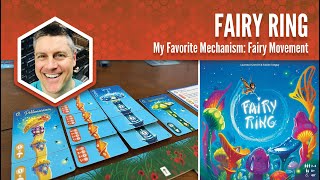
What truly sets Fairy Ring apart is the unique fairy movement mechanic that ties drafting to player interaction. Each mushroom card displays a movement value (typically 3-7) in its top-left corner. After all players resolve their cards in turn order, each player's fairy moves exactly that many spaces clockwise around the table, passing through the mushroom villages of all players. Where the fairy lands determines scoring: if it lands on your own mushroom, you score its value; if it lands on an opponent's mushroom, that opponent scores first, but if you have a matching mushroom type in your village, you also score from one of your own matching mushrooms. This creates a push-pull dynamic where wide villages attract more fairy landings, while focused collections score higher per landing.
The Fairy Ring Experience
Simple Rules Hide Elegant Decision-Making
One of Fairy Ring's greatest strengths is how approachable it feels initially. The rule set is streamlined: draft, play, move, score. Yet beneath this simplicity lies surprising tactical richness. Players must balance competing concerns simultaneously: choosing cards that advance their own mushroom strategy while considering how the movement value will position their fairy around the table, anticipating where fairies will land based on opponents' villages, and constructing villages that either maximize landings or create powerful focal points. Jamie from Stonemaier Games highlighted that the decision of which card to play and where to place it impacts so much of what happens in the game, noting the placement directly influences how often fairies land on players' mushrooms and when.
Clever Product Design Enhances Accessibility
The physical design choices deserve specific mention. Each player mat includes a designated slot for the card being played and a horizontal slot for cards being passed, which elegantly signals readiness and organizes the simultaneous selection phase. The point tracking system uses 20-point tokens that convert to individual points via a hidden dial, mitigating the need for hundreds of point denominations while maintaining hidden information about larger scores. These touches transform what could have been clunky into something genuinely enjoyable to manage across the table.
What Makes Fairy Ring Stand Out
Interaction That Doesn't Feel Punishing
Players land on each other's mushrooms constantly, yet the experience rarely feels frustrating. Instead, it creates a gentle kind of player interaction where fairies drifting across the table regularly reward both the village owner and sometimes the active player. The rigid movement values mean luck plays a role in exactly where you land, but the game's light tone and quick pace mean unlucky outcomes feel forgivable rather than decisive. This balance makes Fairy Ring work beautifully as an entry-level game that actually teaches strategic thinking rather than just luck.
Mushroom Variety Invites Different Strategies
The five mushroom types score in distinctly different ways. Magidrome mushrooms score face-value points that increase with height. Pollinarium scores based on how many total mushrooms a player has multiplied by the mushroom's height. Luminarium scores based on visible firefly icons among all a player's cards. Academy mushrooms score based on the movement value that just activated them, rewarding both the moving player and any player with matching mushrooms. Lookout mushrooms give fixed progression values (3, 8, 15, 24 points) by height. Spring mushrooms function entirely differently, giving movement choices and scoring only when passed over, not landed upon. This mechanical variety means players can pursue genuinely different paths to victory: investing heavily in one towering mushroom type, spreading wide to trigger scores often, or mixing focused collection with broader coverage.
Potential Drawbacks
Movement Rigidity Can Feel Constraining
The core mechanic that makes Fairy Ring special also creates its primary limitation. Movement values are fixed on cards, so if a player drafts a six-movement card but really needed a three-movement card, they must make do. This rigidity occasionally forces awkward landings that feel beyond player control. Several reviewers noted the movement being fairly rigid and acknowledged this could be frustrating at times, though they emphasized the light nature and brisk pace of the game mean such moments rarely derail enjoyment. Players who prefer maximum agency in every decision might find themselves occasionally wishing for flexibility the game deliberately restricts.
Luck Factors in a Otherwise Thoughtful Game
While Fairy Ring's decision space is genuine, luck still plays a meaningful role. Fairy landing patterns depend partly on what opponents play, and which mushrooms score bonus points when triggered depends on random positioning. The outcome of any single turn can feel somewhat determined by factors outside strict player control. However, over the course of twelve total turns across two rounds, strategic choices compound sufficiently that skill clearly separates consistent winners from casual players. The luck factor is forgiving enough that it adds charm rather than frustration, and reviewers consistently noted the game is so inoffensive and so fast that the luck factor didn't bother them at all.
If You Enjoy Fairy Ring
Players who love Fairy Ring should explore Seven Wonders and Sushi Go, the classic closed-drafting games that influenced contemporary design. Merlin and Sushi Go Party offer similar accessible-yet-strategic experiences with simultaneous selection. For the shared-board mechanic, consider Everdell or Calico, which similarly reward tableau interaction. Those drawn to the fairy-tale and garden aesthetics should investigate Everdell and its expansions, or Calico with its peaceful, puzzle-like sensibilities. The lightweight engine-building mixed with interaction maps well to games like Splendor or Ticket to Ride that reward planning and player interaction without overwhelming complexity.
What Reviewers Are Saying
"I don't think I've ever seen a drafting game where you are moving a piece around the table in this way where your decisions of the fairy that you're moving and the card that you're playing have so many impacts on the other players as well. That made me really like Fairy Ring quite a bit."
— Stonemaier Games
"Very charming, very fast, simple but kind of clever at the same time and some unique mechanisms in terms of being forced to interact with the other players. The game is so inoffensive and so fast that the luck factor didn't really bother me at all and I think it's a really nice gateway entry level game."
— Chairman of the Board
"Fairy Ring is my number eight, a wonderful, pretty light game but there's this very fun player interaction in the game. You have this cool balance of like, do I want to make a lot of mushrooms or grow my mushrooms taller? So there's that cool balance and decision-making."
— The Board Game Garden