/pic6499900.jpg)


















Familiar Tales Deep Dive
What the Community Thinks About Familiar Tales
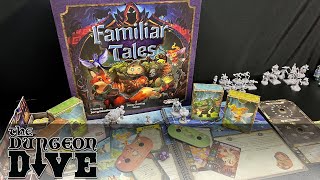
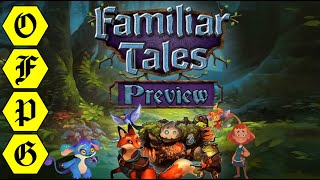
Reviewers have embraced Familiar Tales as a standout entry in cooperative, narrative-driven board games. Channels like The Dungeon Dive and One Stop Co-Op Shop praise how it delivers an emotionally resonant experience that feels complete and satisfying. Reviewers appreciate its accessibility, beautiful presentation, and the way it balances story with meaningful gameplay. The consistent praise centers on how rare it is to find a game that combines charm, engaging mechanics, and genuine emotional connection in equal measure.
Core Mechanics That Define Familiar Tales
Card Crafting and Deck Evolution Across a Campaign
At its heart, Familiar Tales employs a card-based system where each character's deck improves and evolves between chapters. Players acquire new cards to add to their decks as they gain experience, creating a light deck-building element that feels organic to the story. Multi-use cards anchor the system, allowing players to spend cards for skill checks, movement, or special actions. Fate dice introduce an element of chance that keeps tension high without causing frustration, and the danger system creates meaningful consequences for risky decisions. The deck grows richer across distinct eras, introducing new cards at each stage to keep the experience fresh and rewarding. The designer, Jerry Hawthorne, and publisher Plaid Hat Games built this around emotional storytelling.
An App-Guided Branching Narrative
The campaign unfolds through a web-based app that serves as both game master and narrator. This app tracks story choices, danger levels, and campaign progress while presenting a richly illustrated storybook environment. Players navigate branching paths through each era, with their narrative decisions genuinely affecting which encounters they face. The same location can be encountered differently depending on how players approached it within the story, and different setup variations reflect the choices made during earlier chapters. This creates the sense of a lived, personal journey rather than a predetermined gauntlet.
The Familiar Tales Experience
A Storybook Campaign That Unfolds Like a Fairy Tale
Familiar Tales tells the story of magical familiars, a dog and a cat among them, entrusted with caring for a baby princess across her journey from infancy to adulthood. Over three eras, players guide her through hardships, make choices that shape who she becomes, and ultimately help her reclaim her throne. The narrative weight of these choices is felt genuinely; players are not simply completing encounters but actively raising a character and deciding what kind of ruler she will be. The illustrated locations are gorgeous and thematically rich, and the voice acting and narration elevate the entire experience, making story beats land with emotional clarity.
Accessible Yet Tactically Engaging Gameplay
The mechanics are elegantly simple. Movement uses a connect-the-dots line system, and skill checks use a straightforward formula where card values combine to meet a threshold, with the fate die providing a final variable result. Despite this simplicity, meaningful decisions emerge. Choosing when to take risks, how to allocate limited cards across multiple characters, and which items to craft all create a light but real strategic layer. A strong solo mode uses a single combined deck of all the characters' cards, which adds challenge while avoiding the overwhelming multi-deck management of some cooperative games. New rules are introduced gradually, never overwhelming the table.
What Makes Familiar Tales Stand Out
App Integration That Enhances Rather Than Replaces
The app is one of the finest digital integrations in tabletop gaming. It runs as a web page with no download required, features full voice acting with excellent sound design, and handles administrative overhead that would otherwise bog down gameplay. The interface is clean, the text is resizable, and a history feature allows players to revisit previous story beats. Most importantly, the app enhances the narrative without becoming a crutch; the physical book components remain central, and the app acts as a supportive narrator rather than the main event. This represents a benchmark for how technology should serve board games.
Genuine Emotional Resonance and Replayability Through Choice
Familiar Tales achieves something many campaign games aspire to but rarely deliver: the feeling that choices matter in a way that resonates emotionally. Because the princess grows across the campaign and changes based on player decisions, there is genuine incentive to replay and make different choices to see different outcomes. The branching paths ensure that multiple playthroughs reveal different encounters and storylines. This is not a fake choice system; it shapes the actual narrative experience and invites players back to explore alternate timelines.
Potential Drawbacks
Lower Player Count Scaling and Solo Dominance
The game is designed around a fixed set of familiars, and the mechanics for accommodating fewer players can feel strained. Playing with only one or two human players requires either dividing the characters among those players or having one player control several, which dilutes individual decision-making. The solo experience, while strong mechanically, can dominate as the optimal way to play because it grants a single player complete strategic control and removes the negotiation that might enrich multiplayer sessions. The game shines most when every character slot is filled, which limits its flexibility.
Campaign Length Commits Players to the Full Arc
Familiar Tales is a campaign game with a definite endpoint. The campaign is manageable in length, but there is no true modular play; starting it commits players to seeing it through to its conclusion. Unlike some games that can be picked up episodically, Familiar Tales expects sustained engagement with the same characters and story. This can be a strength for dedicated groups but a barrier for casual play or those who prefer variety session to session.
If You Enjoy Familiar Tales
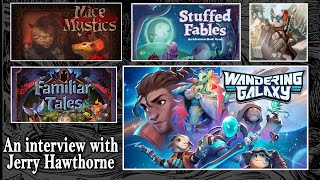
If Familiar Tales captured your heart, several other games offer related experiences. Mice and Mystics was Jerry Hawthorne's earlier foray into narrative campaign games, offering similar whimsy with a more combat-focused foundation. Stuffed Fables continues that legacy with adorable characters and cooperative storytelling, though it is shorter and lighter than Familiar Tales. Sleeping Gods provides a comparable campaign experience with branching paths and meaningful replayability, wrapped in exploration and a stunning art style. Gloomhaven offers epic campaign depth and tactical combat for those ready to commit to a longer journey, and Mansions of Madness delivers app-driven narrative in a more suspenseful tone.
What Reviewers Are Saying
"Familiar Tales does approach that magical dungeon dive space of being effortless fun, and it doesn't sacrifice any good decision making for that simplicity."
— The Dungeon Dive
"The narrative, the way the app with the voice acting tells a really compelling, almost Disney like story, the great adventure you have, I think is a lot of fun."
— One Stop Co-Op Shop
"I have felt nothing but joy while playing this game. It is one that I am looking forward to playing a lot more of."
— The Dungeon Dive