/pic646458.jpg)





































Forbidden Island Deep Dive
What the Community Thinks About Forbidden Island
Within the board gaming community, Forbidden Island occupies a unique and cherished position. Reviewers consistently praise it as an exceptional entry point to cooperative gaming. Its elegant design and stunning visual presentation have earned it recognition as a gateway game that welcomes new players while offering genuine strategic depth. The game's accessibility combined with its challenging difficulty scaling makes it appealing to both casual newcomers and dedicated board gamers seeking a quick, engaging experience.
Core Mechanics That Define Forbidden Island
Action Point Allocation and Set Collection
Each turn in Forbidden Island provides players with a fixed budget of three actions. These actions form the foundation of meaningful decision-making: players can move to adjacent tiles, shore up flooded locations to prevent sinking, share cards with teammates, or claim treasures by discarding four matching cards of the same color. This simple action economy creates depth through constant trade-offs. The hand management element forces players to balance card acquisition against immediate card spending, while the cooperative nature ensures everyone benefits from others' decisions. Each player begins with unique special abilities, with roles like the Engineer able to shore up two tiles per action and the Pilot capable of moving anywhere on the board in a single turn, ensuring diverse viable strategies for each playthrough.
The Island Sinking Mechanic
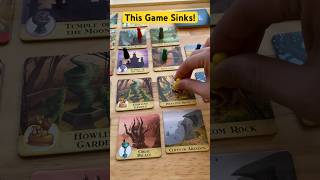
What truly distinguishes Forbidden Island from its spiritual predecessor, Pandemic, is its revolutionary tile-based board that physically disappears during play. As the flood deck resolves, matching island tiles flip to their flooded side. If a flooded tile is drawn again before being shored up, it becomes permanently removed from the board, creating a shrinking play area. This forces players to make agonizing decisions about which locations to save and which to abandon. The water level track ratchets up throughout the game, drawing more flood cards each turn and intensifying pressure. Sinking happens elegantly and thematically without requiring complex tracking; when a tile is removed, any player standing there simply swims to an adjacent space. This mechanism creates genuine strategic tension absent from many cooperative games.
The Forbidden Island Experience
Accessible Yet Genuinely Challenging
Reviewers universally note that Forbidden Island succeeds as a teaching tool without sacrificing satisfaction. The base novice difficulty provides a clear win condition, yet higher difficulty settings demand careful planning and teamwork. The game scales from trivial to genuinely punishing across its difficulty levels, ensuring long-term engagement. Setup takes minutes, explanation requires only a few minutes more, and a game completes in roughly thirty minutes. This efficiency makes it an ideal filler between heavier games or a centerpiece for gaming groups just entering the hobby. The tension builds palpably as the island shrinks and options narrow, creating memorable moments of triumph or heartbreaking last-second defeats.
Collaborative Victory Without Quarterbacking
The game maintains excellent player agency despite its cooperative structure. Because every player can contribute meaningfully and final victory requires collecting four different treasures plus reaching Fool's Landing, no single player can dominate decision-making. The tile arrangement varies with each setup thanks to random initial placement, preventing experienced players from defaulting to rote strategies. Players must negotiate priorities genuinely: should the team prioritize saving islands to maintain connectivity, or sacrifice some areas to focus narrowly on collecting four treasures before time runs out. This creates compelling table discussion and shared ownership of outcomes.
What Makes Forbidden Island Stand Out
Elegant Production and Thematic Resonance
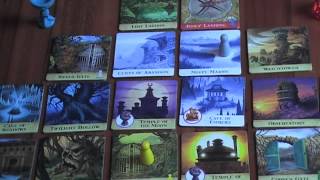
Despite its age, Forbidden Island's components remain beautiful. The screen-printed island tiles feature striking artwork depicting temples and mystical locations. The cardstock and construction quality withstand repeated play without degradation. The game ships in a durable tin box with excellent storage, making it a natural choice for travel. The theming feels cohesive throughout: the board sinks as described, player powers relate to their role flavor text, and treasures feel worth collecting. The art style and design language remain contemporary even more than a decade after publication. This production quality ensures the game appeals to players who value aesthetic presentation alongside mechanical excellence.
Cooperative Gaming as Gateway Experience
Forbidden Island serves a crucial niche. Many experienced gamers encountered Pandemic first and found it more complex than anticipated. Forbidden Island provides a gentler introduction to cooperative mechanics that maintains mechanical honesty. Players actually win or lose based on decisions, not luck alone, yet the ruleset remains concise enough to teach in under five minutes. For educators and teachers, the game offers accessible strategic thinking without overwhelming young learners. The variable player powers ensure replayability and allow different play styles to shine, making it one of Matt Leacock's most inclusive designs despite also being his simplest.
Potential Drawbacks
Limited Engagement for Experienced Cooperatives Players
Reviewers note that players deeply familiar with cooperative games, particularly those who have mastered Pandemic, may find Forbidden Island feels light or too quickly solved. The strategy space, while real, remains narrower than weightier cooperative experiences. Veterans may optimize solutions rapidly, reducing the game's challenge and replay value within their circles. For groups whose primary interest involves intellectual puzzle solving and complex interlocking systems, Forbidden Island's elegant simplicity may feel somewhat austere by comparison. Additionally, once a group discovers optimal difficulty settings and develops strong teamwork, the challenge ceiling may not satisfy those seeking mounting complexity.
Group Dynamics and the Quarterbacking Problem
Though the design encourages collaborative play, groups prone to analysis paralysis or dominant players may still experience quarterbacking issues. The tight action economy and clear information can lead confident players to direct others. Some reviewers noted instances where strong personalities dictated play despite cooperative mechanics. This issue occurs across many cooperative games and reflects player behavior rather than design flaws, but groups should establish communication norms before playing with unfamiliar players. Additionally, the game can occasionally feel like a single-player puzzle that multiple people happen to solve together if one player takes initiative in planning turns.
If You Enjoy Forbidden Island
Fans of Forbidden Island should explore Forbidden Desert, the designer's sequel offering greater complexity and variability. Pandemic provides significantly more strategic depth and remains unmatched in the cooperative space. For those wanting cooperative experiences with different themes, Thunderbirds and Horrified offer comparable accessibility with unique settings. Castle Panic provides cooperative tower defense mechanics, while Spirit Island appeals to players wanting collaborative games with substantial player powers and asymmetric design. Flash Point: Fire Rescue and Robinson Crusoe deliver heavier cooperative experiences. These recommendations respect Forbidden Island's position as an entry point while offering natural progression paths toward greater complexity.
What Reviewers Are Saying
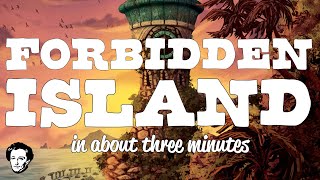
Forbidden Island is a low complexity cooperative game that can get quite hard to beat on its highest difficulties and really is a good entry point for anyone looking at cooperative gaming for the first time.
— 3 Minute Board Games
The best thing about this game is the sinking and shrinking board. It's quite novel and adds to the rising tension in the game. The island physically disappears, which is so different and so elegant that people would rebel against it if it wasn't executed this well thematically and mechanically.
— The Dice Tower
Forbidden Island teaches the basics of cooperative gaming and can be used as a launching point to other games in the Forbidden series or into Pandemic or Thunderbirds or any other type of cooperative board gaming.
— 3 Minute Board Games