









Fortune and Glory Deep Dive
What the Community Thinks About Fortune and Glory
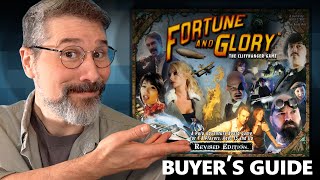
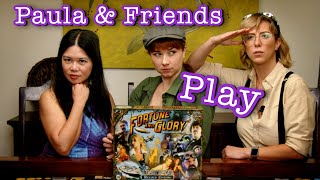
Reviewers approach Fortune and Glory: The Cliffhanger Game as a pulp adventure first and a set of mechanics second. Chaz, Game Night Picks - Pair Of Dice Paradise introduces it as a fast-paced game of thrilling escapades and vile villains, and that framing carries through nearly every discussion. Paula, in a full playthrough of the revised edition on Paula, Paula Deming, opened by comparing the game to Indiana Jones, and they spent much of the session reacting to the theme as much as the rules.
The reception is warm but not uncritical. Daniel, in Daniel, The Dungeon Dive, places the game at number 29 on their top 50 and describes it with obvious affection, while also flagging how fiddly it can be. Board Game Critique ranks it sixth on a list of sandbox board games and says it is the title they defend most strongly, especially for its cooperative mode. At the other end of the spectrum, BoardGameBollocks places it near the top of a list of games that disappointed them, focusing on the sprawl of the board and the density of the rules. Across these voices, the shared view is that the game delivers on its pulp promise, and the debate centers on whether its complexity is worth the effort.
Daniel also reports that the expansion pipeline has been slow. They point to the pandemic as a major disruption to the photography work behind the publisher's art. They note that a second edition has just arrived, with hopes that the long-promised expansions will follow.
Core Mechanics That Define Fortune and Glory
Movement Points
Each round opens with an initiative roll, and any hero who rolls a one receives an event card, a reward reviewers mention because it gives the table an unexpected option. In the movement phase, a hero rolls a die and moves that many spaces, or chooses a guaranteed four movement points and avoids the gamble. Land and city spaces cost one point each, while sea spaces print their own cost. Port cities bearing an anchor symbol let a hero step directly onto the water, whereas cities without that symbol must first spend a point moving inland. Paula's session also showed how the Pacific Crossing shapes long-distance travel across the map. Flying offers an alternative, costing two Fortune or Glory to reach a major city and three to reach a minor one, and Mary Lou used it to race toward a secret delivery in Washington, D.C.
Combat: Dice
Fights are dice pools scaled to a hero's combat skill. Each combat die that shows a four, five, or six is a hit, and enemies roll their own dice at the same time. Heroes ignore a number of hits equal to their defense, and any hits that remain become wounds. Wounds are not fatal, but a hero whose wounds equal or exceed their health is knocked out, returned to the starting city, and forced to discard items equal to a die roll. Paula's table fought zombies, Nazi guards, and mobsters, and wounds piled up on both sides of the table. The same dice engine resolves skill tests. A hero rolls dice equal to the relevant skill, each die that meets the target number scores a success, and rolling at least one success allows the hero to roll every die again. During a cliffhanger, a hero can also exert by taking a wound to add an extra die, which makes a desperate roll more survivable.
The Fortune and Glory Experience
Pulp Tension Built on Cliffhangers
The cliffhanger is where reviewer enthusiasm peaks. A failed danger test does not end a hero's turn in ruin. Instead, the danger card flips to its cliffhanger side, and the hero hangs in suspense while the next turn's movement and adventure phases are replaced by an attempt to overcome the cliffhanger. Board Game Critique describes the reaction at the table when someone first lands one, noting that the group erupts in noise. Daniel compares the rhythm to an old serialized cliffhanger film, where a missed jump means picking up the story next turn while hanging by a thread. Paula's Russian ice shark encounter, which they summed up as moving "from Indiana Jones to James Bond," shows how quickly the tone can shift from swashbuckling to thriller.
Open-Ended Chaos
Chaz emphasizes the combination of randomized encounters, open movement, sudden betrayals, and natural disasters, which they say ensures that no two sessions play out alike. Paula's game illustrates the effect in practice. A villain Zeppelin moved across the map dropping Nazi soldiers, and a chance draw of a faithful dog changed the tone of a late fight. Board Game Critique adds that the artifact locations are seeded in different positions every session, so the route a group chooses is never fully predictable.
What Makes Fortune and Glory Stand Out
The Cliffhanger Mechanic
Board Game Critique singles out the cliffhanger mechanic as the feature that defines the game's genre. Because a failed test leaves the hero suspended rather than eliminated, each setback becomes a story beat instead of a dead turn. A hero may camp down to bank progress and heal, press on and risk losing the glory earned that turn, or exert to improve a cliffhanger roll. Paula's playthrough shows that choice in action, as their table repeatedly weighed whether to camp down and heal before pressing on.
Cooperative Play Against a Vile Organization
The competitive race to 15 Fortune is the standard mode, but Board Game Critique argues that the cooperative mode produces the most dramatic sessions. Heroes pool their Fortune against a vile organization whose track advances toward its own game-ending condition, forcing the table to split attention between artifact hunts and that looming threat. Chaz, by contrast, describes the competitive game as a contest in which players collect the most Fortune while also sabotaging one another's efforts. Offering both modes lets groups choose between open rivalry and shared pressure.
Potential Drawbacks
Rules Density and Edge Cases
The most common reservation is complexity. Daniel says the game contains a lot of rules and notes that the community has relied on fan-made flowcharts to walk through the turn structure, with many small details and edge cases that are easy to get wrong. BoardGameBollocks raises a similar concern from a more skeptical angle, describing a rulebook that has been added to over the years and edited by fans. Paula's table shows the friction in real time. Rather than checking how player-versus-player conflict worked, their group simply adopted a house rule that banned it. Players who enjoy managing a sprawling rules set will likely accept this burden, while others may find it an obstacle to regular play.
Sprawl, Randomness, and Swingy Outcomes
BoardGameBollocks found the game's size to be a liability, describing a board with large stretches of empty space that dilutes the experience, particularly at the higher player counts. Dice variance is another sticking point. Paula's table rolled poorly at key moments, and the cliffhanger system can feel punishing when one failed roll costs a hero several items at once. Reviewers who love the chaos tend to see that volatility as part of the pulp identity, while those who prefer steady planning may find the swings too sharp.
If You Enjoy Fortune and Glory
- Indiana Jones: The Board Game is the comparison reviewers reach for first. Paula opened their playthrough by saying the game looks like Indiana Jones, and Daniel describes Fortune and Glory as a board game version of a globe-trotting Indiana Jones style adventure, so fans of that theme will feel at home.
- Touch of Evil is a sibling title from Flying Frog Productions. Daniel ranks it at number 21 on their top 50, praising its heavy theme and the countryside players can explore, and noting that it works well both as a competitive game and as a cooperative one.
- Last Night on Earth is another Flying Frog title. BoardGameBollocks mentions it alongside Touch of Evil as a game built on artwork, a quality that also defines Fortune and Glory's table presence.
- Shadows of Brimstone is the publisher's current focus. Daniel notes that Flying Frog has been devoting its attention to it while waiting on expansions for Fortune and Glory, so fans who enjoy the Flying Frog style may find it a worthwhile companion.
What Reviewers Are Saying
"A hallmark of Fortune and Glory is its unpredictability. The combination of randomized encounters, open movement across the board, unexpected twists, sudden betrayals, and natural disasters all ensure that no two sessions are the same, allowing it to really feel like anything could happen."
— Chaz, Game Night Picks - Pair Of Dice Paradise
"The theater of it at the table is extraordinary. The first time someone hits a cliffhanger and the group erupts in noise around them, that's the memory that sticks."
— Board Game Critique
"It has such a great pulp feel. I don't know if I have any other game that really does give me that pulp adventure feel. I do feel like I am playing a board game version of a great globe-trotting Indiana Jones style adventure."
— Daniel, The Dungeon Dive