/pic4754389.png)
An incredible new dinosaur graveyard has been discovered, and if the early findings are any indication, it could be a treasure trove of fossils and bones like the world has never seen! In Fossilis, 2 to 5 players become paleontologists working the dig site with shovels, whisk brooms, and chisels looking for a find that could make their career.
Each round, players get two actions to dig at the site or make an extraction. As they remove the top layers of sand, clay, and stone, they'll discover trace fossils, which can be exchanged for tools, the plaster necessary to extract bones, and discovery points. As they delve deeper, precious bones will be exposed. They can make a careful extraction if they have the right amount of plaster, but sometimes shifting the earth to cover up a find and slow down the competition is the right move. Bones on their own can be valuable, but museums are really interested in more complete specimens. Sets of bones can be exchanged for museum cards worth big points!
Fossilis features a unique 3D dig site board, with recessed pockets filled with dinosaur bones, and thick, chunky terrain tiles that cover the dig site. Players have to use strategy, timing, and a little bit of luck if they want to make the best discoveries, get their name in all the paleontology journals, and of course, win the game.
—description from the publisher
Note: The Kickstarter edition supports solo play and includes other game related content. It may be found here Fossilis: Kickstarter Edition.
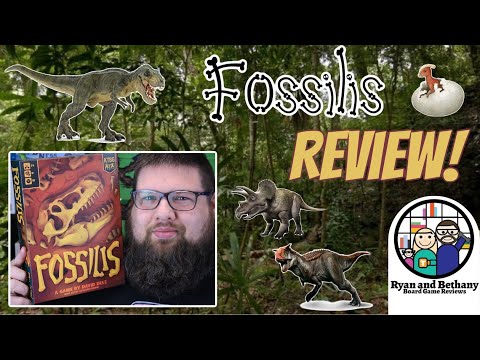
Fossilis Review!

Spotlight Game Night REPLAY - Fossilis

- child-friendly game, doesn't want it on shelves with adult games
Mechanics (from transcript analysis)
Video topics + discussion points
Quotes (from this video)
- It literally feels like a board game just threw up over this entire room.
- The front cover is pretty cool, too. Let's see. The front cover is pretty cool, but that back cover, I had no idea looked like that.
- Um but, we still have I mean, seriously, we have so many games it's actually insane.
- I believe I'm finally to the point where I have enough games kind of on the shelf and organized semi okay so far where we can actually start clearing off this table.
- I have come to the conclusion that this table is absolutely too big for this room. But you know what? I'm not changing a thing about it because I love this table.
- We have a clean board game table. Oh my gosh. I never thought I would see this day, but we're here. We made it. We have a clean board game table.
References (from this video)
- strong family appeal
- co-publishing support from a respected Canadian publisher
- information in transcript is limited; details uncertain
- exploration with dinosaur-themed components
- dinosaur archeology-themed family game
- educational yet playful
- Town Builder
- Chai
Mechanics (from transcript analysis)
- Set Collection — collect bones or dinosaur parts to score
Video topics + discussion points
Quotes (from this video)
- Walled City is criminally underrepresented in the gaming sphere.
- It's a real gem, it's a nice small box.
- Lanterns Harvest Festival is a standout for its tile-laying and color-mantling mechanisms.
- If you like real-time games, Jab Real-Time Boxing is the best of the best.
- Star Trek Alliance Dominion War Campaign is by far my personal favorite campaign-style game.
References (from this video)
- thematic and accessible
- unknown year/weight
- fossil excavation and collection
- Archaeology/paleontology theme
- educational with light humor
Mechanics (from transcript analysis)
- Set Collection — Collect fossil tiles for scoring.
- Tile Placement — Place fossil tiles to activate patterns.
Video topics + discussion points
Quotes (from this video)
- International dinosaur month
- the wall for October is dinosaur month
- draftosaurus you see it's still in shrink
- one of my favorite roll and right games
References (from this video)
- Excellent component quality and a robust, tactile 3D board design
- High-quality artwork across dinosaur cards, tool cards, and event cards
- Rulebook described as well laid out, with clear components pages and an at-a-glance summary
- Educational value and encouragement to learn about dinosaurs and paleontology
- Rulebook can be dense and confusing when fatigued or tired; initial confusion noted
- Setup is fairly elaborate for a two-player game and can feel slow at first
- Turn-tracking (energy per turn) can be fiddly for new players and requires a learning curve
- Array
- Paleontological dig site
- Educational, exploratory
Mechanics (from transcript analysis)
- Action Points — Each turn uses a fixed number of energy tokens to perform actions such as gaining plaster, moving tiles, excavating, or buying cards.
- End-of-Game Scoring and Set Collection — Scoring occurs through multiple avenues: completing dinosaurs with bones, empty skill slots for point bonuses, set completions across taxa categories, and end-game bonuses for leftover resources and skulls.
- Energy-based Action Economy — Each turn uses a fixed number of energy tokens to perform actions such as gaining plaster, moving tiles, excavating, or buying cards.
- Excavation with Plaster and Energy — Excavating a bone requires spending plaster plus energy; each bone has a plaster cost that must be paid to uncover it with tweezers.
- Market Card Purchasing and Lab Assembly — After excavating, players buy cards from a market comprising supplies and tools, then claim dinosaur cards into their lab, progressing toward assembling a complete specimen.
- tile laying — Tiles are placed on a 3D, layered board; tiles can be slid to reveal bones and dictate fossil placement. The game emphasizes layered setup and progressive reveal, with the board designed so bones become accessible as the layer structure changes.
- Tile Placement — Tiles are placed on a 3D, layered board; tiles can be slid to reveal bones and dictate fossil placement. The game emphasizes layered setup and progressive reveal, with the board designed so bones become accessible as the layer structure changes.
Video topics + discussion points
Quotes (from this video)
- This one is quite in-depth.
- Very well laid out.
- It's a really clever board.
- Artwork is really good.
- I think I'll enjoy it more once I get used to it.
- The setup of this one is a little more elaborate than some games.
References (from this video)
- Dinosaurs theme with a geometric pattern/tiles mechanic
- Blends patterning with worker placement
- pattern sets and tile/worker placement
- dinosaurs
- Coimbra
Mechanics (from transcript analysis)
- Pattern Building — pattern sets with tile placement and worker placement
Video topics + discussion points
Quotes (from this video)
- I love I love their stuff I love getting learning about all the games from Asia
- I’m excited for that
- these are top 10 Euro games to watch out for this year
- there's a lot of really cool Unique Mechanics in here and that's what I'm really excited for
References (from this video)
- Unique sliding/pushing mechanic
- Engaging fossil-dig theme
- Appeals to families and hobbyists alike
- Setup and rules can be a bit fiddly
- Requires some patience to learn the mechanisms
- Dinosaurs and fossils
- Archaeology dig
- Educational yet whimsical
Mechanics (from transcript analysis)
- Compound Scoring — Score based on fossil types and discovered bonuses
- Dinosaur bone collection — Extract bones with tweezers and assemble fossils for scoring.
- Pattern/bonus scoring — Score based on fossil types and discovered bonuses
- Tile Placement — Place/shift layers of tiles to reveal fossils.
- Tile placement / pushing — Place/shift layers of tiles to reveal fossils.
Video topics + discussion points
Quotes (from this video)
- This is a really fun lighter game.
- Calico fun game.
- This is a really fun one. It makes you think.
- We really like that one.
- It's a lot of fun. I like Honeybuzz.
- Lost Ruins of Arnack is a really good one.
References (from this video)
- nice physical components (dinosaur bones)
- tactile and thematic flavor for paleo fans
- experienced fatigue can dampen early impressions
- needs awake play for best experience
- dinosaur bone recovery and display
- paleontologists digging bones at a dig site to assemble dinosaurs
- hands-on, tactile, slightly thematic
- Maki Master
Mechanics (from transcript analysis)
- Hand Management — use cards to assemble dinosaur sets
- hand management and set collection — use cards to assemble dinosaur sets
- tactical scoring via top cards — points awarded for completing dinosaur sets
- tiled digging with stones and tools — stones moved to access dig sites; chisels and tweezers used to extract bones
Video topics + discussion points
Quotes (from this video)
- Creature Comforts is my number one KTBG game.
- This is one of our top companies for sure.
- I love the use of dual-use cards in Cafe Baris.
- The Wasabi wasabi mechanism is really your points.
- Maple Valley has a really unique path-based worker movement.
References (from this video)

- Exciting dinosaur/museum theme
- Highlight of diverse voices in design
- Dinosaurs, museums
- Dinosaur-themed museum with tile placement
- explanatory
Mechanics (from transcript analysis)
- Tile Placement — Place tiles to build a dinosaur-themed museum
Video topics + discussion points
Quotes (from this video)
- Diversity in gaming at Spiel.
- Unfortunately, there is not a lot of queer representation here this year.
- I'm very excited for Fossilium.
- I'm so excited for this because this is a nice, big, heavy Euro designed by Stefania Niccolini
- Cascadia Alpine Lakes is a new standalone Cascadia game designed by Randy Flynn, but still with amazing artwork by Beth Sobel.
- The pattern work that she did in this game is so beautiful.
- It is a brand new standalone game. It is not like a duel version of White Castle. It's just set in the same universe.
- Alice, de l'autre côté du miroir.
References (from this video)
- Out of this world components
- Satisfying digging mechanic
- Fulfilling dinosaur orders is cool
- Very cool production
- Absolutely memorable
- Excavating dinosaur bones from sediment layers
- Digging for fossils
Mechanics (from transcript analysis)
- Component Management — Plaster is one of the main resources in the game because you need plaster in order to to kind of get the fossils.
- physical manipulation — You are sliding things around, pushing them, and that by itself is a cool little mini game.
- Set Collection — you're trying to fulfill these orders. These orders have different dinosaurs on them that might need Okay, I need two femurs or two two long bones. I need three teeth and I need one claw or whatever it is in order to fulfill this dinosaur card.
Video topics + discussion points
Quotes (from this video)
- But that doesn't mean that board games didn't come out. So, what we're going to be talking about is the top 10 games that came out that year in 2020.
- So, my number two is uh Vic Counts of the West Kingdom.
- So, my number two, this is Sorcerer City. What a wild game.
- All right, so, we're finally here. We're at our number ones of 2020, and this has been such a great list.
- my number one is Pandemic Legacy Season Zero.
- All right, so my number one game of 2020. Uh this is Conbon EV.
- If you want us to continue these series as the years go on, so in 2026, we can do 2021 and all of that and even compare our lists from top 10 list in the past, let us know in the comments below.
- And be sure to let us know what your favorite games are from 2020. What What was your board gaming experience like in 2020?
References (from this video)
- Fantastic game for families.
- Kids love the tactile fun of sliding terrain tiles.
- Can easily customize difficulty based on age.
- List of changes and reasons included in the rule book.
- Dinosaur bone excavation
Mechanics (from transcript analysis)
- modular difficulty — Suggestions for adjustments to accommodate different levels of difficulty, customizing based on age.
- modular terrain — Sliding chunky terrain tiles to find dinosaur bones.
Video topics + discussion points
Quotes (from this video)
- I'm referring to games where the core experience involves plugging in one or more modules that are part of the core game that have a significant impact on gameplay.
- I'm not just talking about variable setups where maybe you have a few tokens or tiles that are slightly different than in a previous game.
- I'm also not talking about player asymmetry where each player is a different character or different faction, things like that.
- I'm also not including expansion modules.
- I'm talking about the where the core game is designed around the idea where modules shape the core game experience.
- This game is essentially infinitely modular.
- this is perhaps the the best example that I'll have on this entire list of a truly modular game where the core experience of Shackleton base depends on you plugging in these three modules that have a significant impact on the game.
- To say this is a large game is an understatement, but with these different region modules comes a ton of variety.
- you are plugging in different elements to create a new unique experience rather than a scenario where it says like this is the scenario that you're playing.
- all modular setup that all that all modular setup does take some work to put together and reset.
- I think the takedown is almost worse because you're like, "Oh, we finished playing the game. Now we get and you have to sort out all of these different components."
- I think that is a great space for modularity in a game like this.
- You can really play the same temple track over and over again in Lost Arms Vernac and get plenty of replayability out of it.
- I think Clank I think is my favorite modular game where just with the map modularity uh just flipping over which side of the board you're going to play on um can add can really make each game feel quite different every time you play.
- We are talking about big modules that you are plugging into the game in from that are built into the core experience and they are making the game feel different or unique or harder or easier um or shorter or longer.
References (from this video)
- Strong integration of theme and mechanics (digging, pushing, tile manipulation)
- Dual-purpose components (board + micro-board) that are more than gimmicks
- Engaging decision-making with resource management (plaster) and timing
- Very satisfying tile- and card-driven synergies (hammers and ability tiles)
- Exciting end-game choices between completing big dinosaurs vs. chasing set-collection bonuses
- Plaster economy can feel punishing; it runs out quickly over the course of a game
- Well-depth and opaque wells can make bones hard to see, affecting tactile play
- Initial learning curve around costs, actions, and when to push for effects
- Some fiddliness with pushing off tiles; requires care to avoid accidental misplays
- paleontology and dinosaur reconstruction
- a fossil dig site with bones hidden under layers of earth; a lab to assemble dinosaurs
- explanatory and enthusiastic
Mechanics (from transcript analysis)
- card market and purchases — cards (tools and supplies) are bought using resources from the dig site and grant various bonuses
- digging for bones — players spend plaster and actions to extract bones from dig sites and assemble skeletons for scoring
- End Game Bonuses — game ends when plaster piles run out and event cards are resolved; scoring includes set collection, dinosaurs, and cards
- end-game and event cards — game ends when plaster piles run out and event cards are resolved; scoring includes set collection, dinosaurs, and cards
- hammers and ability tiles — digging yields hammers that can be traded for special ability tiles with powerful, rule-bending effects
- lab claiming of dinosaurs — complete dinosaurs can be claimed into your lab for victory points; end-game scoring tallies these and other bonuses
- pushing and sliding on the board — players move and shift sand, clay, and stone tiles; heavier items push lighter ones and can reveal holes
- Resource Management — plaster is a key resource with a limited supply; actions and digging costs hinge on plaster availability
- resource management with plaster — plaster is a key resource with a limited supply; actions and digging costs hinge on plaster availability
- Set Collection — collect bone components to complete dinosaur cards for victory points; partial sets yield smaller points
- set collection and dinosaur cards — collect bone components to complete dinosaur cards for victory points; partial sets yield smaller points
- Tile/Map Shifting — players move and shift sand, clay, and stone tiles; heavier items push lighter ones and can reveal holes
Video topics + discussion points
Quotes (from this video)
- it's all about dinosaurs
- you need to become a paleontologist
- it's always better to complete an entire card rather than just a partial card
- i loved the fact that the two components that you use to set up the game, that board and a tiny board to pull everything off, i love that that's just not a gimmick
- there's this tug and pull of how you're going to use your resources
- i wish that there was more plaster just you can play more of the game
- this is a really interesting game
- we don't have a single game like this
- fossilus was something different that earned a place in our collection
References (from this video)
- gorgeous components
- tactile and engaging experience
- great weight for families
- expansions on the horizon
- some downtime between turns
- not a long-playing experience
- Discovery, collection, and display of fossils
- Fossil excavation and paleontology
- Tactile, family-friendly exploration
Mechanics (from transcript analysis)
- Set Collection — players collect fossil tiles to score points
- tactile components — use tweezers and large plastic tiles to retrieve fossils
- tile drafting / placement — select and place fossils to optimize scoring opportunities
Video topics + discussion points
Quotes (from this video)
- oh it was so hard on my brain
- we love suburbia
- we have the superb deluxe edition
- it's a fantastic game
- the game looks fun but we will not back it
- there's just no time to play these
- we want to do more videos
- please subscribe it's free
References (from this video)

- Gimmick with the bone board and extraction feel
- Accessible and family-friendly while still engaging
- Bones, tools, and dinosaur cards
- Dinosaur fossil excavation
- Accessible Euro with a tactile gimmick
Mechanics (from transcript analysis)
- Resource Management — Use plaster/resources to gain bones and fulfill objectives
- Tile Placement — Tiles representing bones are dug up and placed to fulfill dinosaur cards
- Tile/bone extraction and placement — Tiles representing bones are dug up and placed to fulfill dinosaur cards
- Variable game-end and scoring from bone fulfillment — Points come from completing dinosaur cards via bone requirements
Video topics + discussion points
Quotes (from this video)
- it's basically like a cottage board game relaxation weekend
- I love bumping tracks it's a good time
- I love multi-use cards
- Evenfall is my number one
- I cannot wait to play this one again
References (from this video)
- Components have a tactile, toy-like quality that makes the game appealing to kids and adults alike
- Rules are straightforward to teach and learn, with a helpful player aid
- A large, diverse pool of dinosaur cards contributes to strong replayability
- Gameplay design effectively integrates physical components with the core mechanics
- Victory strongly hinges on acquiring dinosaur cards; fewer alternative win strategies
- Lab space can become congested if bone collection mismatches a player's dinosaur card needs
- Pacing can dip in longer games if players over-optimize turns without enough variety
- Archaeology and paleontology with a light-hearted, family-friendly tone.
- An archaeologist's dig site where players uncover bones and pieces to assemble dinosaur cards.
- Toy-like and approachable, emphasizing discovery and collection over harsh competition.
Mechanics (from transcript analysis)
- Card-based bonuses — Tool and supply cards grant situational bonuses that can accelerate bone collection or scoring; selecting the right bonuses matters for efficiency.
- Resource Management — Players allocate a fixed amount of energy each turn (four energy) to perform actions such as digging, moving tiles, and collecting items.
- set collection / card drafting — Dinosaurs are represented by cards that players assemble by collecting the required bones; completing a set yields a large end-game score.
- Terrain interaction and push rules — Different terrain types (sand, clay, stone) interact with movement and tile pushing, creating strategic choices about where to dig and how to manipulate the board.
- tile manipulation — Pits and bones are represented by tiles that can slide, with rules about pushing or moving neighboring tiles of equal or lower type; terrain type affects energy costs.
- Turn structure with action economy — On a player's turn, they perform a sequence of actions (three steps after energy expenditure) followed by potential purchases and card claims.
Video topics + discussion points
Quotes (from this video)
- the amazing components
- family game and not a euro game
- i dig the game
- grab your tools and get ready for the dig of your life
References (from this video)
- Distinctive tactile setup (tweezers, plaster, and tokens) enhances immersion
- Strong family-weight balance: accessible for kids while offering meaningful decisions for adults
- High player interaction via pushing, blocking, and competition for resources
- Thoughtful rulebook and on-table cues that enable quick setup and play
- Some rule interactions can feel fiddly and may benefit from clarification in errata or a quick reference
- Endgame scoring can become complex and lengthy for newcomers
- Reliance on plaster supply can create bottlenecks if resources run low
- Dinosaurs, fossils, and paleontology
- Paleontological dig site and fossil excavation context
- Educational, family-friendly, hands-on
Mechanics (from transcript analysis)
- Action points per turn — Each player has three actions per turn to move tiles, extract bones, and perform other tasks.
- Partial scoring and partial dinosaur completion — Dinosaurs can be scored even if not fully completed, allowing strategic partial scoring toward endgame.
- Resource management (plaster, bones, amber, teeth) — Plaster is used to perform actions and extract bones; other resources contribute to purchases and scoring.
- Set collection and symbol-based scoring — Players collect bone sets and symbol combinations to score points, with some bonuses for complete sets.
- Tile manipulation (sliding/pushing) — Players can move and position tiles orthogonally and push blocks, with some tiles blocking others.
- Trace tiles and action economy — Gaining trace tiles unlocks additional actions or points; tiles are turned in to execute actions.
Video topics + discussion points
Quotes (from this video)
- "the setup for this game is so cool"
- "this is the most unique dinosaur themed board game ever created"
- "parents involved" in family-weight games
- "two-player game, super fun"
- "kids are gonna go gaga over doing this with the tactile pieces"
- "it's a family weight game"
- "two-player game super fun it's out now"
References (from this video)
- Stunning, chunky components (large stones)
- Family-friendly and accessible
- Strong table presence
- Higher price for a family-weight title
- Fossil collecting and archeology
- Paleontological dig site
- Family-friendly educational vibe
- Fossilus
Mechanics (from transcript analysis)
- Grid Movement — Move digging tokens to reveal bones efficiently.
- Set Collection — Assemble bones/cards to meet scoring conditions.
- Tile Placement — Place bones on a grid to form patterns and collect bonuses.
Video topics + discussion points
Quotes (from this video)
- it's a great game
- it's a hit
- it's beautiful it's got great chunky components
- the sweet spot
- it's a puzzle
- it's a fun game
- it's the love of the game
References (from this video)

- Compact engagement with quick rounds
- Less widely known; data is sparse
- Cooperative / competitive tile and action drafting
- Abstract (wordplay/engine-building flavor varies by edition)
- Compact and mechanistic
Mechanics (from transcript analysis)
- tile/die drafting — Draft tiles or dice to perform actions and build sets.
Video topics + discussion points
Quotes (from this video)
- 'co-designed a deck building area control game called path of light and shadow'
- 'the game's about building a dinosaur theme park'
- 'you co-designed Dead of Winter with Isaac Vega'
- 'you can stop watching and go play a game'
- "it's a t-rex on our dinosaur scoring scale"
- 'Cosby Dude Tower' (reference to the host's favorite game mentioned in context)
References (from this video)
- family-friendly and approachable
- cute art and accessible rules
- light on depth for seasoned gamers
- set collection with approachable mechanics
- dinosaur fossil excavation and discovery
- Array
- Phosphorus
- Dice Hospital
Mechanics (from transcript analysis)
Video topics + discussion points
Quotes (from this video)
- it's a two-player game even though it's abstract
- the art is great i loved it
- we love sharing it with you guys
- stay safe keep wearing a mask
References (from this video)
- Quality components
- Colorful design
- Easy to learn
- paleontology
- dinosaurs
Mechanics (from transcript analysis)
Video topics + discussion points
Quotes (from this video)
References (from this video)
- 3D board
- Unique looking
- First KTBG game for hosts
- Truly underrated
- Moving 3D tiles
- Tweezers component
- Does not get enough love
- Digging for dinosaur bones
- Dinosaur excavation
- Archaeological discovery
Mechanics (from transcript analysis)
- contract fulfillment — Construct dinosaurs from bones
- dexterity — Use tweezers to extract bones
- Resource Management — Dig through sand and stone for bones
Video topics + discussion points
Quotes (from this video)
- Once we discovered how to really play Azul we started playing 8 times
- If someone ask me to give a favorite I have to give you a list
- It all depends on if you're learning the game the right way
- Fossilis is truly underrated
- This is Phil Walker-Harding y'all you know one of the 3,000 games he made in like one day
- We want the whole family we want them all
References (from this video)

- thematic resonance with digging and bones
- family-friendly and approachable
- clever thematic puns
- rules could be intricate for very casual players
- some components may feel minimal
- Paleontology with a humorous, canine twist
- A fossil-dinding adventure where players dig for bones and prehistoric finds.
- Relatable, dream-like, bone-obsessed theme
- Diced Veggies
Mechanics (from transcript analysis)
- dice/resource management — Resources manage digging actions and bone discovery.
- Set Collection — Players collect bone cards or fossil tokens to score.
Video topics + discussion points
Quotes (from this video)
- I am in fact a dog see here are my feet uh and that's my face with my tall ears and this is me eating a dog treat
- my number one game of all time is a little game called exploding kittens
- this bone can get bit watch me bite
- I would rather just eat the food
- there cannot be too many bones