/pic714398.jpg)













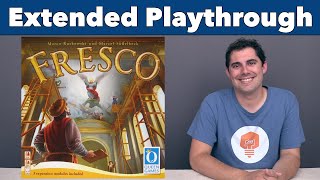


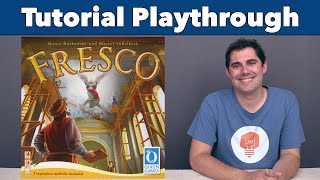




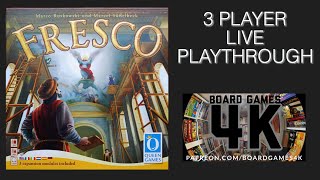


Fresco Deep Dive
What the Community Thinks About Fresco
Fresco stands out as a beloved yet often underappreciated gem that reviewers consistently praise for its elegant design and strong thematic execution. Across multiple playthroughs and analyses, board game reviewers highlight the game's ability to blend accessibility with meaningful strategic depth. Unlike many games that stumble in theme implementation, Fresco weaves its Renaissance church restoration setting seamlessly into its mechanics, creating an experience where the theme and gameplay reinforce each other rather than working against one another. Reviewers note that while Fresco may not have achieved the mainstream recognition of contemporary releases, it deserves consideration as a standout title that exemplifies thoughtful game design.
Core Mechanics That Define Fresco
Wake-Up Time Selection and Mood Management
The most distinctive mechanic in Fresco is its elegant solution to turn order and resource availability. Each round, players simultaneously choose when to wake up (5, 6, 7, or 8 AM), which determines turn order for the entire round. This seemingly simple decision carries significant consequences. Waking up early guarantees first pick at the market and other desirable actions, but forces players to pay premium prices for paint and results in unhappy apprentices who work less efficiently. Conversely, sleeping in allows cheaper paint purchases and improves worker morale, but sacrifices strategic positioning. This wake-up mechanism perfectly encapsulates Fresco's design philosophy: every meaningful advantage comes with a trade-off. The mood track directly impacts how many apprentices players control each round, creating a delicate balancing act where players must decide whether early action priority or worker efficiency matters more for their current position.
Simultaneous Action Selection with Asymmetric Information
After determining turn order through wake-up times, players engage in simultaneous action selection behind hidden screens. Each player deploys apprentices to five different action locations: the market, cathedral, portrait studio, paint workshop, and theater. This simultaneous reveal element creates meaningful tension and strategic planning. Players must predict what opponents will do without knowing their intentions, leading to moments where careful plans unravel because a competitor took the apprentice placement a player expected to use. The hidden information combined with simultaneous selection means downtime remains remarkably low even with full player counts, as everyone makes their decisions at the same time before resolving actions in turn order sequence.
The Fresco Experience
Beautiful, Breezy Gameplay with Strategic Depth
Reviewers consistently emphasize Fresco's gorgeous aesthetic paired with surprisingly quick play despite its strategic richness. The game genuinely looks inviting on the table, with the cathedral fresco gradually revealing itself as players paint tiles throughout the game. Players describe the visual satisfaction of watching the artwork come together and the tactile pleasure of mixing paints from primary colors into blended hues. The pace remains snappy (typically 60-90 minutes for the full game), keeping momentum high despite the available decision space. This balance between eye-catching components and swift gameplay makes Fresco appealing to both experienced gamers and those new to the hobby, as neither group finds themselves bogged down by rules complexity or excessive downtime.
Interactive and Dynamic Decision-Making
The game thrives on player interaction without devolving into direct confrontation. Rather than explicitly blocking opponents, players navigate a system where their choices influence what options remain available for others. The bishop mechanic adds another layer of interaction, as players can spend money to move a bishop pawn before painting, gaining bonus victory points if the bishop sits adjacent to or on their chosen fresco tile. This creates subtle strategic tension: should you spend money to improve your position, or invest in paint quality? Should you try to position the bishop for your benefit or force opponents into less optimal plays? The paint blending system further encourages player engagement, as watching which colors opponents mix provides crucial information about their painting plans.
What Makes Fresco Stand Out
Thematic Integration Without Mechanical Compromise
Fresco achieves what many games struggle with: its theme does not feel tacked on. The apprentice mood system directly reflects the realistic concern that workers forced to wake early would become unhappy. Paint mixing flows naturally from the game's core loop rather than existing as a separate subsystem. The portraits available for commission thematically make sense as commissioned work painters would undertake to generate income. Even the turn order mechanism derived from wake-up times feels narratively justified rather than arbitrary. Reviewers appreciate that designer Marco Ruskowski and Marcel Süßelbeck avoided the trap of adding chrome that distracts from gameplay. Instead, they created a system where theme and mechanics dance together, making the Renaissance fresco restoration feel grounded rather than cosmetic.
Elegant Simultaneous Action Selection System
The simultaneous action selection combined with turn order determined by wake times creates a design elegance that other games attempt but rarely achieve as cleanly. This system solves multiple design challenges simultaneously: it keeps downtime minimal, it creates meaningful player interaction, and it generates narratively sensible turn order. Rather than arbitrary player order rotation or complicated tie-breaking, the mechanical reality that early risers (with first choice of actions but unhappy workers and expensive resources) oppose late sleepers (with happy workers and cheap resources but later action resolution) creates organic tension. Players face real strategic choices about how much they value position versus efficiency, and these choices change each round based on game state.
Potential Drawbacks
Analysis Paralysis Risk and Planning Complexity
While the decision space in Fresco generally feels manageable, some reviewers note that players prone to analysis paralysis may struggle with the simultaneous action selection phase. Since apprentice placement happens behind screens before any actions resolve, players must plan multiple turns ahead, deciding not just what they want to do this turn but where they want the bishop positioned and what paint combinations they need. For players who naturally overthink, the hidden information requirement and need to predict opponent behavior can lead to extended decision times. The paint mixing system, while elegant, requires understanding the probability that available paint combinations will satisfy desired fresco tiles, adding another layer of calculation for analytical players.
Limited Variance in Expansion Modules and Scaling
Reviewers acknowledge that Fresco ships with optional modules that allow players to adjust difficulty and complexity, which is commendable design. However, some note that these modules feel more like difficulty knobs than fundamentally new gameplay experiences. The game's balance with two players differs noticeably from its balance at three or four players, and while this is not necessarily a flaw, players seeking consistent experience across player counts may find this jarring. Additionally, some players report that playing with the advanced module variants feels more like extra bookkeeping than meaningful strategic expansion, suggesting that the core game captured the designers' vision most effectively.
If You Enjoy Fresco
Players who love Fresco often gravitate toward other games that blend elegant mechanisms with thematic coherence. Vasco da Gama offers similar strategic depth through its unique worker placement system combined with turn order mechanics, though it plays more drily and abstractly. Wingspan appeals to the same audience that values gorgeous components and accessible gameplay combined with strategic options. For those drawn to the aesthetic and Renaissance setting, Subterra and other games with strong visual design provide similar table presence. However, reviewers most frequently recommend Fresco to players who appreciate mediumweight euros with simultaneous action selection, suggesting games like Agricola, Caverna, or other Uwe Rosenberg designs as natural progressions for those seeking deeper gameplay while maintaining the balance Fresco achieves.
What Reviewers Are Saying
"It's such a cool mediumweight Euro with a beautiful art aesthetic out on the table. It's just a fun experience and I'm looking forward to playing more of Fresco because it's got some really cool ideas."
— Getting Games
"The theme is very well implemented. Fresco has the theme is pretty strong. You're taking these paints and you're mixing them, and you're painting, and there's that satisfaction to it."
— BoardGameWarriors
"Fresco is definitely a kind of game that you want to introduce to people that are new to board games. It's an excellent introduction, but I think it doesn't have a lot of staying power, whereas it's a game that is fun because you're taking these paints and mixing them and painting, and there's that satisfaction."
— BoardGameWarriors