/pic7070521.jpg)













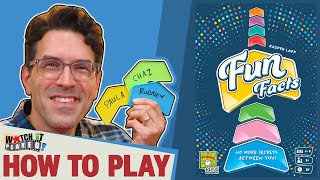








Fun Facts Deep Dive
What the Community Thinks About Fun Facts
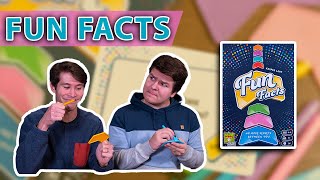
Fun Facts has quickly become a favorite among party game enthusiasts, with reviewers praising its ability to spark conversation and deepen player connections. Designed by Caspar Lapp and published by Repos Production, the game takes a clever approach to personal questions and cooperative ordering that creates an experience feeling fresh even after multiple plays. The Board Game Garden calls it a standout party game, while Totally Tabled tempers that enthusiasm with notes about card quality. The overall consensus is that Fun Facts delivers genuine fun and surprising insights into the people you play with.
Core Mechanics That Define Fun Facts
Written Answers and Secret Numbers
Each round begins with one player drawing a question about personal preferences or behaviors. Players privately write their answer as a number on the back of their arrow tile, whether it is rating how much they enjoy abstract art on a scale of zero to one hundred or estimating how many hours of sleep they get per night. This secrecy is crucial: no hints, no clues, only honest answers written in silence. The variety of question types ensures that some rounds feel deeply personal while others introduce unexpected angles about familiar friends.
Cooperative Ordering Without Communication
Once all answers are written, the real challenge begins. The first player places their arrow on the table, answer side down. Going clockwise, each remaining player must decide where their arrow belongs in an ascending sequence, without speaking to anyone. If you think your number falls between two existing arrows, you place yours there. If you believe yours is highest, you put it on top. The first player gets one final chance to move their arrow before all tiles are revealed. When flipped, the team scores points for every arrow that landed in correct numerical order, turning a quiet guessing exercise into a shared puzzle.
The Fun Facts Experience
Learning New Things About Your Circle
The game's emotional core lies in what happens after the reveal. Reviewers consistently highlight the joy of discovering unexpected details about people they thought they knew well. Answers often spark conversation and laughter, turning a simple numeric ordering puzzle into a vehicle for genuine connection. The Board Game Garden notes that the game excels at helping players understand preferences they might never have discussed otherwise, creating moments of surprise and insight that linger long after the final score is tallied.
Variable Card Quality Requires Curation
Not every question in the deck works equally well for every group. Some cards are beautifully universal, while others depend heavily on shared experiences or knowledge. Questions about personal habits can fall flat with groups where such details are common knowledge rather than mysteries. Players often find themselves naturally filtering the deck before playing, which is perfectly acceptable and does not diminish the game's appeal. In fact, this flexibility lets groups tailor the experience to their own dynamics and comfort levels, which is part of why the game travels so well across different tables.
What Makes Fun Facts Stand Out
A Cooperative Game That Builds Trust
Unlike competitive party games that pit players against each other, Fun Facts aligns everyone toward a shared goal. This cooperative structure removes the sting of failure and replaces it with collective investment. The challenge is not to beat your friends but to understand them well enough to predict their answers. This shift in dynamic makes the game feel less like a trivia gauntlet and more like a collaborative exploration of your group's personalities. The experience becomes memorable not because someone won, but because everyone learned something about everyone else.
Elegant Simplicity Hides Depth
On the surface, Fun Facts is wonderfully straightforward: write a number, guess where it fits, reveal the answers. But this simplicity masks a game rich with psychological play and group dynamics. Knowing your friends well becomes both a blessing and a curse. You might confidently place an arrow, only to discover that someone surprised you in ways you never expected. The game rewards genuine self-knowledge and empathetic thinking about others, favoring players who have paid attention to their friends' quirks and preferences over time. Each play teaches something new, whether about the game, your friends, or yourself.
Potential Drawbacks
Limited Card Pool and Replayability Ceiling
The deck contains a finite number of questions, and some do not work universally. A meaningful share of the cards may not land well depending on your specific group, particularly if players know each other extremely well. After extensive play with the same group, cards that once sparked fascinating discussion become predictable. The answer pool eventually runs dry, though this can be mitigated by creating custom questions. It is worth noting that this limitation is far more pronounced with established gaming groups than with new or casual players who are still learning about each other.
Spatial Requirements and Component Handling
Fun Facts requires clear table space for arranging arrows in a visible line, which can be awkward in casual settings like living rooms where players are scattered across furniture. The arrow tiles need room to be placed, seen, and rearranged without knocking over drinks or other objects. While not a game-breaking issue, it does mean Fun Facts works best around an actual table rather than perched on a coffee table or armrest. This minor logistical friction is worth accepting given the game's otherwise excellent portability and quick setup.
If You Enjoy Fun Facts
Players drawn to Fun Facts might also appreciate The Mind, another cooperative game that removes traditional communication but challenges groups to sync their thinking. Wavelength offers a similarly social experience where players work together to interpret clues and align their interpretations on a hidden scale. Those who love the party atmosphere and group-psychology angle should explore Just One, another cooperative word party game from Repos Production that rewards reading your fellow players. Each of these games rewards table presence and genuine understanding of the people you play with, while maintaining the collaborative spirit that makes Fun Facts so easy to bring to the table.
What Reviewers Are Saying
"This one, just playing a few times, I can already tell that this is going to be one of our go-to party games. It is just so much fun. You each have your little arrow, and on the other side you're answering for these different cards, so you get to learn new things about everybody at the table. That is my favorite party game so far this year."
— The Board Game Garden
"I think I really, really enjoyed this one, except for some of these cards. The questions on these cards were not all great. I would say about a third of these cards in this box actually worked for the situation. Otherwise it was quite enjoyable; we had a great time with it."
— Totally Tabled
"I'm sure you know some facts about your friends, but this game is going to help you discover the best ones, the fun facts. Not only that, this is a cooperative game, so you're all working together to get the best score."
— Watch It Played