/pic6305717.png)
Game Info
Year
2021
Players
1-4
Age
13+
Playtime
70 min
Collection
Your Tier
Loading…
Mechanic profile
Not enough video data yet
Vibe profile
Not enough video data yet
Description
In G.I. JOE Deck-Building Game, you and your fellow players will lead teams of G.I. JOE soldiers on missions to stop Cobra's dastardly plans! Each player starts the game with a meager deck that will grow more powerful as you recruit veterans from the G.I. JOE team, requisition gear, and field new vehicles. This fully co-operative game pits you against increasingly dangerous missions to save the world. This core set begins your journey with everything needed to play, but be prepared for more JOEs and missions to come!
—description from the publisher
Featured Videos


Ask a Rules Question
All mentions
Browse transcript mentions, sentiments, pros/cons, mechanics, topics, quotes, and references.
Total mentions: 8
This page: 8
Sentiment:
pos 8 ·
mix 0 ·
neu 0 ·
neg 0
Showing 1–8 of 8
Video xSyF6GgxHwE
The Dice Tower Top List at 13:18 sentiment: positive
video_pk 99976 · mention_pk 278180
Click to watch at 13:18 · YouTube ↗
Overall sentiment (raw)
positive
Pros
- Strong cooperative experience
- Effective player aid system
- Engaging scenario-based missions
- Good fit for G.I. Joe fans
Cons
- Rulebook is 'a little tricky to get through'
- May be perceived as just a reskin of other deck builders, but is unique
Thematic elements
- G.I. Joe, military, fighting baddies, going on missions
Comparison games
- Transformers Deck Building Game
Mechanics (from transcript analysis)
- Cooperative deck building — Players cooperatively build decks to fight baddies and go on scenario-based missions.
- die rolling — Players roll dice to determine success on missions.
- Player Aid — Players can jump into other players' missions and use their abilities to help.
- scenario-based missions — Uses scenarios to determine objectives and plots.
Video topics + discussion points
No key topics recorded for this video.
Quotes (from this video)
- You You sure you up to it? Maybe try that game to the left instead.
- Oh, my goodness, this needs red lens technology to read it.
- This is mom's favorite game. She'd be really sad if this low.
- Look at me, I'm the King of New York.
- Yeah, that's what we do when we're playing King of Tokyo, King of New York, King of Monster Island and King of Tokyo Duel.
- I'm wearing cargo shorts, so yeah, it definitely fits in my pocket.
- This is the best way of playing and I like playing the thief.
- The Crew is 52. That rhymes.
- Well, there we go. We're halfway done. Smooth sailing from here on out. Nothing but great games to come.
References (from this video)
No references stored for this video.
Video PrgsagI2E6c
Watch It Played News at 4:44 sentiment: positive
video_pk 90272 · mention_pk 240986
Click to watch at 4:44 · YouTube ↗
Overall sentiment (raw)
positive
Pros
- Renegade Games has been putting a lot of energy into their IP field deck builders recently
Cons
none
Thematic elements
- stopping Cobra's dastardly plans
- Cooperative experience pitting players against increasingly dangerous missions
Comparison games
- Power Rangers Deck Building Game
- Transformers Deck Building Game
Mechanics (from transcript analysis)
- Cooperative — A fully cooperative experience that pits you against increasingly dangerous missions to save the world.
- Deck Building — Players start with a mega deck that will grow more and more powerful as you recruit veterans, requisition gear, and field new vehicles.
Video topics + discussion points
No key topics recorded for this video.
Quotes (from this video)
- everything was going okay until the fire nation attacked
- you know like thanos or zordon from the power rangers who essentially is forcing teenagers to fight his intergalactic war when all they wanted to do was learn karate
- i burn water
- my dark and lonely thoughts
- seriously it's a cultural blind spot in my world
- what the romans do indeed do what the romans do
- the game that people wouldn't stop tweeting me about
- so many tweets
- yes yes to this all of that those words that's whole paragraph
- i don't know what that means but my guess is they're like a group of people who don't like the queen or something
- who keeps on ruining your monologues
References (from this video)
No references stored for this video.
Video qO1tDRtmflw
Grant Lyon New Releases at 5:46 sentiment: positive
video_pk 88879 · mention_pk 235174

Click to watch at 5:46 · YouTube ↗
Overall sentiment (raw)
positive
Pros
- crossover with Transformers
- fun mix of content
- lots of cards
- lots of content
Cons
none
Thematic elements
- G.I. Joe vs Cobra
Comparison games
- Transformers deck building game
Mechanics (from transcript analysis)
- crossover — this is also a crossover with the Transformers deck building game that they have
- Deck Building — deck building games which you know heavily focused on cards
Video topics + discussion points
No key topics recorded for this video.
Quotes (from this video)
- how many times can we say the word expansion expansion
- this adds Elsa Scar and Buzz Lightyear to the game
- The False Baron set adds six additional luminary options for ilat which brings new strategies and surprises to your experience
- I've met people that have ilac tattoos that's how much they like the game
- it's a semi-cooperative game where you are trying to work together and get off an island you are trying to build a raft and get off the island but you got to be able to feed everybody and if you can't you can vote to kill somebody
- you're doing it with dice and I love push your luck stuff
- these are escape room type of games
- you will be destroying components folding things ripping things stuff like that so it is essentially a one-time use only game
- this is the culmination of a trilogy of cantaloop books games book one two and three
- I don't think you should be jumping into this one if you haven't played the other ones because there is a story line that um you know brings them all together
- scotland yard the sherlock holmes edition and this essentially serves as the 40th anniversary edition of scotland yard
- one of the most well-known games with hidden movement in it it's sort of popularized the sub genre of hidden movement
References (from this video)
No references stored for this video.
Video qhGDMbC-08U
Meet Me At The Table Top List at 0:38 sentiment: positive
video_pk 85781 · mention_pk 220544

Click to watch at 0:38 · YouTube ↗
Overall sentiment (raw)
positive
Pros
- Provides difficult missions with unknown complications.
- Satisfying deck streamlining
- Brings tension to solo games.
Cons
none
Thematic elements
Comparison games
none
Mechanics (from transcript analysis)
- Deck Building — The game is described as a deck builder where players buy cards to the top of their deck. It also features retiring starting Joes to streamline the deck.
- dice resolution — The cards have dice resolution for their actions.
- Mission Completion — There are missions to complete and players can attach weapons and use transports.
Video topics + discussion points
No key topics recorded for this video.
Quotes (from this video)
- I find that when I play games solo, I really enjoy having a reason to come back to them over and over again. And those campaigns are one of the best ways to get me to come back and play a game.
- Almost every single concern I had with the original Sleeping Gods was fixed in Distant Skies.
- As of this recording, I've yet to find a game that provides a better sandbox adventure.
- I just love how this game makes you feel clever as you find ways to defeat multiple threats in one turn.
- Although the game may look cute, the puzzles in the scenarios are no joke.
- Each scenario takes less than 20 minutes, so it's easy to get to the table as a solo player.
- Arkham Horror, the card game, is by far the best narrative driven campaign on this list.
- So many scenarios, I chuckle to myself on how clever a mechanic they used or a thematic tying that worked so well.
- With the revised boxes coming out now, it is easier than ever to pick this one up and give it a try.
- All of a sudden, Awaken Realms designed Dragon Eclipse, and now my dreams have come true.
- I cannot get enough of the puzzly and tactical combat, which is the backbone of this game.
- When you have the embers of a forsaken star expansion for Zia Legends of a drift system, this game becomes an epitome of a campaign sandbox game.
- The joy of leveling up your ship, running away from the scoundrel and racing the merchant for fame never gets old in a universe that's always changing in an unexpected ways.
- With the theme Lord of the Rings, the first thing that comes to mind is working together to defeat a common goal. That is exactly what Lord of the Rings the card game is about.
- I will never tire with finding synergies between different heroes or different cards and continuously appreciating the scenario design and how it challenges the players.
References (from this video)
No references stored for this video.
Video tjEq2tTvjIE
Ryan and Bethany Board Game Reviews Review at 0:07 sentiment: positive
video_pk 62323 · mention_pk 154828
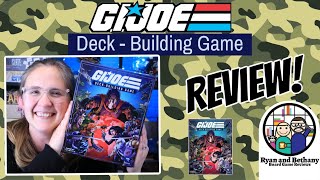
Click to watch at 0:07 · YouTube ↗
Overall sentiment (raw)
positive
Pros
- Cooperative deck-building with meaningful card upgrades and group missions
- Strong thematic integration with nostalgic GI Joe characters and era
- Progression and pacing create a satisfying escalation of difficulty
- Multi-use cards provide flexibility and strategic depth
- Rule variations (expert mode) offer extended replayability
Cons
- Rulebook and setup can be confusing or unclear; some flubs noted by players
- Memorization and setup quirks can slow down play and cause missed steps (e.g., flipping complications)
- Nostalgia-dependent appeal may not land for all players
Thematic elements
- Array
- G.I. Joe universe, 1990s-era action/military missions
- episodic, mission-based cooperative
Comparison games
none
Mechanics (from transcript analysis)
- Character Leadership and Promotion — Players start with leaders in their deck and can pay costs to promote them, upgrading capabilities during the game.
- Cooperative Actions — Some missions are group missions where all players can contribute to the objective.
- Cooperative Group Missions — Some missions are group missions where all players can contribute to the objective.
- Deck Building — Players start with weak starter cards and acquire new cards to add to the top of their deck, shaping future draws.
- Dice Rolling — Missions require dice to resolve; each card contributes dice; successes are on stars, failures on circles; rerolls can occur via certain cards.
- end-of-turn effects — Certain effects trigger at the end of a player's turn, requiring attention to multiple card interactions.
- Expert mode — There is an optional expert mode with additional cards that increase difficulty for advanced play.
- Multi-Use Cards — Many cards have multi-use capabilities, usable for different effects or strategies.
- Story Progression and Finales — Missions are structured into acts with finales; advancing through acts leads to a final finale and potential victory.
- Threat Tracker and Complications — A global threat meter rises and can cause complications; completing or failing missions affects the tracker and can trigger enemy reinforcements.
Video topics + discussion points
No key topics recorded for this video.
Quotes (from this video)
- this is of course a deck building game so we're going to start with a weak deck of just kind of some basic starter cards
- start with a starting leader in your deck we've got you know some of these classic leaders
- we're going to roll five dice
- all the players on the table can help out with this
- the threat tracker ... if we ever get to the very very top we lose the game
- end of turn you need to look around and see if any of the cards are going to kind of do any effects at the end of your turn
- multi-use cards ... you can use it for this or that
- this game ramped up brilliantly
- this playing this game brought out so many of those old classic memories i forgot i had
- if you like deck building and if you like gi joe this is kind of like almost an instant buy for you
- emotional roller coaster
References (from this video)
No references stored for this video.
Video XFYr2pBp6xM
The Discriminating Gamer Top 10 List at 8:31 sentiment: positive
video_pk 38559 · mention_pk 116152
Click to watch at 8:31 · YouTube ↗
Overall sentiment (raw)
positive
Pros
- Nostalgic IP with solid dice-based play
- Exciting, tense cooperative missions
Cons
- Dice outcomes can feel punishing or overly luck-driven
Thematic elements
- Team-based actions; dice-driven outcomes
- G.I. Joe universe; cooperative missions
- Story-like mission flow
Comparison games
none
Mechanics (from transcript analysis)
- Cooperative play with shared resources — Players share cards and pool dice to meet mission goals.
- Deck Building — Joes contribute dice through cards and abilities to influence missions.
- Deck-building with dice expansion — Joes contribute dice through cards and abilities to influence missions.
Video topics + discussion points
No key topics recorded for this video.
Quotes (from this video)
- I'm not ranking the games overall. I'm not saying these are objectively my favorite games in order.
- What do I think are the best dice rolling aspects?
- It's all about the dice rolls.
References (from this video)
No references stored for this video.
Video ghXLL3Tgj0k
The Discriminating Gamer Discussion at 43:22 sentiment: positive
video_pk 31545 · mention_pk 209378
Click to watch at 43:22 · YouTube ↗
Overall sentiment (raw)
positive
Pros
- fun IP-based, accessible to families
- strong pacing for light-to-medium play
Cons
- not as deep as heavier deck-builders
- IP reliance may limit appeal
Thematic elements
- team-based combat with IP licensing
- GI Joe universe
- IP-driven, accessible and fast-paced
Comparison games
- Star Wars: Deck Building Game
- Star Trek: Fleet Captains
Mechanics (from transcript analysis)
- Deck Building — players acquire and play cards to perform actions
- deck-building — players acquire and play cards to perform actions
Video topics + discussion points
No key topics recorded for this video.
Quotes (from this video)
- War Room is my favorite game of all time.
- Labels are helpful, you know, for organizing things.
- I love negotiation. Twilight Imperium, War Room, they all involve negotiation at a high level.
- Crowdfunding carries risk, but historically the risk has been fairly small.
- I don't write off FFG; they still surprise me with big expansions and IP integrations.
- Werewolf is awesome.
- Space Empires 4X is fantastic. It's one of my favorite games.
- Blood on the Clocktower is a great social deduction game; it intrigues people and changes the room.
References (from this video)
No references stored for this video.
Video 9fIEkV8q_rI
Board Game Coffee Rules Teach at 0:00 sentiment: positive
video_pk 11274 · mention_pk 91122
Click to watch at 0:00 · YouTube ↗
Overall sentiment (raw)
positive
Pros
- Clear, approachable rule set with a strong emphasis on teamwork and communication.
- Rich thematic integration via story/misson structure and complication mechanics.
- Dynamic lineup and hangar management that creates shared strategic decisions.
- Flexible first-game setup providing a guided path into complex mechanisms.
Cons
- Rule depth can be daunting for new players; non-intuitive components (story, complications) require careful setup.
- Game length and downtime can escalate in larger player counts if players over-plan or discuss at length.
- Managing multiple card types (transports, officers, battalions) may be confusing without prior exposure.
Thematic elements
- Team-based counter-terror/covert operations era GI Joe missions; cooperative rescue and interdiction.
- A global Cobra containment operation with Joes racing against a ticking threat on a mission-based, story-driven board.
- Story-driven with acts, complications, and branching mission events; modular story deck shapes play.
Comparison games
none
Mechanics (from transcript analysis)
- Cooperative Game — Players collaborate to complete missions and manage shared resources (the lineup, hangar, threat meter).
- cooperative play — Players collaborate to complete missions and manage shared resources (the lineup, hangar, threat meter).
- Deck Building — Players recruit cards to improve their personal decks; new cards replace or augment starting capabilities.
- deck-building — Players recruit cards to improve their personal decks; new cards replace or augment starting capabilities.
- Dice-based missions — Missions require rolling dice whose quantity depends on Joes, transports, and skill bonuses to meet or exceed difficulty.
- End Game Bonuses — Various effects resolve at end of turns and rounds, influencing the threat meter, mission outcomes, and lineup.
- End of turn and end of round effects — Various effects resolve at end of turns and rounds, influencing the threat meter, mission outcomes, and lineup.
- Hierarchy of mission types — Side missions vs. group/story missions; group missions can involve multiple players while side missions are individual.
- Recruitment phase — Players spend recruitment points earned from cards to recruit new cards; transports go to a hangar rather than to discard.
- Scenario / Mission / Campaign Game — Side missions vs. group/story missions; group missions can involve multiple players while side missions are individual.
- Story and act structure — Story mission deck divided into acts; acts trigger card renewal, complications, and act progression.
- Threat meter — A round-based track that advances each round; reaching the top space triggers a loss condition.
Video topics + discussion points
No key topics recorded for this video.
Quotes (from this video)
- the gi joe deck building game is played in rounds
- the threat meter increases by one space every round
- you recruit classic joes and vehicles to improve your deck
- remember have fun, keep gaming be social
References (from this video)
No references stored for this video.
Transcript Navigation
Showing 1–8 of 8