/pic7377352.jpg)
Game Info
Year
2023
Collection
Ratings
Creator Score
Mechanic profile
Not enough video data yet
Vibe profile
Not enough video data yet
Description
General Orders: World War II pits competing commanders against each other in a tug of war for control over a crucial Second World War battlefield, either in the mountains of Italy or the islands of the Pacific. Players strive to seize crucial strategic assets that unlock special abilities, and prevent their opponents doing the same. Balance the desire to gain these advantages with the need to secure supply lines, ward off aerial assault and artillery barrages, and protect your vulnerable headquarters in this compact and elegant two-player game.
—description from the publisher
Featured Videos


Ask a Rules Question
All mentions
Browse transcript mentions, sentiments, pros/cons, mechanics, topics, quotes, and references.
Total mentions: 12
This page: 12
Sentiment:
pos 9 ·
mix 0 ·
neu 1 ·
neg 0
Showing 1–12 of 12
Video FnRwI7WSzaM
Rolling Dice & Taking Names Discussion at 32:35 sentiment: positive
video_pk 103772 · mention_pk 299955
Click to watch at 32:35 · YouTube ↗
Overall sentiment (raw)
positive
Pros
- No-brainer purchase at $35.
Cons
- Credit card issues with the point of sale system at the booth.
Thematic elements
Comparison games
none
Mechanics (from transcript analysis)
Mechanics unknown.
Video topics + discussion points
No key topics recorded for this video.
Quotes (from this video)
- Mortal Kombat 11 Versus Deck we played that game when it first came out as a ccg many many many years ago
- we took a flyer called Builder High we're going to report back on this it was very interesting
- so I was like oh that's a good thing that we stayed and got that
- we got to do an exciting demo of a new ccg style game coming from asthma Day called altered
- instead of beating each other down no you're not but there are a lot of very similar elements between this and Star Wars unlimited
- the art is some of the best art I've ever seen in a c game in a very long time
- it's just a very uh fancy fasy colory it's very bright and it's gorgeous don't get me wrong but it's not my cup of tea
- we're kind of wondering about those QR codes we talked about you can scan those into their application so that you can track who owns what card
- if that sounds wild it is we can't fully wrap our minds around it but is a odd business model that you want to keep an eye on
- J con the big things were the three card games
- it was given to me by Rainer and it's a candy from from uh cck was it C I think I think so and he just said when you try it there's going to be he just said wait for it
- it's salty that's different oh it's licorice it's licorice but salty
- I don't like black licorice but this isn't this doesn't taste like there's that salty on the top
- I do not like licorice at all at all
- hey y'all thanks for listening and thank you so much for helping us get to 300 episodes
References (from this video)
No references stored for this video.
Video AGVdT5DT_CQ
Rolling Dice & Taking Names Review at 22:38 sentiment: positive
video_pk 94426 · mention_pk 257296
Click to watch at 22:38 · YouTube ↗
Overall sentiment (raw)
positive
Pros
- Fast-paced gameplay
- Tight decisions
- Two-sided board adds variability
- Deterministic combat with strategic card play
- Quick to set up and play
- Good for two players
- Small box, inexpensive
Cons
- Lighter on theme
- Can be difficult to get with limited copies
Thematic elements
- Area control, worker placement
- World War II theaters
Comparison games
none
Mechanics (from transcript analysis)
- Area Control — touted as is as a quick playing area control game that's driven by worker placement.
- Combat — The battling is pretty straightforward too you move in on somebody's territory... compare the Defender rolls a die based on that value on the dice it could be either zero one or two the opposing Army then has to remove that number of pieces.
- Hand Management — draw some cards and these cards will change outcomes based on the action you're taking if you're moving troops or doing a bombardment or maybe repositioning or um recruiting more troops onto the board those cards can come into play.
- Variable board — there's two sides of BL both play totally different... on the land side you got paradrop where you can just pick a spot and and drop people in Behind Enemy Lines.
- Worker Placement — The core mechanic of work replacement is an obvious subtraction from the choices available to the generals at the time.
Video topics + discussion points
No key topics recorded for this video.
Quotes (from this video)
- best laid plans go to poooo
- Mayhem in the skies
- I split you choose
- The goal of the game G be the first to get eight tentacles and complete the cosm octopus
- this honestly could have been a deck of cards
- this is card driven
- this is totally reinvigorated our interest in ashes
References (from this video)
No references stored for this video.
Video IjG6cPxxm1w
Watch It Played News Segment at 2:01 sentiment: positive
video_pk 88877 · mention_pk 235160
Click to watch at 2:01 · YouTube ↗
Overall sentiment (raw)
positive
Pros
- Intriguing design team and publisher
- Quick playtime (around 30 minutes)
Cons
none
Thematic elements
- tug of war for control over a battlefield
- crucial Second World War battlefield (mountains of Italy or islands of the Pacific)
Comparison games
none
Mechanics (from transcript analysis)
- Area Control — Striving to seize crucial strategic Assets in order to unlock special abilities or while you of course attempt to prevent your opponent from doing the same.
- defense against attacks — Defend against aerial and artillery attacks that are coming for you and your precious HQ.
- Supply line management — As you try to manage and secure your supply lines.
- Worker Placement — This is a worker placement game.
Video topics + discussion points
No key topics recorded for this video.
Quotes (from this video)
- The heroes and maps are also compatible with regular unmatched so that's cool as well
- This looks a lot like another here's more game expansion instead of a here's a whole new area you now have to manage.
- The artwork I think looks awesome
- I thought writing this script was time consuming well thank you I guess it's a matter of perspective
References (from this video)
No references stored for this video.
Video hFxr-g5nSrQ
Meeple University Top List at 30:51 sentiment: other
video_pk 88440 · mention_pk 233143
Click to watch at 30:51 · YouTube ↗
Overall sentiment (raw)
Cautiously anticipated
Pros
none
Cons
none
Thematic elements
- World War II
- World War II
Comparison games
none
Mechanics (from transcript analysis)
- Worker Placement — Described as a 'tight worker placement'.
Video topics + discussion points
No key topics recorded for this video.
Quotes (from this video)
- Rats of Wurtzburg by Cranio Creations so it is a worker placement game it is by Simon luani which we love the games
- Footprints by chili fox games so we love come together from last year yep yeah that one was a real hit for us big hit for me it was in my top five by the same designer and publisher Footprints so this is going to be good
- general orders World War II by Osprey games the fourth one because it was at demo it's demo and then followable at chenon but they sold out and I heard good things about it it's a great to player game but it's got World War II theme not the theme that I would usually kind of like attracted to but because there so many things so many people like oh I recommend this game it's very tight worker placement uh taco war worker placement so there you go general orders
References (from this video)
No references stored for this video.
Video dKMi0BYIGi4
Meeple University Unboxing at 30:36
video_pk 88193 · mention_pk 232014
Click to watch at 30:36 · YouTube ↗
Pros
none
Cons
none
Thematic elements
Comparison games
none
Mechanics (from transcript analysis)
- war game — Crossover war games and like Euro crossover war games.
Video topics + discussion points
No key topics recorded for this video.
Quotes (from this video)
- This is one of the big Euro releases from the Essen it's really good we both really enjoy it especially me I think
- It's really fun. It feels like it's very satisfying engine building.
- Competitive relaxing holiday in Japan.
- The design is actually the movie maker or film maker based on the movie and they make the board game out of it
- viral virual what is it called hang on virual revolution virual revolution
- this is Studio H this is the biggest box game I think I've seen from Studio H
- this seems really interesting it's it's I think this was the one from the movie so the design is actually the movie maker or film maker based on the movie and they make the board game out of it
- a good looking map always makes me uh picks my interest
- it wasn't on my list as an anticipated list but I picked it up
- this is a waterfall park
- look at this uh there was a common board and you are a color frame and you place it and then you gain the TOs of the building and you can negotiate to each other to gain the building that you want to score points
- the points is comes from the money that you have you have to buy stuff and then you goate
- those are the games please do let us know which one that you like to see the most or the ones that you actually got either from ENT or pre-order or anything like that and let us know what you think of them hit the like button if you've been enjoying it hopefully you have an awesome awesome day everyone thank you so much and see you next time bye
References (from this video)
No references stored for this video.
Video RAKRRy3-GMQ
Grant Lyon Top 10 List at 5:29 sentiment: positive
video_pk 88123 · mention_pk 231531
Click to watch at 5:29 · YouTube ↗
Overall sentiment (raw)
positive
Pros
- lighter war game
- playable in 40 minutes or less
- lots of thinkness and strategy
- feels like a bigger game than it is
- strategic outsmarting opponent
- cool special abilities
Cons
- two-player only
Thematic elements
- war
- World War II
Comparison games
none
Mechanics (from transcript analysis)
- Area Control — or control the most spots for points at the end of four rounds
- Hand Management — to get you cards that do cool special abilities
- Worker Placement — it is a worker placement game where you are placing down these workers to get you advance actions to get you paradrop actions to get you cards that do cool special abilities
Video topics + discussion points
No key topics recorded for this video.
Quotes (from this video)
- This is the closest to a card game on this list
- There are these really cool little magazine tiles and the magazine tiles are getting you points at the end of the game in different ways
- I think that's just a really cool way to do an auction to have to arrange your hand in a specific way before we even start drafting at all before we start bidding at all
- This was also my top two-player Only Game of the Year
- Every card that can be purchased by one side or the other can also be destroyed by the opposing side before that person can buy them and add them to their deck
- I constantly have to agonize over whether I want to spend my resources to hurt you or to buy a card that helps me
- There is a board a little board element to this game where there is a force and the force is sort of going back and forth between either side
- I had a bet with my brother that I could hit 10,000 subscribers by the end of the year and it looks like I am going to lose that bet
References (from this video)
No references stored for this video.
Video VkdAvPOJnTg
kovray Top 10 List at 14:03 sentiment: positive
video_pk 87963 · mention_pk 230684
Click to watch at 14:03 · YouTube ↗
Overall sentiment (raw)
positive
Pros
- Deep strategy with timing and action sequencing
- Smaller box with a lot of game
Cons
none
Thematic elements
- Area-control with battlefield actions and sequencing
- World War I era
Comparison games
- War games (implicit)
- overboss (none)
Mechanics (from transcript analysis)
- action_seqencing — Back-and-forth actions with timing to control areas; cards influence actions.
Video topics + discussion points
No key topics recorded for this video.
Quotes (from this video)
- "it's got like a campaign esque feel where you're trying to land in different airports"
- "it's a hidden Cooperative game"
- "it's like a elevated tic-tac-toe type situation"
- "a patchwork light"
- "you can sabotage your opponent's board"
References (from this video)
No references stored for this video.
Video SzWQwq8oDrU
BoardGameCo Other at 2:03 sentiment: positive
video_pk 80419 · mention_pk 195684
Click to watch at 2:03 · YouTube ↗
Overall sentiment (raw)
positive
Pros
- Excellent game, fantastic, highly recommended
- Very clever
Cons
- Doesn't get pulled off the shelf often
Thematic elements
- World War II
Comparison games
none
Mechanics (from transcript analysis)
- Worker Placement — Described as a "two-player worker placement game."
Video topics + discussion points
No key topics recorded for this video.
Quotes (from this video)
- I did not love this one. I I drastically prefer Hey, That's My Fish.
- This felt like a less fun version of Hey, That's My Fish.
- I thought the game was very dry.
- This was very charming. I I like what the game was doing as far as the real-time speed nature of trying not to be the last one holding the bag when everything goes bust, while also trying to collect sets of cards through real-time live trading. This was very fun.
- I was very impressed by how well the game is designed. Uh ultimately it was it was fine to play a few times and then move on from it.
- This was very solid uh going along with Triangulation and Decrypto. It's another one of those clue intercepting games, uh, but done very differently.
- Biggest complaint I have against it is I'm just keeping too many of these games and I can't have all these small box games be everything.
- It's cute. It's fast. It's thematic. I've enjoyed this one, but this kind of real-time game is just not overall my jam.
- Basically, it's a fun charming game. I'm just not overly uh enthused by it.
- Vestige is a great game. I think I just prefer Vindication.
- Vindication will almost always get picked over Vestige each time.
References (from this video)
No references stored for this video.
Video nhrMP9MW4Pw
Meeple University Discussion at 11:08 sentiment: neutral
video_pk 70567 · mention_pk 231693
Click to watch at 11:08 · YouTube ↗
Overall sentiment (raw)
neutral
Pros
none
Cons
none
Thematic elements
- War game
- World War I
Comparison games
none
Mechanics (from transcript analysis)
- Worker Placement — A competitive worker placement game with a hex grid.
Video topics + discussion points
No key topics recorded for this video.
Quotes (from this video)
- It's essentially a travel version of basic Azul.
- It's a very quick game, only a four round game.
- This is a solo pinball game.
- This is the most brutal two-player Ticket to Ride I've ever played.
- It's a tile placement game with a dexterity finale.
- It's a light game, very much a two-player filler.
- The way some of the different mechanisms will interact at higher player counts will vary.
References (from this video)
No references stored for this video.
Video itGDhJQTHO8
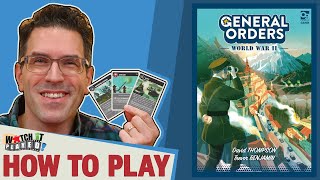
Watch It Played Rules Teach at 0:13 sentiment: positive
video_pk 64104 · mention_pk 157589
Click to watch at 0:13 · YouTube ↗
Overall sentiment (raw)
positive
Pros
none
Cons
none
Thematic elements
- military strategy involving control of spaces and supply
- World War II
- instructional tutorial with setup and gameplay explanation
Comparison games
none
Mechanics (from transcript analysis)
- advance action — Move in-supply troops into adjacent spaces controlled by you or adjacent to controlled space.
- barrage — Choose a target space up to three connected spaces away and roll two dice to determine casualties.
- commanders on action icons — Assign a commander from Reserve to an action icon and resolve its effect.
- Conflict resolution — Resolve combat after advancing; defender rolls dice; bursts remove attackers; casualties return to reserves; space contested until resolved.
- operation cards — Draw cards from operation deck; time icons determine when they can be played; red/black timing; can re-roll with cards; discarded after use.
- paradrop — Place two troops from reserve into a target space via the paradrop icon; cannot target HQ or restricted spaces.
- plan — Assign a commander to planning spaces; draw operation cards and manage color-token influences.
- reinforce — Place one commander from your reserve onto the support board; place troops from reserve into controlled, supply spaces; limit of five troops per space.
- round progression — End-of-round processes include advancing a round marker; color-based order of play in the next round.
- star scoring & victory — Victory points earned for stars in supply spaces after four rounds; HQ losses end game instantly.
- Supply — A space is in Supply if there is a connected path back to your HQ.
- takeoff and air battles — Planes move through air zones; takeoff action places planes into air zones; air battles resolved like land battles with dice.
Video topics + discussion points
No key topics recorded for this video.
Quotes (from this video)
- if you lose control of your headquarters you lose the game
- you earn a victory point for every Star in a space that you control that is also in Supply
- that's how you play the Alpine side of the board
- that's everything you need to know to play general orders World War II
References (from this video)
No references stored for this video.
Video 9RAj4xP9U2Q
kovray Playthrough at 0:18 sentiment: positive
video_pk 60422 · mention_pk 152818
Click to watch at 0:18 · YouTube ↗
Overall sentiment (raw)
positive
Pros
- Tense, close head-to-head play that often comes down to the last turns
- Card-driven mechanics add variability and strategic depth
- Clear emphasis on supply and reinforcements creates meaningful decisions
- Ambush and bombard options introduce dramatic tactical swings
Cons
- Replacement pieces observed during setup; minor production hiccup
- Rule/iconography can be a bit dense for newcomers
- Tracking supply, reinforcement limits, and activation rules requires attention
Thematic elements
- area control and reinforcement strategy driven by commander placement and supply lines
- World War II, tactical engagements on a modular map with a focus on command, movement, and supply.
- abstract tactical warfare with card-driven actions and intermittent combat
Comparison games
none
Mechanics (from transcript analysis)
- Area Control — Players vie for territorial control; each controlled space contributes to progress toward victory via stars and strategic positioning.
- area_control — Players vie for territorial control; each controlled space contributes to progress toward victory via stars and strategic positioning.
- barrage — A ranged attack action that, when triggered, rolls dice to determine hits in range, potentially removing multiple enemy troops.
- card_driven_actions — Tactical cards provide a variety of situational bonuses, modifiers, and the ability to influence initiative or other actions.
- commanders_and_move — Commanders determine where you can place troops and influence adjacent areas; only one commander may occupy a space.
- paratroopers / par_drop — Troops can be dropped onto the board from supply in designated zones, providing tactical surprise and reinforcement.
- reinforcement_and_supply — Troops can be reinforced from supply areas back to the headquarters, creating a supply network that enables stronger holds and push opportunities.
Video topics + discussion points
No key topics recorded for this video.
Quotes (from this video)
- and today we're going head-to-head in a playthrough of general orders World War II
- the other way to win is you wait until the fourth round
- the cards are what makes this game
- cut off the supply I think is one of the most essential aspects in this game
- one of my favorite parts about this game is how close it's always been for every time we've played
References (from this video)
No references stored for this video.
Video kMEfPh6Fmpg
Foster the Meeple Top List at 18:57 sentiment: positive
video_pk 192 · mention_pk 550
Click to watch at 18:57 · YouTube ↗
Overall sentiment (raw)
positive
Pros
- Compact box; approachable entry into war games
- Solid strategic depth within a small footprint
- Theme and mechanics align well for quick sessions
Cons
- May feel shallow to players seeking sprawling war games
- Less room for macro-long-term planning
Thematic elements
- Small-box, strategic war game
- World War II
- historical wargaming flavor
Comparison games
- Caesar Blitz / Caesar Dogfight series
Mechanics (from transcript analysis)
- Area Control — Control points on a compact map determine scoring
- Direct combat and support actions — Motions like mortars, air drops, and maneuvering onto hexes
- Worker Placement — Place workers to activate map actions
Video topics + discussion points
No key topics recorded for this video.
Quotes (from this video)
- If you're looking for an intro trick taking game this is probably not the one
- River of gold is one of my favorites
- it's set in like 1800s New Orleans
- There is a simple decision space in this it is a very small boox War themed game
References (from this video)
No references stored for this video.
Transcript Navigation
Showing 1–12 of 12