/pic5055631.jpg)
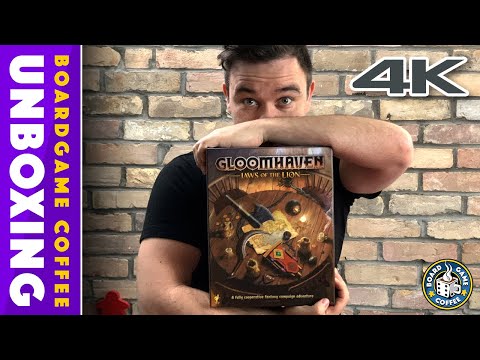
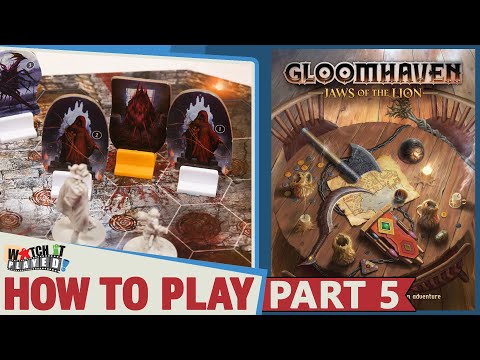






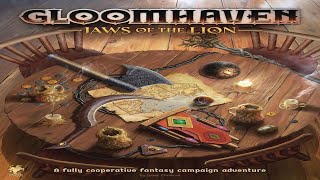

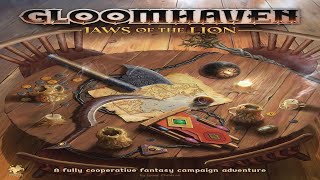
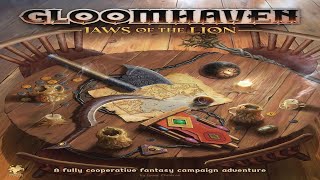
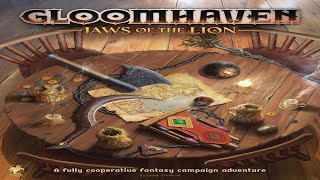
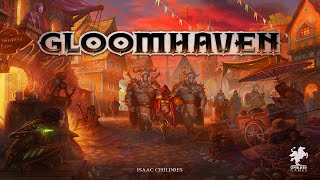
















Gloomhaven: Jaws of the Lion Deep Dive
What the Community Thinks About Gloomhaven: Jaws of the Lion
The board gaming community has embraced Gloomhaven: Jaws of the Lion as a transformative release that solves one of modern tabletop gaming's most pressing accessibility challenges. Reviewers consistently praise the game for achieving what many thought impossible: making the legendary Gloomhaven experience genuinely welcoming to newcomers while maintaining the mechanical depth that veterans demand. The game has earned recognition as one of the finest dungeon crawlers available, with particular appreciation for how it streamlines the base game without sacrificing what makes the system compelling. Players emphasize that Jaws of the Lion succeeded in opening "the floodgates for the masses" to experience tabletop dungeon crawling, transforming Gloomhaven from an intimidating commitment into an accessible entry point.
Core Mechanics That Define Gloomhaven: Jaws of the Lion
Card-Based Action Selection and Initiative
At the heart of Gloomhaven: Jaws of the Lion lies an elegant card-based action system that drives tactical decision-making. Each round, players simultaneously select two action cards from their hand and place them face down. When revealed, the cards determine both what actions a character performs and their initiative order, the lowest initiative number acts first. This creates a layer of prediction and planning, as players must anticipate opponent and enemy actions without seeing what others have selected. The system generates meaningful moments of tension and reward, particularly when skillful prediction enables perfectly orchestrated character combinations or when an unexpected initiative twist forces rapid tactical adaptation.
Elemental Mechanics and Synergistic Teamwork
Gloomhaven: Jaws of the Lion enriches its combat depth through elemental interactions that reward careful team coordination. Characters can create elements through their abilities, which other party members then activate for additional benefits, encouraging players to sequence their turns thoughtfully and work in concert. The four included classes (Red Guard, Hatchet, Demolitionist, and Void Warden) each interact with positioning and elements in distinct ways. The Red Guard pulls enemies and shields itself, Hatchet manages a mobile special weapon, the Demolitionist exploits walls and explosions, and the Void Warden controls enemy movement through psychic influence. These design choices mean that teamwork opportunities emerge organically throughout scenarios, with experienced players discovering increasingly sophisticated combos and synergies.
The Gloomhaven: Jaws of the Lion Experience
A Tutorial Woven Into Story
The game's most innovative structural element is its integration of comprehensive tutorial mechanics directly into the campaign narrative. Rather than overwhelming newcomers with a separate, disconnected learning module, the first five scenarios introduce rules progressively, teaching the fundamentals of movement and basic attacks before layering in elements, battle goals, and leveling systems. Each class includes special tutorial-marked action cards that explain mechanics in plain language. The scenario books themselves, printed with custom artwork rather than generic tile layouts, build the story around this learning curve so that acquiring mechanical understanding feels like narrative progression. This design approach keeps newer players engaged and invested while they learn, avoiding the false start that many traditional board games impose on their audiences.
Streamlined Campaign Structure and Component Organization
Gloomhaven: Jaws of the Lion demonstrates exceptional thoughtfulness in component design and organizational clarity. Unlike the original Gloomhaven's overwhelming component density, this game includes carefully curated content sufficient for 25 scenarios without excess. Each character's materials come packaged together in a single envelope, player board, attack modifier deck, reference cards, and action cards all in one place, eliminating the hunt for scattered elements between scenarios. The rulebook includes an alphabetized glossary, helpful blue-boxed explanations scattered throughout, and a how-to-play guide that unfolds mechanics page by page. The scenario books themselves serve as self-contained maps, eliminating the need for dozens of modular tiles. These organizational choices compound to dramatically reduce setup time and mental friction, allowing players to spend more time engaging with the actual game rather than managing logistics.
What Makes Gloomhaven: Jaws of the Lion Stand Out
Four Expertly Designed Character Classes
The four playable classes represent some of the finest character design in the dungeon crawler genre. The Red Guard serves as a straightforward but nuanced bruiser, hit things and pull enemies in, but with subtle synergies around adjacent enemy positioning and shielding mechanics. Hatchet brings cowboy fantasy to life as a ranged marksman who must manage a special favor axe that bounces between enemies and must be retrieved after thrown attacks. The Demolitionist specializes in explosive area damage, particularly when enemies stand next to walls and obstacles, creating satisfying moments where environmental positioning pays dividends. The Void Warden provides support through psychic domination, mind-controlling enemies to reposition them or make them attack their allies. Reviewers note that if these classes appeared in the original Gloomhaven's roster, each would immediately rank among the best options available. Newcomers find them approachable and quickly grasped, while experienced players discover surprising strategic depth as they learn to layer these mechanics together.
Beautiful Presentation and Thematic Integration
The visual presentation of Gloomhaven: Jaws of the Lion elevates the experience beyond pure mechanics. The scenario booklet's custom artwork for each location provides thematic color and helps players emotionally connect to the world, making progression through the campaign feel like an actual journey rather than advancing through a series of tactical puzzles. Monster standees are clearly designed and visually distinct, with monster attacks receiving proper names that add flavor to otherwise abstract combat mechanics. Character boards showcase stunning artwork unburdened by unnecessary UI elements, letting the character designs breathe. The included Eye of Sauron dice tower, an included accessory referencing the Gloomhaven IP's fantasy heritage, functions as both mechanical aid and conversation piece, taking roughly 15 minutes to assemble and fitting back in the box with minimal disassembly. These presentation choices work together to create an immersive experience that draws players into the world rather than forcing them to push through aesthetically flat mechanics.
Potential Drawbacks
Pacing Challenges in Extended Play
While Gloomhaven: Jaws of the Lion streamlines the base game significantly, scenarios can still stretch to three or four hours in length, particularly with four players managing multiple action options, numerous status conditions, and careful tracking of elite versus non-elite monster health. The decision paralysis inherent in card-based systems can cause downtime as players deliberate their two-card selections. The combat, though mechanically fascinating, requires consistent bookkeeping attention that can pull focus away from narrative beats. Reviewers who played extensively noted that the complexity of managing multiple simultaneous systems, hand management, position optimization, elemental tracking, and initiative prediction, transforms what should be fast-moving tactical encounters into extended deliberation sessions. Players comparing the experience to simpler dungeon crawlers like Descent or HeroQuest noted that those games' streamlined combat systems enabled better pacing, allowing story moments to punctuate gameplay rather than interrupt it.
Inverse Difficulty Curve and Scenario Variety Imbalance
Experienced players identified an inverse difficulty curve where late-campaign scenarios become significantly easier than early ones as characters accumulate powerful items and unlock advanced abilities. Newcomers face the unfortunate reality that their first scenarios present the game's greatest challenge, when they're still learning mechanics, while veteran play often feels lighter mechanically. Additionally, some scenarios feature objectives that feel purely mechanical, "kill everything" becomes common, occasionally paired with arbitrary secondary tasks that feel disconnected from the narrative. Reviewers noted that certain objectives feel more naturally integrated into the story (conquering Eisenard prevents respawning enemies; gathering specific characters in key locations reinforces narrative beats) while others feel like checkbox completion unrelated to the broader campaign arc. The game includes enough enemy variety, items, and events to sustain 25 scenarios without exhaustion, but some players felt the roster could have benefited from slightly more diversity to prevent late-game scenarios from feeling repetitive.
If You Enjoy Gloomhaven: Jaws of the Lion
Players who appreciate Gloomhaven: Jaws of the Lion should explore Frosthaven, the spiritual successor that carries forward many lessons learned from Jaws of the Lion into a new campaign with fresh classes and mechanics. The original Gloomhaven remains the natural evolution for those who complete the Jaws campaign and want a significantly deeper, more sprawling experience. Jaws of the Lion: Founders of Gloomhaven offers additional characters who can transition into Jaws of the Lion campaigns. For those seeking similar dungeon-crawling experiences with different mechanical frameworks, Descent: Journeys in the Dark provides narrative-driven fantasy adventuring, while HeroQuest offers a more streamlined alternative with less decision complexity but solid tactical combat. Pandemic Legacy shares the campaign structure and narrative progression that make Jaws of the Lion special, translated into a cooperative disease-fighting framework rather than dungeon crawling.
What Reviewers Are Saying
"Jaws of the Lion has done the unthinkable which is making Gloomhaven accessible. Considering just looking at the original game, playing through it has almost as much commitment as taking care of a small child. Essentially Jaws of the Lion has fixed Gloomhaven's problem of being so inaccessible and has really opened up the floodgates for the masses."
— Watch It Played
"The components of Jaws of the Lion have been carefully designed to make newcomer or veteran playthroughs as smooth as possible. The scenario booklet itself is built right into the game with custom art for each location, eliminating the need for dozens of modular tiles. This single decision dramatically reduces setup time and lets players focus on actual gameplay rather than managing logistics."
— watch it played
"I love Gloomhaven's gameplay, so the more I can get to actually playing Gloomhaven the better. And guess what, we've been playing a ton of Jaws of the Lion, we're actually further along in it than we are in the original Gloomhaven campaign. This is truly an excellent game that's an easy recommendation to a lot of different people."
— PlayingBoardGames