/pic1939442.jpg)
Guild Ball is a tactical miniatures game of skirmish soccer. Two coaches lead six players from their respective guilds in a race to 12 points--gaining 4 points for scoring a goal, 2 points for taking out a regular player, and 1 point for taking out a mascot (yes, one of the six players on each team is a mascot). During each turn, coaches alternate activating one player at a time. With a small number of models per side, Guild Ball delivers great depth of strategy, balancing ball control, attack, and defense.
The strategy in Guild Ball continues with the playbook system. Attacks are resolved by rolling dice against the target's defenses, but dice alone do not dictate the results of attacks. Coaches choose the results of attacks from their players' playbooks: the more successful hits an attack roll generates, the more options from the playbook the coach is able to choose from. Possible results include damage, tackles, knock-downs, pushes, dodges, and powerful character plays that can change the course of the game.
Guild Ball is also a game of resource management: coaches must manage influence and momentum. Teams start each turn with a pool of influence. In order for a player to attack, kick the ball, or perform a character play, the player needs influence. Coaches allocate influence to players at the start of the turn, so careful planning is required. Momentum is generated by special playbook results and successful passes. Momentum allows a coach to perform special actions, such as taking shots on goal, healing damage, or making out-of-activation dodges. Momentum remaining at the end of a turn also affects the initiative roll for the next turn.
Featuring 11 unique guilds, each with at least 12 players--and more guilds to be released--Guild Ball allows coaches to choose their own play style.


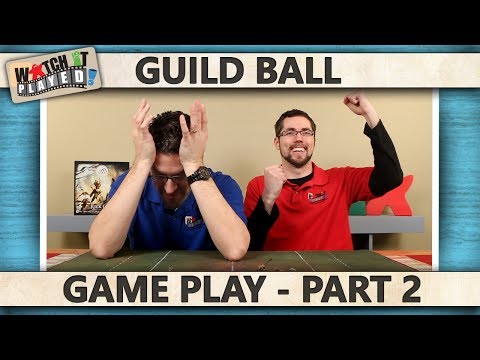
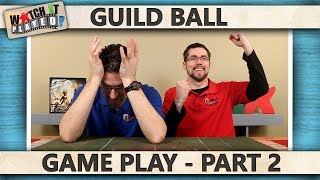
Guild Ball - Game Play 1
Guild Ball - Game Play 2
- New teams are plastic and preassembled
- Kits contain all necessary tokens, terrain, and goal posts
- Packaging is convenient and 'one-and-done'
Mechanics (from transcript analysis)
- Component Inclusion — Kits include tokens, 3D terrain, and 3D goal posts.
- miniatures — Mentioned as a miniatures game.
- Team building — Discussed acquiring new teams with all components included.
Video topics + discussion points
Quotes (from this video)
- Terrence is my favorite game of all time and so this going into space and being streamlined and tweaked a little bit I was just so excited
- it's gonna have to be distinguished from castle panic because when you look at the game yes it looks exactly like the castle panic board
- basically you can talk about that now where it's the complete opposite of what you do from pandemic legacy season one where the world collapse now at seventy years later you our own little outposts in the ocean trying to save humanity and you have to try to supply the world with these cubes and we'll call them that because that's what they are and that helps you trying to build the outpost from there so you're trying to rebuild the world not save it trying to rebuild it
- it was like an emotional experience it's like holy cow this one guy had an idea to have get some miniature gamers together who eventually decide I'm gonna make an RPG to the event that we have now with 70,000 people in it
- if we were to sum up Gen Con in one word what would it be I think it was just pretty darn neat very neat
- it's becoming the thing to do at GenCon it's nice it's like a way to cap off the show you know for me once that's over I'm ready to go home I've had my Gen Con
References (from this video)
- Good player interaction
- Fast-paced and strategic once cards are known
- Language independent due to symbols
- Nice artwork
- Good card stock
- Can be pricey for just cards and tokens
- Job fair where players recruit professionals for their guild.
Mechanics (from transcript analysis)
- action selection — Players can perform two actions per turn from a list of options: play a card, discard, or buy victory points.
- Card Drafting — Players take cards from a central row and can replace them with new ones.
- Hand Management — Players manage cards in their hand to play, discard, or buy victory points.
- Resource Management — Players use chapters from their guild hall to buy victory point cards.
- Set Collection — Players recruit sets of professionals for their guild and form chapters by collecting five of the same profession in different colors.
Video topics + discussion points
Quotes (from this video)
- Guild Hall job fair players are trying to recruit sets of Professionals for their Guild
- the first player to get 20 victory points wins the game
- the tax collector allows you to gain VP tokens equal to the number of tax collector in your guild Hall but you must Place one of your guild Hall Cards into another player's Guild Hall
- we really like this game and are giving it eight Guild members out of 10
References (from this video)
Mechanics (from transcript analysis)
Video topics + discussion points
Quotes (from this video)
- "Marty it's our anniversary month so it's going to take a lot to drag me away from you there's nothing that a hundred men or more could ever do just move on to the intro you're so unromantic."
- "I don't know whether people like them or not but hey you know we're gonna do a couple of them."
- "I one day i will pay you back for this."
- "A card laid is a card played."
- "Why did you pick round tokens that just floors me I don't understand that."
- "I'm an old man it's a little small on cards people i know i know you got to get it in there yada yada yada whatever but the font was kind of one of those um Ignacio odds they're intense that's what we're gonna call it now yeah the annossy fine big na SI phan which now for from here on that would be known as a small small fun yes."
- "Everybody knows your gay oh dude that was pretty I was nice was that their slogan you just make that up it's actually on his business card dude."
- "I cannot believe that somebody hasn't come out with one of these before now."
- "You need to drop start craft on them one down man just do that just come drop that on the table and say go for it."
- "It's just it's a nagging gnawing type of feeling I have but I'm going to let those that are way smarter than me to tell me whether or not I'm wrong or right after they have a whole bunch of plays in their pros at these euro games."
- "I'm a blind hog and found an acorn and saw it come it just hit me a blind hog finding an acorn yeah that's a common expression blind squirrel is blind hog Google a hog a hug are you serious why would a hog find ok for squirrels find a core is it a hug Hyundai corns too but ok for this show it's a blind squirrel finding an acorn."
- "Anthony was possessed devil you know anyway I try to tie it together and you messed me up but that's okay I'm good with that."
- "That's only one third of a 20-ounce coke in the hotel i'm at right now."
- "It was abysmal dude it was like being releasing a horror flick in the middle of summer which you picked which idea which was an idiot pic but anyway."
- "Our Marty obviously did not pay attention to that very well because he has been sharing it with every other guy and not me."
References (from this video)
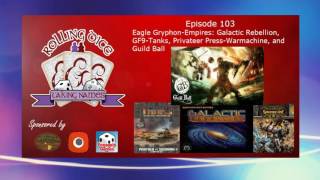
- Easy to understand core concept.
- Strategic depth with character abilities and tactics.
- Potential for growth with more plays and understanding of characters.
- Miniatures are small and require painting.
- Higher cost of entry compared to Tanks.
- Requires understanding keywords and team tactics.
- soccer with weapons
- War Machine
Mechanics (from transcript analysis)
- Ball Kicking and Passing — The primary objective is to get the ball into the goal, with mechanics for kicking and passing.
- Card-Based Stats — All necessary stats and abilities are found on player cards.
- Combat — Players can take out opponents, which is worth points.
- Influence Allocation — Players issue influence each turn, which characters spend to perform actions like running or charging.
- Momentum Points — Players gain and spend momentum points for actions like healing or attempting to score.
- team-based sports — Players control a team of six individuals (captain, players, mascot) in a competitive match.
Video topics + discussion points
Quotes (from this video)
- I think for the first time ever we are using an instrumental theme song that's right we have because I floundered gray liam coming up with a song title however this one marty is because of our five-minute initiative in this one cause of imperial the domination of it of the empire Plus this whole week they've been doing Star Wars own blows at tnt I don't know it's dynamite yeah whatever you know so I've been was another song we could use AC DC AC DC that's right but it was the fact that episodes 1 2 3 4 5 6 we're all on TNT in order each night so I would be picking up various ones you know periodically like Return of the Jedi was last night got to watch the end of it and so I was like man which ones were on all of them in order so 4 5 & 6 1 2 3 4 5 & 6 no try that again four five and six you can deny all you want to deny oh I shall deny but you played a video game Star Wars galaxy that included the Gungans therefore you cannot deny that they were part of the Star Wars lore yeah but what was the best thing about playing Star Wars Galaxies with the Gungans we got to slaughter them exactly that's right we took every mission where we had to go to the island and kill them and enjoyed every minute of it brings back a lot of memories doesn't it yeah it does fantastic game but we aren't here to talk about video games however i would like to an episode on video game sometime but not this time we have got a great show tonight because we are going to do something that we've been talking about for a little while well we're going to do in-depth analysis of three miniature games
- people might be wondering why you guys will talk about miniature games and I think the main reason why Tony is cause I feel that the gap between board games and miniature games has been shrinking over time and I think there's this feeling of intrepid ation or our little nervousness about a board game are getting into miniature games and we just want to talk about how actually easy it is to get into these games because a lot of current board games actually use some mechanics for miniature games yeah and it could also be you know getting smaller because every freaking game now comes with miniatures escalating the prices way up out of our price range
- well it's that time of year again where the fall TV shows start coming on and Marty I don't know what's on your radar I'm sure nothing on CBS I'll see assuming every CBS show either involves a doctor or lawyer or cop that's cool yeah yeah there you go so you had bull and all that other stuff but what are you going to watch this fall the only things that we have said we'll give a shot was a good place Ted Danson and kristen bell that's the comedy was made by some of the other people that we like we watched the first show thought it was ok we'll we'll keep trying and what's on your list we haven't really tried a lot yeah a good place i enjoyed watching that I gotta give it another chance I did watch speechless that I enjoyed I thought but I enjoy the actor who's in that and an actress who's in that and as well as the guy who plays um bow II from Big Bang he's in it that one was really fun we actually watched that one of vanessa was like who is that guy I said come on Vanessa fake and I said voice you oh yeah that's right for Big Bang yeah so what do you think of it I thought it's actually pretty good show it was a lot like I told Vanessa I was a lot like Goldberg's to me the mom and this shows a lot like the mom and Goldberg's but we'll continue to watch it i think that that was a dish and show another show that we're going to try is that ties that show for NBC timely as will be mother time travelers the teasers look good but we'll see what we'll give it a shot I've kind of gotten to the point with new shows I want to see how their ratings are over the first several weeks and if they're not bad I'm not even gonna invest in the entire met him because I know they're going to be gone right and I think for me the biggest disappointment so far but one more shot is MacGyver I had to give it a shot any reboots I'm just reluctant to give a shot too but it's a reboot on CBS I'm out
- I think some of the most competitive some of the best gamers I've ever played against were miniature gamers by far I've played the heaviest of heavy euros and the amount of brain power it takes to play those to me doesn't compare when you're playing against somebody that really knows how to play these miniature games because there's just so many decisions that need to be made
References (from this video)
- The host is hoping to feature it on the channel.
Mechanics (from transcript analysis)
Video topics + discussion points
Quotes (from this video)
- I don't think that was quite the watch it played intro
- I always come over here in a flustered mess
- we are wildly unprepared
- I don't know how I'm always prepared
- you don't usually bring a level
- pretty flat yeah usually pretty even keel yeah unlike your basement
- all they can't hear us chewing
- you're no longer locked up pep you're now I actually haven't updated the website to show that but you have been unlocked
- I can commit to you yes I can pay you next year
- pep will be working on watch of played next year with with me full-time which is fantastic
- it's not a cheap thing so so these kind of donations really help make that a bearable cost for sure
- I I won't bore you to tears with more and more thanks and gratitude
- you would have to order directly from the I think the the publisher themselves they don quite the retail system
- we ended up playing it you and I just on our own and we when we were done we were like oh this is um this deck builder but it's a little different
- question mark question mark question mark question mark
- do you have him in blonde
- I don't think they could join us
- I do not like this box but we're not here to play The Box we're here to play the game components however the tray and everything's really nice just that that box yeah it's a it's a decent tray yeah
- the most common problem faced by cavemen that's right your family getting eaten right of course
- rubber family no matter what happens while you're gone this family will always bounce back
- what if your family might try to rute a shred it's a legitimate threat
- meat fashion yeah yes because you have two problems you're hungry and you don't have any clothes
- you will become someone else's meat fashion
- well that was an experience that was many years ago
- I really felt like I was the only person playing board games in my area and certainly I was the only one obsessed with them that's for sure
- don't go to a publisher and say hey I'm going to start doing reviews can I have some free review copies because they get inundated with people asking for free stuff
- Fantasy Flight Games initially rejected Rodney's request for collaboration
- my face is essentially saying yeah I pulled that off
- we should always have Boggle on the table I think it'll Boggle their minds Bogle their minds
- I always like it's hard to pick a favorite cuz I I like different ones for different reasons but I'll try not to cop out on this one
- I think my basement is actually pretty nice it's just unfinished
- we're not going back to that we'll have to talk we're not changing the set in that direction I'm sorry
References (from this video)
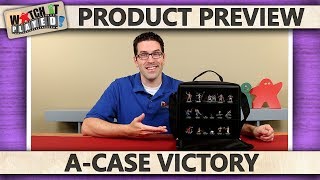
Mechanics (from transcript analysis)
Video topics + discussion points
Quotes (from this video)
- I don't review games but I don't mind reviewing products if I feel I can demonstrate what they do so you know exactly what you're looking at
- This was sent to me free of charge by the company for the purposes of being able to present this video
- The secret to how all of this works of course is that the are magnetized to the trays
- I have to say that aspect alone as someone who stored Miniatures in the past is a big relief
- This is not going to stop all movement of all your Miniatures no matter what size they are in weight obviously there are limitations
- it will survive a lot of rigorous movement here and that's the most important part for me
References (from this video)
Mechanics (from transcript analysis)
Video topics + discussion points
Quotes (from this video)
- I'm just saying literally 85% at least of the support that I receive financially for the show comes from people like yourselves who watch and say yeah I think I'd like to see more of this please
- I really want to show how cool and fantastic our hobby is and that hopefully I do that in a positive way
- you know I feel like I'm in a proper workspace I'm not staring at my recycling or empty paint cans or storage or freezing to death or freezing pep to death
- my heart right now is pretty full
- it's not a threat it's really just a practical reality that I I just feel is important to put out there
References (from this video)
- Dust Warfare
Mechanics (from transcript analysis)
Video topics + discussion points
Quotes (from this video)
- it was me Matt Marty and I forget the other gentleman's name it's bugging me that I'm forgetting his name he was fantastic he he was uh he worked with FFG and we played learned and played Great Western tra together Marty knew how to play and he taught us he did a fantastic job teaching the game
- so yeah so that that was another game I was really glad to have gotten a plan of anything else you want to mention before we move on from BG
- I love Jenga so of course I'm going to love what is wony what okay so it's uh it's just the these squares those little medium big squares but they're not quite squares the cubes are a little bit wonky you could say cuz they're like shaved on edges and so you can't really stack them properly you have to angle them
- that reminds me cuz the game came up uh Tada someone some asked about games that make make you laugh sure recently especially uh tadada and hex casters were great for making people laugh like the whole yes you know when you have to roll dice with your elbows on the table especially when someone had already played something on you and you have to have your elbows on your table and while you're doing something else yeah well you have the head on your table too and it's just impossible yeah that game's about being ridiculous super ridiculous yeah
- it's basically just looking around and seeing if there's vacant looks on everyone's faces like they don't understand what's going on especially if while I'm reading at the same time I'm not fully understanding the rules like if it's my first time reading through the rules trying to teach the game and I'm not quite fully understanding it so there's Factor number one if you as the teacher are like I'm not getting this working that's a great reason to box it up
- I actually enjoy these live shows a lot more than than doing the table talks enjoy them more you know what I mean they're a different kind of work like this we sit down I prepare stuff in advance takes time to set up but then when it's done it's done with table talk it's like we shot it for a couple of hours now we need to go edit that then we I likeed having the viewers be a part of it so then getting in their stuff and editing their content and it all is kind of time consuming not in a bad way but it's like you have to create time for that though if you're going to do it
- yes my hope is that we'll be able to have those uh available in the future as well
- I just played with Luke overcooked it's a couch only Co-op game and boy did we have a lot of fun our first play of it we were just cackling while playing that game
References (from this video)
Mechanics (from transcript analysis)
Video topics + discussion points
Quotes (from this video)
- hey everyone welcome to watch it played
- if you're a veteran it's basically just comedy
- everything you would normally need to play the game including a board to play on is included in the kickoff starter set
- we have an epic match up on the way between the Brewers and the Masons
- brick has an ability called counter charge
- this is going to hurt
References (from this video)
Mechanics (from transcript analysis)
Video topics + discussion points
Quotes (from this video)
- When I saw this, I really felt like there was a lot of bases covered.
- Exactly zero glue.
- It's the complete rule set. Uh and it can also be found online.
- The goal of the game of Guild Ball is to get 12 points. And you can do that in two different ways. Scoring points by taking out an opposing player is worth two victory points... And when you're able to score by getting the ball into the goal of the opposing team, that's worth four points.
- It's a game of alternating activations.
- The playbook is a very important aspect of guild ball. And even models that may have a similar stat line, if they have a different playbook, what they do on the table is going to be very different from one another.
- Momentum is a secondary resource in the game of Gild Ball, and it belongs to your whole team.
- So, you can pre-measure anything you want in Guild Ball. You can see what things are in range. You can make that plan and then execute it cuz it's more fun to do that than to make a plan, go to execute it, and be like, uh, just a little 16th of an inch away.
References (from this video)
- Guild rivalries settled on a pitch through a game of mob football.
- The Empire of the Free Cities
Mechanics (from transcript analysis)
Video topics + discussion points
Quotes (from this video)
- When I saw this, I really felt like there was a lot of bases covered.
- Exactly zero glue.
- It's the complete rule set. Uh and it can also be found online.
- The goal of the game of Guild Ball is to get 12 points. And you can do that in two different ways. Scoring points by taking out an opposing player is worth two victory points... And when you're able to score by getting the ball into the goal of the opposing team, that's worth four points.
- It's a game of alternating activations.
- The playbook is a very important aspect of guild ball. And even models that may have a similar stat line, if they have a different playbook, what they do on the table is going to be very different from one another.
- Momentum is a secondary resource in the game of Gild Ball, and it belongs to your whole team.
- So, you can pre-measure anything you want in Guild Ball. You can see what things are in range. You can make that plan and then execute it cuz it's more fun to do that than to make a plan, go to execute it, and be like, uh, just a little 16th of an inch away.
References (from this video)
- The neoprene mat and acrylic tokens are nice additions, though not strictly necessary.
- The figures were beautifully painted.
- The game includes everything needed in the kickoff starter set.
- Rules and character profile cards are available for free download.
- The game mechanics, like character traits and special plays, create interesting interactions.
- It's easy to forget rules during a first playthrough.
- Acrylic tokens and neoprene mat are separate purchases.
- sports
Mechanics (from transcript analysis)
- Activation — Models are activated one by one during a turn to perform actions.
- Character Traits — Unique abilities or rules that apply to specific characters, such as 'Family', 'Counter-Charge', 'Knockback', and 'Tooled Up'.
- Combat — Attacks involve rolling dice based on the character's skill and potentially receiving bonuses (e.g., from a charge). Defense involves rolling dice against the attacker's successes, with armor potentially reducing damage.
- influence — A resource spent by players to activate abilities, move, or perform actions, with each team generating a set amount per turn.
- Kickoff — A special phase at the start of the game involving kicking the ball, with modifiers for distance and scatter, and a bonus die for success.
- Knockdown — A status effect that can be applied to models, preventing them from using character plays and potentially affecting their activation.
- momentum — Points gained through certain actions (like successful passes) that can be tracked and potentially used.
- Movement — Models can jog (standard move) or sprint (increased move) using influence.
- passing — The ball can be kicked to teammates, with success granting momentum points.
- Pushback — Models can be moved a certain distance away from the source of an effect, like an explosion or a knockback ability.
Video topics + discussion points
Quotes (from this video)
- hey everyone welcome to watch it played
- if you're a veteran it's basically just comedy
- everything you would normally need to play the game including a board to play on is included in the kickoff starter set
- we have an epic match up on the way between the Brewers and the Masons
- brick has an ability called counter charge
- this is going to hurt
References (from this video)
Mechanics (from transcript analysis)
Video topics + discussion points
Quotes (from this video)
- hey everyone welcome back to watch it played
- this is going to be a quick news and updates video and at the end I'm going to have a contest to give away a game so stick around for that
- it's just going to be slight slight disruption to the recording schedule
- speaking of content a few hours from now at the time of this recording of course pep and I are going to be going live with another one of our live Q&A videos
- What if they included an optional add-on with another Kickstarter they're already running and that way the miniature is just added on to shipping they're already planning to do
- I just wanted to start by mentioning that for the last week I've been working on painting up some Miniatures for the game Guild ball
- I also need to say a huge thank you to our friends over at kolman you're not
- I love these guys I love their content and one of the benefits of having a platform which I'm very fortunate to have like this one with so many enthusiastic viewers is that I can occasionally come on here and plug something that I'm excited about and would love to see supported
- it says I am scorpy Marty one of the co-hosts of that podcast and I at the cool Min or not Expo last year and we were teamed up in a game of times up
- I know there's lots of things competing for your attention so I really appreciate any of the time that you do give to us
- to wrap up I'd just like to say a quick thank you to you thank you for watching this video and any of the other videos that we have on this channel
- you have to get your contest entries in by March 19th 2016 and we'll do a draw shortly after that
References (from this video)
Mechanics (from transcript analysis)
Video topics + discussion points
Quotes (from this video)
- hi everyone welcome back to watch it played my name is Rodney Smith this is going to be a very quick news and updates video primarily I just want to run the contest to give away this copy of fuse that we started a few weeks ago but I also want to give you a couple quick updates on the channel as well
- this is complex Euro game and it's probably going to be one of the most ambitious projects that I've worked on so the script is taking me a little longer
- although the paint jobs aren't perfect I think they'd be passable for some video I'm considering this game for a possible feature
- so what we've been doing lately is having table talk on a Tuesday table talk back on the following Tuesday and then a live Q&A on the Tuesday after that and then repeating that cycle
- not only do we answer questions but we also try to play a game or two talk about some games and just get up to some other General Shenanigans
- the winner of this watch it played contest is Benjamin Cocker congratulations Benjamin I'll send you an email get your mailing address and then ship this on to you as soon as possible
- I also forgot to mention I'm recording a video to talk about this the game canopy it's a new product coming to Kickstarter that will provide you an alternative way of carrying your games to game group or wherever you're trying to take them
References (from this video)

- Can start playing for free by downloading rules, templates, unit cards, and paper cutouts.
- Starter set includes pre-assembled and pre-colored miniatures.
- Models are becoming pre-assembled plastic in future releases, making them easier to get to the table.
- Kickoff starter set provides everything for two players to learn and play the complete game.
- Tournament-ready teams are provided in the box for immediate play.
- The game can be played with a shorter point goal or on a smaller board for an introductory game.
- Includes a complete rulebook and an introductory booklet.
- Video series is available to teach the standard game.
- Some figures require assembly and painting.
- Guild plots are not included with the starter set and are needed for the full game experience.
- New seasons can introduce new guilds or update unit cards, potentially requiring additional purchases (though cards can be printed).
- A rough and tumble sports miniatures game, representing what happens on the field and behind the scenes in the larger narrative of the game's story.
- Played between neighboring towns on feast days, leading to national level games between powerful guilds that use popularity to negotiate background deals and increase influence over the populace.
Mechanics (from transcript analysis)
- Ball Scatter — When a kick is successful, the ball can bounce and scatter. A scatter template is used, with direction determined by a die roll and distance also determined by a die roll. The player can reroll the scatter once if the initial kick was successful.
- Goal Scoring — Victory points are gained by kicking the ball into the opponent's goalpost.
- Guild plots — Special effect cards that players can use during a match, which are dealt and chosen privately.
- Health Points — Models have health points tracked on their character cards, which can be marked with a dry erase marker or managed with health point dials.
- Kicking — A player's kick stats determine how far they can kick the ball. Kicking involves rolling dice against a target number. Successful kicks have a controlled scatter mechanic, while failed kicks have an uncontrolled scatter.
- Movement — Players can move models a number of inches equal to the first value on their profile card under the movement stat. Movement can be in any direction, and direction can be changed during movement.
- passing — Players can perform a pass action, kicking the ball up to a distance determined by their kick stat. A successful kick requires a target number test (rolling dice equal to the kick value, needing a 4 or higher).
- Taking Out Players — Reducing an opponent's health points to zero forces them to be removed from the field, granting victory points. Taking out a mascot yields fewer points than a regular player.
- Team building — Players choose from different factions and custom build their team by selecting a captain, a mascot, and four additional players from the same guild. Union players can also be added to other guilds' teams.
Video topics + discussion points
Quotes (from this video)
- Guild ball is a rough and tumble Sports Miniatures game where each player will choose from one of several different factions and then custom build their own team which they'll use to rush pass and Bash their way to goals and domination.
- Guild ball which was something like North American soccer although with much more brutal tactics was in the history of this game's setting played between neighboring towns on feast days.
- The game represents not only what's happening on the field but also what's happening behind the scenes especially in the larger Narrative of the game story.
- The objective of Guild ball is to be the first team to score 12 victory points.
References (from this video)
- Terrain can be customized to represent various settings like ruins, town squares, or icy landscapes.
- Terrain rules are explained for open ground, rough ground, fast ground, obstructions, barriers, and forests.
- Guild plots add a layer of planning and scheming for guilds vying for power.
- Terrain is not recommended for the first few games.
- Guild plots are optional and do not come in the starter set.
- Line of sight is blocked through forests.
- Kicking from within or to a forest incurs a -1 die penalty.
- the planning and scheming of the various guilds that vie for power and wealth behind the scenes
Mechanics (from transcript analysis)
- Guild plots — Optional cards that players can use. Each player is dealt five plots secretly and discards two. When a requirement on a plot is met, it can be revealed to claim a reward. This represents behind-the-scenes guild scheming.
- momentum — Used to activate heroic plays. One plot allows a player to effectively get a heroic play for free by spending one momentum point and then gaining one back.
- terrain — Different terrain types affect movement and combat. Open ground has no effect. Rough ground imposes a -2 inch penalty to base and max move values during an advance, applied only once per advance and not affecting repositions. Fast ground grants a +2 inch bonus to base and max move values during an advance, applied only once per advance and not affecting repositions. Obstructions provide cover, imposing a -1 to Tactical ability for attacks against models benefiting from cover. Models can move over or stop on obstructions if there's room for their base. Barriers, like goalposts or buildings, also grant cover but block line of sight and cannot be moved into or placed onto. Forests are both rough ground and provide cover, but block line of sight through them and impose a -1 die penalty to kicks from or to within a forest, applied only once per kick.
Video topics + discussion points
Quotes (from this video)
- hi welcome back to watch it played my name is Rodney Smith and this is the final part in our continuing series to learn the two-player game Guild ball using the kickoff starter set
- for your first few games I don't recommend that you use terrain but when you're ready there are some terrain tokens included in this starter set
- the most important thing is that both players know what it represents
- just make sure before the game begins that players both agree on how the terrain will be treated
- you only need one shared deck between the players and you'll want them from the season that you're playing in
- if you have any questions about anything you saw in these videos don't hesitate to put them in the comments below
References (from this video)

- Momentum adds excitement and synergy.
- Multiple ways to gain and spend momentum.
- Counter-attacks add strategic depth.
- Teamwork actions enhance passing plays.
- Conditions provide interesting challenges and consequences.
- Cannot gain momentum when the ball is in own goal area.
- Counter-attack momentum point is lost if the model is unable to attack.
- Snap shot requires two net hits to score.
Mechanics (from transcript analysis)
- bleed condition — When a model is suffering from bleed, they will lose three health points. This condition is always removed at the end of the maintenance phase.
- bonus time — When resolving a target number test, after all modifiers to the dice pool have been factored in, a model can spend one momentum to add a die to their pool before rolling. May only be used and paid for once during each target number test.
- burning condition — Loses one health point during each maintenance phase that the condition is active and also loses two inches from both its base and max move values.
- come on mate — Costs two momentum points and allows a model to target another friendly model within eight inches and line of sight, who will then recover for health points or remove all conditions. A model can only benefit from come on mate once each turn.
- Conditions — Remain on a model until something removes them. If they cause damage, it is known as condition damage. Resolved during the maintenance phase.
- counter attack — After an attack or charge is declared against a model, that model can respond by spending one momentum point to declare a counter attack. After the initial attack is resolved, the target model may then make an attack against the original model if it's able. A model may only declare a counter-attack once per turn against each different enemy model that might attack it, spending a momentum point each time. A model may not declare a counter-attack against a counter-attack. Momentum points are not generated from Momentis playbook results chosen during a counter-attack.
- defensive stance — When a charge is declared against a model, the target may immediately spend one momentum to gain +1 defense for the duration of the charge.
- give and go — After a successful pass to a target friendly model, the active model may spend one momentum point to perform a dodge of up to four inches.
- glide — A model may spend one momentum point to move across rough ground without penalty for the rest of the turn.
- knocked down condition — Does not block line of sight, can't engage an enemy model, can't use any of its character plays, and can't have possession of the ball. If knocked down while it has the ball, scatter it with the standard scatter template. A model also can't make an advance or make a move by any means other than dodges or from a push. Suffer minus one to its defense. If a model forfeits its standard advance, it may remove the knockdown condition.
- momentum — Points collected that represent the building excitement of the game, the cheers of the crowd, and the growing synergy of players. Can be gained and spent in various ways. Earned by individual models but go into a team pool. A team will never generate momentum while they have a friendly model in possession of the ball anywhere within the area behind their own goal line, or if the ball is free within that area as the result of their own failed kick, a goal kick that deviated into this area, or if it was placed there for some reason by that team's controlling player.
- pass and move — After a successful pass to a target friendly model, the receiving model may spend one momentum point to make a 4-inch dodge.
- poison condition — Loses two health points during the maintenance phase. The condition is not automatically removed.
- Run the Length — After scoring a goal, the active model may spend one momentum point to immediately make a dodge up to four inches prior to the goal kick that will send the ball back into play.
- snap shot — After a successful pass to a target friendly model, the receiving model may spend two momentum points to immediately make a snap shot at the goal without spending any influence. Two net hits are required to score instead of the usual one. A screamer can be scored by rolling two sixes, gaining two momentum points instead of the usual one for a successful shot on goal.
- snared condition — Does not take damage during the maintenance phase but suffers minus one from its defense stat and also loses two inches from its base and maximum values.
- Take a Breather — Once during a model's turn, it may spend one momentum point to either recover for health or remove all of its conditions.
- taking out condition — Can occur when a model's health is reduced to zero or when it's forced involuntarily off of the pitch. If it was in possession of the ball, scatter the ball like you did for the knockdown condition. The model is then removed from the pitch and any other conditions it is suffering are removed as well. While a model is taken out, it can't become active and cannot receive or generate any influence for the team. Harmony will be able to return to the pitch during the next maintenance phase if the controlling player chooses to.
Video topics + discussion points
Quotes (from this video)
- my name is Rodney Smith and this is the next part in our continuing series to learn the two-player game Gill ball using the kickoff starter set
- momentum is something we've talked about before these are points that you collect that represent the building excitement of the game the cheers of the crowd the growing synergy of your players
- all of the previous ways we've looked at for spending momentum are considered their own actions but for the purposes of gameplay the following uses for momentum are not considered actions
- and those are the uses for momentum and don't worry you don't need to memorize these on the steam forage web site in the resource area for Gil ball you'll find these reference cards that list all the momentum options as well as actions and their modifiers playbook results the sequences of a turn and the various conditions a model can suffer which we'll learn about in detail right now
- and with that you now know the rules to momentum and conditions in the next and final video in this tutorial series to learn Guilbeau we're going to learn about guild plots and terrain
References (from this video)

- Tokens are included for sustained effects as a handy reminder.
Mechanics (from transcript analysis)
- character plays — Skills and abilities of players that come in three types: character, heroic, and legendary. Character plays are found on the front of a character's profile with a name and description. They can cost influence or a GB symbol. Heroic plays cost one momentum point and can only be used once per turn. Legendary plays can only be used once per game.
- Character Traits — These are listed on the back of profiles. Some are passive, always active or active under certain conditions. Others are active, meaning the player may choose to use them when listed conditions are met. Traits may not interrupt another action.
- heroic plays — These plays are found on the back of character profiles, cost one momentum point, and may only be used once per turn. They generally last until the end of the turn.
- legendary plays — These plays are also found on the back of character profiles and have no cost. They can only be used once per game, even if the model is taken out and returns. Effects last until the end of the turn.
- once per turn — A check mark in the 'OPT' column means the play may only be used once during a turn. An 'X' means it can be resolved several times if the cost is paid each time.
- sustained effects — Plays with sustained effects last until the end of the current turn. Tokens are used as reminders.
- target number test — Used to determine success for some plays, especially those paid for with influence. The number of dice in the pool is equal to the influence cost. A modifier applies for 'crowding out' (enemy models engaging). The target number is the defense value of the model being targeted. Some plays automatically succeed without a test, especially when paid for with GB symbols or targeting friendly models with influence.
- Targeting — Models must be within range and line of sight. Range can be a distance in inches, 'self', or 'P' (Playbook icon). Some plays can target other models within range even if not the original target of an attack.
- zone effects — Includes Aura (constantly active effect within range), Pulse (effect resolves only when triggered and ends immediately), and Area of Effect (AOE) (targets a circular zone on the pitch). AOE effects can be sustained or ongoing.
Video topics + discussion points
Quotes (from this video)
- hi welcome back to watch it played my name is Rodney Smith and this is the next part in our continuing series to learn the two-player game Gil ball using the kickoff starter set
- but until the next episode thanks for watching
References (from this video)

- Movement rules are clearly explained, covering various aspects like straight lines, changing direction, and obstacles.
- The three types of standard advance (Jog, Sprint, Charge) are detailed with their costs and benefits.
- Parting blows are introduced as a reactive combat mechanic triggered by movement.
- Repositioning movements like Dodges and Pushes are differentiated from advances.
- Detailed rules for ball possession, including how it's gained, lost, and scatters upon knockdown.
- Snap to rules for gaining possession of a free ball are explained, including tie-breaking mechanics.
Mechanics (from transcript analysis)
- Advance Conditions — When moving towards something, the distance to the target must always be decreasing. When moving away from something, the distance must always be increasing. Moving directly towards a target requires following an exact path from center point to target center point. Moving directly away follows the same principle of a precise line, always increasing distance.
- Ball Scatter — If a model in possession of the ball marker suffers the knockdown condition, the ball marker scatters. A standard scatter template is used, centered on the knockdown model, with the '1' pointing towards the active model's goalpost. A die roll determines the direction of scatter, and a second die roll determines the distance in inches from the knockdown figure's base, centering the ball marker on the target distance.
- Movement — Models always go in straight lines but can change direction at any point. Distances are measured from the nearest point on the edge of a model or marker's base. Models cannot move over another model's base and must choose a path around them.
- Parting Blow — If an active model leaves the melee zone or line of sight of an enemy model it is engaged by during an advance, that enemy model may immediately perform a parting blow. This is an attack that does not cost influence and grants a +2 bonus to the tack value (roll an additional two dice). Modifiers from ganging up or crowding out are ignored. Momentum points from playbook results cannot be generated. Only damage, knockdowns, or tackle results can be chosen. A model may suffer several parting blows but cannot continue movement if knocked down. Repositions (Dodges, Pushes) do not trigger parting blows.
- Possession of the Ball — When a model has possession of the ball, it travels with them. The ball marker is placed against the figure's base, but has no physical position on the pitch. The ball marker remains with the model throughout its movement. If a model is not engaged, it may give up possession of the ball by placing the marker within 1 inch of the figure. A model cannot regain possession within the same activation after giving it up.
- Repositioning — Any type of movement not classified as an advance, such as Dodges and Pushes. Dodges allow changing direction, while Pushes do not. If a push would result in running into an obstruction or another model's base, the push must stop. A push is not considered voluntary movement. Repositions receive no penalties or bonuses from terrain or ground unless otherwise noted.
- Snap To — A model that starts its activation or moves within 1 inch of a free ball may take possession by snapping it to its base. This can be done even if the model is not currently active if the ball is placed within an inch of it. A knocked down model cannot have possession of the ball. If multiple models are within 1 inch of a free ball when it is placed, they each roll a die and add their base kick value; the model with the highest total gains possession. Ties are resolved by re-rolling until possession is assigned.
- Standard Advance — At any point during a model's activation, it can perform a standard advance in one of three ways: Jog (no influence cost, move up to base move amount), Sprint (costs one influence, move up to max move value), or Charge (targets an enemy model within line of sight not currently engaging, costs influence, move in a straight line towards the target up to max move distance, ending engaged with the target and performing an attack with a +4 dice pool bonus. If the charge fails to end engaged, it is unsuccessful and the activation ends. A charge requires moving towards the target, not necessarily directly towards, and can navigate around obstructions.
Video topics + discussion points
Quotes (from this video)
- models always always go in straight lines but can change direction at any point
- if during an advance the active model leaves the melee zone or the line of sight of an enemy model that it is engaged by that enemy model May immediately perform a parting blow against it
- this is any type of movement not classified as an advance
References (from this video)

- Explains actions like movement, kick, attack, and special abilities.
- Details the process of attacking, including influence cost, dice pool generation, and modifiers.
- Explains line of sight rules and how terrain or other models can block it.
- Clarifies the concept of 'engaging' an opponent.
- Breaks down target number tests and how successes are calculated.
- Introduces the playbook and how net hits unlock results.
- Explains various playbook results like damage, push, dodge, knockdown, tackle, and character plays.
Mechanics (from transcript analysis)
- attack — A model can spend one influence to make an attack against an enemy model it is engaging. The attack dice pool is generated using the active model's current tactical ability (Tac) and may be modified by other effects.
- Character Play (GB) — A special ability that can be triggered using Guild Ball (GB) symbols from a model's playbook. Each GB symbol is tied to a specific cost and can trigger a corresponding character play.
- Damage — A result that reduces the target's health by a specific amount, potentially modified by other effects.
- Dice Pool Modifiers — Dice pools can be modified by effects such as 'ganging up bonus' (extra dice for friendly models engaging the target) or 'crowding out' (losing dice for each enemy model engaging the attacker, but the pool can never be less than one die).
- Dodge — A result indicated by an arrow pointing left, allowing the attacking model to move themselves up to the total distance indicated. Can change direction.
- Engaging — A model is engaged if the target is within its melee zone and line of sight can be established. Models can be engaged by multiple other models and can engage multiple models.
- Knockdown (KD) — A condition applied to a target model, represented by a token. Cannot be chosen if the target is already knocked down.
- Line of Sight — Line of sight must be established to target an enemy model, meaning a clear line can be drawn from the attacker's base to the target's base. This line can be blocked by terrain or intervening models.
- Momentous Result — Results with a colored, non-white background on the playbook that generate one momentum point for the team.
- Momentum Points — Generated by momentous results and represented by tokens. Can be used to trigger effects.
- Movement — Actions can include movement, kick, attack, or special abilities.
- Net Hits — The final number of successes after subtracting the target's armor value and any other modifiers. An attack succeeds if it generates at least one net hit.
- Playbook — A series of circled values on a model's profile card. Net hits unlock columns from left to right, and a player chooses a single result from the unlocked columns. Some results may have multiple effects.
- Push — A result indicated by an arrow pointing right, representing 1 inch of movement for the target model. Multiple push symbols add up to a total push distance.
- Tackle (T) — A result that allows the attacker to gain possession of the ball if the target model has it. Cannot be chosen if the target does not have possession.
- target number test — Many actions require a target number test, where dice rolled must equal or exceed a target number. For attacks, the target number is the target model's defensive ability.
Video topics + discussion points
Quotes (from this video)
- hi welcome back to watch it played my name is Rodney Smith and this is part three in our ongoing series to learn the two-player game Guild ball using the kickoff starter set
- but until the next episode thanks for watching
References (from this video)

Mechanics (from transcript analysis)
- Activation — Players take turns activating one friendly model at a time until all models have been activated once per turn.
- Conditions — Represented by tokens, these affect models, such as 'poisoned' which causes damage or 'taken out' when a model is removed from the pitch.
- icy sponge — A term representing treated wounds for models that have been taken out, allowing them to return to the pitch with adjusted health.
- influence pool — Generated by models on the pitch and goals scored, this pool of tokens is then assigned to friendly models to perform actions.
- initiative — Determined by dice rolls modified by momentum points, deciding the order of actions and turn phases.
- Momentum Points — Points gained by players that are added to dice rolls for initiative and retained for the next turn if not used.
Video topics + discussion points
Quotes (from this video)
- Now, I'm sure you'd like to dive right in, get on the pitch, pass the ball, knock over an opponent, and go for the goal. But first, we need to learn about the sequence of a turn.
References (from this video)

- Successful passes to friendly models grant possession and a momentum point.
- Successful shots on goal grant victory points and momentum points.
- Screamers grant two momentum points.
- Scoring grants bonus influence for subsequent turns.
- Goal kicks provide an opportunity for possession.
- Throw-ins are resolved via standard scatter.
- Shots on goal require spending momentum points.
- Unsuccessful passes result in ball scatter.
- Unsuccessful shots on goal result in ball scatter.
- Scatters can lead to interceptions.
- Scattering into the goalpost does not count as a score.
- A score ends the active model's activation immediately.
Mechanics (from transcript analysis)
- Ball Scatter — When a pass is unsuccessful, a kick scatter is performed using a template centered on the target model or spot, with an arrow indicating the direction of travel. A die roll determines the scatter direction and another die determines the distance. If kicking to a spot and successful, the player has the option to re-roll the kick scatter once. If kicking to a spot and unsuccessful, the initial scatter result is final. When a shot on goal is unsuccessful, a kick scatter is performed centered on the goal post, and the ball stops at the point of contact if the new ball path intersects the goalpost. If the ball leaves the pitch, it is placed on the center spot and a standard scatter is resolved as a throw-in.
- Goal Kick — After a team scores, the opposing team performs a goal kick. The ball is centered on any spot within 10 inches of their goal post and then a kick scatter is performed with the template's arrow pointing from the goalpost. The ball then lands at a scatter destination, and if within 1 inch of a player, that player can choose to snap the ball to their base to take possession.
- Interception — During a kick scatter, the closest model encountered within the new ball path (from the kicking model to the final resting place) may choose to take possession of the ball. This opportunity is given to each subsequent model within the path if the previous model declines, until the final spot. Interceptions can only be made on scatters involving the kick scatter template and not the standard scatter template. Goal kicks may never be intercepted.
- Kicking — The kick action can be made by an active model in possession of the ball and will either be considered a pass if it targets a friendly model or a spot on the pitch, or if it targets an enemy's goal post it's considered a shot. The kicking model must spend one influence, and if making a shot on goal, must also spend one of the team's momentum points. The target does not need to be within line of sight but must be within the model's kick distance. The ball path is 30mm wide. The number of dice used for the dice pool is based on the kicking model's base kick value, minus one die for each enemy engaging the model and one die for each intervening model within the ball path, but the pool cannot be reduced below one. A target number test of four or higher is required for success.
- Least Disturbance — When placing the ball marker, if the intended spot is on top of another model or terrain, it is placed as close as possible to the correct position without disturbing them.
- Modifiers to Kick Target Number — If the target is not within line of sight, add one to the target number test. If the kick is a pass to a friendly model, increase the target number by one for each enemy engaged with that model. If the kick is to an enemy goal post within 4 inches, it's called a 'tap in' and the target number is reduced by one.
- momentum — A team gains momentum points when a friendly model successfully passes the ball. If a shot on goal is successful, the team also collects a momentum point. Performing a 'screamer' (two or more sixes on a kick roll) grants two momentum points instead of one. Teams also get an extra influence point for each goal scored during the game, referred to as 'goal influence'.
- scoring — A successful shot on goal scores for the team. When a team scores, they gain four victory points and one momentum point. If the kick resulted in two or more sixes, it's called a 'screamer' and they gain two momentum points. If the active model scores during its activation, its activation ends immediately. The ball is then returned to the pitch with a goal kick.
Video topics + discussion points
Quotes (from this video)
- if your team hasn't gained any momentum yet that round you will not be able to take a shot at the opponent's goal
- any enemy model not engaging the kicking model but with any part of its base within that path is referred to as an intervening model
- for the kick to succeed After Rolling you'd need to see at least one result of four or higher
- if the kick is a pass to a friendly model as we're doing in this example then you would also increase the target number by one for each enemy engaged with that model
- if the kick is to an enemy goal post within 4 in of the model making the shot then this is called a tap in and you reduce the target number to roll by one
- when a team scores give them four victory points they also gain one momentum point and if their kicks Target number test resulted in two or more sixes in that role this is called performing a screamer and they gain two momentum points instead of one
- the closest model first encountered within the path whether friendly or otherwise may choose to take possession of the ball this is known as an interception
- if the new ball path would cause the ball to intersect with the goalpost for example if its final scatter point was here the new ball path would instead travel through the goalpost in that case it can't count as a score as the kick was ultimately unsuccessful but because the goal post is a barrier the ball will stop dead at the point it would make contact with it
References (from this video)
- Taking out opponent's players significantly impacts the game and provides points.
- Gaining momentum points fuels powerful abilities and turns.
- Activating character abilities like commanding aura enhances team performance.
- Scoring a goal provides a significant point swing.
- The return mechanic (takeote) can bring back key players and change the game state.
- Difficulty in hitting targets when the opponent rolls well.
- Armor can negate a significant portion of damage.
- Characters can be taken out of the game, reducing options.
- Getting 'knocked down' makes characters more vulnerable.
- Some characters might feel 'rusty' or underperform initially.
- Medieval fantasy sports
Mechanics (from transcript analysis)
- character abilities — Each character has unique traits and playbook actions that define their capabilities.
- Charmed Male — A trait that increases defense against melee attacks.
- Dice Rolling — Attacks and other actions are resolved by rolling dice against target numbers.
- Dodge — An action that allows a character to move a short distance, often to reposition or avoid attacks.
- Football Legend — A trait that enhances kicking distance and dice for kicking actions.
- Ganging Up — Attacking with nearby friendly models grants extra dice.
- influence — A resource spent to activate characters, perform actions, and make attacks.
- Knockdown — A condition that reduces a character's defense, making them easier to hit.
- momentum — A resource gained through successful actions, used to fuel abilities and powerful plays.
- Parting Blow — An attack made by a character when they are taken out of play.
- Player Elimination — Players can be taken out of the game, affecting the team's available actions and influence.
- poison — A condition that causes damage at the start of the maintenance phase.
- sprint — An action that allows a character to move further by spending influence.
- Takeote — A condition that allows models to return to play in the maintenance phase.
- Tough Hide — A trait that reduces incoming damage.
Video topics + discussion points
Quotes (from this video)
- hey everybody welcome back to watch it played my name is Rodney Smith and this is Pep McDonald and we're here here to conclude our playthrough of Guild ball
- Now that's going to activate tapper's commanding Aura so that means any friendly model within 4 in of Tapper is gaining plus one Tack and plus one damage on every Playbook result
- I think violence is the key to your sucess uccess here if you want to win this game
- Goal as usual with a goal I'm going to gain One new momentum Point as well as a new influence to spend during next turn's maintenance phase
- Oh that's a screamer it is you got two sixes not that it it's over but it is technically over but might as well finish it with a screamer
- well hopefully you have a good sense of how the game works and don't forget these are just two of the teams there's several other teams you can choose from as well and even within the teams you can swap different players in and out and change the composition
References (from this video)
- Exciting goal-scoring moments
- Strategic depth with character abilities
- Engaging player interactions
- Dice rolls can lead to frustrating misses
- Complex interactions between abilities
Mechanics (from transcript analysis)
- Activation — Players activate individual characters on their team to perform actions.
- attack — Actions used to inflict damage or conditions on opposing characters.
- Aura — An ability that affects models within a certain range, providing bonuses or penalties.
- Character Play — Unique abilities or actions specific to individual characters, often costing influence or momentum.
- Come on, Mate — An ability that allows a player to remove conditions from or heal a friendly model.
- Conditions — Status effects that can be applied to characters, such as knockdown or poison, which affect their abilities or stats.
- Dirty Knives — A playbook result that can apply poison or lower defense.
- Dodge — A movement ability that allows a character to move a set distance without triggering reactions from enemy models.
- Gang Up — A bonus to attack rolls when a character is engaged with multiple friendly models or when an enemy is engaged with multiple friendly models.
- Heroic Play — A special play that can be used by certain characters, often costing momentum, to gain additional benefits like extended kick distance.
- influence — A resource spent by players to activate characters and perform certain actions.
- Kick — An action used to pass the ball to another player or to attempt a shot on goal.
- momentum — A resource gained through successful actions or abilities, which can be spent on bonus actions or abilities.
- pass — An action to move the ball between players.
- Run the Length — A special move available after scoring a goal, allowing a dodge.
- Scatter — A mechanic that determines the random movement of the ball after a kick, potentially changing its final position.
- Singled Out — An ability that increases attack against a specific enemy model.
- Take a Breather — An ability that allows a character to remove conditions.
- Tough Hide — A defensive ability that reduces incoming damage.
Video topics + discussion points
Quotes (from this video)
- Hey everybody, welcome back to Watch It Played.
- This is uh this is devastating.
- Woo! I got it. Yes, you did.
- This plan has got so many parts.
- Well, that brings us to the end of another jam-packed actionfilled episode of Gil Ball.
References (from this video)
- Suggestion system from viewers leads to interesting plays.
- Player interaction and strategic decisions are highlighted.
- The game mechanics allow for complex interactions and surprising outcomes.
- Poison conditions stacking up can be detrimental.
- Knockdown conditions hinder activations.
- Player positioning and engagement are crucial and can be difficult to manage.
Mechanics (from transcript analysis)
- armor — A defensive stat that reduces the number of successful hits from an attack.
- attack — The action of trying to inflict damage or effects on an opponent's character.
- Charge — An action that allows a character to move and attack, often with bonus dice.
- Charmed Male — A defensive ability that grants bonus defense against male characters.
- Counterattack — An attack made in response to an opponent's action.
- Crowding Out — A bonus or penalty to dice rolls when adjacent to friendly or enemy models, affecting attack rolls.
- Dirty Knives — A specific playbook result that can deal damage, apply poison, and lower defense.
- Dodge — An ability allowing a character to move a short distance. Used defensively.
- Dodge (as a Playbook Result) — A movement granted by a playbook result, allowing a character to move away after an attack.
- Family Trait — A character trait that allows another character to use their stats.
- Ganging Up Bonus — A bonus to attack rolls when adjacent to friendly models.
- initiative roll — A roll made at the start of a turn to determine which player goes first.
- Knockback — An effect that pushes an enemy model away from the attacker.
- Knockdown — A condition that prevents a character from moving or acting normally until removed.
- maintenance phase — A phase at the end of a turn where ongoing effects and conditions are resolved.
- momentum — A resource used to fuel abilities, extra attacks, or remove conditions.
- pass — An action to move the ball to another friendly character.
- Playbook Result — Specific outcomes or actions that can be chosen from a character's playbook after a successful attack.
- poison — A condition that deals damage to a character at the start of their maintenance phase.
- Push — An effect that moves an enemy model a certain distance.
- Scatter — The rule for determining where the ball goes when dropped or fumbled.
- sprint — Used to move a character a certain distance during activation.
- Tooled Up — An ability that grants a bonus to attack or defense.
- Tough Hide — A defensive ability that reduces incoming damage.
Video topics + discussion points
Quotes (from this video)
- the suggestion actually we're going to merge with another suggestion we got from David Curl feels like we do that a lot
- gbhl wanted me to use my first action to do a dirty knives against brick but with the extra bonus provided by scum being nearby I don't think we're going to need to do that
- this is an interesting concept for people to be aware of certain Playbook results with ranged you can then use to hit other valid targets beyond the actual model that you initiated the attack with
- violence is the answer remember that in this case it might be
- your Brewers they so poetic
- it's trag
- I've been chipping away at you chipping I wish you were chipping I'm the one with a character named Mel and I've just been bashed over and over again I need your help guys
References (from this video)
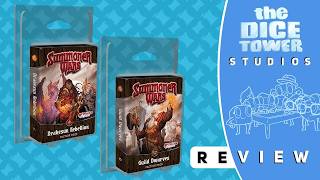
- Deep structural/deck manipulation with a distinct fortress focus
- One of the better common units in the game (Guild Defender) with utility
- Engaging concept for players who enjoy fortified play and deck-building elements
- Feels clunky at times; many card types can make the engine feel muddled
- Longer games and steeper learning curve; not ideal for new players
- Defensive fortification and deck-structure manipulation
- Fortified dwarven structures and siege-oriented play
- Castle assault/defense vibe with structural focus
- Forged
Mechanics (from transcript analysis)
- Blueprints and multi-structure synergy — Blueprints allow stacking and lowering costs for bringing out multiple structures.
- General unit-structure synergy — Units benefit from proximity to structures, enabling stronger defenses and pushes.
- Structure-centric positioning — Dwarves can manipulate and utilize structures for offensive and defensive advantage.
- Structure-driven deck and events — A deck built around structures, upgrades, and attached boosts; draw/play interactions differ from standard units.
Video topics + discussion points
Quotes (from this video)
- Flavor win is incredibly well done.
- The Drakeson Sun Rebellion may be the fastest faction ever in the game.
- 30 factions now. That's wild, folks.
References (from this video)
- Accessible gateway title mentioned as a broker in the hobby
- Not deeply explored in the transcript
- team-based tactical sports with fantasy twists
- fantasy sports-themed skirmish
- sporting narrative with character-driven teams
- Moonstone
- Gaslands
- X-Wing
- Marvel Crisis Protocol
Mechanics (from transcript analysis)
- team-based tactical play — coordination of multiple units/players with distinct roles
Video topics + discussion points
Quotes (from this video)
- not all miniature games are Warhammer 40K
- I hate you Games Workshop
- there's one out there for everyone
- I'm the hero that's right just this is your call to Adventure
- this is your call to the adventure
- this was entertaining for you I hope it was fun
- start with Marvel crisis protocol an amazing game super easy to learn
References (from this video)
- Fast-paced gameplay
- Accessible entry point for guild-based strategy
- High tactical depth and meaningful choices
- IP/licensing uncertainties affecting future support
- Rules complexity for new players
- Production quality and availability concerns
- Rivalry, teamwork, and strategic play between guilds in a competitive sports environment.
- Fantasy urban guilds compete in a street-based football/arena sport within a bustling fantasy city.
- Competitive sports narrative with guild-specific flavor and character archetypes.
Mechanics (from transcript analysis)
- dice-driven action resolution — Key actions are resolved with dice to introduce variability, risk, and swingy outcomes.
- Line of Sight — Movement and line-of-sight influence passing, tackling, and shooting opportunities.
- Role-specific abilities — Each guild has unique characters with special rules that shape tactics and balance.
- tactical positioning — Movement and line-of-sight influence passing, tackling, and shooting opportunities.
- team-based play — Players control a squad of models from the guilds and take turns activating figures for moves and actions.
Video topics + discussion points
Quotes (from this video)
- Guild ball is perfect for you it's fast paced there's lots of action tons of interesting choices and the best
- you're no longer prohibited from saying the words kill Paul or featuring the models of our now no longer supported property
- I must depart I have a mediocre board game to produce based on a popular video game franchise
- I hate you it's your fault I don't want you playing it
References (from this video)
- Fresh take on sports-themed skirmishes in miniature form
- Tactical team-building and player choice
- Community backlash over discontinuation and rule changes
- Perceived misalignment between IP strategy and consumer expectations
- Team-based sports with a strong IP and character focus
- Fantasy world sports with a gritty, competitive tone
- Sporting with a humorous, dark-edge flavor
Mechanics (from transcript analysis)
- ball-and-goal mechanics — Team actions and plays aimed at scoring goals while managing players
Video topics + discussion points
Quotes (from this video)
- I love Infinity, these Miniatures are metal and the heft feels tangible
- I have to have this transforming dog character
- Gaslands is basically Mario Kart but in tabletop form
- I still love Malifaux and the Neverborn—the Dreamer is so cool
- Stanley on a park bench—terrain can be a feature, not just a backdrop
- I was so irritated with Batman the Miniature Game because they released a new set and a whole new rule set