




Guillotine Deep Dive
What the Community Thinks About Guillotine
Reviewers tend to treat Guillotine as a light card game with a sharp sense of humor rather than a deep strategy experience. Avalon Hill's new edition, which reviewers describe as a visual refresh with largely the same play, has drawn most of the attention. Alex Radcliffe, BoardGameCo admits they owned the original for years without ever getting it to the table, and they say the new art is preferable to the old. Grant's GameRex describes it as one of the games that drew them into the modern hobby, and appreciates that the reissue leans into the tongue in cheek theme.
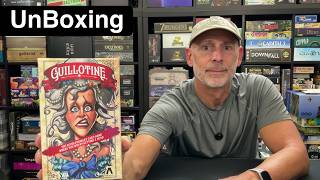
The Dice Tower is more measured. Tom Vasel, The Dice Tower finds the game silly and cartoonish, says there is little strategy involved, and suggests it is a fun time for players who want something silly but not a purchase they would make on their own. The Discriminating Gamer approaches the reissue as a first-time unboxing and comes away enthusiastic, calling it a small, light, fun game that will get laughs at the table. Ryan, Knights Around a Table placed their copy on a list of games they parted with, yet admits to a grain of regret and fond memories of the friend who introduced them to it.
The strongest endorsement comes from a family trip. Grant's GameRex reports that the new edition was the most popular game with a group spanning ages nine to seventeen. Taken together, these perspectives point to a game that works best as a laugh-driven filler for game nights rather than a centerpiece.
Core Mechanics That Define Guillotine
Set Collection
Set collection shapes much of the scoring in Guillotine. Beyond the nobles that players chop for points at the front of the line, several cards pay out based on groups of matching cards. The clearest example is the palace guard. Tom Vasel explains that each palace guard is worth a number of points equal to how many guards the player holds, so every additional guard raises the value of the whole group. The count and the countess are worth extra points when they are held together. The Dice Tower's news segment describes a similar idea, with royal guards worth one point if you hold one, two if you hold two, and three if you hold three. The reviewer noted that this structure now appears in many scoring games, but it stood out the first time they saw it in this one.
Card Drafting
Guillotine has no shared pool that players pick from, so drafting here is better understood as building a hand over time. Players hold action cards with no hand limit, draw a fresh card at the end of each turn, and decide each turn how to use what they have. Playing an action card can mean giving up that turn's noble in exchange for three more cards, and other cards move nobles forward in the line or swap them out. The Discriminating Gamer notes that the deck has few duplicates, so each game deals out a different mix of cards and the hand a player builds changes from one play to the next.
The Guillotine Experience
Silly, Cartoonish Humor
Reviewers consistently describe the tone as comic rather than grim. Tom Vasel calls the game silly and cartoonish, while Grant's GameRex describes a tongue in cheek take on the French Revolution. The Discriminating Gamer laughs through the card reveal, reading out comic card titles such as "Let Them Eat Cake" and "Escaping the Guillotine" and enjoying the exaggerated characters, from the palace guards to the cardinal. The humor is what carries the game for most reviewers, even those who find the subject matter uncomfortable.
Chaotic, Unpredictable Play
The play experience is volatile. Tom Vasel describes the cards as wild, chaotic, and crazy, and says the player trying to score the most points may or may not succeed. Action cards can move a noble to the end of the line, send the noble at the front into another player's score pile when it carries negative points, or stop a chosen player from playing action cards. The front of the line rarely stays where a player planned it, and the twelve nobles of each day are gone quickly, so the swings arrive fast.
What Makes Guillotine Stand Out
Tongue-in-Cheek Artwork
The reissue's artwork is the feature most reviewers praise. Grant's GameRex says the new style is over-the-top and exaggerated, which leans into the theme more than the original art did, and notes that the noble cards are now larger. Alex Radcliffe, BoardGameCo, says the new art is an improvement, and The Discriminating Gamer says they adore the comic illustrations. Reviewers acknowledge that some players will dislike the style, but the consensus is that the new look suits the game's irreverent tone.
Quick, Approachable Rules
Reviewers repeatedly point to how easy the game is to teach. The Discriminating Gamer calls the rulebook about as easy as a rulebook can get, and the game's short sequence of turns with no hand limit keeps the rules light. That accessibility also helps the game travel across age groups. In the family trip described by Grant's GameRex, the same edition was the most popular choice among players from nine to seventeen years old.
Potential Drawbacks
Limited Strategic Depth
The most common criticism is that Guillotine offers little to think about beyond its chaos. Tom Vasel says there is pretty much no strategy here, describing a turn as playing a card and moving people around. The Dice Tower's news segment calls the game not particularly strategic. Players who want decisions with long-term consequences may find the outcomes too swingy to feel earned, and the experience depends heavily on what the table draws.
A Macabre Theme Not Everyone Will Enjoy
Beheading nobles is the core of the game, and reviewers are clear that the theme will not suit everyone. Tom Vasel says that if the theme bothers players, they will not love the game, while also noting that the silliness softens the grim subject. The Dice Tower's news segment calls the theme very macabre. Ryan, Knights Around a Table, says the designer later admitted that one card was a horrible idea and should never have been put in the game.
If You Enjoy Guillotine
Smash Up is the natural comparison. Tom Vasel notes that Paul Peterson designed Smash Up, which the reviewer considers the designer's magnum opus, and that Guillotine was the game the designer was most associated with for years before it. Players who enjoy Guillotine's comic chaos and card-driven scoring tricks will find the same spirit in Smash Up, which is a natural next step for anyone who wants that silly, card-based energy in a fuller package.
What Reviewers Are Saying
"There's pretty much no strategy here. But it is a silly thing that I think will appeal to some people and irritate others."
— Tom Vasel, The Dice Tower
"Everybody that I know that has played it in the past has always had fun playing it. It's always been kind of one of those little favorite little light games to play either starting a game night, ending a game night, but just something you put down the table, just have a good laugh, play it for a little bit, and you go on to something else."
— The Discriminating Gamer
"This new version is mostly the same game play but it's got a lot of new artwork. It's all exaggerated and tongue in cheek and I think it works really well for the theme."
— Grant's GameRex