
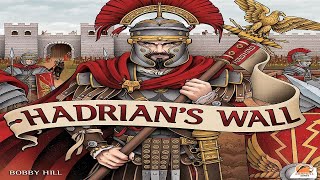
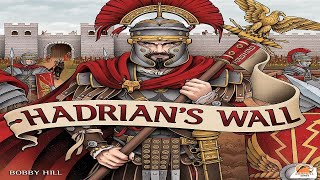


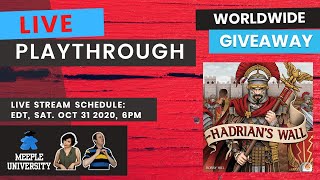



























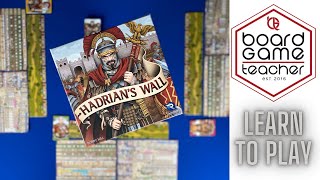

When visiting the North of Britannia in 122 AD, the Roman Emperor Hadrian Augustus witnessed the aftermath of war between his armies and the savage Picts. In a show of Roman might, he ordered a wall to be built that would separate the Pict tribes from the rest of England. Grand in its design, the wall stretched 80 Roman miles, from coast to coast. Hadrian's Wall stood in service to the Roman Empire for nearly 300 years before its eventual decline. Today, Hadrian's Wall is a UNESCO World Heritage Site and the remains of the forts, towers, and turrets can still be explored.
In Hadrian's Wall, players take on the role of a Roman General placed in charge of the construction of a milecastle and bordering wall. Over six years (rounds), players will construct their fort and wall, man the defenses, and attract civilians by building services and providing entertainment — all while defending the honor of the Roman Empire from the warring Picts. The player who can accumulate the most renown, piety, valor and discipline, whilst avoiding disdain, will prove to the Emperor they are the model Roman citizen and be crowned Legatus Legionis!
—description from the publisher
Images
- Too convoluted.
- Not interesting.
- Smorgasbord of iconography.
- Dated genre.
- Cluttered mess.
- Ugly aesthetic (browns and grays).
- Squeezes too much onto two sheets.
- Gameplay is not exciting.
- Historical
- Twilight Inscription
Mechanics (from transcript analysis)
- Combo Building — Players chain actions together through crossing off spaces, but the overall execution is cluttered.
- Roll and Write — Players flip cards and cross off spaces on sheets to perform actions and score points.
Video topics + discussion points
Quotes (from this video)
- Paladins of the West Kingdom just does not do it for me.
- I just found this too convoluted, not interesting.
- Explorers of the North Sea, I think it's their weakest title I've played.
- V Counts of the West Kingdom to be my third favorite that they've ever done.
- Inventors of South Tigris, I really enjoy this one.
- Wayfarers. And I know some people don't like Wayfares, and I can see why. I can see why.
- It's definitely my favorite.
References (from this video)
- deep tactical puzzle
- two-player and solo play work well
- heavy setup and learning curve
- heavy engine-building with solo planning potential
- roman frontier expansion with caravans and work actions
- Dwarf Romantic
Mechanics (from transcript analysis)
- rolling right / worker placement hybrid — multi-sheet layout with high interactivity and planning
Video topics + discussion points
Quotes (from this video)
- it's such an interesting mix of card Drafting and tile placement
- the asymmetry is fascinating
- it's a really clever game
- this is a racing betting game
- the cluster of eight cards can be incredibly powerful
- it's a cozy, cooperative puzzle
- the engines really click when you chain the bonuses
- it's a game of inches
References (from this video)
- Dense, multi-path design
- Two-player head-down play works surprisingly well
- Heavier than typical two-player abstracts
- Arno's Wall (fictional/analogous name)
Mechanics (from transcript analysis)
- Flip/Roll and Write — Heavy thinky game with resource management and multiple paths on a single sheet.
- rolling-right / flip-right — Heavy thinky game with resource management and multiple paths on a single sheet.
- two-player head-to-head feel — Solitary, head-down puzzle with minimal direct interaction at two players.
Video topics + discussion points
Quotes (from this video)
- This is like our comfy time game.
- the coziest of cozy games for me.
- Surprisingly terrific two-player game.
- This is one of the games that was responsible for the resurgence of roll and write games.
- Cooperative games is one of my favorite types of games.
References (from this video)
Mechanics (from transcript analysis)
Video topics + discussion points
Quotes (from this video)
- I'll take you through five general tips for what can help you to explain board games
- this is deck building
- the wind condition
- Spirit Island is actually a surprisingly difficult game to explain because the turn sequence is completely jumbled up compared with the sequence you would use in your mind to understand the theme
- there are many games out there even really crunchy Euro red cheaty Euro types of games where you can still really use the theme to your advantage
- the game is scenario driven the cards will unfold the story and you'll win if you find something that says you are victorious you lose if you max out any track with a red skull
References (from this video)
- Crunchy, satisfying decisions
- Compact yet deep for a heavy solo experience
- crunchy, euro-style decision-making
- Frontier/empire-building theme with walls and defense
- crunchy, puzzle-like strategic play
Mechanics (from transcript analysis)
- flip_and_write — A flip-and-write style mechanic where components are flipped and written/recorded for scoring.
- Flip/Roll and Write — A flip-and-write style mechanic where components are flipped and written/recorded for scoring.
Video topics + discussion points
Quotes (from this video)
- There are two number one games because I can't choose.
- Stardw Valley Extra Cozy Level Board Game Edition.
- cozy queen right here.
- Perfect game. Perfect game. I've never played such a perfect game in my life.
- I can't explain it. You just have to try it.
- The setup is too long.
References (from this video)
- brilliant puzzle; deep planning
- specialization leads to interesting decisions
- highly engaging with expansion content
- can feel punishing or dense for newcomers
- resource conversion and worker optimization
- ancient frontier empire; Roman frontier theme
- puzzle-like, spreadsheet-driven
Mechanics (from transcript analysis)
- area specialization — Focusing on a few areas for better efficiency.
- flip-and-write — A heavy flip-and-write structure used as a planning spreadsheet to maximize turns.
- Flip/Roll and Write — A heavy flip-and-write structure used as a planning spreadsheet to maximize turns.
- Resource management — Balancing diverse resources and roles to optimize turns.
- resource management and specialization — Balancing diverse resources and roles to optimize turns.
Video topics + discussion points
Quotes (from this video)
- we suck at drawing oh our cats are terrible
- it's a flip and write version and they did such a great job of turning the big game into a flip and write
- resting is like the most exciting because when you rest you bring all of your people back
- asymmetry is phenomenal
- this is my most played solo game
- it's a brain burner
- it's a little interactive but a step removed
References (from this video)
- tight, tough puzzle
- largest value when you narrowly optimize turns
- very heavy; not beginner-friendly
- resource conversion, worker optimization, puzzle-like play
- medieval frontier / Roman era frontier
- crunchy, strategic
Mechanics (from transcript analysis)
- flip-and-write — Heavy flip-and-write used as a planning and tracking device for turns.
- Flip/Roll and Write — Heavy flip-and-write used as a planning and tracking device for turns.
- Resource conversion — Turning resources into actions and progress; balancing is key.
- Resource management — Turning resources into actions and progress; balancing is key.
Video topics + discussion points
Quotes (from this video)
- we suck at drawing oh our cats are terrible
- it's a flip and write version and they did such a great job of turning the big game into a flip and write
- resting is like the most exciting because when you rest you bring all of your people back
- asymmetry is phenomenal
- this is my most played solo game
- it's a brain burner
- it's a little interactive but a step removed
References (from this video)
- Plenty ways to win.
- Simultaneous individual puzzle.
- Can convert things to get even more points and resources.
- Can construct buildings for more resources income.
- Get points for defending successfully.
- Options to remove negative points.
- Can train gladiators to fight.
- Can build markets to collect sets of goods for points.
- Can fund patricians for full resources and points.
- Lose points if not defending successfully.
- Constructing Hadrian's Wall to protect Britannia from Pict attacks.
- Roman Britain
Mechanics (from transcript analysis)
- engine building — Resource management and engine building. The longer you last keep getting resources to more things you can do in your turn. Resources are tight at the start but once you start engine building you get more resource income and you can do more things.
- flip-and-write — Mechanics such as flip and write. The game plays one to six players with mechanics such as flip and ride. All of the actions are done by marking off your sheets. It has the feel of flip the dice game but no dice here.
- Resource management — Resource management and engine building. Players start with several objective cards for extra end game points in which each round they pick one out of the two they draw randomly from their deck.
- set collection — Building market to collect sets of goods for points.
- worker placement — Materials and workers players start with several objective cards for extra end game points.
Video topics + discussion points
Quotes (from this video)
- hi it's stella from mipple university
- hadrian's wall from garfield games
- so thanks for watching folks
- we will do live playthrough of hadrian's wall i'll put the link in the description below when i have it
- if you have any questions for me please write in the comment sections below
- you would help us by subscribing to nipple university and hit the bell so you won't miss anything from us
- i also share my board games journey on instagram so hopefully i'll see you there too until next time
References (from this video)
- Crunchy and engine-buildy.
- Flows smoothly once understood.
- Tangible worker placement combos.
- Many different strategies possible, dictated by drawn cards/goals.
- Ranging difficulties for attacks, allowing progression.
- Engaging solo campaign with challenges and scenarios.
- Art by Mico.
- Looks daunting with two big sheets of iconography.
- Solo campaign has a 50/50 win rate, indicating difficulty.
- Building Hadrian's Wall and defending against attacks.
- Roman Britain, building Hadrian's Wall.
Mechanics (from transcript analysis)
- engine building — It's very engine buildy.
- flip-and-write — A crunchy crunchy flipping right game.
- Resource management — Implied through engine building and completing actions.
- set collection — Players work towards goals.
- worker placement — Players can use workers to do actions and build them.
Video topics + discussion points
Quotes (from this video)
- We played over 120 different games, geez.
- It's an absolute presence on the table, holy moly, talk about taking up space.
- The deck is so big that it has that Terraforming Mars feel where the combinations are always really different.
- It really focuses on the conservation piece, environmentalism piece, and it really makes you not feel so bad for owning a zoo.
- This is your favorite game and you can't even say it right.
- This is your engine buildy dice manipulation worker placement game or a set collection game that was the other thing I was looking for.
- I feel like I fall in love again and again.
- It's just a lot and it's everything.
References (from this video)
Mechanics (from transcript analysis)
Video topics + discussion points
Quotes (from this video)
- easy peasy I'm not even sweating
- The Anarchy is a spiritual successor of Hadrian's Wall
- about maximizing your resources by spending and using them in the best order you can to support Steven's war effort against Matilda and earn some points for your bravery loyalty influence and much along the way
- At the start of each round you'll draw cards so you know what attacks are coming
- then you'll draft cards which give you resources and an endgame objective
- then it's actions simultaneously
- you can't carry leftovers resources from round to round so be efficient
- in the game you'll have two sheets that represent most of your actions
- these are where you mainly build fences spend Craftsman and material for Gates towers and other fortifications
- Gathering farming and training to become soldiers
- these are Arsenal which you can construct
- these are your incomes you get this at the start of each round in addition to the card you draft
- these four tracks are all the different victory points you're collecting for game end
- the required Siege weapons you can construct for battle
- The Anarchy you're building a war economy all of the tracks interlock and collectively support your efforts in defense and attack
- the game comes with different levels of difficulty and solo players get special 20 campaign scenarios with stories with different setup and winning conditions
References (from this video)
- High potential for brute-build momentum via brick-rich rounds
- Opportunity to complete multiple landmarks and tracks
- Temple/priests provide defensive options that mitigate attacks
- Clear sense of progression toward a late-game landmark strategy
- Significant luck element from attack cards and disdain draws
- Defense balance can be fragile and risky
- Attacks and point deductions can swing outcomes significantly
- defense and civic development along a frontier fort
- Roman Britain frontier, Hadrian's Wall, circa 2nd century CE
- solo playthrough with live commentary
Mechanics (from transcript analysis)
- citizen tracks scoring — completing citizen tracks for victory points
- defense/attack mechanics — attack cards and disdain tokens that affect scoring and defense
- renown/piety/valor economy — tokens that unlock benefits and affect scoring and combat options
- Resource management — managing bricks, civilians, and other tokens to feed tracks and build landmarks
- scouting and road/landmark building — scout actions to gather bricks/servants and build roads/landmarks
- temples and priests — building temples and assigning priests to gain piety and defensive options
- worker placement — placing builders, servants and civilians to gain resources and activate tracks
Video topics + discussion points
Quotes (from this video)
- this is a really buildy year
- I've never done that before this is like probably my best play of this ever
- we completed all the citizen tracks
- 77 points
- gosh should have probably done that one as well
- we're going to build the wall guys
- the large Gardens is going to be sick
- we did complete the challenge
References (from this video)
- Engaging solo campaign with modular forts
- Deep resource/tempo planning with multiple viable paths
- Satisfying sense of progression as the wall is built
- Rule clarifications can be confusing for first-time players
- Endgame objectives can be slow to reach (high point thresholds)
- fort building, resource management, expansion, and defense
- Roman Britain frontier fortification campaign along Hadrian's Wall
- campaign-driven solo playthrough with progressive forts
Mechanics (from transcript analysis)
- Endgame scoring with multiple conditions — points from completed wall sections, landmarks, track statuses, and resources
- Resource management — manage workers and production to build fortifications and advance tracks
- Track advancement — advance on Renown, Defense, and other tracks to gain bonuses and endgame points
- worker placement — allocate builders, soldiers, and other tokens to gain resources and perform builds
- Worker placement / action selection — allocate builders, soldiers, and other tokens to gain resources and perform builds
Video topics + discussion points
Quotes (from this video)
- I am just so excited about this whole campaign I can't wait
- I can't wait to play through this campaign
- I am loving this game so much
- and I loved it I enjoyed my time which is the most important
- I'm proud of us
References (from this video)
- Deep, heavy strategy with multi-path progression
- Intuitive setup despite complexity
- Rich thematic flavor through wall-building and citizen management
- Can be punishing or stressful due to tough decisions
- Certain aspects not frequently used (market, gladiator arena)
- Rules explanation can be lengthy for new players
- defense, city-building, resource management, raider threat
- Ancient Britain, Hadrian's Wall along the Roman frontier
- historical/theme-driven euro with spatial and track-based progression
Mechanics (from transcript analysis)
- Asset building and prereqs — Construct buildings like temples, gardens, granaries that unlock later options and increase production.
- Deck/hand resource management — Draw cards representing resources and actions; decide which cards to use to build or defend.
- End-of-year raiding and defense — Each year the Picts attack; the player must defend; failing defenses yields disdain penalties and point loss.
- Market and trade / citizen types — Trade goods, recruit different citizen types (traders, performers, priests, operators) to gain effects and resources.
- Partition/Polyomino area interaction — A sub-game where shapes are filled to unlock resources when covering icons; adds spatial puzzle elements.
- Track-based scoring — Progress along Renown, Valor, and Discipline tracks to gain points; faster advancement increases scoring potential.
- Trading — Trade goods, recruit different citizen types (traders, performers, priests, operators) to gain effects and resources.
- worker placement — Assign workers (soldiers, servants, builders, etc.) to actions to gather resources, defend the wall, and build structures.
Video topics + discussion points
Quotes (from this video)
- I have been absolutely loving this game
- it's just incredible
- it's so addicting
- there are so many things still that I can explore
- the setup is so easy and the game play is just very there's so many ways you can go about your choices
- I would love to play through the solo campaign
References (from this video)
- Impressive production and box presentation
- empire defense and frontier management
- England during the Hadrian's Wall frontier era
- historical-themed strategy with worker roles
- Everdell
Mechanics (from transcript analysis)
Video topics + discussion points
Quotes (from this video)
- I am very excited to try this out
- I just can't wait to play this so so badly
- Hadrian's Wall the biggest box
- I love the artwork it's stunning
- UK Games Expo in May next year
- I'll definitely make videos about Hen Wall and Aquatica
References (from this video)
- Crunchy, thinky decisions
- Strong solo mode
- Heavy for new players
- Fort-building and supply networks
- Roman frontier across the empire
- Crunchy, thematic
Mechanics (from transcript analysis)
- card drafting — Draft cards to construct forts and plan actions.
- mini-games — Includes dedicated solo fort scenarios.
- Resource management — Manage cards and resources to optimize fort-building.
- Resource management / area control — Manage cards and resources to optimize fort-building.
- solo challenges — Includes dedicated solo fort scenarios.
Video topics + discussion points
Quotes (from this video)
- Calico is one of my favorite games that I discovered this year.
- Cascadia was my first game that I bought in 2024 and I played it so much in January that it was incredible.
- Hadrian's Wall is an incredible game, I love Hadrian's Wall, it's so crunchy and thinky.
- Harvest... solo challenges, it's so great, solo I love it.
References (from this video)
- Strong integration of resource conversion with box-ticking progression
- Fast setup and clean, tactile components feel nice in hand
- Solid solo replayability and depth via citizen tracks and multiple strategies
- Appealing thematic nods and atmospheric visuals (wooden pieces, thematic tokens)
- Short, approachable session length for an hourly-slot game
- Rulebook dense and lacking a succinct player aid; learning curve can be steep
- Feels very open-ended and can verge on analysis paralysis
- Heavy reliance on paper sheets; components can seem excessive for the value
- Poor multiplayer experience described as 'multiplayer solitaire'; price/contents not ideal for 2-6 players
- Limited asymmetry; end-game scoring can feel repetitive
- Roman societal development; defense and expansion; resource management
- Ancient Rome frontier, Hadrian's Wall
- box-ticking, resource-conversion, procedural
- Gaia Project
Mechanics (from transcript analysis)
- Box-ticking resource engine — Players spend resources to check off leftmost boxes on sheets, triggering benefits and unlocking areas/coins/resources
- Citizen tracks and unlocks — Advancing gray-flag citizen tracks unlocks new abilities and strategic options
- End-of-year invaders and defense — Invaders attack; players must defend via building/cohorts and resources; failure yields negative points
- Resource conversion & cascading effects — Spending resources often yields additional benefits or resources, creating chain reactions
- Track advancement — Advancing gray-flag citizen tracks unlocks new abilities and strategic options
- Yearly action economy via cards — Each year, players draw two cards (one for potential permanent points, one with resources) and choose how to progress
Video topics + discussion points
Quotes (from this video)
- the main meme of this game is picking up a pen and checking off boxes spending your resource to do so you can only tick off the leftmost box
- hadrian's wall is so easy to set up
- the sheets are filled with very self-explanatory symbols
- the box ticking is the game
- I had fun taking off boxes and talking to myself for an hour
References (from this video)
Mechanics (from transcript analysis)
- Area Control — Control of key regions yields points and bonuses.
- area_control — Control of key regions yields points and bonuses.
- worker placement — Players place workers to advance on tracks and claim resources.
- worker_placement — Players place workers to advance on tracks and claim resources.
Video topics + discussion points
Quotes (from this video)
- i love the way that it looks when board games are color coordinated
- this video was kind of just a quick little fun thing that i really want to start doing a little bit more
- i really enjoy when board game content creators do this more like chill video
- you are somebody's reason to smile
References (from this video)
- favorite game of all time for the author
- crunchy, rewarding loop
- crunchier than light games; may be heavy for some players
- Frontier administration, empire-building and conflict
- Roman frontier
- Crunchy Euro with heavy decisions
- Tapestry
- Flee the Dice Game
Mechanics (from transcript analysis)
- Flip-and-write / track advancement — Fill tracks with workers and resources to unlock benefits.
- Resource optimization — Balance resources and time to maximize scoring opportunities.
- worker placement — Spend workers to gain resources and perform actions.
Video topics + discussion points
Quotes (from this video)
- it's a cute little puzzle it's very therapeutic
- the art in this is just oh it's insane
- the drafting pool is bigger than usual
- it's a challenge and it's a challenge that I want to keep on trying to go back to and beat it
- Cascadia has quickly become one of my comfort games
- Final Girl is a solo only game
- Hadrian's Wall was released in 2021
- Arc Nova is a fantastic Zoo management game
References (from this video)
- Rich, heavy euro with campaign feel
- Solitary play available
- Long play time
- Complex rules
- Worker actions, card-driven resource management
- Ancient Rome frontier, forts and campaigns
- Historically flavored, heavy euro
Mechanics (from transcript analysis)
- Card-driven actions — cards influence choices and options each round
- worker placement — place workers to gain resources and activate actions
Video topics + discussion points
Quotes (from this video)
- My heart is set on Miyabi it's happening
- Paint the Roses is gonna win
- Seize the Bean that's the winner
- I think I'm going with Katan y'all
- I think Cascadia is still going to be my choice
References (from this video)
- Deep strategy
- Beautiful components
- Complex rules
- Conquest and administration
- Roman frontier
- Dinosaur Island
Mechanics (from transcript analysis)
- Resource management — Manage resources for actions and scoring
- worker placement — Voting and worker actions to build and score
Video topics + discussion points
Quotes (from this video)
- I hate being mean to games I love pretty much all games
- goodbye Splendor for a second time
- this is the finished getting rid of collection
- wind outside is insane
References (from this video)
- extremely satisfying comboing of actions
- strong solo campaign pushes variety
- high crunch level may be intimidating for new players
- construction, defense, and resource management
- Roman frontier development and defense
- crunchy, campaign-driven
- Four Against Darkness
- Gloomhaven (solo context)
Mechanics (from transcript analysis)
- campaign and track progression — progress through tracks to unlock resources and points.
- flip-and-write — cards reveal actions and resources; players write/record results.
- Flip/Roll and Write — cards reveal actions and resources; players write/record results.
- Track advancement — progress through tracks to unlock resources and points.
- worker placement — colored workers are spent to perform actions on two sheets.
Video topics + discussion points
Quotes (from this video)
- I honestly can say that I enjoy playing solo more than I do multiplayer
- I freaking love Cascadia solo
- Hadrian's Wall is my number one solo game
- it's such a fantastic solo puzzle
- I am obsessed with the way that the solo variant works
- this is one of the crunchier Roll-and-Writes that I have
- I love the sister thing, it's fun
- I love to combo things in Castles of Burgundy
- it's so easy to implement a solo variant
- this is such a wonderful game it just brings me so much joy and comfort
References (from this video)
- satisfying optimization per round
- deep solo campaign
- hard to exceed 80 points in some forts
- military logistics and frontier defense
- Roman frontier in Britain during Hadrian's Wall
- campaign-like, solo-focused
Mechanics (from transcript analysis)
- flip-and-write — Core loop involves flip and write style scoring decisions within a solo campaign.
- Flip/Roll and Write — Core loop involves flip and write style scoring decisions within a solo campaign.
- worker placement — Use workers to climb tracks; gaining access to mini-games and new mechanics; 16 forts/scenarios.
- worker placement and track progression — Use workers to climb tracks; gaining access to mini-games and new mechanics; 16 forts/scenarios.
Video topics + discussion points
Quotes (from this video)
- Hadrian's Wall is my favorite game of all time
- I love the theme, it warms my heart
- The end of the first chapter broke my heart
- Portals is an abstract strategy game
References (from this video)
- Desirable solo campaign for extended streams.
- Strong fit for a long-term solo series.
- Not yet explored in depth on stream.
- Roman frontier logistics and campaign building with a solvable solo arc.
- Roman frontier campaign framing; a solo series contender via print-and-play propositions.
- Solo aspirations and content creation around Hadrian's Wall; referenced as a potential series.
- Three Sisters
Mechanics (from transcript analysis)
- solo campaign mode — Dedicated solo campaign rules with a defined AI opponent.
Video topics + discussion points
Quotes (from this video)
- Edith is the absolute worst
- Edith is evil
- my favorite game is Seven Wonders but I haven't won a game of it yet
- you don't have to be good at board games to enjoy them
- I love three sisters
References (from this video)
- Strong solo appeal and depth
- Unique two-pad paper setup provides tactile engagement
- Campaign/15+ multiple objectives adds variety
- Low interaction may deter some players
- Niche genre label ('eurorite') may limit audience
- chain-building, scoring through evolving objectives
- solo/solitaire-driven euro-style puzzle with two large pads of paper as boards
- enthusiastic, personal testimony
Mechanics (from transcript analysis)
- two-sheet tableau / chaining — Players chain actions to cross off opportunities on large paper boards; emphasis on patterns and synergy rather than direct interaction.
Video topics + discussion points
Quotes (from this video)
- The best game in the world, the most perfect game in the world is the one that's still in your head because it's never been tested by anybody else.
- An obstacle is not an obstacle unless it's in the path of the direction you're trying to go.
- The closer I get to what I think the game is being done, the more my ego is kind of fragile on the line.
References (from this video)
- therapeutic feel of resource optimization
- engaging solo/campaign style play
- learning curve and complexity
- flipping-rights style engine-building
- Diorama-style dungeon-like village defense
- campaign-ish, narrative-driven
- Dune Imperium
- Spirit Island
Mechanics (from transcript analysis)
- Compound Scoring — Balance wall-building with actions to protect towns
- Flip-and-write / engine-building — Flip cards to reveal resources and build a village engine
- Multi-track scoring and defense — Balance wall-building with actions to protect towns
Video topics + discussion points
Quotes (from this video)
- Penny is also the star of the show
- remember you are somebody's reason to smile
- this truly is a comfort game
- there are so many games out there and they're all fantastic
References (from this video)
- strong solo appeal
- dense combos and satisfying engine-building
- highly replayable solo setup
- can be heavy and rules-intensive for newcomers
- resource gathering and building on a dynamic map
- Romanticized frontier of Hadrian’s Wall
- flipping cards to reveal resources and building a personal tableau
- Raiders of Scythia
- Legacy of You
Mechanics (from transcript analysis)
- engine building — maximize combo potential across turns with available resources
- engine-building — maximize combo potential across turns with available resources
- flip-and-write — flip cards to determine resources and fill in a personal sheet
- Flip/Roll and Write — flip cards to determine resources and fill in a personal sheet
- Resource management — collect and allocate resources to complete actions and build
Video topics + discussion points
Quotes (from this video)
- this solo variant is very much like that where Becky or Becca whatever the heck her name is you are just doing a few things back and forth with her
- the three different tracks you're going up and you're trying to bring all of these different rides into your park
- it's a really good like set collection game you're collecting different flowers and different bugs in order to gain some points
- i scored 50. so i don't know if i just scored it wrong but i was very proud of myself
- it's so easy at the table it's such a good puzzle
- i'm very excited to get cartographers and cartographers heroes to the table more
- this is one of my favorite solo games and i did play it in august
References (from this video)
- solo campaign provides a story-like progression
- two large sheets with many tracks offer depth
- strong crunch and thematic piling on replays
- rules can be intimidating for new players
- fortification, resource management, and societal growth
- Roman-British frontier and village development
- campaign/story-driven solo progression
Mechanics (from transcript analysis)
- crunchy roll-and-write — roll and assign colored workers to tracks and actions on sheets
- Flip/Roll and Write — roll and assign colored workers to tracks and actions on sheets
- resource tracking and chaining — manage stone and worker actions to chain rounds and unlock bonuses
Video topics + discussion points
Quotes (from this video)
- it's a fantastic game either multiplayer or solo
- there are like different challenges and achievements in the back of the rule book
- the solo variant of viticulture is so so easy
- I freaking love this game
- the solo variant feels like a completely different game
- it's just the cutest thing in the entire world
References (from this video)
- feeling of excess
- constantly busy turns
- deeply engaging
- history
- Rome
Mechanics (from transcript analysis)
Video topics + discussion points
Quotes (from this video)
- This is my most played game of the year
- It is the perfect engine builder
- absolutely adore this game
- one that instantly I fell really hard for it
- would absolutely watch Oathsworn the HBO series
- the story and the setting is that rich
- for me the epitome of what a thematic game can be
- every click of the clock matters
References (from this video)
- strong strategic depth
- fits well in a euro-heavy collection
- rule depth can be intimidating
- Area control and resource management
- Ancient Roman frontier fortification
- Strategic, historical flavor
- Ark Nova
- Sleeping Gods
Mechanics (from transcript analysis)
- tile/biaxial scoring — layout and connected scoring paths
- worker placement — place units to gain resources and points
Video topics + discussion points
Quotes (from this video)
- these shelves are too cool to suggest anything
- i'm drooling and looking at games
- i really like the looks of it
- best looking arrangement shelf
- i want this collection as well
References (from this video)
- deep, crunchy decisions
- lots of tactical depth
- high complexity and setup could be intimidating
- flip-and-write with deep combinatorics
- Roman Britain
- crunchy euro with spreadsheets feel
- Glenmore 2 Chronicles
- Terra Mystica
Mechanics (from transcript analysis)
- engine building — combos and scoring engines develop across turns
- engine_building — combos and scoring engines develop across turns
- flip_and_write — players flip actions and record results to drive engine
- Flip/Roll and Write — players flip actions and record results to drive engine
Video topics + discussion points
Quotes (from this video)
- probably my favorite tire placement game of all time
- this one is like a companion game to el grande
- Arc Nova certainly the hotness at the moment
References (from this video)
Mechanics (from transcript analysis)
- Resource management — Managing limited resources to optimize placement and scoring.
- resource_management — Managing limited resources to optimize placement and scoring.
- worker placement — Players place workers to develop areas and advance on their track.
- worker_placement — Players place workers to develop areas and advance on their track.
Video topics + discussion points
Quotes (from this video)
- this weekend was partially cool just because of the people I got to meet
- board gaming will join video games and take its place in Academia
- I really hope to see more work like this happen in the future
- the weekend really filled my cup intellectually
- I got to play Prime Minister and I actually won
- Prime Minister is a mean little game
- it's hard to decide what to do socially in Prime Minister
References (from this video)
- interesting scope and crunchy decisions
- engaging once playing with proper group size
- noted as long/lengthy in play sessions
- resource management and empire-building
- Roman frontier
- historical/epic
- Twilight Inscription
- Orleans
Mechanics (from transcript analysis)
- draw and plan — long, strategic planning with multiple layers
- simultaneous drafting — players draft components and manage actions in a large-scale system.
Video topics + discussion points
Quotes (from this video)
- "Point City... looks like this really cool game about pretty tactical about building up a really streamlined engine and just trying to get a bunch of points"
- "I’ve been fatigued by rolling rights"
- "the more you pull back or pull me back from being like in instruction mode the faster you’re going to find I end up"
- "Nostalgia definitely does apply"
References (from this video)
- strong campaign mechanics
- adds a different feeling to Hadrian's Wall compared to other games
- story elements and campaign modes increase longevity
- requires more time and setup for solo play
- potentially long campaigns may deter casual players
- synchronous progress vs risk; tactical pacing
- Ancient frontier era with incremental progress and cooperative tension
- story-like campaign and modular progression with story elements
- Legacy of You
Mechanics (from transcript analysis)
- Campaign-style progression — two sheets enabling different pacing and locations
- Card-driven actions — cards trigger actions, resources, and event consequences
- Resource management — requirements to progress, waves of barbarians, workers for tasks
- risk-reward decision making — drawn from the balance of progress vs. wave urgency
- storybook integration — story events activated by actions; adds depth to cards
Video topics + discussion points
Quotes (from this video)
- this game is for you or you or you
- multi-use cards ... gives you so many options
- it's such a hook
- the story adds personality to this game
- two sheets of paper ... freedom to play Hadrian's Wall in different modes
References (from this video)
- tight thematic integration
- solid decision space for two players
- robust puzzle for seasoned gamers
- rule complexity can be high
- not ideal for casual players
- workforce allocation and logistics
- rural Roman frontier development and defense
- historical, resource-driven
- A Feast for Odin
- Pax Porfiriana
Mechanics (from transcript analysis)
- card/board interaction — Strategic card use affects actions and outcomes on the board
- Resource management — Gather and convert resources to advance the frontier and score
- worker placement — Assign workers to build and fulfill tasks across the frontier
Video topics + discussion points
Quotes (from this video)
- Sleeping Gods is a story game where there are tons of choices you just get stranded with your ship and a logbook.
- Arc Nova is on the heavy side, super heavy side where you build a zoo.
- You always can draw as many cards you want from your deck until you either burn or you stop.
- it's the party hit for this year for sure.
- Wavelength is the party hit for this year as well.
- The Crew Deep Sea Edition is the most played game this year because it's much easier to play.
References (from this video)
- Engaging two-player sheets and solo mode
- Interesting combo/system depth
- Solid thematic tie-ins with practical decision-making
- Engineering, trade, and frontier defense
- Roman frontier and military logistics
- Strategic, with thematic ties to Roman-era frontier politics
Mechanics (from transcript analysis)
- engine-building — players optimize actions to expand their engine and trade resources
Video topics + discussion points
Quotes (from this video)
- mind your business
- one board gamer at a time
- we love you bye
- epitome of a flip and ride experience
- it's not our job to police others or interrogate others, it's our job to just live our lives
- mind your business and last but not least just leave people alone who are not bothering you
References (from this video)
Mechanics (from transcript analysis)
Video topics + discussion points
Quotes (from this video)
References (from this video)
- Tons of choices
- Only two pages needed
- Can go different directions each play
- Building Hadrian's Wall
- Roman Britain
- Flip and write
Mechanics (from transcript analysis)
- engine building — Marking makes you better and produces more resources
- Flip and Write — Flip cards, use resources to mark sheet
- Flip/Roll and Write — Flip cards, use resources to mark sheet
Video topics + discussion points
Quotes (from this video)
- Does your wife ever tell you what to do all the time especially what board games to play
- My wife loves games where she beats your ass
- This was the game we took to the hospital when my son was born
- I'm afraid for the calendar its days are numbered
- What does a sprinter eat before a race? Nothing, they fast
References (from this video)
- Depth and replayability
- Lots of meaningful choices per turn
- Strong solo mode and puzzle-like feel
- Longer playtime than typical roll-and-write
- First-time learn curve is steep
- expansion of infrastructure and border defense
- Roman frontier life and military campaigns
- story of choices and contingency
- Railroad Inc
- Through the Ages
- Clever Series
Mechanics (from transcript analysis)
- Resource management and rerolls — Dice results determine outcomes; rerolls and choices affect scoring dramatically
- Roll-and-write with heavy decision space — You start rounds with a pile of resources and decide how to spend them to progress
- Simultaneous drafting and planning — Two pages provide a dense set of options and constraints per round
Video topics + discussion points
Quotes (from this video)
- it's exactly how it looks you draw different things here and get points
- it's really really fun race game
- this is the new kid in town it's definitely better than regular link almost everyone can play it
- two pages contain as much stuff to write on as all the other nine
- so many choices so many challenges
- mix of roll and write and roll and draw is one of the best hybrids
- i would put it above but i would actually like put it very close so there's no space between them
- the solo game shines, and there is a mini-golf thing in the solo mode
- it's an amazing game with so many choices so many challenges
References (from this video)
- Innovative marking mechanic in lieu of rolling
- Appreciation for Roman theme and pacing
- Complexity may appear daunting
- Price and value debates indicated
- defend and manage resources to hold back invasion
- Roman Britain frontier
- flip-and-write / deduction-lite management
- Longer-marking or pencil-based Euro concepts
Mechanics (from transcript analysis)
- flip-and-write / pencil-marking — No dice: players mark actions on a sheet and cross off progress
- route/defense economy — Players balance defenses and progression to stop invasions
Video topics + discussion points
Quotes (from this video)
- it's basically a big game of Among Us
- the board game, the way they've done it, looks amazing
- I just want the price to come down
- the wife will probably actually play this one with me
- this looks like the perfect Monster Hunter game
- I went all in on this
- I am super hyped for this game
References (from this video)
- clever flip-and-write design
- tight Euro-style decision making
- brilliant component layout and two sheets
- steep learning curve
- heavy setup and table space
- two-player only feel may limit interaction in larger groups
- defense and urban development in a militarized frontier
- Frontier fortification across Roman Britain during late empire
- historical Euro with heavy strategy
- Raiders of the North Sea
- Brass: Birmingham
Mechanics (from transcript analysis)
- area-majority scoring — final scoring based on dominance in cavern zones and wall tracks
- flip-and-write — cards are flipped and results written on two action sheets representing the wall and the town
- Resource and track management — civilians, soldiers, builders, and resources drive construction and defense
Video topics + discussion points
Quotes (from this video)
- back it you won't regret it
- we're in year nine
- it's a heavy flipping right
- this is a matrix tonight
- it's a deck builder
- the rules are easy guys
References (from this video)
- Huge variety of choices leading to high replayability
- Compact components despite epic scope
- Satisfying combat that resolves quickly
- Strong solitaire experience with meaningful decisions
- High sense of progression and optimization
- High learning curve and complex rules to teach
- Limited player interaction; can feel solitary for some groups
- First-time setup and rule reading can be overwhelming
- Two large, dense sheets and heavy text can be daunting
- Retail price around 50 euros for paper components
- frontier defense, resource management, and wall-building
- Roman Britain frontier along Hadrian's Wall
- procedural/competitive
- Roll-and-Write games (genre)
- Three Clever Series roll & write games
- Clever Series: Roll & Write Adventures
Mechanics (from transcript analysis)
- card-driven resource generation — Instead of dice, players turn over cards to determine available resources each turn.
- grid-based Roll & Write/resource placement — Players fill in spaces on two sheets by turning cards to determine resources and then spending them to fill spaces, creating an evolving wall and resource network.
- point-driven scoring and combos — Points are earned for filling squares in strategic ways; combos can maximize points through resource placement.
- resource-to-squares chaining — Resources earned feed into more squares on either sheet in a cascading puzzle.
- round-end attack events — When a round ends, the Picts attack and players must defend using their accumulated walls and resources.
- two-sheet asymmetrical boards — Core gameplay spans two sheets representing different phases or areas of the wall-building effort.
Video topics + discussion points
Quotes (from this video)
- it's about a wall that hadrian built and you're not building it i think you are helping to be honest
- you built it i built it and hundreds of other players built it
- the whole game are these two pages
- there are so many options so many things you can try to do
- it's addictive
- it's compact it feels like an epic game
- replay value is very high here
- combat happens the combat is just turning around few cards
- it's a niche game for solitary experiences
- the entry level is quite high
References (from this video)
- Changed what a roll and write can do
- Heavy and complex
- Incorporates worker placement innovatively
- Classic game
- Long collection keeper
- Brain intensive
- Requires mental breaks
- Roman history
- wall building
- Three Sisters
- Architects
- Paladins
Mechanics (from transcript analysis)
Video topics + discussion points
Quotes (from this video)
- it's a full day of gaming you got a plan for snack breaks you need to plan for nap breaks
- this cool game about sliding these things around the board and it's so stinking satisfying
- we really enjoy unfair but i don't enjoy all the mean stuff so every single piece so fun fair just really fixes that problem
- this one completely changed what a roll and write can do
- my brain turned to much like i literally need to power down for a little while and let my brain reset
- there's something special about it you know that really makes it stick out amongst everybody else
- this replaces terraforming mars for me
- it is just such a smart idea that is so simple
- orange nebula designs just incredibly unique incredible experiences
- the way that you use your hand management and the resource management it all just sings together really well
- they're there this isn't like a we're just going to reskin something
- it does a really great job of letting those last two players have the opportunity to really challenge the people that are in first and second
- it's quacks of quinlenberg the dice version
- i'm a sucker from dice i love the tactical sensation of just chuck and dice
- you really are paying attention to what's going to fill up each cauldron
- the best hidden movement game that i've played ever
- if you like the crew to begin with you can literally throw it in the trash and get this version
- it's brilliant from a design standpoint it's absolutely brilliant
- it's that wonderful tension right every round where am i gonna place where am i going to you know place my bid
- it's so relaxing it's so satisfying it's gorgeous
- i've needed my board gaming to be a warm thumpy blanket
References (from this video)
- Solitaire-focused design
- Extremely easy to set up
- Pencil and paper gameplay
- Engine building mechanics
- Feel-good game
- Resource production system
- Multiple resource uses
- Simplest setup of the list
- Rules are somewhat complicated despite simple setup
- Historical
- Roman
- Wall Building
Mechanics (from transcript analysis)
- engine building
- Paper-and-Pencil
- Pencil and Paper
- Resource management
- tableau building
Video topics + discussion points
Quotes (from this video)
- which games do you enjoy the most solo so we can add and adjust these rankings if we agree
- the hype train is real here
- it's the best survival game that we have played
- if I could make a deal with God continue run off the field and switch places with Hadrian
- everything you do is choice between at least two different things
- I didn't think I'd like it as much solo as I did
- it's the easiest to play I think from all of these
- we're all about the story here
- you do feel like a researcher there
- all of these fantastic games that we love to play solo
References (from this video)
- deep, satisfying engine with strong replay value
- strong thematic integration
- steep learning curve and rule complexity
- defense, frontier construction, and resource management
- Roman frontier in northern Britain, 2nd century
- historical/strategic
Mechanics (from transcript analysis)
- area development / placement strategy — position walls to influence defense and scoring
- dual action sheet / layered planning — two sheets guide actions and progression each round
- Resource management — gather and spend resources to advance builds and points
Video topics + discussion points
Quotes (from this video)
- it's absolutely must
- it's top three game of all time
- it's a betting game where you bet on horses
- it's like a borderline party game
- Sleeping Gods is a massive Story game
- you read the stories, make your choices, upgrade
- it's the biggest thing why you don't like it is sometimes you'll play a card to create a ship and then I'll play a card to cancel your ship creation
- you both have a Summoner and an army you have wars
- it's still a must have for both turns
References (from this video)
- chunky, fast setup for a heavy game
- high replayability and depth with repeated plays
- strong solo modes and group play options
- historical presentation may feel heavy to some
- mechanics can be dense for new players
- military organization, strategy, and resource management
- Roman Britain frontier and imperial logistics
- historical flavor with heavy mechanics
Mechanics (from transcript analysis)
- Resource management — manage soldiers, supplies, and campaigns to maximize scoring
- roll-and-write — dice-based actions recorded on a scoring sheet for ongoing engine progress
Video topics + discussion points
Quotes (from this video)
- not only is it just a delight in general but it's a game that's good solo and it's fun to teach people
- it's rare to find a game that just everybody likes so much
- what a good game it's so tense every time I get really excited
- we really really fight it out all the way to the end
- it's interesting I'm not sure it's the best solo game but I still can't quit playing it solo and I absolutely love with other people
- it's a wonderful world
- the third game on the list is one that I wasn't sure I was going to like mainly because there are aspects of its historical presentation that I have issues with, but I just cannot get enough of Hadrian's Wall I absolutely love that game
- haplo remastered and victorum both made it to my apartment
References (from this video)
- Tense, strategic puzzle
- Engaging campaign mode
- Historically heavy theme requires careful handling in discussion
- Historical building and defense with worker placement and campaign mode
- Frontier Roman frontier and historical campaign
- Campaign-driven, tense optimization
- Feast for Odin
- Nemo's War
Mechanics (from transcript analysis)
- campaign/legacy-like progression — Campaign-style progression with evolving scenarios.
- worker placement — Players place workers to activate actions and advance on the board.
- Worker placement with action economy — Players place workers to activate actions and advance on the board.
Video topics + discussion points
Quotes (from this video)
- Spirit Island is just so engaging and interesting.
- Words cannot express how dominant this is.
- My true love is still Mage Knight… but Spirit Island ate and left no crumbs.
- The solo gaming community is the best gaming community.
- Thank you so much to the solo Community; you guys do a great job.
References (from this video)
- epic scope and meaningful decisions
- multiple strategies; robust solo mode
- impressive production and sense of accomplishment
- very long setup and playtime
- rule complexity can be intimidating
- cooperative empire defense with solo campaigns
- Roman frontier control and defense
- highly thematic, epic scale
Mechanics (from transcript analysis)
- dual-sheet roll-and-write — two sheets provide parallel track-building and defense lines
- Flip/Roll and Write — two sheets provide parallel track-building and defense lines
- variable defenses and AI threats — bad guys attack; players balance points vs. walls
Video topics + discussion points
Quotes (from this video)
- it's an amazing game especially if you're traveling around quite a lot
- the rules are not that uh complex
- you are farmers and you're planting a garden
- the biggest unique thing about this game is its chain reactions
- it's really a party game kind of game that will give you the most emotions for sure
References (from this video)
- great depth and interconnectivity of systems
- multiple paths to score with varied replayability (many sheets and goals)
- solo mode with nearly identical rules to multiplayer
- high component volume offering extensive play opportunities (200 sheets per sheet type)
- steep learning curve and initial overwhelm
- limited player interaction in multiplayer due to solo-driven design
- dense rules and many tracks to learn on first plays
- building and defending a Roman frontier, managing resources and workforce to fortify walls and defend against Picts
- Roman Britain, circa 122 A.D., Hadrian's Wall as the northern frontier
- historical, strategic, resource-management
- Fleet the Dice Game
- Paladins of the West Kingdom
Mechanics (from transcript analysis)
- Card-fate and timeline placement — Fate cards determine available resources each turn; one card kept goes to a timeline and can yield end-game bonuses.
- Compound Scoring — Each game uses different end goals which change strategic focus and point allocation.
- Flip/Roll and Write — Players perform actions and mark them on score sheets, encoding choices across tracks and buildings.
- Goal-based scoring — Each game uses different end goals which change strategic focus and point allocation.
- Resource and worker management — Spending workers and resources to advance tracks, build fortifications, and gain bonuses.
- Resource management — Spending workers and resources to advance tracks, build fortifications, and gain bonuses.
- Roll-and-write (no dice) — Players perform actions and mark them on score sheets, encoding choices across tracks and buildings.
Video topics + discussion points
Quotes (from this video)
- Hadrian's Wall is a beast of a roll and write with so many different paths and options to choose from you will initially be overwhelmed
- the best thing about this game is its depth
- this is one game you won't be solving after two plays
- if you enjoyed roll and writes in the past and ever thought i wish there was much more to this then this is the game for you
References (from this video)
- high interactivity and strategic depth
- rich thematic feel for dry Euro fans
- teaching curve
- longer play times
- high interaction Euro with worker-placement-ish facets
- Roman frontier development/economic engine-building
- dry Euro with heavy decision impact
- Terra Mystica
- Gaia Project
- Ankh: Gods of Egypt
Mechanics (from transcript analysis)
- asymmetric or complex engine — factions/roles influence different paths to victory
- high player interaction — actions by one player directly affect others' plans
- Resource management — building and upgrading operations on a shared map
Video topics + discussion points
Quotes (from this video)
- two-player Cooperative game dice game about trying to land planes this is Sky Team
- reviews were great and glowing
- it's such a unique game
- the modular map... explores with base players
- cooperative campaigns
- this is the Nemesis experience that I'm going to want to have and play for years to come
References (from this video)
Mechanics (from transcript analysis)
Video topics + discussion points
Quotes (from this video)
- Gloomhaven will not be removed from number one on BGG it's just not possible.
- Frost Haven tweaks a few things but the stuff that it adds is so much more involved and in depth.
- Arc Nova is meteoric rise in the top lists; it's everywhere now.
- Mage Knight is my number one favorite game of all time.
- Spirit Island is my number one cooperative game of all time.