



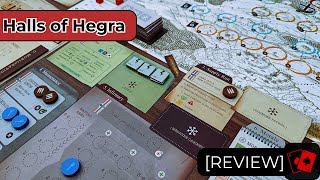

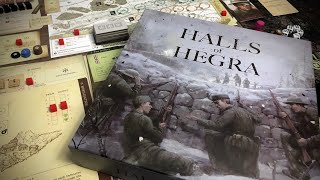




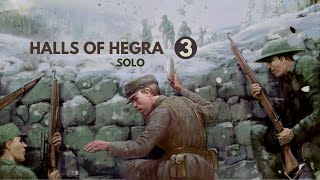

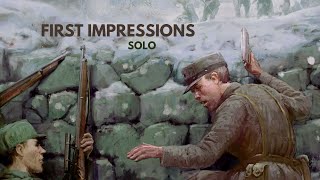



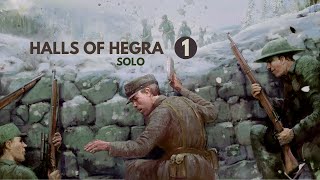







From an abandoned mountain fortress you command a group of Norwegian volunteers fighting numerically superior German forces in the early days of WW2.
Halls of Hegra is a solitaire-only wargame in the same vein as "Robinson Crusoe", "This War of Mine" and "Dead of Winter". The mechanics are worker placement, bag building, and area control/ tower defense.
You play as the commander of the Norwegian forces during the three stages of the game.
1. Mobilization.
Explore the fortress while you dig your way through mountains of snow and broken equipment. New recruits are joining your growing force while you plan supply routes for the coming siege.
2. 1st. attack
The village below the fortress is attacked. You try to defend it while you do the final preparations before the Siege. Send out patrols behind enemy lines to secure enough supplies.
3. Siege
The Siege of fortress Hegra begins. You have to endure constant bombing and infantry attack while keeping the morale up amongst your men. Will you survive?
—description from the designer
Halls of Hegra | Playthrough
- Array
- Array
- Survival and slow build of defense
- Array
- Solo war game with German forces
- Array
- Array
- Array
- positive
Mechanics (from transcript analysis)
Video topics + discussion points
Quotes (from this video)
- geometry in the game is amazing
- oh so so good
- it's such a beautiful game
References (from this video)
- deep, epic feel with a classical survival arc
- highly thematic and tense late-game sequences
- complex and lengthy for a solo experience
- steep learning curve
- occupation resistance in WWII with a strong survival tilt
- War-themed tower defense with Moroccan/Scandinavian-inspired Norway setting
- epic, escalating challenge, survival-focused
- Robinson Crusoe: Adventures on the Cursed Island
- This War of Mine
Mechanics (from transcript analysis)
- Combat: Dice — Dice-based combat with a robust resource system and morale mechanics.
- Cube tower — Dwindling morale and escalating waves create a pressure-filled finale.
- Dice-based combat and resource management — Dice-based combat with a robust resource system and morale mechanics.
- tower-defense style escalation — Dwindling morale and escalating waves create a pressure-filled finale.
- worker placement — Assign workers to locations to gather resources and push back the enemy.
- worker placement / area control — Assign workers to locations to gather resources and push back the enemy.
Video topics + discussion points
Quotes (from this video)
- AP doesn't exist in a Solo game; only a analysis paralysis isn't a problem when no one's waiting for you to finish your turn
- it's all very simple but the puzzle itself is crunchy and interesting
- the puzzle itself is brilliantly constructed but solving it leaves me a little bit cold
- No better solo only game than Final Girl; it's my number one
References (from this video)
- Clever bag-building system that creates dynamic tension
- Strong thematic integration with survival and siege elements
- Tower-defense core provides satisfying escalation
- Can be complex for new players
- Solo rules may require extra setup and learning
- Survival, siege warfare, fortification building
- World War II, Norwegian volunteers defending an abandoned Mountain Fortress against a German force.
- Narrative-driven survival with a looming large-scale assault
Mechanics (from transcript analysis)
- bag building — As fortress parts are damaged or removed, tokens are added to a bag and later drawn to resolve artillery damage.
- Cube tower — Early rounds focus on building defenses and recruiting volunteers, increasing tension toward a final assault.
- morale/event/suspicion tracks — Morale, event, and suspicion tracks influence decisions and escalate pressure during play.
- recruitment and specialist actions — Volunteer types provide different actions and strategic options as the defense evolves.
- tower defense — Early rounds focus on building defenses and recruiting volunteers, increasing tension toward a final assault.
Video topics + discussion points
Quotes (from this video)
- this is the fourth in a series of videos where I'm separating my favorite solo games into five different complexity levels
- it's my favorite as well
- no Universal scale exists so a mediumweight game to you might be a heavy game to me and vice versa
- I particularly like its clever bag building system
- this war of mine is the most profound board game I've ever played
- the solo opponent is super quick and easy to manage
References (from this video)
- Thematic tension and narrative drama during siege
- Dynamic morale and supply management create meaningful decisions
- Last Stand adds a climactic, cinematic moment
- Rich event variety via the hit bag and artifacts creates memorable playthroughs
- Punishing difficulty; high chance of quick defeat
- Complex rules with resource tracking and surrender conditions
- Heavy randomness from hit bags and dice leads to uneven outcomes
- Can feel punishing without a strong learning curve or guide
- siege defense under resource and morale pressure
- medieval fortress siege; desert fortress under attack
- turn-by-turn narrative with live tactical decisions
- The Siege 2 deck
Mechanics (from transcript analysis)
- hit_bag_resolution — Draw from a bag to resolve hits and injuries with probabilistic outcomes.
- last_stand_event — A climactic Last Stand stage that escalates threat and requires rapid defense.
- morale_tracking — Morale levels influence Defender availability and potential surrender.
- Resource management — Track supply tokens—out of supply reduces capabilities and triggers penalties.
- supply_management — Track supply tokens—out of supply reduces capabilities and triggers penalties.
- surrender_and_recovery — Surrender markers and Morgue/Waiting Area rules determine loss conditions and recovery options.
Video topics + discussion points
Quotes (from this video)
- this is going to be absolute Carnage
- Spoiler alert we're not surviving this
- tragic ending which has become a staple of this channel
- complete play of Halls of hegra
- we're not surviving the end of this
References (from this video)
- Tension ramps up beautifully, especially after the first attack
- Euro-style core (worker placement, bag-building, resource management) with a tower-defense feel
- Flexibility of focus and surprises within a single-story framework
- Rulebook is clear and flows well
- Appeals to solo gamers and players seeking a different war-game experience
- Lacks the overt storytelling of Robinson Crusoe or This War of Mine
- Replayability may be limited for some due to deterministic event flow
- Recruit bag can feel punishing early with doubt tokens, creating swingy luck
- Game length can be long; not ideal for shorter sessions
- Theme may not appeal to players who dislike war as a setting
- Survival under siege with resource management, morale tracking, and city-defense elements
- War-torn frontier with survival and siege dynamics
- One-story-per-playthrough with variability; not heavy emergent storytelling
- Robinson Crusoe: Adventures on the Cursed Island
- This War of Mine
- Frostpunk
Mechanics (from transcript analysis)
- bag building — Draw tokens from a bag to resolve events; doubt tokens add risk and can swing outcomes; managing the bag is central
- Bag-building / hit bag — Draw tokens from a bag to resolve events; doubt tokens add risk and can swing outcomes; managing the bag is central
- Combat: Damage Based — Defensive elements like cannons and walls; repairs reduce damage and impact future draws; hits can go back into the bag
- Combat/defense components — Defensive elements like cannons and walls; repairs reduce damage and impact future draws; hits can go back into the bag
- Event-driven variability — Modules and random events produce different experiences across plays
- Events — Modules and random events produce different experiences across plays
- Resource management — Players manage resources and worker morale to keep the settlement viable
- Resource management and morale tracking — Players manage resources and worker morale to keep the settlement viable
- Supply runs / map exploration — Sending workers out to collect supplies; weather and patrols affect movement and risk
- Tension / siege escalation — Mobilization phase increases pressure, leading to escalating sieges and tougher decisions
- worker placement — Different workers with varied actions; some workers can’t perform certain actions; fatigue/refresh mechanics affect utilization
Video topics + discussion points
Quotes (from this video)
- Halls of hegura is my current front runner for solo game of the year
- the rule book is terrific everything makes sense everything flows just perfectly
- it's long and there's a lot going on but I think this gets the attention it deserves
References (from this video)
- Deep strategic decision making under variable weather
- Clear solo playthrough with step-by-step actions
- Morale and doubt systems create tension
- High complexity and many rules interactions
- Token randomness can lead to punishing downsides
- Coup event later in mobilization can disrupt plans
- defense under siege with resource, morale, and weather management
- World War II Norway; defense of a mountain fortress by Norwegian volunteers against German forces
- let's play / narrated playthrough
Mechanics (from transcript analysis)
- Area movement — Open/expand supply routes; move units toward supply depots under weather rules
- Combat and artillery firing — Artillery fire can deal damage; jams may require unjam actions
- Combat: Damage Based — Damage tokens accumulate in a hit bag; jams require repairs
- event cards — Draw events matching the current phase that affect morale, doubt, weather, etc.
- Events — Draw events matching the current phase that affect morale, doubt, weather, etc.
- Hit bag and damage tokens — Damage tokens accumulate in a hit bag; jams require repairs
- Resource management — Track supplies, morale, fear/doubt, patrols, and hit bag tokens
- Supply routes and movement — Open/expand supply routes; move units toward supply depots under weather rules
- Turn structure — 11 turns with mobilization, morning, day, morale, and other phases
- Weather and terrain effects — Weather markers affect movement and snow removal difficulty
- worker placement — Place workers on actions like morale, repairs, snow, and supply routes
- Worker placement and action economy — Place workers on actions like morale, repairs, snow, and supply routes
Video topics + discussion points
Quotes (from this video)
- it's the early days of World War II we play the commander of a group of Norwegian volunteers fighting overwhelming German forces from an abandoned Mountain Fortress
- the first thing that we do on our turn is to draw one of the event cards
- the weather that shows snow so we move this marker up to the snow
- for every one of these volunteers that we drew we get to collect a supply
- we're going to open a new Supply route
References (from this video)
- Front-runner for 2023 game of the year in discussion
- Inspired by Robinson Crusoe
- Not widely played yet
Mechanics (from transcript analysis)
Video topics + discussion points
Quotes (from this video)
- I still absolutely love this design
- the AI system is so smart
- it's on the totally table Todo list
- Frost Punk is incredible
- I absolutely plan to get to the table this year
- the slide puzzle mechanism I love
- Weather Machine remains one of my favorites
- Sleeping Gods no reason to believe that I won't love this one as well
References (from this video)
- Deep, unforgiving, euro-gamey war game with a holistic view of armed conflict
- Strong solo-focused design with evolving day-to-day concerns
- Good thematic integration and tension as siege progresses
- Grim theme and high difficulty may deter some players
- Long playtime and complex rules; not casual-friendly
- Solo experience demands commitment and patience
- Logistics-centric siege warfare and resource scarcity
- April 1940, Norway during the German invasion
- Euro-gamey, holistic view of armed conflict with day-by-day concerns
- Pavlov's House
- This War of Mine
Mechanics (from transcript analysis)
- action programming — players place tokens on the board to determine and resolve actions in a set order
- bag building — draw recruits from a bag; purple doubt tokens constrain how many recruits can be kept
- bag-based recruitment with tokens and constraints — draw recruits from a bag; purple doubt tokens constrain how many recruits can be kept
- event-driven progression and weather effects — draw event cards per stage; weather modifies actions and adds complications
- Events — draw event cards per stage; weather modifies actions and adds complications
- movement constraints based on weather and supply — token movement depends on weather; supplies slow movement
- Resource and fatigue management — manage supplies, tired tokens, and the ready state of recruits across turns
- Resource management — manage supplies, tired tokens, and the ready state of recruits across turns
- room and damage management with repair — damage tokens affect rooms; repair actions restore functionality
- siege progression, morale and surrender mechanics — morale tracks and a surrender condition determine victory and endgame
Video topics + discussion points
Quotes (from this video)
- it's the most Euro gamey war game I have ever played which surprisingly gives it an incredibly holistic view of armed conflict
- it's a deep and unforgiving game that really makes you think
- the best thing about this game is how it evolves your day nine concerns are so different from the ones you had on day one
- the victory condition isn't to win, it's to surrender with dignity
References (from this video)
Mechanics (from transcript analysis)
Video topics + discussion points
Quotes (from this video)
- Thunderbolt Apache Leader has sadly dropped to 199 on this list.
- John Company solo is great.
- Mr President is the biggest table hog—it's like one of the most ridiculous but like in an awesome way games I have ever seen.
- Paperback Adventures jumped up 560 spots this year.
- Pavlov's House changed the course of my videos and my gaming habits.
- Earth is going to rise up next year.
References (from this video)
Mechanics (from transcript analysis)
Video topics + discussion points
Quotes (from this video)
- I made it up
- this is a good launching point
- Skies Above Britain went up three places
- it's a wonderful simulation
- I would go with Pax Premier
- Undaunted Kalisto on the list
- I Napoleon shipped in what June
References (from this video)
- Unique historical focus and unknown-to-popular-story
- Solo-only design offers a dedicated single-player experience
- Solo-only constraint may limit group play
- Moderate familiarity with historical wargame tropes may be required
- Historical military defense and resistance
- Norway, WWII defense against German attacks
- Historically-inspired strategy with solo play focus
- Robinson Crusoe
- Edge of Darkness
Mechanics (from transcript analysis)
Video topics + discussion points
Quotes (from this video)
- Emerson's greatest work
- this game has an awesome table presence
- it's an expensive game
- i'm a sucker for metal coins
- print and play options ... are awesome
References (from this video)
- excellent example of historical siege design
- compact, brutal, and replayable
- complex systems can be daunting without group familiarity
- interlocking mechanisms with brutal pacing
- historical siege-style engagement
- short, brutal scenarios with interlocking systems
- Pav’s House
Mechanics (from transcript analysis)
- interlocking mechanisms — mechanisms that work in concert to create brutal decision points
- quick, brutal play — short, intense sessions with tough choices
Video topics + discussion points
Quotes (from this video)
- Turning Machine solo is so much fun; there’s something nice about doing a puzzle next to another person.
- The seven Citadel ... is a top game for me this year probably a top game of all time.
- Nemesis is one of the most epic climatic experiences that existed out there for solo epicness.
- Ash’s reborn popping up so high … I’m becoming quite fond of that game.
- Halls of Hegra is an excellent excellent like kind of historical Siege game.
- Great Western Trail second edition came packaged with a solo mode that used to be a fan solo mode.
References (from this video)
- solo-friendly appeal
- strong thematic hook for war-theme lovers
- strategic depth with clear rules and logical flow
- very challenging to win; can be punishing
- may be tough to find for players outside the solo niche
- siege, defense, resource management under duress
- World War II Norwegian fortress defense scenario
- grim, tense, with tactical depth
Mechanics (from transcript analysis)
- bag-building / action selection — players assemble a bag of action options and choose how to respond to threats
- phase-based escalation — phases simulate increasing pressure from the enemy with escalating challenges
- worker-type management — different troops and resources have unique abilities; placement yields benefits
Video topics + discussion points
Quotes (from this video)
- this game was made for me it's like playing out lord of rings
- it's massive
- easy to learn hard to master
- it's like three little mini gamess within a game
- I freaking loved it
- it's a heavier game but everything makes sense
- I knocked it down every single time but I don't even care
- open Adventure game with no ending you can just play it infinitely expor you're exploring the world
- look no further it's the perfect combination
- I love dexterity games like they're just puzzly in like a fun way
- it's a straight up push your luck game with a Walking Dead theme
- I freaking love it
- it's a perfect travel game
- it's so so so good
References (from this video)
- strong thematic immersion with weather, morale, and supply dynamics
- enjoyable solo-focused tension and push-your-luck mechanics
- clear on-board rule references and multiple tactical options each turn
- rewarding decisions around recruitment, upkeep, and defense timing
- high energy narration and enthusiastic playthrough
- heavy dice RNG can be punishing and swingy
- steep learning curve and dense event/siege rules
- managing numerous trackers (morale, suspicion, doubt, beds, infirmary) can be complex
- siege defense, morale management, resistance against German forces
- Abandoned mountain fortress in Norway during World War II
- immersive, procedural solo war-game storytelling
- Robinson Crusoe: Adventures on the Cursed Island
- This War of Mine
- Dead of Winter
Mechanics (from transcript analysis)
- Area Control — defenders occupy wall segments; German patrols and infantry threaten sectors and walls
- bag building — recruitment tokens and doubts are drawn from a bag, driving recruitment outcomes and risk management
- Combat: Dice — combat relies on dice and jam/miss mechanics, with risk of misfires and damaged equipment
- Cube tower — the fortress withstands rounds of German assault with artillery, machine guns, and fortified positions
- Dice-based combat — combat relies on dice and jam/miss mechanics, with risk of misfires and damaged equipment
- event deck / phase-based flow — mobilization, siege, and last-stand phases driven by event cards affecting weather, morale, and supplies
- Events — mobilization, siege, and last-stand phases driven by event cards affecting weather, morale, and supplies
- recovery and injury management — beds, infirmary, relapse/recovery, and fatigue track how units heal or are removed from play
- Resource management — morale, doubt, suspicion, supplies, beds, and infirmary capacity influence actions and outcomes
- tower defense / siege mechanics — the fortress withstands rounds of German assault with artillery, machine guns, and fortified positions
- worker placement — place workers to perform actions such as shoveling snow, repairing fortifications, and defending walls
Video topics + discussion points
Quotes (from this video)
- this game is amazing
- I can't wait to show this to you for a solo player
- it's about the experience
- I love this game, 100% for you
- push your luck element comes into the game
References (from this video)
- Unique historical scenario
- Multiple strategic stages
- Volunteer type variation
- Challenging survival gameplay
- Merciless attack scenario
- Military Defense Against German Forces
- Norwegian Fortress during Early World War II
- Solo Historical Simulation
Mechanics (from transcript analysis)
- Resource management — Manage equipment, supplies, and defensive positions
- Stage-Based Gameplay — Game progresses through three stages: Mobilization, First Attack, Siege
- Volunteer Management — Assign volunteers to different tasks and positions
Video topics + discussion points
Quotes (from this video)
- The player must endure as much as possible by attending to the wounds of Defenders
References (from this video)
- Good example of adapting a game to a reliable solo system
- Highlights editing and teaching as core skills in solo design
- Requires careful balance to not overshadow the multiplayer experience
- War strategy with solo adaptation
- Historical/fantasy battle scenarios
- Informational/teaching a system
- Damio
- Undaunted
Mechanics (from transcript analysis)
- Solo-mode integration — Rule set built to support solo play with balance and clarity
Video topics + discussion points
Quotes (from this video)
- the solo mode has to be right for the game in terms of balancing what they want and what you want
- I've got a theory that's called complexity budget
- we were able to do both extremes
- I want solo games to be interactive; I want the game to be a challenge without it being too aligned to my typical negative experience of co-op games
- I'm not the best person to be doing this anymore; I'll crack on
References (from this video)
- Innovative combination of worker placement and bag pull
- Excellent tower defense implementation
- Tension between preparation and crisis response
- Replayable and engaging
- Solo-focused design
- Good balance of decision-making
- Very difficult to win
- Resource scarcity can feel frustrating
- Early bad luck can be unrecoverable
- Desperate siege and defense
- World War II - Norwegian Defense
- Solo historical simulation
- Tower defense games in general
Mechanics (from transcript analysis)
- bag building — Modifying bag contents to change probabilities
- Morale/injury tracking — Workers get hurt and demoralized, requiring recovery time
- tower defense — Defending against waves of German attacks
- worker placement — Limited workers to distribute among actions
Video topics + discussion points
Quotes (from this video)
- what's more fun than fighting out the naval campaign of the War of 1812 if there's something I don't know what it is
- it just really captured the nasty ambitious mess of it all
- got me to a place of extreme selfishness and frustration with the selfishness of others
- it's such a deeply it it's one of those games that as a game I'm not actually sure that any individual thing you're doing is any fun
- it's a block game but I still like it
- I love feeling bad playing that game
- the human baseness that it brings out is so pleasing
References (from this video)
- solitaire accessibility
- distinctive topic and design space
- niche appeal
- solitaire war game with Euro-flavor
- Nordic/European medieval frontier context
- single-player oriented with historical flavor
Mechanics (from transcript analysis)
- Euro hybrid — blends Euro mechanics with wargame sensibilities
- solitaire play — designed for solo play with AI-like opposition
Video topics + discussion points
Quotes (from this video)
- I think we have seen a widening breadth of serious historical modeling in tabletop games.
- There is a golden age of historical gaming, with growth across topics, publishers, and designers.
- Pedagogy and game-based learning is a hopeful area for the future, especially in social sciences and humanities.