












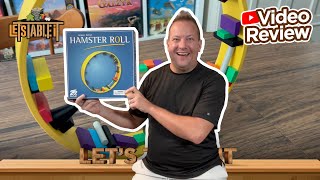




Hamster Roll Deep Dive
What the Community Thinks About Hamster Roll
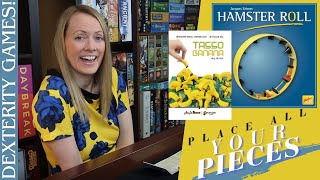
Reviewers almost always start with a laugh. Hamster Roll, published by 25th Century Games and first released in 2000, asks players to add wooden pieces to a large segmented wheel that rolls across the table. Ryan and Bethany Board Game Reviews admit the game looks silly at first glance, but say the impression changes once the wheel starts moving and the pieces begin to tip. Their verdict is that it is an excellent family game because the rules teach themselves and the excitement arrives almost immediately.
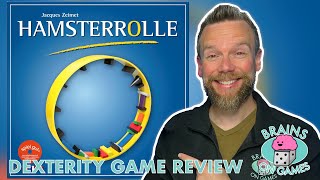
Praise is consistent across channels. Dr. Brian McDonald of Brains On Games calls it a Grail game and describes waiting a year for the import to come back in stock, arguing that it offers something different from Jenga. Let's Table It goes further and calls it a dexterity game unlike any other, stressing its table presence and the way onlookers want to see what is happening. Tantrum House places it in a Wednesday "would you rather" pairing with UVO and leaves the choice to viewers, which reflects how often the game is framed as a quick, physical filler with strong spectator appeal.
The main point of disagreement concerns who will enjoy it most. Ryan and Bethany's young children embraced the game and invented house rules, while the father of a nephew in the Brains On Games video found the balancing hard going and suggested emotional children might struggle with it. Meeple University found that its pace suits players who dislike long stretches of watching someone carefully balance a tower, and Tabletop Tolson, hosted by Kimberly, valued the way turns move quickly. Logistics also come up often. Reviewers agree the wheel and box are large, and Brains On Games notes that the 25th Century Games edition fits a standard cube better than the earlier import.
Core Mechanics That Define Hamster Roll
Stacking and Balancing
The central rule is directional. Once players agree which way the wheel will roll, every new piece must extend farther along that direction than the piece before it. Ryan and Bethany explain that pieces can overlap and be stacked in unusual ways, but a placement only counts if it reaches further down the path, and once the wheel begins to roll, the pieces near the middle end up on the edge and ready to fall. Brains On Games describes the same constraint in practical terms: a piece that does not extend beyond the yellow piece cannot simply be stacked in the same space, so the player has to angle it until it reaches farther. The balancing is what turns a simple geometric rule into a tense decision, because every placement changes the state of the entire wheel.
Physical Removal
Hamster Roll also offers a way to pass without adding weight to the structure. Ryan and Bethany describe taking a piece from the far end of the wheel and moving it forward along the path, which lets a player avoid being forced to add a risky piece. Let's Table It explains the same option in more formal terms: a player may remove a piece from one of the two lowest compartments and place it farther ahead in the rolling direction. Reviewers see this as a strategic stall that lets someone else deal with the more complicated part of the wheel, and Ryan and Bethany call it a way to stop things falling without being forced to take a whole bunch of pieces.
The Hamster Roll Experience
Tension
Reviewers repeatedly describe the moment before a placement as the defining feeling. Brains On Games characterizes the game as one where everyone is holding their breath, then cheering when someone makes a fantastic placement. Ryan and Bethany say the game is tense, and they describe a slowly rolling wheel that the player keeps adjusting while wondering whether this will be the turn that something falls. The suspense is shared, since the entire table watches each piece, and that collective attention makes the wheel feel like a communal event rather than a private puzzle.
Playful Silliness
The second experience reviewers describe is joyful silliness. Ryan and Bethany report that their youngest child stood on the chair during placements and bumped the table for excitement, and that the game kept generating house rules that reflected how much the child enjoyed it. Let's Table It highlights that even players who are not fond of dexterity games find it entertaining to watch. Brains On Games makes a similar point, saying the game is so funny and intense when the wheel begins to roll that viewers enjoy it even if they usually avoid balancing games. The lightheartedness is a large part of why reviewers recommend it as a game night opener or a shared family activity.
What Makes Hamster Roll Stand Out
A Design That Is Hard to Find Elsewhere
Almost every reviewer begins with the wheel itself. Let's Table It calls the game one of the most unique dexterity titles available, noting that there is no other dexterity game that works this way. Brains On Games makes the comparison to Jenga and Animal Upon Animal but adds that Hamster Roll has an extra layer because the entire playing surface moves. Ryan and Bethany agree that a simple concept can produce very different games depending on the group, which explains why the same rules feel novel to them each time they play.
Strategy Beneath Simple Rules
Reviewers are also impressed by how many options a few rules create. Ryan and Bethany describe players who play it safe with pieces close together, players who place pieces ahead to force opponents into riskier positions, and players who try to stack unusually. Let's Table It highlights the strategic choice of which piece to use and which to keep, along with the way a placement can set up the next player to knock pieces loose. The rule that a piece cannot match another piece already in the same section adds a constraint that becomes more significant as the game progresses, and the combination makes each turn feel distinct.
Potential Drawbacks
Box Size and Storage
The physical footprint is the most common practical concern. Brains On Games says the original import did not fit a standard cube and had to be stored on a higher shelf, although the 25th Century Games edition is smaller and fits better. Kimberly of Tabletop Tolson makes a similar observation, noting that the wheel is large and the box contains a lot of empty space, which makes packing up less convenient than with some other dexterity titles. Reviewers who have limited shelf space should plan for this before buying.
Frustration for Some Players
The learning curve and the repeated collapse of towers can wear on some players. Brains On Games reports that a nephew found the game harder than expected and that the nephew's father felt it could be frustrating for emotionally sensitive children, especially when knocking pieces off repeatedly. Let's Table It is more measured about replay value, describing it as more replayable than most people expect but less replayable than they might hope. Both points suggest the game works best for groups that enjoy the physical challenge and can laugh off a bad turn.
If You Enjoy Hamster Roll
Players who enjoy Hamster Roll's balancing tension will find a similar satisfaction in Jenga, which reviewers still use as the standard comparison for stacking games. Brains On Games names Suspend as the closest match, pointing out that both games ask players to hold a delicate arrangement together while avoiding a collapse. Animal Upon Animal suits players who enjoy the satisfaction of fitting oddly shaped pieces into a growing structure, while UVO, which Tantrum House pairs with Hamster Roll, appeals to players who want a quick physical challenge with a clear goal. Each recommendation builds on the same core appeal: a short, physical game where the table is watching every move.
What Reviewers Are Saying
"To be completely honest, when you see this game it just looks silly. But then you see it in action and you're like, this still looks silly, but it looks like fun too. It looks silly fun, and that is exactly what happens while you play the game."
— Ryan and Bethany Board Game Reviews
"The best thing about this game is that it's so unique, you know, there is no other dexterity game that does it like this, game does it, has a great table presence that keeps on rolling on and on. Everyone wants to check out what's going on."
— Let's Table It
"The ones which I find the most fun are not the Jenga types of ones where you are trying to make something balanced. There's a lot of tension in people standing around watching someone try to make something balanced, but I like the ones which have a bit more speed and pace to them."
— Meeple University