/pic8107311.jpg)
Do you stand beside Queen Catherine Ironfist and vanquish the lurking chaos? Do you help the power-hungry Mutare fulfill her plans and turn her into a dragon? Or, maybe you despise all of this and want, together with Sandro, to cover the whole world with the shadow of death? Move through the beautiful land of Antagarich, plunge into adventures and strategic battles with endless possibilities.
Heroes of Might & Magic III: The Board Game is an adventure-driven strategy game for 1-3 players set in the cult fantasy universe. The game includes competitive, cooperative, and solo scenarios to battle and explore your way through. The adventure maps will be represented by tiles, with each tile divided into seven hexagonal fields.
Play different scenarios with different victory conditions, explore the adventure map to discover various locations, and play out epic battles using the unique miniature models that represent the iconic units from the original game. All battles will be performed with models on separate boards.
—description from the publisher


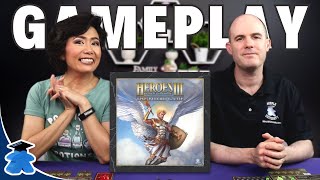
Mechanics (from transcript analysis)
Video topics + discussion points
Quotes (from this video)
- Heroes of Might and Magic 3 is a scenario driven game
- there's various scenarios there are Cooperative ones there are competitive ones some that play in Solo campaigns
- this is the first board game which is based on the third video game
References (from this video)

Mechanics (from transcript analysis)
Video topics + discussion points
Quotes (from this video)
- "The Adventure phase is played in rounds and rounds will alternate between resource rounds in which players will gain income and astrologer rounds in the latter"
- "two types of Adventures events and combats"
- "Shuffle the three new decks adventure and positive and negative morale you won't use the morale tokens the astrologer events or the neutral units"
- "the battlefield expansion for Heroes of Might and Magic 3 the board game"
- "the battle phase begins after 9 13 or 16 rounds of adventuring depending on whether you wish to play a small medium or large battle"
- "if you'd like to use the positive and negative morale decks instead of the morale token you can do that"
- "you'll be going out on a detailed exploration of the lands and playing some simplified battles on this 4x5 combat grid"
References (from this video)

Mechanics (from transcript analysis)
Video topics + discussion points
Quotes (from this video)
- hi everyone it's da and Taran here from Maple University
- Heroes of Might and Magic 3 the board game
- this will be a little bit different to our typical how to play
- we filmed these videos as a series so to learn how to play the entire game you'll want to watch the entire series
- you will have your town board which you flip face up and note that your faction color is represented by the border around this side
References (from this video)

Mechanics (from transcript analysis)
Video topics + discussion points
Quotes (from this video)
- every statistic and ability card has two effects separated by a crown and these are called the basic effect and the expert effect
- you may freely choose which of the two you wish to play when you cast a spell for its spell effect
- the strength of your deck is very much entwined with the level of your hero
- level up to level four or level six take the specialty card of the corresponding level which you set aside during setup
- and that's how to play cards and to level up your heroes in Heroes of Might and Magic 3 the board game
References (from this video)

Mechanics (from transcript analysis)
Video topics + discussion points
Quotes (from this video)
- the solo Campaign which is a series of thematic scenarios which which are played against an AI
- this means your deck will start a Little Bit Stronger going into each subsequent episode of a campaign
References (from this video)
Mechanics (from transcript analysis)
Video topics + discussion points
Quotes (from this video)
References (from this video)
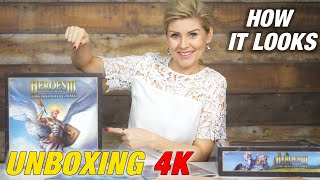
- Large and varied component set across multiple card types and board elements, offering potential depth and tactile appeal.
- Double-sided combat boards and modular map components suggest strategic variety and replayability.
- Clear emphasis on unboxing and component quality, providing a strong first-impression for potential buyers.
- Presence of hero figures/boards and a diverse cast of hero archetypes implies varied playstyles and thematic flavor.
- Rulebook is described as lengthy (over 40 pages), which could indicate a steep learning curve for new players.
- Prototype status may mean final production quality, art, and balance are not yet confirmed, introducing risk for early adopters.
- The breadth of card types and decks hints at high complexity, potentially challenging onboarding and setup.
- Heroic exploration and arcane conflict driven by a large card-driven system and city-building elements, teased through an in-box component showcase.
- A fantasy realm populated by magic, heroes, necromancers, warlocks, clerics, and competing factions. The game emphasizes exploration, combat, and arcane interaction across a modular map with tiered levels.
- Prototype showcase and unboxing with emphasis on physical components and potential play feel rather than final production details.
Mechanics (from transcript analysis)
- Deck ownership and faction customization — The game appears to feature decks assigned to different factions or heroes, allowing players to customize their tools and strategies over the course of play.
- Dice-based resources and combat — Attack dice, resource dice, and treasure dice introduce randomness and resource management into the core gameplay loop.
- Double-sided combat boards — Combat boards are dual-sided, offering different layouts for battles to increase replayability and tactical variety.
- Extensive card deck ecosystem — Numerous card decks are revealed in the unboxing (astrology/proclaimed cards, neutral units, ability cards, artifact cards, spell cards, unit cards, special Hero cards, town-building cards), indicating a dense, multi-deck system that drives effects and strategic options.
- Hero boards and faction/character diversity — Multiple hero silhouettes (Night Overlord, Death Knight, Necromancer, Warlock, Cleric) imply separate boards or stats that influence combat and hero-specific actions.
- Round tracker and hero boards — A round tracker and dedicated hero boards indicate a structured progression with tracked status effects, hero actions, or mission timing.
- Scenario / Mission / Campaign Game — A mission or scenario book accompanies the game, providing defined objectives and replayable content beyond a base game.
- Scenario and mission framework — A mission or scenario book accompanies the game, providing defined objectives and replayable content beyond a base game.
- Tile-based modular map with multiple levels — The map is presented as tiles with varying levels, suggesting depth and strategic positioning during exploration and combat.
- Town building and faction city dynamics — Mini Town building cards suggest a city-building layer that influences resources or victory conditions, integrated with other game systems.
- Track Advancement — A round tracker and dedicated hero boards indicate a structured progression with tracked status effects, hero actions, or mission timing.
Video topics + discussion points
Quotes (from this video)
- looks great right but now I will show you the rest of cards
- the rules as you can see are really quite a lot of learn here in this board game
- more than 40 pages
- inside the box of this prototype with me
- I will show you how the components boards cards and of course Miniatures
- thank you guys for watching I hope you enjoyed this quick unboxing
References (from this video)
- innovative mana-lane mechanic
- plenty of cards (800+ in some pledge tiers)
- premium components and potential for epic scale
- heavy and potentially expensive
- complex for newcomers
- large-scale card-grid battles and strategy
- fantasy IP-inspired world with mana-management
- campaign-like, with deck-building and planning
Mechanics (from transcript analysis)
- card-grid battles / mana lanes — cards are placed along lanes, with colors representing mana types and powers
- deck-building — build a deck from hundreds of cards to power up heroes and abilities
Video topics + discussion points
Quotes (from this video)
- This is a 4X cooperative game that can be brutally punishing.
- There's a ton of content to go into on this.
- the painted cursed miniatures
- Don't Starve the Board game looks absolutely gorgeous
- I absolutely adore Elder Scrolls and the class lines
- Below the Asylum from Awaken Realms is a is a action horror board game
References (from this video)

- Very faithful homage to the PC classic
- Nostalgic appeal and engaging strategic depth
- Taps into the depth of Might and Magic with board-game practicality
- Rulebook and setup can be dense; heavy learning curve
- Long playtime at higher player counts; not ideal for casual sessions
- Fantasy kingdom conquest and questing
- Heroes of Might and Magic III universe recreated as a board game
- Nostalgic, PC-game-inspired campaign
- Too Many Bones
Mechanics (from transcript analysis)
- Castle-building and resource management — Build homes, produce units, and manage gold and resources to grow your domain.
- Character and unit progression — Heroes gain levels; units improve with upgraded structures and spells.
- Co-op or Skirmish play — Solo campaigns, co-op modes, or two-player skirmishes with balanced objectives.
- Deck-building and synergy with spells — Spells and unit enhancements mix with hero progression; a nod to the PC game's feel.
- Map exploration and hex-based battles — Explore a map, acquire resources, meet creatures, and engage in battles on a hex grid.
Video topics + discussion points
Quotes (from this video)
- it's not terribly complicated but you get that same feel as more complicated games it's just really elegantly designed
- the stone thing is so cool it's so weird is because it looks like a limitation and it almost feels initially like oh they didn't really think this through but then totally thought yeah
- I absolutely love this game but if I had to pick something negative to say I think I've already played it a bunch and I'm starting to be familiar with the deck
- the 3x3 grid like that alone ... that's a really cool idea of like having to pick which row and which column to trigger
- it's a contender for my early game of the year
References (from this video)

- captures core vibe of the video game IP
- asymmetry offers varied play experiences
- strong thematic pull for fans
- license-dependent and may be difficult to source
- unclear depth for non-fans of the IP
- Asymmetric faction play and hero-driven conflict
- Fantasy realms with diverse kingdoms
- nostalgic homage to the classic video game
- Blood Rage
- Twilight Imperium
Mechanics (from transcript analysis)
- area_control — Compete for control of key regions and resources
- asymmetric_factions — Different factions with distinct abilities and victory conditions
- hero-led_unit_combats — Heroes provide unique powers and drive battles
Video topics + discussion points
Quotes (from this video)
- it's not simple, it's streamlined
- you can win by communicating and collaborating
- the theme is super important for me, it draws you in
References (from this video)
- Rich, tactical combat with meaningful unit interactions and special abilities
- Deep campaign progression with settlements, treasures, and escalating power
- High replayability through multiple scenarios and enemy configurations
- Dynamic map exploration and resource management add strategic variety
- Clear sense of progression as heroes level up and unlock stronger units and spells
- Steep learning curve due to complex rules and many moving parts
- Rule ambiguities and evolving rulebook updates can cause confusion (notably AI deck reshuffle clarifications in later versions)
- Early-game balance can feel punishing without careful planning and optimization
- Hero-led armies and magical units engaging in strategic battles and territory control
- Fantasy world with castles, dragons, and heroes; map-based conquest with settlements
- Campaign-driven playthrough with scenario-specific rules and events
Mechanics (from transcript analysis)
- Ability and spell decks — Heroes gain permanent abilities and spells; leveling up increases hand size and unlocks specialty cards; spells can be searched or drawn during rounds.
- AI interaction and enemy hero — A mechanic where an enemy hero is introduced, with an AI deck and combat rules; some rules have undergone revisions (e.g., AI deck reshuffle rules).
- Combat: Damage Based — Unit activations are determined by initiative values; higher initiative units act first within each round, with ties resolved in favor of the attacker.
- Initiative-based combat — Unit activations are determined by initiative values; higher initiative units act first within each round, with ties resolved in favor of the attacker.
- Recruitment from neutral decks — At certain rounds players can recruit neutral units from decks; recruitment costs and dwelling requirements apply.
- Resource Management — Gold, building materials, and valuables are spent to build structures (e.g., City Hall, Brotherhood of the Sword, Mage Guild) that yield ongoing bonuses.
- Resource management and town building — Gold, building materials, and valuables are spent to build structures (e.g., City Hall, Brotherhood of the Sword, Mage Guild) that yield ongoing bonuses.
- Tile-based exploration and movement — Players move a hero and units across a map with settlements and resource tiles, triggering events and combat.
- Tile/Map Shifting — Players move a hero and units across a map with settlements and resource tiles, triggering events and combat.
- Timed events and round tracking — Astrologer predict/proclaim rounds drive special effects and events (e.g., extra movement, card draws, or map effects) on specific rounds.
Video topics + discussion points
Quotes (from this video)
- this was a blast
- the AI deck is not reshuffled once it runs out of cards
- this scenario has additional rules and one of them is that you can enter a block locked field if the enemy hero is in that field
- this is not mentioned anywhere in the rules
References (from this video)
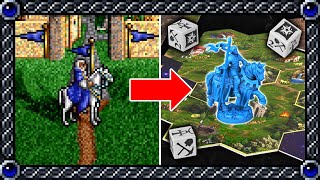
- Faithful to IP flavor and feel
- Engaging balance of deck-building with tactical map play
- Rulebook quality can hinder early play
- Not as in-depth as Mage Knight for some players
- Hero-based exploration with grid combat and deck-building elements
- Heroes of Might and Magic 3 universe reimagined for board
- Hero-driven campaign with unit upgradings
- Mage Knight
- Slay the Spire: The Board Game
Mechanics (from transcript analysis)
- Deck-building attached to hero progression — Your deck evolves as you gain loot and abilities
- grid-based tactical combat — Paused combat with tactical movement and engagement rules
Video topics + discussion points
Quotes (from this video)
- it's such a bizarre game
- this is one of the best translations from video game IPs into board game form
- it's basically like Star Wars themed XCOM
- the closest thing you'll get to a first person shooter in board game form
References (from this video)
- Expansion content adds variety and strategic options
- Rich campaign feel with hero progression and artifact choices
- Dynamic battles that reward planning and unit positioning
- New mechanics (astrologers, shared enemy decks, glory of Aria) increase depth
- Brutal, high-stakes combat can wipe out armies and require repeated playthroughs
- Expansion neutrals can feel punishing and slow pacing at times
- Reinforcement and gold economy can be challenging to manage late game
- Heroic fantasy conquest, exploration, and strategic management of resources, with magical artifacts shaping battles.
- Fantasy realm where mighty heroes lead armies across a branching campaign map with towns, dungeons, and ancient threats.
- Campaign-style playthroughs with scenario-specific setup, story prompts, and on-map decisions.
Mechanics (from transcript analysis)
- AI-driven neutral/mixed armies — Neutral enemy decks and AI-controlled encounters add variability and challenge to exploration and battles.
- Area Control — Map tiles, towns, and settlements provide strategic control and economic benefits; exploration drives expansion.
- Deck Building — Players manage a hand of spell/ability cards and artifacts; leveling up grants access to new cards.
- deck-building / hand management — Players manage a hand of spell/ability cards and artifacts; leveling up grants access to new cards.
- Exploration and area control — Map tiles, towns, and settlements provide strategic control and economic benefits; exploration drives expansion.
- Resource and economy management — Gaining and spending building materials, gold, and valuables to fund expansion and upgrades.
- Resource Management — Gaining and spending building materials, gold, and valuables to fund expansion and upgrades.
- Scenario-driven round structure — Alternating rounds (resource, astrologers, etc.) change the flow of the game and introduce new effects mid-campaign.
- Town building and reinforcement — Construct citadels/buildings to recruit units and reinforce armies; some buildings have upgrade paths.
- turn-based tactical combat — Grid/room-based combat with initiative, unit placement, and dice-driven outcomes influenced by unit abilities and artifacts.
Video topics + discussion points
Quotes (from this video)
- this scenario now has a conventional struct round structure all right
- I think I should be able to tackle that level two field in a second
- this is brutal I got most of my Army wiped but we'll recover
References (from this video)
- Rich tactical depth with varied unit types and abilities
- Flexible progression and expert effects via level-ups and crowns
- Campaign structure with meaningful decisions (settlements, mines, artifacts)
- High complexity and lengthy play sessions
- Dependence on dice/ artifact draws introduces luck
- AI and special enemy abilities (e.g., paralyzing medusas) can be punishing
- Hero-led exploration and conquest with resource management
- Fantasy kingdom campaign with castle faction, realms and sieges
- Campaign-driven with encounters, upgrades, and town/settlement progression
Mechanics (from transcript analysis)
- Area Control — Move on a campaign map, capture settlements and influence towns.
- Area control / territory influence — Move on a campaign map, capture settlements and influence towns.
- Deck-building / ability deck mechanics — Draw and use ability and artifact cards to influence actions and combat.
- Initiative-based combat and unit activation — Combat uses initiative values to determine order; flying units have special movement and attack rules.
- Movement Points — Tile types affect movement; snow paths reduce movement; visiting fields grant bonuses.
- Neutral and enemy armies encounter and AI deck during hero encounters — Neutral armies are drawn and deployed with level-based composition; hero encounters use an enemy M-deck.
- Reinforcement and population mechanics — Reinforce units by flipping population tokens; recruit bronze/silver units without required buildings under scenario rules.
- Resource management and town/settlement income — Income comes from settlements and mines; town board income is modified by scenario and captures.
- Terrain and movement costs (snow path vs grass path) — Tile types affect movement; snow paths reduce movement; visiting fields grant bonuses.
Video topics + discussion points
Quotes (from this video)
References (from this video)
- Gorgeous artwork and production values across minis, components, and cards, providing a high-fidelity fantasy aesthetic
- Three interlocking scopes (map, town, battlefield) create a dynamic rhythm and replayability as you switch between macro and micro decisions
- Solid solo campaign with varied scenarios and meaningful hero progression that feels rewarding over time
- Excellent inserts and organization in the core box; storage is well thought out and pages of the rule-set are usable with proper setup
- Expansions add substantial material—more factions, more tiles, more heroes, and broader campaign options
- Rule book is rough, scattered, and can be hard to parse without external references or fan resources
- Miniatures presence inflates shelf space and price; some players may wish for a non-miniature option or modular accessories
- Solo experience is a fraction of the multiplayer game’s breadth; to reach full depth you’ll likely want expansions
- Some expansion content is gated behind non-retail availability (tower expansion being trade show exclusive) and requires online downloads for full solo content
- Strategic fantasy warfare driven by hero-led exploration, resource management, and card-driven combat. The game blends campaign storytelling with modular scenario design to create a long-tail experience that rewards planning, risk assessment, and strategic diversification.
- A high-fantasy world inspired by the Heroes of Might and Magic video game series, where kingdoms compete for land, artifacts, and power across a richly illustrated map. The board game localization emphasizes exploration, town management, hero development, and tactical battles that echo the video game’s thematic arc of empire-building and magical warfare.
- Campaign-based and scenario-driven with episodic progress for factions. The narrative is conveyed through quests, loot, and the evolving capabilities of your hero as you conquer settlements, expand your economy, and face rival commanders on a map that intertwines exploration with tactical combat.
- Mage Knight
- Gloomhaven
Mechanics (from transcript analysis)
- Area Movement — The game separates map exploration from tactical battlefield combat. Movement on the map progresses resources and positioning, while battles occur on a dedicated battlefield grid with ranged, melee, and flying units interacting in tactical space.
- area_movement_and_battlefield — The game separates map exploration from tactical battlefield combat. Movement on the map progresses resources and positioning, while battles occur on a dedicated battlefield grid with ranged, melee, and flying units interacting in tactical space.
- deck_building — Players construct and optimize a Might and Magic-inspired deck from a pool of spells, artifacts, and event cards that influence combat, resources, and exploration. Deck choices shape your combat tempo, spell support, and strategic options for each encounter.
- deck_building_and_card_interaction — Cards interact with the battlefield and hero abilities, offering buffs, direct effects, and situational plays. The integration between deck-building, card draw, and unit management creates a layered, syncretic mechanic set.
- dice_combat — Combat resolution relies on dice rolls augmented by unit stats, card effects, terrain, and hero specialties. The randomness introduces tension and variability, ensuring that even strong boards can face swing moments, especially in late-game battles.
- exploration_and_quest_structure — The map is explored to uncover tiles, artifacts, and events. Exploration drives loot, upgrades, and strategic choices about where to invest in expansion and where to push for territorial control.
- hero_progression — Heroes level up through combat and exploration, unlocking specialties and powerful abilities that persist across engagements. This progression motivates players to invest in their commander and make strategic decisions about where to push for glory.
- Resource Management — There are three distinct resource types—valuables, building materials, and gold—that fuel town construction, unit recruitment, and expansion. Managing scarcity and timing resource income is central to engine-building and long-term planning.
- resource_management — There are three distinct resource types—valuables, building materials, and gold—that fuel town construction, unit recruitment, and expansion. Managing scarcity and timing resource income is central to engine-building and long-term planning.
Video topics + discussion points
Quotes (from this video)
- The artwork, presentation, and sculpts are absolutely gorgeous; this is eye candy in every sense.
- Playable without Miniatures; you can run the whole thing with hero boards and cards if you want to save space and cost.
- There is depth to the combat and economy; the more I played, the more I appreciated the nuance.
- The rule book is in pretty rough shape; you’ll need to rely on external references like the Astrologer’s Answer and Discord.
- Expansions bring more variety; the tower expansion adds a lot of content and keeps the game feeling fresh.
- Setup is relatively quick once you know the flow, and the inserts keep things organized and accessible.
- I would recommend this game for fans of the IP, but only with the caveat about rule complexity and storage.
- Multiplayer feels epic with the right group, while solo play remains highly enjoyable thanks to campaigns and replayability.