/pic167362.jpg)
Hex was invented by the Danish mathematician and poet Piet Hein, who introduced the game in 1942 at the Niels Bohr Institute. The same year Hex appeared in the Danish newspaper Politiken under the name Polygon. Hein introduced the game to the readers on December 26, 1942 and during the following four months gave them a problem each day to begin with - eventually two days a week, on Wednesdays and Saturdays. The solution would always appear in the following column. It was independently invented by mathematician John Nash in 1947 at Princeton University. In 1952, Parker Brothers marketed a version. They called their version Hex, and the name stuck. Hex has the simplest rules of almost any game: connect your color edges with a path of tokens of your color. There is also a "swap rule" (also known as a pie rule) which compensates for the inherent advantage of the first player.
There are a number of resources for Hex on the internet, including several real-time servers. If you want to play face-to-face, used Hex sets are occasionally available, and you can also make your own set. A Battlemat with 1" hexes can be cut into a 15x15 rhombus grid. Standard Go stones also work well for this board. It is also playable as a pencil-and-paper game, like the 3M Paper Game version.

Every game I played in 2024
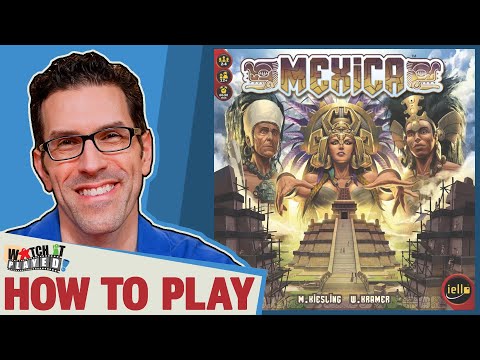
Mexica - How To Play

- Received as a free game at BGG Con.
Mechanics (from transcript analysis)
Video topics + discussion points
Quotes (from this video)
- it was me Matt Marty and I forget the other gentleman's name it's bugging me that I'm forgetting his name he was fantastic he he was uh he worked with FFG and we played learned and played Great Western tra together Marty knew how to play and he taught us he did a fantastic job teaching the game
- so yeah so that that was another game I was really glad to have gotten a plan of anything else you want to mention before we move on from BG
- I love Jenga so of course I'm going to love what is wony what okay so it's uh it's just the these squares those little medium big squares but they're not quite squares the cubes are a little bit wonky you could say cuz they're like shaved on edges and so you can't really stack them properly you have to angle them
- that reminds me cuz the game came up uh Tada someone some asked about games that make make you laugh sure recently especially uh tadada and hex casters were great for making people laugh like the whole yes you know when you have to roll dice with your elbows on the table especially when someone had already played something on you and you have to have your elbows on your table and while you're doing something else yeah well you have the head on your table too and it's just impossible yeah that game's about being ridiculous super ridiculous yeah
- it's basically just looking around and seeing if there's vacant looks on everyone's faces like they don't understand what's going on especially if while I'm reading at the same time I'm not fully understanding the rules like if it's my first time reading through the rules trying to teach the game and I'm not quite fully understanding it so there's Factor number one if you as the teacher are like I'm not getting this working that's a great reason to box it up
- I actually enjoy these live shows a lot more than than doing the table talks enjoy them more you know what I mean they're a different kind of work like this we sit down I prepare stuff in advance takes time to set up but then when it's done it's done with table talk it's like we shot it for a couple of hours now we need to go edit that then we I likeed having the viewers be a part of it so then getting in their stuff and editing their content and it all is kind of time consuming not in a bad way but it's like you have to create time for that though if you're going to do it
- yes my hope is that we'll be able to have those uh available in the future as well
- I just played with Luke overcooked it's a couch only Co-op game and boy did we have a lot of fun our first play of it we were just cackling while playing that game
References (from this video)

- stunning production and board aesthetic
- clever flip mechanic turning words into color-dominance
- unclear how the event mechanic affects gameplay
- word-building and area control
- two-player word game on a hex grid
Mechanics (from transcript analysis)
- hidden event layer — a larger board with a D20 event mechanic adds variability
- tile-based word construction — two players place tiles to create/expand words; tiles flip to their color
Video topics + discussion points
Quotes (from this video)
- this is a work replacement Style game that very much reminds me of dwellings of el reveal
- I like Tableau building I like interesting work replacement systems
- I am quite looking forward to digging into this game to see exactly how it works
- I genuinely don't really understand and honestly I wouldn't say I'm particularly compelled by the mechanics that are explained so far
- this game has this interesting River idea where six cards will put face up in the middle of the table
References (from this video)

- Good feedback when it came out
- People wanted a copy after it was out of print
- I think it's good though it's fun
- Didn't get critically successful
- Annoying in a co-op game that you can't tell people what you saw
- Only one print run
Mechanics (from transcript analysis)
- cooperative play — The game is described as cooperative.
- tile flipping — Players flip tiles as part of the gameplay.
Video topics + discussion points
Quotes (from this video)
- Ghost Face the game it was pretty dumb
- YouTube Shorts are like a whole different weird thing I'm still trying to figure it out
- it would be stupid to me not to try and catch lightning in a bottle again
- I just did 40 of them while we were on did and you know what 39 of them won't do anything but if one of them hits bam boom
- our flag means death is a comedy on Max
- it is absolutely an LGBTQ TV show
- we have been using our old roommates ex-girlfriend's Grandma's Netflix account for the last six years
References (from this video)

- The mechanics are inspired by Dune.
- It was a good game.
- Hard to find nowadays.
- Considered a rarity due to limited print runs.
- Political intrigue and conflict over the control of Arrakis.
- The Dune universe.
- Dune
Mechanics (from transcript analysis)
- Area Control — Players compete for control of territories.
- Dune mechanics — Utilizes mechanisms inspired by the Dune universe.
- political maneuvering — Involves alliances, betrayals, and strategic negotiation.
Video topics + discussion points
Quotes (from this video)
- there's there's a version of Monopoly yeah
- Artisan dragons with five in their breath craft goods and wonders with skill that's top shelf
- I don't have any information on a game called Flame crap because it doesn't exist in the data I was trained on
- Securing valuable resource spots and diversifying your access to resources are key strategies.
- they have figured out how to do parkour in board game mechanics
- get your ass on Board Game Geek get ass Board Game Geek
- it was seven eight guilt eight guild and one not guilty and then so the lady who is not guilty she just said I just want to talk about it for a minute okay we talked about it for five minutes and we revoted and it was guilty done
- the worst thing is to be the alternate oh you know watch the whole thing and then you got to just stop and you leave
References (from this video)
- Manages to be fun despite its 'see what happens' nature.
- Offers a unique flavor of chaotic fun.
- Base game has very little strategic control.
- Hurl hexes at each other and deflect them at other people.
Mechanics (from transcript analysis)
- Card Play — Players use cards to perform actions.
- dexterity — Involves physically throwing hexes.
- Set Collection — Implicitly involved in playing cards and managing a hand.
- Take That — Players directly target each other with actions.
Video topics + discussion points
Quotes (from this video)
- It's a real time cooperative dexterity game where you build cures to deadly diseases using uh wooden blocks.
- The gameplay is fairly I don't know strategic doesn't give the right connotation but it's um there's a lot of player agency and that you are in fact designing the very things which you're going to build.
- You're matching sequences in order to stack towers of blocks like you did when you were like 10 years old in a frustratingly complicated pattern that ends up confounding you by the end of it.
- It really is a hard game to talk to people about, which is one of the reasons we did gameplay of it on the channel. it it doesn't come across as interesting as it is until you sit down and start playing with it.
- The initial game came so the core design mechanism and build mechanism came together extremely quickly.
- The game has a momentum to it. The game is real time and it's real time for a reason.
- The master cure system has turned out so well because it's a puzzle that is rewarding.
- The physical mechanisms of the game are evocative of this theme.
- Don't hide your designs because like nobody's going to steal them and if they do people won't buy them.
- Always keep interest curves in mind.
- I do find it really fascinating that whether it's you with Spirit Island or Elizabeth Hargrave with Wingspan that create games that are known across the I mean the depths of the industry as some of the best out there.
- Yes, we're rich. We're not ultra rich. We don't have a yacht. We don't have a second home, but we like we have a mortgage and we own our home and that's in the Boston area.
References (from this video)
- A very good game
- A very solid game
- Setting never quite worked as well as Dune
- Factions not easily understood without Dune context
- Factional conflict
- Dune
- Dune
- Twilight Imperium
Mechanics (from transcript analysis)
Video topics + discussion points
Quotes (from this video)
- it was raining I said to him we really need to solve this case and he agreed
- Detective a modern crime board game might be the most disappointing game I've played in a very very long time
- so what was billed to me is a fantastic detective just felt like busywork it felt like drudge work it felt like repetition
- the sitting was weird you like some elite crime unit but you're investigating a theft from 70 years ago
- this is an old game it's been out of print forever it's one of the Holy Grails of board game collecting
- it's just a mess of a game city remnants just doesn't deliver on its promise of being this intricate gang building area control game
- and it's got these wonderfully big taro sized cards that that look gorgeous
- and the second thing is one of the people of my regular group has rather poor eyesight and literally cannot play the game
- Between 2 cities love that game it's still one of my top twenty or so games in my collection I absolutely endorse and adore it
- Megaland is fine for what it is and that's an easily accessible short playtime push your luck game you can set up play and be done in 15 minutes
- and that is how you make money off board game media is buying games that 80% off and then selling them for $10
- just because there's a new edition doesn't mean that editions going to be better for you new doesn't mean better for everyone
- good games that are just ok they're just they're solid leave me in this weird space from like ok I've played that and that's about the level of engagement
- but the simple fact is this game takes up so much damn space it takes something that same space as six other games
- at some point a collection becomes unmanageable or unplayable
- there's a danger in this hobby of overloading yourself with cardboard
- I now have games that I've had for months that I haven't been able to get to yet simply because of the demands of a channel and work
- if you're looking to buy a game ask yourself am I actually going to be able to play this anytime in the future
- I mean I run a YouTube channel that reviews board games so I will eventually get through all the games I have and I will put them on the channel
- but I worry that for some people the gating is more important than they're having and that's kind of troubling to me
- it's okay to get rid of some games it's okay not to have everything in your collection it's okay for another friend of yours to own a game and for you to borrow it off them if you want to play
- there's literally no need to have a thousand unplayed board games sitting in your garage
References (from this video)

- Can get credit for work other players have done.
- Can found a district someone else worked on.
- Can build temples to block access to bridges.
- Can build temples in ways that trap other players.
- Can use teleporting to escape being penned in.
- Can discard district tokens if they cannot be satisfied.
- Can be trapped by other players or buildings.
- Cannot place canals within a founded district.
- Cannot place temples on top of other temples or palace spaces.
- Cannot place canals on Emperor's Palace spaces or on top of other canals/lake.
- Cannot place canals on land spaces adjacent to bridges.
- Bridges cannot lead into the lake.
- Cannot move diagonally or stop on/pass through a space with another Noble, temple, or district token.
- Nobles (Pilli Mex) shaping the city to rise to high office at the emperor's side
- The great city of Tenochtitlan
Mechanics (from transcript analysis)
- Action Point Allowance System — Players have six action points to spend on their turn for various actions like constructing canals, founding districts, building bridges, building temples, and moving their noble. Action point tokens can be collected and spent later for additional action points.
- Area Control — Players aim to have the greatest 'Grandeur' (total levels of temples) in founded districts to score prestige points. This is also used for scoring in unfounded districts in the second period.
- Race — The game is played over two periods, and scoring occurs at the end of each period. The game ends when specific conditions related to district founding and temple placement are met.
- Set Collection — Players collect temples of different levels and use them to build in districts. The game ends when a certain number of districts are founded and a player has placed all their initial temples.
- Tile Placement — Players place canal tiles to carve up the island into districts and can place temple pieces within these districts. District tokens are also placed to mark founded districts.
Video topics + discussion points
Quotes (from this video)
- In this video we're going to learn the two to four player game Mex by super meele and yellow games
- The Mex me you are a pilli Mex a great Noble and you hope through your efforts in shaping the city that you'll rise to a high office at the emperor's side
- players will be carving up the island with canals to create and found districts of specific sizes as requested by the emperor
- crafty Nobles can even get credit for work that other players have done
- you can found a district that somebody else spent their time working on you just have to have your Noble there and take the action to found it before they do
- you can build temples in ways that would trap yourself or even another player
References (from this video)
- Quick to play
- Chaotic
- card-based chaos
Mechanics (from transcript analysis)
- Card placement — Add cards to central piles in ascending order
Video topics + discussion points
Quotes (from this video)
- Daisy Walker remains the undisputed champion of Arkham
- I always have a bad reaction to games which seem to go 'here's another unnecessary mechanic'