







Hibachi Deep Dive
What the Community Thinks About Hibachi
Reviewers approach Hibachi as a dexterity game with an economic core. In the Meeple University rules walkthrough, the Before You Play live session, the Board Games With B7 feature, and the Gaming with Edo & Jessica Kickstarter roundup, the same picture recurs: players take the role of teppanyaki chefs, flick face-down poker-style chips onto a dual-layer board, and let the landing spots decide which ingredients they can buy or sell. The mood is warm. Board Games With B7 calls it a charming, light-hearted choice for anyone who enjoys dexterity games, while Gaming with Edo & Jessica describes it as a simple, fun coin-tossing game that they got a kick out of despite running a little long.
The reviewers who played it on camera seemed to enjoy the chaos as much as the cooking. Before You Play's live session spent much of its time on stray throws, invalid landings, and chips that jumped or left the table, and the Watch It Played segment that featured Hibachi on a people's choice countdown was similarly quick to highlight how much fun the throwing itself is. The throws are what stick with these reviewers, more than the recipe math.
Core Mechanics That Define Hibachi
Chip Throws Set the Market
Each round opens with a throwing phase. Meeple University explains that players secretly choose one of their chips and toss it face down, and that chips landing over the outer edge are removed without replacement. Knocking an opponent's chip out of position is legal, and Meeple University says that move "is a key part of the strategy." Before You Play added a practical twist: Monique explained that high-value chips should go toward the bonus spaces, while lower-value chips are better aimed at ingredient bowls where they set a cheap purchase price. The same flick can therefore serve several purposes, and a player must decide in advance what each chip is for.
Recipes Demand Exact Ingredient Sets
Recipes are the win condition, and they only pay off when the exact ingredients are in hand. Meeple University notes that a recipe is completed by discarding the three ingredients shown on it, and that the first player to complete a third recipe wins immediately. Before You Play made the same point in dialogue, saying that "to fulfill you must have ingredients," and walked through a private recipe that needed broccoli, fish, and rice. Recipes drawn from the reserve bonus space are hidden, so a player can quietly work toward a goal that no opponent can contest. Because the first chef in turn order resolves recipes first, the head chef role carries real weight in the final cooking phase.
Scarce Ingredients and Cash Drive Every Decision
The ingredient economy is where the hosts spent the most time. Meeple University describes the sequence: each bowl with chips is resolved in turn, sales come before purchases, and a buyer pays the cumulative value of their own chips in that bowl. Before You Play explained that buyers remove their highest chip after each purchase, so the next ingredient can become cheaper, and that a player cannot sell and buy the same ingredient in one turn. Cash is finite, too. Before You Play noted how quickly their starting money ran low, with one host saying they were down to 800 yen and "running low," which turns each bowl into a choice about what a player can afford to spend.
The Hibachi Experience
Chaotic and Unpredictable
Board Games With B7 describes the play as "dynamic and engaging, often becoming wild and chaotic as chips fly across the board." That unpredictability is the defining feeling. Chips scatter, bonus spaces flip over to reveal hidden totals, and a chip intended for one bowl can end up somewhere else entirely. Before You Play reached a similar conclusion, imagining a full four-player table as "pretty pretty wild." The outcome of a round stays hard to predict until the last chip is turned over.
Interactive and Dynamic
Every player's throws affect everyone else. Meeple University stresses that knocking chips out of the way is part of the plan, and Before You Play called a deliberate bump "rude but legal." Watch It Played quoted a viewer who said the game lets players annoy their friends by kicking their chips around, which captures the playful edge of the interaction. Ingredient sales are open to everyone, so a player who never tosses a chip into a bowl can still sell there.
What Makes Hibachi Stand Out
Tactile Chips and a Recessed Board
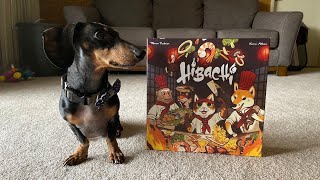
Components earn consistent praise. Gaming with Edo & Jessica singled out the components and noted that the double-layer board keeps tokens from sliding off the table after every throw. Meeple University describes a dual-layer board with a recessed throwing area, which gives players a clear target and a physical boundary. Before You Play admired the chips for feeling like true poker chips, and pointed out the small center hole that decides whether a chip counts as landing on a space. The hole is a neat detail because it turns a rule into something players can literally see on the table.
Bonus Spaces Turn a Throw Into a Prize
The four bonus spaces give the throwing phase real stakes. Meeple University explains that the highest total on each bonus space wins that space, and the winner gets to throw an extra chip, draw ingredient cards equal to their highest chip divided by 100, reserve a recipe in secret, or take the head chef token. Before You Play showed how a single well-placed chip could draw six ingredients and let its owner keep one. Because a strong chip can pay off in several ways, a single throw can matter well beyond the bowl it lands in.
Potential Drawbacks
Dexterity Can Decide Rounds
Some players find the physical side demanding. During its live session, Before You Play admitted to struggling with throwing strength, asking whether their limbs simply would not allow a proper toss. The hosts also admitted they had not been strict about the rule against extending a hand past the table edge. A player with a steadier arm can dominate rounds, and co-host Naveen, whom the hosts called the Hibachi champion after winning every game they had played, was described as the athlete of the household. Groups that prefer strategy to physical skill may find that tilt frustrating.
Length and Loose Rules
Gaming with Edo & Jessica said that Hibachi is a little long for what it offers, even though the team appreciated the spice expansion added to address that. Several reviewers also flagged that the material they played with was prototype stock, and Meeple University warns that the rules and components may not be final. Before You Play also settled a disputed first-player question with a house rule, and admitted that the edge rules were not strictly enforced during their session. Players who want a tightly specified experience should expect to settle a few questions at the table.
If You Enjoy Hibachi
Several games came up alongside Hibachi, and reviewers offered varying levels of endorsement for each.
- Safranito: the 2010 original that Hibachi re-implements. Meeple University and Before You Play both name it as the game this one is built on, making it the most direct next step for anyone who enjoyed the chip-throwing market.
- Pipeline: the designer of Pipeline joined the Before You Play stream, where the channel noted a Pipeline expansion due in December. Reviewers do not describe its mechanics, so treat it as a lead to explore rather than a verdict.
- Curious Cargo: Before You Play said it had been livestreaming Curious Cargo during the same stretch. As with Pipeline, reviewers mention it in passing rather than evaluating it.
- Mysterium Park: Before You Play described it as a truncated, lean version of the original Mysterium, and played it on their channel. It is a reasonable next pick for groups who want a leaner game from the same family.
- Calico: named as a favorite play by Before You Play, who said it was crunchy and puzzly with a luck factor that pulls players in different directions. It is a fit for players who want more planning than Hibachi's chip throws allow.
- Truffle Shuffle: a filler card game in which players build a pyramid and play poker hands with chocolate-themed cards, according to Before You Play. It is a lighter pick for groups who want a quick, low-chaos game after Hibachi.
What Reviewers Are Saying
"The game play is dynamic and engaging, often becoming wild and chaotic as chips fly across the board, adding to the excitement."
— Board Games With B7
"...a little long um but they did add a little spice expansion to try and combat that a little bit but i got a kick out of it and then i really enjoy the components."
— Gaming with Edo & Jessica
"obviously a dexterity game it is but also the way you go about it is very very fun it's like flicking throwing and flick."
— Watch It Played