/pic3342007.jpg)








Hotshots Deep Dive
What the Community Thinks About Hotshots
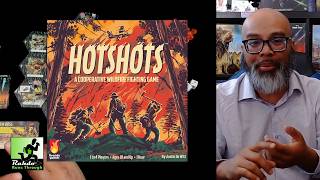
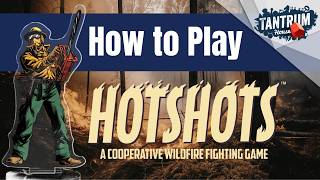
Reviewers praise Hotshots as a fast-paced, thematically immersive cooperative game that delivers genuine tension through its push-your-luck dice system. Before You Play frames it as a fully cooperative firefighting game that moves briskly, while TheGameBoyGeek highlights the teamwork of cutting firebreaks and calling in vehicles. Tantrum House emphasizes how the press-your-luck core keeps every turn weighty. Designed by Justin De Witt and published by Fireside Games, the game stands out for feeling more tense and decision-driven than many cooperative titles while remaining accessible to groups of any skill level.
Core Mechanics That Define Hotshots
Push-Your-Luck Dice Rolling at the Heart
The central mechanic of Hotshots is a push-your-luck system built around rolling firefighting dice to match symbols on terrain tiles. On a turn, a player locks in at least one matching die, then chooses to stop and claim a reward or push their luck by rerolling the rest. This choice becomes agonizing as players chase better outcomes: more matches yield firebreaks, flame removals, and reward tokens, while the biggest combination clears multiple flames at once. The elegance lies in the tension between settling for a guaranteed modest reward and pushing for something better at the risk of busting and adding a flame to the tile instead.
Cooperative Support and Containment
Players gain support through positioning, such as standing on a tile with another character or being adjacent to the lake, and that support can offset a failed roll. This keeps the push-your-luck system from feeling purely punishing while preserving the danger, and it naturally pulls players toward coordination. Firebreaks block the fire's spread, and the team must decide together where to draw their lines as the blaze advances. Before You Play stresses repeatedly that this is a fully cooperative effort, where containing the fire requires the whole table working in concert rather than any one player acting alone.
The Hotshots Experience
Thematic Immersion and Escalating Tension
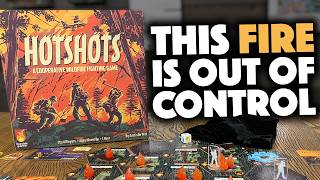
Hotshots captures the visceral pressure of wildfire containment. The board is already ablaze when the game begins, setting immediate urgency and forcing hard triage decisions from the first turn rather than easing players in. Wind effects change the fire's direction unpredictably, and fire cards constantly push new flames onto the board, creating cascading scorch reactions that can spiral toward disaster. Reviewers consistently describe the game as tense and fast-moving, with every turn feeling consequential, while the modular board ensures variability so the experience never becomes mechanical despite the streamlined ruleset.
Meaningful Character Roles Tied to the Board
Each player takes a unique crew role with a special ability, and those abilities connect to the spreading fire in ways that raise the stakes. As tiles scorch, the consequences mount, and certain key tiles carry outsized penalties when lost. This design creates compelling tension, since players must balance protecting important tiles against the broader goal of extinguishing fires elsewhere. TheGameBoyGeek highlights how this transforms what could be static role selection into an evolving board-state puzzle, where positioning and sacrifice decisions shift constantly with the blaze.
What Makes Hotshots Stand Out
Vehicles as Powerful, Temporary Wildcards
The game offers powerful one-time-use vehicles with dramatic effects, such as an air tanker that clears flames across a line of tiles, a helicopter that strips multiple flames from a single tile, and a dozer that lays down a run of firebreaks. Each vehicle is a precious, irreplaceable resource, and players must decide when and where to deploy it. The strategic weight of using a vehicle at the wrong moment is real, since wasting it removes a powerful tool for good. Reviewers highlight vehicles as a satisfying way to swing momentum or address a crisis at the critical moment.
Streamlined, Approachable Tension
Hotshots packs its drama into a fast, teachable framework. The push-your-luck core means firefighting never feels like simply removing tokens with an action; each roll carries weight. Before You Play and Tantrum House both stress how quickly the game comes together at the table, while the constant threat of the fire keeps the pressure high. This combination of accessibility and genuine tension is what reviewers return to, noting that the streamlined rules invite players of any experience level without sacrificing the white-knuckle feel.
Potential Drawbacks
A Punishing Early Game
Hotshots fires aggressively from turn one, with no gradual difficulty ramp. The board starts dangerously ablaze, and the number of ways to lose can feel overwhelming in the opening turns. Newcomers may struggle with the decision-making while also falling behind, creating a discouraging early experience. The game does not ease players in, and while that aggressive opening is thematically appropriate, it may frustrate groups expecting a gentler start.
Alpha Gaming and Quarterbacking Risks
Like most cooperative games, Hotshots is vulnerable to alpha gaming, where one assertive player dominates the group's decisions. The push-your-luck choices and firebreak placement invite detailed table discussion that a single player can monopolize. Reviewers note this as a general risk of the cooperative format rather than a flaw specific to Hotshots, but it is worth considering for groups with uneven experience levels or strong personalities.
If You Enjoy Hotshots
If Hotshots resonates with your table, consider Flash Point: Fire Rescue, another cooperative firefighting game with a similar theme but an action-point engine rather than dice. Castle Panic, also by Justin De Witt, shares the same approachable, team-focused tower defense spirit. For cooperative tension without the push-your-luck element, Forbidden Island delivers tight, fast-paced teamwork, while Pandemic offers the classic race against an escalating threat. Each shares Hotshots's emphasis on coordination under pressure.
What Reviewers Are Saying
"This is a fully cooperative push-your-luck firefighting game for one to four players that plays in about an hour, in which players will work together to extinguish the fires."
— Before You Play
"You'll be using teamwork to press your luck, cut firebreaks, and call in vehicles for support in hopes to extinguish all the fires."
— TheGameBoyGeek
"Hot Shots is a cooperative press-your-luck firefighting game for one to four players where you work together to put out wildfires. It's published by Fireside Games."
— Tantrum House