/pic7810845.png)
The six Investor cards are shuffled and one is dealt face up to each player. Any Investor cards not dealt to the players are set aside for now. The Influence Card deck is shuffled and each player is dealt five cards face down. The player whose Investor is first in alphabetical order goes first. The player to the starting player’s right places the Dollar marker on any space on the game board.
Each space on the game board represents a potential deal which Investors have to approve the deal and the number of dividends to be paid to those investors.
On one’s turn, a player can open negotiations on the deal where the Dollar marker rests or roll the six-sided die. If the player rolls the die, the Dollar marker is advanced clockwise around the game board counting the available deals as spaces. Once the Dollar marker rests, the player may try to negotiate that deal or draw three Influence cards. If by drawing cards, the player’s hand exceeds twelve the player chooses which cards to discard to the limit.
Should a player choose to make the deal, the player negotiates with the player or players representing the Investors how to divide the money at stake. The amount is number of dividends written on the space multiplied by value of the shares written on the deal tile. Any or all of the players may use their Influence cards to affect the outcome of the deal:
• Clan cards may act in place of Investors whether the Investors are in play or not.
• Travel cards put Investors out of play for the negotiations. Some are specific for a given Investor; some are wild to be played on any Investor.
• Recruitment cards can only be played in sets of three to steal another player’s Investor and make it your own.
• Boss cards give the player control of the negotiations.
• Stop cards immediately stop the effects of Travel, Recruitment, and Boss Influence cards.
The players are paid from the bank when a deal has been struck. The game board space is covered with the Deal tile (effectively closing the space from further game play), the Dollar marker is moved to the next open space, and play continues with next player.
Once nine deals have been made, a die is rolled after each subsequent deal to determine whether the game ends (with the odds increasing each time). Victory goes to whoever has the biggest bankroll!
--user description
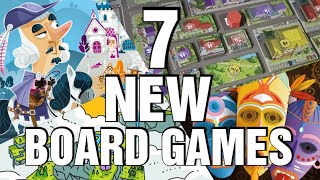
- Excited to play
- Negotiation
Mechanics (from transcript analysis)
- Negotiation — negotiate the dividends that are going to be um paid out
- Player Elimination — you can actually just kick people out of the hot seat and then you can take control of the um of the negotiations
- Set Collection — these skills which are basically cards that you need to complete it
Video topics + discussion points
Quotes (from this video)
- hey everybody it's that time of the month again where I talk about all of the new board games that I've added to my collection
- I did miss the boat on the original foundations of Rome um not like I would have bought it anyway because it just looked a bit too cumbersome um too expensive and just too large but I love the idea of the game
- I am yet to play this one um because you do need the higher player counts really I'm probably going to wait until I have at least four people with this one even then I probably want to play it with five or six players to get the to get the most from it
- I think it could go one of two ways it's either going to be a really big hit or it's going to crash and burn but I'm excited to find out regardless
- I've pretty much explained the whole game there lots of games like this out there but um I will review it and to compare it against some of the you know the classics
- I'm quite excited to share my thoughts on castle combo and my review of this one should be up very very soon as part of a review Series
- for one reason or another which I can't even imagine now I did choose to sell this one because I played it quite a few times on the bounce thought that I'd seen everything
- so really happy to have that one back in the collection
- I think there's some interesting ones you know big small again old and new I'm really looking forward to trying I'm the boss
- hopefully you've enjoyed the video um and are excited to see my thoughts on some of these games
References (from this video)
- Unique and energetic negotiation gameplay
- Ahead of its time with its free-wheeling style
- The serious theme might limit its appeal compared to a more 'goofy' theme.
- Negotiation
- Business
- Exploding Kittens
- The Boss
Mechanics (from transcript analysis)
- Free Form Deal Making — Players can make deals freely, leading to a chaotic and energetic gameplay experience.
- Negotiation — Involves open negotiation and deal-making between players.
Video topics + discussion points
Quotes (from this video)
- It's all about the narration, the story, the the you know, and that's I still get caught up in this map.
- It was called Remote Possibilities.
- Scotland Yard, it just it's one of those games that's way ahead of its time.
- Sid Sackson was Way ahead of his time.
- This game almost just This started a genre, but then didn't.
- Cosmic Encounter is the or one of the original asymmetric games.
- Also introduced the traitor mechanism, which was a really cool concept that again didn't really become a thing till years later.
References (from this video)
- Negotiation
Mechanics (from transcript analysis)
- Negotiation — A negotiation game the reviewer has wanted to play for a while.
Video topics + discussion points
Quotes (from this video)
- The scoring in The Princess of Florence is really unique and it's one of the main draws for me.
- Pax Pamir is just such a masterclass in creating a really tense and dynamic political game.
- Catacombs is such a fun dexterity game. The flicking mechanic is just so satisfying.
- Root is a prime example of an asymmetric game done right. Every faction feels so different.
References (from this video)
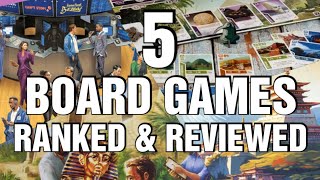
- Good potential for negotiation.
- The 'I'm the Boss' card is a cool aspect that allows hijacking negotiations.
- Aged reasonably well.
- Sid Sackson design, a forefather of the negotiation genre.
- Some aspects are too lucky.
- Player placards could be too powerful, diluting the need for other players' involvement.
- Has been overtaken by similar and better designs like Chinatown.
- negotiation
- Chinatown
Mechanics (from transcript analysis)
- Negotiation — Players negotiate to contribute cards and receive dividends for deals.
- Set Collection — Deals require specific combinations of cards.
- Take That — The 'I'm the Boss' card allows a player to seize control of negotiations.
Video topics + discussion points
Quotes (from this video)
- If you're going into this game wanting control um you know best player winning that kind of experience then you're simply not going to get it
- this one hasn't aged well
- the luck factor is simply too much
- it is competing directly with some other games that I think are simply better
- I felt like this game was like neck and neck the whole way I played it and everyone played equally but it worked out in the favor just by happen stance
- I want I want that's probably the best way to say it
- I do find it a little bit more um a little bit more laborious than being just selecting a dice and moving it that way
References (from this video)
Mechanics (from transcript analysis)
Video topics + discussion points
Quotes (from this video)
- I think it's fairly S tier stack for 90 bucks
- how do you rank this $90 spent?
- how do you think we did for 90 bucks?
References (from this video)

- Solid old-school negotiation flavor
- Non-modern mechanics that still deliver fun
- Old design may feel dated to modern players
- negotiation with social manipulation
- inheritance negotiation in a family estate
- real-world social interaction
Mechanics (from transcript analysis)
- Negotiation — players negotiate to split an inheritance; strategic signaling and bluffing
- Take That — competitive blocking and persuasion effects during splits
- take-that — competitive blocking and persuasion effects during splits
Video topics + discussion points
Quotes (from this video)
- Not a single one of these games ends up on my list today.
- 21 years ago when I made this list, I was 28; now I'm 49 and tastes change.
- This game here, this I've not played that much anymore, but I still like it.
- I would love to see a more modern remade version of this one a lot.
- I really like the theme of this game.
- This is a worker placement game where you place workers face down so people know where you're placing your workers but they don't know the value of them.
- Look at that PLA. You have to realize when this game came out, there was almost no plastic in games.