
/pic2871265.jpg)
/pic4543702.jpg)





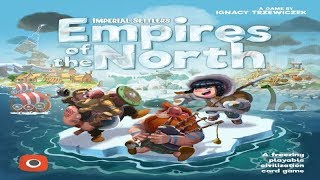


































Imperial Settlers: Empires of the North Deep Dive
What the Community Thinks About Imperial Settlers: Empires of the North
Imperial Settlers: Empires of the North stands out among civilization card games for its approachable presentation combined with surprising strategic depth. Reviewers consistently highlight how the game's charming artwork masks a genuinely engaging engine-building experience. Whether players are discovering it for the first time or comparing it to the original Imperial Settlers, the game delivers consistent satisfaction through its unique clan asymmetry and rewarding mastery curve.
Core Mechanics That Define Imperial Settlers: Empires of the North
Engine Building and Tableau Development
The heart of Empires of the North lies in its engine-building system. Players develop personal card tableaus that generate increasingly powerful resource production and special abilities. Each clan deck plays fundamentally differently, with mechanics ranging from resource-gathering economies to maritime-focused expeditions. Cards serve multiple purposes throughout gameplay, creating strategic decisions about when to deploy locations for their immediate effects versus holding them for long-term engine synergies. The tableau grows organically as players add locations and conquered islands, each contributing fresh action options and passive abilities that compound throughout the game.
Worker Management and Action Economy
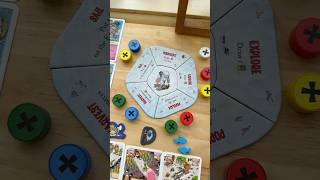
Workers form the backbone of the action economy. Players spend workers during the lookout phase to draw additional cards, then manage their dwindling supply strategically. The spent workers remain visible on a clan tile, returning only during cleanup, which creates meaningful tension around action sequencing. The clan action wheel offers five standard actions, but players can perform custom actions from cards in their tableaus. Using the wheel consumes action pawns, though spending food resources allows reactivating pawns to adjacent actions, extending available turns. This system rewards tight play and forward planning while remaining accessible to newcomers.
The Imperial Settlers: Empires of the North Experience
Asymmetric Clan Gameplay
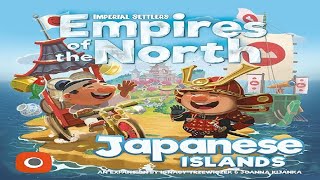
Each of the six base clans delivers a distinctly different experience. The Olaf clan focuses on pillaging and conquering islands for immediate victories, while other factions emphasize resource trading, boat management, or economy building. This asymmetry means players essentially play different games simultaneously, discovering new synergies with each clan they explore. Reviewers praise how accessible the base clans are for learning, yet how sophisticated the expanded factions become with additional decks like the Japanese and Roman variants. The diversity means returning to the same game repeatedly feels fresh rather than repetitive.
Escalating Tableau Complexity
Games begin small with only basic field cards generating modest resources. As players add locations and special cards, their tableaus expand and chain effects multiply. By mid-game, a well-constructed engine produces numerous resources and victory points per round, creating satisfying crescendos of productivity. The game visually demonstrates progress through growing table presence and expanding ability chains. Reviewers emphasize how the experience shifts from simple card play in early rounds to managing intricate interactions in later phases, rewarding players who stick with a coherent strategy.
What Makes Imperial Settlers: Empires of the North Stand Out
Gorgeous Production and Accessible Presentation
The artwork and component quality exceed expectations for the price point. Cards feature beautiful illustrations with clear iconography that supports rapid comprehension. The resource tokens include charming designs, and the modular boards present islands in an appealing visual format. This accessible presentation lowers the barrier to entry without sacrificing the sophisticated systems beneath. Reviewers consistently note how the cute aesthetic might deceive players into underestimating the strategic depth, becoming pleasant surprises after initial plays reveal the game's complexity.
Meaningful Player Interaction Through Ships and Raiding
Despite being largely a tableau-building game, Empires of the North maintains interactive elements through its expedition system. Ships placed on the board create competitive moments as players race to claim islands first, potentially discovering valuable locations or resources. Raid actions allow targeted disruption, exhausting opponent locations before they can be used. These interactive moments feel earned rather than random, punishing players who overlook offensive opportunities while rewarding those who anticipate threats. The balance between individual engine-building and shared competition differentiates this from purely solitary optimization puzzles.
Potential Drawbacks
Variable Clan Complexity and Learning Curve
While the recommended Glen and Olaf clans teach the rules effectively, accessing all six base clans requires understanding their distinct mechanics. The Japanese and Roman expansion clans add significant complexity, including resource trading and warehouse mechanics that introduce new decision trees. Reviewers acknowledge this diversity as a strength but note that players seeking straightforward experiences might find clan selection overwhelming. Mastering individual clans rewards repeated plays, but the variety creates uneven learning experiences across different factions.
Table Space and Game Length Scaling
Games expand significantly as players accumulate cards and islands, potentially consuming considerable table real estate by mid-to-late game. The play area transforms from compact to sprawling, which might frustrate players with limited space. Additionally, while rulebooks claim 45-90 minute playtimes, actual games vary considerably based on player experience and clan choices. Some faction combinations drive extended deliberation, particularly for players optimizing complex engine interactions. The game works best at lower player counts where table space pressure and analysis paralysis remain manageable.
If You Enjoy Imperial Settlers: Empires of the North
Players drawn to Empires of the North typically appreciate asymmetric civilization builders, card-driven engine-building, and tableau-development games. The original Imperial Settlers shares similar DNA but involves deck building, whereas Empires of the North streamlines setup with pre-constructed decks. For players wanting higher complexity, Ark Nova delivers similar tableau-building satisfaction with additional layers. Great Western Trail and Colt Express offer comparable strategic decision-making and interactive moments. Those who love the clan asymmetry might explore games like Gaia Project, which delivers different factions with distinct mechanics across varied play spaces. The game bridges accessibility and depth effectively, appealing to both casual gamers discovering engine-building and enthusiasts seeking faction mastery challenges.
What Reviewers Are Saying
"The game is super fun and the way it flows with the different factions means each clan plays a different game, which is really cool. You're always wanting to play again to try and master it and then move on to another one and keep trying and switching them out."
— Allies or Enemies
"This is a game I'd probably only play at two mainly because there's so much that can happen in the game and so much going on. The size of this game just starts off really small but it quickly is sense of this game where it literally takes up the entire table."
— Board Game Sanctuary
"I love empires of the north I don't know if you haven't tried it there's just so much variety in that game and with all the different factions. So there's barbarians, romans, japanese and egyptian so we have everything except for egyptian."
— Foster the Meeple