/pic285822.jpg)


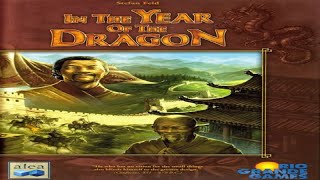















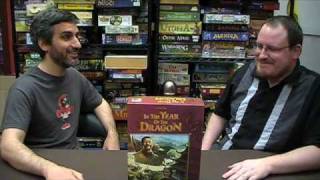
In the Year of the Dragon Deep Dive
What the Community Thinks About In the Year of the Dragon
In the Year of the Dragon splits opinion cleanly along a single axis: whether you embrace punishment as game design. The game is relentless, with twelve months of calamities bearing down on your Chinese dynasty, each round presenting famine, plague, Mongol invasion, or taxation. Channels like Chairman of the Board rank it among their favorites, while Getting Games and BoardGameWarriors note how grinding and frustrating the constant threat can feel. The consensus is clear on one point: this Stefan Feld design is unlike most euros, and it divides tables between those who play to win points and those who play to survive.
Core Mechanics That Define In the Year of the Dragon
Action Selection and Worker Management
Each turn, players choose one action from a set of slots, then hire a specialist into their palace: a healer, farmer, warrior, or tax collector. These people form an engine, since each specialist boosts specific actions. But your palace has limited space. If you hire someone new with no room, you must discard an existing person, losing their benefits. This creates tension: build a large palace to hold many people, or cycle workers constantly, keeping only those you need for upcoming threats? The action selection itself uses turn order as pressure. Going first is powerful but costs you in the action economy; go later and you pay money or skip your action entirely.
Event Resilience and Resource Juggling
Every round presents a known event, since the board reveals all twelve months at game start. You see when drought hits and when the Mongols invade. This foreknowledge is both mercy and curse. You can plan ahead, but if one mistake or shortfall strips you of resources, a single event can cascade into disaster. Published by alea and Rio Grande Games, the game forces resource management at its tightest: rice to feed workers, money to hire and act, and the right specialists to survive each calamity, or you lose people you cannot easily replace.
The In the Year of the Dragon Experience
A Game About Surviving, Not Thriving
Point acquisition is notoriously difficult. Reviewers describe getting points like getting blood out of a stone, since most points flow only from endgame scoring on the people you keep alive and the buildings you construct. This is the opposite of point-salad euros. Nearly every turn, you are in a defensive posture: can you feed everyone, and do you have enough warriors to fend off the Mongol attack? This makes In the Year of the Dragon feel like a game of attrition rather than optimization. Winning often means doing marginally better at survival than your opponents, not executing a flashy strategy, and newer players sometimes struggle with that mindset.
Brutal Tightness and High-Stakes Decisions
The game is punishing. A single mistake, hiring the wrong person, misreading the order of events, or poor luck with action availability, can spiral into cascading failures across multiple rounds. This creates moments of exhilaration when you correctly anticipate a threat and exasperation when an opponent's mistake leaves them crippled for the rest of the game. At four players the tightness only intensifies, since with more players selecting actions before you, the window of viable options shrinks further. Some players see this as the game's greatest strength: the decisions matter because mistakes are visible and punishing. Others find it exhausting.
What Makes In the Year of the Dragon Stand Out
A Unique Stefan Feld Design
Stefan Feld is famous for point-salad games packed with decision trees and optimization paths. In the Year of the Dragon deliberately inverts this. It is almost ascetic in its low-scoring nature and its focus on a single axis: survival. This departure from the designer's normal style makes it feel distinct even in a rich collection of Feld games. Some reviewers rank it his finest work precisely because the constraint is so pure. Others find it less satisfying than his busier designs. Either way, nothing else plays quite like it, even within Feld's own portfolio.
Elegant Tension Through Known Information
Revealing all twelve events at the start of the game seems like it should lower tension. Instead, it heightens it. You can plan with perfect information about what happens, yet you are never certain you will be ready. This twist, where foreknowledge becomes a burden rather than a luxury, feels fresh. Players spend turns thinking, I can afford this now, but if I spend it I will not have enough when the plague hits three turns from now. The game becomes a puzzle of resource flow across time, compressed into a single-year timeline.
Potential Drawbacks
Constant Defense Can Exhaust Rather Than Engage
One major thread through community discussion is that the game can feel like an extended chore of damage control. If you fall behind early, catching up is nearly impossible, not because the game is rigged, but because your resource base shrinks, limiting your future options. Some players embrace this as the game's core tension; others find it leads to a sense of helplessness where early mistakes doom the rest of the session. The game is not forgiving and offers few comeback mechanics, so a player who falls significantly behind will likely stay behind, which can make a long game feel long.
Heaviness and Theme at Odds with Casual Play
While reviewers praise the game as a possible Feld gateway, it remains conceptually heavy. The theme of guiding a dynasty through twelve months of calamity is evocative, but the mechanics are abstract and demand forward planning across multiple turns. New players grasp the rules quickly, but grasping the strategy, when to invest in palace size versus cycling workers, when to take a hit now to be stronger later, takes plays to internalize. Some groups may find the difficulty curve steep and the theme's grimness at odds with a relaxed evening.
If You Enjoy In the Year of the Dragon
If In the Year of the Dragon resonates, seek out other Stefan Feld designs for a fuller sense of his range. Trajan offers a similarly tight action-selection puzzle with a friendlier scoring curve, while The Castles of Burgundy delivers Feld's signature multi-path optimization. For games that embrace attrition and cascading consequences, Tigris and Euphrates by Reiner Knizia shares a willingness to let players stumble into bad positions through their own decisions. And those drawn to ruthless, unforgiving resource planning should try Food Chain Magnate, which similarly rewards foresight and punishes improvisation.
What Reviewers Are Saying
"It's punishing. If you make a mistake, things can really go bad for you. One of my opponents was one money away from being able to do a specific thing, and because they couldn't, it just became this ball rolling down the hill of terribleness."
— Getting Games
"Getting points is like getting blood out of the stone. It's a much lower scoring game, and I always describe this game as being a game of attrition, because it really is about weathering the storm and trying to overcome all the obstacles the game throws at you."
— Chairman of the Board
"This game is fantastic, even though I wasn't really expecting it to go down so well. A really rewarding game, despite not being an overly pleasant game to play."
— Chairman of the Board