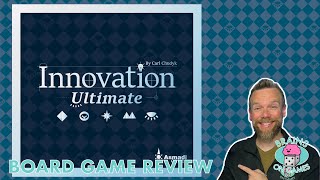
Innovation is Carl Chudyk's tableau-builder of infinite possibilities, taking you on a journey from pre-history all the way to the present...and the near future! In this game, you build a civilization using only cards; there's no map, no tokens, no dice, no pieces. The game's 105 innovations — or in the fourth edition, 115 innovations — are each represented by a card with a unique effect, organized into ten (or eleven) ages. Each innovation's effect is tied thematically to its identity, allowing you to either elevate your society or attack your opponents.
In addition to directly affecting your opponents, you can share in the effects of their technologies if you amass enough visible icons on your board. Strategically building your tableau of cards to share often and defend against demands is crucial to success.
To win, you must claim achievements, which you can attain by amassing points or by meeting certain criteria with the innovations you have built. No two games of Innovation play the same way.
[Admin note: The specific card effects have changed across the four editions of Innovation, in addition to age 11 being added in the fourth edition, but the core gameplay has remained consistent across all editions, so all editions are listed on a single page in the database.]
Innovation - Playthrough With Friends
- technologies and civilizations
- civilization-era card tableau
Mechanics (from transcript analysis)
Video topics + discussion points
Quotes (from this video)
- Stellar is not a super well-known, well-talked-about game. I found it randomly in a local board game store.
- it's basically a two-player only game, asymmetric
- Lost Cities is a hand management game
- Patchwork is a tight, solid Uwe Rosenberg design
- Santorini is my favorite abstract game
- Castles of Burgundy... there's nothing like it for me in two-player
- Race for the Galaxy is my number two two-player game of all time
References (from this video)
- Dense strategic space with meaningful decisions each turn.
- Thematic critique of relentless progress and the need for patience.
- Two-phase design creates a rhythm of drafting and execution.
- Can be punishing and chaotic; requires comfort with high dependency on future cards.
- The pace can feel frenetic, which may deter players seeking a calmer experience.
- progress, upheaval, and the paradox of advancement; civilization-building under pressure to accelerate while also risking destabilization.
- A sweeping arc of human civilization that moves from primitive beginnings to imagined futures; cards symbolize critical innovations across ages, creating a layered narrative about progress and disruption.
- philosophical, opinionated, and analytical; the game is treated as a commentary on modern life and the pace of change.
Mechanics (from transcript analysis)
- age progression — Advancing through ages unlocks new cards and opportunities, creating a perpetual cycle of upgrading potential and strategic tension.
- card drafting — Players draft cards representing innovations from different ages; each card provides icons and abilities that influence future choices and scoring.
- icon collection / dogma actions — Icons collected on cards unlock dogma actions; players balance advancing their own engine with blocking or countering opponents’ plans.
- Melding and Splaying — Icons collected on cards unlock dogma actions; players balance advancing their own engine with blocking or countering opponents’ plans.
- Resource management — Points and resources are earned and spent to push ahead, trade-offs are frequent, and risk-reward calculations dominate decisions.
- Resource management / Currency — Points and resources are earned and spent to push ahead, trade-offs are frequent, and risk-reward calculations dominate decisions.
- Tech trees — Advancing through ages unlocks new cards and opportunities, creating a perpetual cycle of upgrading potential and strategic tension.
Video topics + discussion points
Quotes (from this video)
- In many ways, board games have never been as popular as they are today.
- We're not just building a board together. We're having a conversation.
- Patience isn't complacency, patience is living.
- Two phases.
- You choose what matters. Because you build the board. You splay the cards. You choose what you let go of. You choose what you keep.
- Sometimes you just need to wait for the right thing to say.
References (from this video)
- Strong competitive two-player play when played regularly
- Rich strategic space and interaction
- Three-player chaos variant is less appealing; the core is best with two
- Chaos-driven civilization card game
- GNC
Mechanics (from transcript analysis)
- Card-driven with iconography — Dramatic dogma/icon interactions and direct competition for powerful combos.
Video topics + discussion points
Quotes (from this video)
- two players, not enough time
- steal someone's donkey
- bang for your buck
- eight maps in the base box
- you can draw from the deck. Each card has its own way of like yes, you can use it as an item, but it's also one of the endgame conditions
References (from this video)
- Excitement about the combination of card drafting and engine-building.
- Recognized as a civilization-building engine builder with approachable core ideas.
- civilization development and tech progression via card interactions
- civilization-building through card drafting
- engine-building progression driven by card play
Mechanics (from transcript analysis)
- card drafting — players draft cards from a common pool to shape their civilization's development.
- engine building — players arrange and chain card effects to generate long-term benefits and victory points.
- engine-building — players arrange and chain card effects to generate long-term benefits and victory points.
- hand management — careful selection and timing of card plays and draws to maximize engine output.
Video topics + discussion points
Quotes (from this video)
- I've got the ultimate edition of Innovation.
- This one is a card drafting game, a civilization builder where you're drafting cards and building an engine.
- Ember Leaf, which is a card dancing game. I don't even know what that is.
- Which one should I learn first?
References (from this video)
- thematic depth
- engaging drafting and combo potential
- relies on memorization of many cards
- can feel chaotic or punishing
- lack of a strong overarching theme can hurt cohesion
- civilizational progress and idea exchange
- civilization and technological evolution
- conceptual, puzzle-like
- Race for the Galaxy
Mechanics (from transcript analysis)
- multi-round card drafting / tableau building — Draft cards to create a cascading tableau that scores and combos
- set collection — Collect and chain cards to unlock scoring opportunities
- set collection / engine-building — Collect and chain cards to unlock scoring opportunities
- variable end-game triggers — End-game conditions create shifting asymmetry and tension
Video topics + discussion points
Quotes (from this video)
- No parts of this game work well together. There are a zillion different interactions, none of which are emergent.
- Imagine if Race for the Galaxy had many more icons and none of them interacted with each other in any way.
- The game is extremely frustrating to play.
- Memorizing cards/combos doesn't make this fun.
References (from this video)
- deep, chaotic strategy
- varies greatly between plays
- may feel overwhelming to new players
- cultural / intellectual progression
- technological evolution through ages
Mechanics (from transcript analysis)
- card tableau / iconography — Place cards in a tableau by color; matching icons trigger chain actions.
- take that — Actions on cards can affect opponents with shared icons.
- take-that / competitive interaction — Actions on cards can affect opponents with shared icons.
Video topics + discussion points
Quotes (from this video)
- that was an absolute chaotic mess I don't even know if this video is watchable or not
- the ultimate board game travel kit
- absolute chaotic mess and yet I had fun talking about 16 games
References (from this video)
- very interactive at two players
- readable table across for both players
- great with repeated plays and expansions
- love/hate game for some players
- can be lengthy with expansions
- history and technological progress via card decks
- Civilization-building across ages, prehistory to information age
- interactive, highly head-to-head
- Kanban: EV
Mechanics (from transcript analysis)
- card drafting — Each card represents historical actions; players draft and play cards to develop civilizations.
- card drafting with evolving powers — Each card represents historical actions; players draft and play cards to develop civilizations.
- interactive symbols and timing — Actions trigger effects and affect opponents, creating a measurable, head-to-head race.
- splicing/combining effects — Certain cards let you layer or 'splice' powers to unlock stronger effects.
Video topics + discussion points
Quotes (from this video)
- it's a nice little puzzle
- two players, it's head-to-head and dualistic
- escape room in a box, except it's puzzles
- it's a euro and in that kind of element there's not so much interaction
- excellent at two players
- the stock market element is tricky if others take the cards you want
References (from this video)
- Interesting dragon lifecycle theme
- Debut title from publisher, suggests fresh design intent
- Transcript provides limited technical detail on gameplay
- Life cycle, incubation, and progression
- Dragon egg incubation and hatch progression
- Objective-driven, developmental
Mechanics (from transcript analysis)
- engine building — manage dragon development to hatch stronger offspring
- engine_building — manage dragon development to hatch stronger offspring
- tile placement — place actions/modules to progress incubation
- tile_placement — place actions/modules to progress incubation
Video topics + discussion points
Quotes (from this video)
- Colors of Paris is the latest from Super Meeple, a French publisher that typically brings back classic heroes like Attica, Telegraph or Mississippi Queen.
- Saurus is a fast and furious just quick playing well drafting game.
- little dragon egg needs to become a baby dragon.
- Incubation is the debut game from its publisher Connelly Synapse James.
- Colors of Paris this is the latest from super meeple, a French publisher that typically brings back classic heroes like Attica.
References (from this video)
- brings a high level of strategic depth to take-that
- defensive symbols create a more balanced feel
- can feel swingy and luck-driven
- some view take-that as an unfair negative interaction
- card-based conflict with symbols and defenses
- take-that card game arena
- elevated take-that mechanics with defensive counters
Mechanics (from transcript analysis)
- symbol-based defense — defend against attacks by accumulating matching symbols
- take that — attack cards and effects that directly affect opponents
Video topics + discussion points
Quotes (from this video)
- Terrible mechanism interrupts.
- I despise memory in board games.
- The absolute worst board game mechanism is in the game Hit Zero.
- I love that these are like jobs and missions where, you know, you're maybe escorting somebody to a different planet or you're carrying contraband.
References (from this video)
- Very thematic and highly interactive
- Rich variety of powerful combos
- Extremely swingy; easy to lose focus
- Hard to maintain a coherent long-term plan
- Cultural and technological advancement across eras
- Civ-building through inventive card play on color piles
- Card-driven engine-building with dramatic swings
Mechanics (from transcript analysis)
- card drafting — Draft and play cards to trigger special abilities and combos.
- card drafting and cycling — Draft and play cards to trigger special abilities and combos.
- color-pile card actions — Five colored piles determine which powerful actions are available.
- engine building — Newly drawn cards can derail or shift strategy dramatically.
- highly swingy engine-building — Newly drawn cards can derail or shift strategy dramatically.
Video topics + discussion points
Quotes (from this video)
- the real meat of the game is that first phase which is a real-time tile laying game
- Saving Grace with Galaxy Trucker is the game gets better the worse you are at it
- the D10 from Hell the single most evil die in board game history
- it's a Scrabble killer
- Friday is just a really clever small deck building game that's solo only
- I will always overindulge in piracy
References (from this video)
- Highly interactive and dynamic player interaction
- Deep thematic integration and evolving card interactions
- High replayability from 100 unique cards and multiple strategic paths
- Clear end-game via achievements with dramatic swing potential
- Can be chaotic and punishing for new players
- Heavy reading and rule-learning curve; card text governs many interactions
- Potential for long session length and analysis paralysis in mid to high player counts
- Civilization-building through ideas and innovations
- Historical progression from Prehistory through Information Age, exploring civilizations via card-driven cards
- Dynamic, modular tableau with unique multi-use cards; Dogma actions drive cascading interactions
Mechanics (from transcript analysis)
- Achievements/Scoring — Public score track; players tuck and score cards to earn achievements; achieving six items or certain combinations ends the game.
- Dogma — A special action on certain cards that can force transfers, draws, scoring, or other effects; can affect all players or only those with specific conditions.
- draw — Draw actions pull cards from the appropriate piles; top card values guide how many and from where.
- Icon/Crown/Leaves Economy — Icons (crowns/leaves) drive actions and interactions; managing these resources influences which actions you can take.
- Meld — Players select a card from hand and place it face-up to create or extend a color stack; melded cards stay in front and unlock other actions.
- Splaying/Display — Displaying cards to the left or right (splaying) changes how future Dogma effects apply and reveals new icons.

Video topics + discussion points
Quotes (from this video)

- I think this game is incredibly thematic.
- This is a very interactive game.
- Chaos in this game would not be for everyone.
- Innovation is a deck of cards that changes value over time.
References (from this video)
- highly swingy and interactive
- engaging when players enjoy strategic tension
- polarizing due to randomness and sudden shifts
- progress, dogma, and civilization development
- Civilizational advancement through eras
- card-driven civilization progression
- Terraforming Mars
- Race for the Galaxy
Mechanics (from transcript analysis)
- card-drafting — Draw and play cards to trigger powerful combos.
- hand management — Carefully curate a hand to maximize turn order and scoring.
- set collection — As you collect certain cards, you gain points and bonuses.
Video topics + discussion points
Quotes (from this video)
- “it's another episode of board games and brew where we don't have brew”
- “we launched our merch store”
- “Arc Nova is a tableau builder”
- “it's been chaos because everybody is trying to outsmart everybody”
- “159 games in a week or 10 days”
References (from this video)
- high variability and swinginess
- short play cycles with intense decisions
- thematic cohesion can feel abstract
- some players dislike the chaos factor
- cascading technology and ideas
- cultural eras across civilizations
- swingy, card-driven civilization tableau
- Dominant Species
- Race for the Galaxy
Mechanics (from transcript analysis)
- card drafting / era progression — build a civilization through card-driven actions and era transitions
- card drafting / evolving tech tree — players develop civilizations by chaining cards to gain abilities
Video topics + discussion points
Quotes (from this video)
- it's board game adjacent let's just say it's kind of like an activity where you've got a big map on the table and you're trying to solve crimes
- i really really like tapestry
- it's simple but fun
- the fan track keeps you relevant when you're behind
- it's a bundle of fun
- i love calico
- radlands is a fantastic two-player card dueling lane fighter
References (from this video)
- Chaotic, silly theme that can be highly entertaining when playing with the right group
- Icon-driven action economy creates dynamic and interactive play
- Clear sense of progression through eras with evolving card interactions
- Chaos and power spikes can overwhelm new players or lead to perceived imbalance
- Mechanics are dense; may have a steeper learning curve
- Technological and societal progress through civilization-building cards and icons.
- Civilizational advancement tracked through 10 eras, with card-based progression and era-based tech icons.
- card-driven civilization development with evolving technologies
Mechanics (from transcript analysis)
- Card-driven actions — Actions on cards are determined by the icons they display; revealing icons enables actions and can allow taking actions on other players' turns.
- Era Progression — The game progresses across 10 eras with innovation cards that players collect and play, driving advancement.
- high on-card effects / chaos potential — Card effects can be extremely powerful, leading to chaotic gameplay dynamics.
- icon-based action economy — Icons on revealed cards grant access to actions; more icons revealed means broader action options and potential to act out of turn.
- spread/display mechanic — Players can display or spread out their cards to reveal more icons and increase their capabilities.
Video topics + discussion points
Quotes (from this video)
- innovation is the silliest game that i absolutely love
- the card effects can be so powerful that the game can be absolute chaos
- innovating can make you very powerful
- the game has 10 eras of innovation cards
References (from this video)
- elegant design
- clear teaching curve
- abstract in theme
- Title Blades
- Brass
Mechanics (from transcript analysis)
- set-building / card drafting — Players evolve civilizations by playing inventions with unique effects.
Video topics + discussion points
Quotes (from this video)
- We wanted to just have become like this entity that would make games and be very awesome at switching styles.
- passion first
- we like freedom but sometimes after working on a project with a lot of freedom, it's nice to have things laid out and know where you're going.
- we have a very little sense of ego... I'm going to feel equally proud of the end product if she touched it, if we worked both of us on it.
- we want to work as a couple on the same games together
References (from this video)
- Deep strategic depth and varied card powers
- High replayability due to many invention combinations
- Can be complex for new players
- Taking time to grok optimal engine builds
- technological progression and civilization development
- abstract civilizations evolving through inventions
- card-driven, polyform invention track
Mechanics (from transcript analysis)
- card-drafting / action selection — Players select actions from a hand of invention cards, shaping their civilization trajectory.
- set-collection / engine-building — Players build a tableau of inventions to unlock points and future actions.
Video topics + discussion points
Quotes (from this video)
- we are giving away over 50 games across those 24 episodes
- the description is where we will post the winners, never in the comments
- Concordia is a must-have, it's easy to learn but has amazing depth
- this is a gorgeous prototype, they did a great job
- it's easy to get into and has depth—Deserved of our boarding coffee seal of approval
References (from this video)
- insane_triggers
- game_changing_events
- great_at_two_players
- amazing_travel_game
- tiny_box_big_table_presence
- unique_gameplay
- too_chaotic_at_higher_player_counts
- civilization_building
- human_progress
- history
Mechanics (from transcript analysis)
Video topics + discussion points
Quotes (from this video)
- no guilt no shame no mercy
- it is pure magic pure gold
- build like a mortal win like a god
- tiny box biggest table presence experience
- this is a game i wouldn't want to play at higher than two
- jamie knows when she's one and i can see it in her face
- i have a very difficult time comparing games that are that drastically different
- castles of burgundy is heavier therefore i put castles of burgundy at one
- i know myself well enough by now you know i've got 34 years into this body i know i know what i'm into
- don't be a meanie or weenie it's okay to hate things
References (from this video)
- interesting mechanism; can be mean in play
- not a personal favorite; appeal may vary
Mechanics (from transcript analysis)
Video topics + discussion points
Quotes (from this video)
- one of the best two-player games ever
- it's not amazing it's just fun
- it's an amazing deduction game it's really hard to get
References (from this video)
- rich, spicy interaction
- great for fans of abstract engine-building
- can be dense and heavy
- design ideas over time
- card-driven strategic evolution
- evolutionary, rift between tech and culture
- Res Arcana
- Kanban
Mechanics (from transcript analysis)
- card drafting / engine building — players draft cards to build evolving symbols and engines.
Video topics + discussion points
Quotes (from this video)
- it's a fantastic engine building game
- Rules are important for checking mine
- cheater cheater pumpkin eater
- I am crushing you like a grape
- Town 66 going right above
- that Lord of the Rings confrontation pack
- this is the cube challenge
- Calico fits perfectly in the cube with room to spare
References (from this video)
Mechanics (from transcript analysis)
Video topics + discussion points
Quotes (from this video)
- we're selling our house and we wanted to do this before we had to pack everything up
- we're just going to show you what we got probably won't have too many new games coming in
- innovation is a game we adore
- jamie's favorite game brass birmingham
- gaia project tara mystic on space
- we have root so the og base game
- this is one of jamie's absolute favorites and that is innovation
- we love it it's so good
References (from this video)
- Not a looker but gameplay is compelling
- Multiple end conditions provide variety
- Great combo potential
- Puzzly tactical decisions
- Available on Board Game Arena
- Artwork is not appealing
- Best with 1-2 players; multiple players becomes a nightmare
- Can get out of hand if played with too many players
- Card Driven Civilization
- Civilization history
- Abstract
- Glorias
Mechanics (from transcript analysis)
- Card Play — Players play cards from hand combining effects
- Multiple End Conditions — Players can win through different conditions: auto condition, six dominations, or domination count at final age
- Tactical Play — Game requires tactical play based on hand, cannot be played strategically
Video topics + discussion points
Quotes (from this video)
- we're basically saying that at some point during the first game of it we knew that this was a game we were gonna love and it stayed that way
- man i loved everything about ascension it was great
- you kind of had to play this game very tactically you cannot play this game strategically it's physically impossible
- everything in this game looks absolutely beautiful i could i could have that board as a poster on my wall
- it's just so many options you get in this
- not enough people give whistle mountain any credit at all
- pandemic was just really really good when that came out
- i love a good thematic game
- this is gonna be one i like isn't it
- street masters has really done me a good one here
- being effectively like a twilight imperium for star trek sounds cool
- i really really dig cargo noir
References (from this video)
- clever, multi-layered engine-building potential
- high tabletop banter and tension
- rules can be dense for new players
- evolution of ideas and invention
- varied historical micro-themes across eras
- abstract/history-tinted
- 7 Wonders
- Dune: Imperium
Mechanics (from transcript analysis)
- card drafting — build a hand of cards to trigger chain effects.
- hand management — manage a flexible hand to maximize route efficiency.
- set collection — collect cards with matching icons to gain points.
Video topics + discussion points
Quotes (from this video)
- "I love hate drafting"
- "it's christmas when you unbox a game"
- "the sound of dice hitting the side of a wooden dice tray"
- "brew baby"
- "i'm literally miserable playing unicorn fever"
- "I love the first time you get to unbox a board game"
References (from this video)
- synergy can chain strongly
- replay variety keeps it fresh when played often
- random chaos can be frustrating
- feels repetitive after too much play
Mechanics (from transcript analysis)
- random chaos / draw-tile interaction — rapid-fire actions with often chaotic results
Video topics + discussion points
Quotes (from this video)
- our top 50 is like a living breathing thing that changes every day by the day by the minute
- these games are all incredible even if something's like a number 600 from 700 it's probably still a good game
- ranking is subjective; it's hard to compare a 18 card game to a heavy Euro
- we rank in the moment based on our gut feeling and that's just how the chips fall sometimes
References (from this video)
- Incredibly fun and engaging
- Every game is different
- Chaotic and unpredictable
- Memorable game moments
- Strategic depth
- Can be very swingy
- Chaotic gameplay
Mechanics (from transcript analysis)
Video topics + discussion points
Quotes (from this video)
- These games are games that we enjoy playing at two
- Easy to learn hard to master
- Every game is different
- This game is awesome the artwork is incredible
- If you're a couple and you're looking to get a significant other into board games, that is one to check out
- It's a game that's either your thing or it's not
- The more and more I play unmatched more and more I appreciate how good that game is designed
- I love this game I do not like to play it at more than two players
- It might be a masterpiece of two-player game
- Very mean and I just think at two player it just becomes so much more tight
- This is one of the most chaotic games I've ever played
- I love dueling games like I love any game where you are just like Head to Head playing out cards
- Every time where I have the opportunity to play it I want to play it
- I think it's my favorite two-player game
References (from this video)
- Expansions add depth without destroying pacing
- Echoes of the Past introduces clever new dynamics
- Rule management can be heavy for newcomers
- Expansions add complexity that may deter casual players
- innovation bends dogma and dogmatic effects
- Cultural and technological progress across eras
- thematic puzzle with evolving mechanics
- Dune Imperium
- Terraforming Mars
Mechanics (from transcript analysis)
- Deck building — Era-based cards expand the options and interactions.
- deck-building — Era-based cards expand the options and interactions.
- forecasting — Top cards have forecast-based effects and rewards.
- iconography / coin-based scoring — Victory tracking through coins and evolving card winnings.
Video topics + discussion points
Quotes (from this video)
- "The pendulum die landed on a bullseye"
- "Underwater Cities is a game that has managed to carve out its own niche"
- "I ended up winning and it wasn't particularly close"