

















Invincible: The Hero-Building Game Deep Dive
What the Community Thinks About Invincible: The Hero-Building Game
Reviewers see Invincible: The Hero-Building Game first and foremost as a cooperative bag-building game, and most of them enjoy the core loop even when they have reservations about the rest. Shaggy of Totally Tabled played a full solo run through the opening scenarios and came away impressed by how the game flows. Rahdo Runs Through placed it in a personal top ten of cooperative games after season two content was added, calling it the best superhero-themed game they have played. Luke Hector of The Broken Meeple took a more cautious line, describing it as a decent game that does not quite reach the level of similar titles. The Dice Tower's countdown also listed it and described it as an interesting twist on the bag-building genre, and Totally Tabled's retail roundup called it really fun. The praise is consistent, but it usually comes with specific caveats about luck, depth, and presentation.
Core Mechanics That Define Invincible: The Hero-Building Game
Bag Building With Push-Your-Luck Crashes
Each hero has a personal bag of colored action cubes along with black cubes. On a turn, a player draws three at a time and places them on the character board and cards to trigger abilities. Black cubes are wild, which makes them useful, but drawing too many causes the hero to crash. A crashed hero cannot draw more cubes until a teammate rescues them, and a failed rescue forces a damage roll. Luke Hector called the game essentially a bag-building game, and reviewers consistently describe the tension of deciding when to stop drawing as its central pleasure. Totally Tabled summed up the loop as hoping not to bust by drawing too many black cubes.
Tableau Building Through Training
Between rounds, heroes spend confidence earned from their actions to learn new superpowers. Ultimate powers must be played beneath superpowers, which amplifies them, and the cards are all unique, so each hero's tableau grows into a different engine. Shaggy highlighted wrench-symbol combo abilities, where linked cards trigger together and can add cubes to the bag, which reduces how often black cubes come out. Heroes can also discard cards to add cubes of the matching color, which lets players tune what they draw. Luke Hector saw this as the source of individuality, since a single hero can become a combat powerhouse or a support character depending on which cards come up.
The Invincible: The Hero-Building Game Experience
Simultaneous Play With No Turn Order
Shaggy described the solo game as playing two heroes with no turn order, so one character can take a run of actions before the other moves, and the reviewer said this gives the game a unique flow they enjoy. Rahdo framed simultaneous, cooperative bag building about superheroes saving civilians and each other from long odds as the heart of the appeal. In a group, the simultaneity creates constant talk about sequencing, and players who are slower to read their cubes can fall out of sync with the table. Solo play avoids that friction, though it means managing two separate bags.
Co-op Discussion and Table Talk
Reviewers describe the cooperative experience as conversational. Players regularly negotiate who needs to draw cubes before someone else can move into a threatened zone, and that back-and-forth is a large part of the social pleasure. The same dynamic can leave newer players feeling behind when the table moves faster than they can process their draws. Shaggy's solo run showed a steady rhythm of choosing which villain to take down first while keeping civilians alive.
What Makes Invincible: The Hero-Building Game Stand Out
Scenario Campaigns That Follow the Show
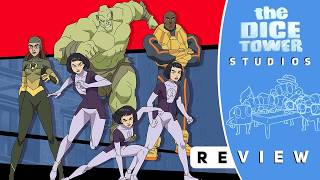
The game is organized around scenarios that recreate events from the first season of the show, and they can be played as one-off games or as a linked campaign. Shaggy began with the second episode, where the heroes must protect Mount Rushmore from Doc Seismic by thwarting his plans on a set schedule before defeating him. Luke Hector noted that the scenarios differ mainly in who you fight, with many episodes spawning random villains, so the theme is only partly reflected in the mechanics. Their view was that the license is fine but does not earn extra credit simply for being a licensed property.
Difficulty You Can Dial In
Shaggy pointed out several ways to adjust difficulty, including changing how the event deck is set up, using helper cards for one-time assistance, and adding challenge cards to raise the stakes. Luke Hector said the game offers three difficulty levels and a tutorial mode that guides a first game, and that on the easiest setting the scenarios are fairly manageable. That range makes it approachable for newer players who want to ease in before layering on challenge cards.
Potential Drawbacks
Luck and Crash Damage
The most frequent criticism is randomness. Luke Hector found the crash mechanic odd, since crashing triggers a die roll for damage, and a plus-one result means rolling again, which can make a single crash far more punishing than expected. They described the luck of the draw as the nature of the beast for bag-building games, but said it can get on nerves when challenge cards make the game harder and the bag keeps delivering black cubes at the wrong moment. Shaggy also showed how a failed rescue can turn into a damage roll with little warning. Reviewers suggest players accept that the randomness is part of the design before committing to it.
Similar Heroes and Modest Components
Luke Hector felt the heroes are not distinct enough, noting that starting cards and special abilities differ only slightly, and that "the characters could have maybe felt a little bit different from each other." Component quality also drew criticism for generic cubes and basic cardboard, although the bags were praised as sturdy. Rahdo, speaking before the season two content arrived, said the original box did not feel like it had enough in it, and the newer content addressed that complaint. Luke Hector suggested sleeving the cards because the game involves a lot of handling.
If You Enjoy Invincible: The Hero-Building Game
If the bag-building loop and superhero cooperation appeal to you, reviewers point to a few titles in similar territory. Totally Tabled described the game as feeling a little bit like Marvel United in its scenario-driven cooperative structure. Luke Hector placed it below Sentinels of the Multiverse, which offers far more variety and tactical decisions, while still recommending it to players who want a lighter superhero co-op. The host also noted that the game comes from the same people behind Dune Imperium and was keen to see what else that team could make. Players who prize the bag-building loop may find this a comfortable fit, while those who want deeper tactics may prefer Sentinels of the Multiverse.
What Reviewers Are Saying
"I also enjoy personalizing the characters by adding cubes to their bag and creating powerful combos with the cards."
— Totally Tabled
"Oh, and then also, and this is the part I wouldn't have realized I loved, I love all that other stuff I said when it's combined with push your luck."
— Rahdo Runs Through
"as a co-op game Invincible does generate a lot of interaction with the players you're constantly discussing with each other"
— The Broken Meeple