/pic8381709.png)
































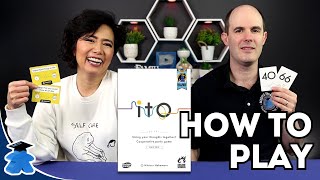



ito Deep Dive
What the Community Thinks About ito
ito has earned a place among the board gaming community's favorite party experiences. Reviewers consistently describe it as a cooperative party game with genuine appeal across diverse player groups. Published by itten, the game's ability to engage newcomers and experienced gamers alike has made it a frequent topic of discussion in gaming circles, with particular emphasis on its elegant approach to cooperative play and theme-based reasoning.
Core Mechanics That Define ito
Hidden Number Ordering Through Cryptic Clues
At its heart, ito is about arrangement and inference. Each player holds a secret number between 1 and 100, and the entire challenge revolves around ordering these numbers from lowest to highest. The twist is that players never reveal their numbers directly. Instead, they give clues tied to a rotating category: things that are hard to do alone, famous people, temperatures, and many others. Players must craft clues that hint at their number's relative position on the spectrum. A low number requires a clue for something easy; a high number demands a clue for something very difficult. The brilliance lies in how players must think about the spectrum itself, not just their individual number.
Spectrum-Based Reasoning and Negotiation
The spectrum creates natural tension. When you give your clue, you place your card where you think it belongs relative to others' clues, but the group then discusses and may reposition cards. This discussion phase is where ito creates its most memorable moments. Players debate the relative difficulty or ease of different clues, negotiating positions and challenging interpretations. The spectrum becomes a shared language, with players constantly referencing where ideas fall on the scale, creating a collaborative puzzle-solving experience that feels both strategic and social.
The ito Experience
Accessibility and Universal Appeal
One of ito's greatest strengths is how naturally it teaches itself. There are no complex turn structures, no difficult resource management, and no hidden information that rewards veteran players unfairly. The game moves at the pace of conversation, and people of different gaming backgrounds blend seamlessly. Families report consistent success with ito, suggesting it bridges the gap between casual and hobby gaming. The category cards scale from simpler themes for children to more sophisticated categories for adult groups.
Discussion-Driven Social Interaction
The magic of ito emerges in its table talk. Rather than quiet deliberation, the game invites discussion. Players find themselves leaning forward, defending their interpretations or questioning teammates' logic. The shared ownership of success or failure, everyone either wins the round together or loses together, creates a bond that competitive games rarely achieve. Reviewers highlight that even unsuccessful rounds remain enjoyable because the conversation itself becomes the entertainment.
What Makes ito Stand Out
Spectrum-Based Gameplay Innovation
The spectrum mechanic sets ito apart from other party games. Games like Wavelength also use spectrums, but ito applies this to a mathematical ordering problem, creating a unique challenge space. The constraint that clues must reflect real-world difficulty or quality forces players into genuine creative thinking. A player cannot simply say a low number is small without making a connection to the category; the clue must actually make sense for the number in question.
Cooperative Win Conditions Create Trust
Unlike games where success depends on deceiving others or having superior knowledge, ito's purely cooperative structure means everyone at the table has aligned goals. This fundamentally changes the social dynamic. Players help each other interpret confusing clues because it's in everyone's interest to succeed. Families find this refreshing compared to party games where aggressive bidding or bluffing can dominate play.
Potential Drawbacks
Rule Flexibility Introducing Awkward Dynamics
The rule allowing players to change their clue mid-round, while designed to be helpful, can create uncomfortable moments. If a player hears the discussion and realizes their clue is being misinterpreted, they face a choice: stay quiet or revise. This flexibility, intended to keep the game fluid, sometimes introduces a layer of subtext to gameplay. Groups must develop a shared understanding of when revision is acceptable, and without clear table agreement, moments can feel weird or manipulative even though the game doesn't intend this.
Consistency Dependent on Group Dynamics
ito's success relies heavily on how the specific group approaches the game. With groups committed to collaborative spirit and comfortable with discussion, ito shines brightly. With groups less engaged in dialogue or those fixated solely on winning, the experience flattens. The game doesn't solve this through mechanics alone; it trusts the social contract. If a group isn't naturally inclined toward the kind of conversation ito invites, the experience can feel less rewarding than when it lands perfectly.
If You Enjoy ito
Players who love ito tend to gravitate toward Wavelength, Just One, and So Clover. These games share ito's emphasis on cooperative party play and discussion-driven mechanics. If you enjoy the spectrum-based thinking, Wavelength offers more abstract spectrum clues with similar social reasoning. If you appreciate the collaborative spirit without the ordering puzzle, Just One creates different but equally social challenges through simultaneous clue-giving.
What Reviewers Are Saying
"ito is one of my favorite party games. I've played it with families, played this with tons of people, and it just continues to hit. ito is one of the best party games ever made. It is a Dice Tower essential."
— The Dice Tower
"They had this gem of a mechanic that fostered a really awesome thing and then just couldn't quite polish it out to deliver. There's a rule in the game that you can change your clue based on what others say, but that introduces a very weird dynamic."
— Rolls in the Family
"It's a cooperative experience where everyone's kind of doing it at the same time. The whole mechanic is about giving clues tied to a theme, and it turns into this collaborative puzzle where the conversation is the game."
— Meeple University