ito - How to Play. A Board Game Tutorial, Including Other Mode.
Games in This Video
1 game is featured in this video — it unlocks as you watch.
Transcript
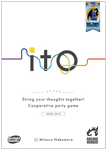
give clues and rank everyone's secret numbers in it. And today we'll be teaching you how to play Itto game designed by Mitsuru Nakamura and published by Arlite Games and Arcane Wonders. And hi everyone, it's Stella and Taran from Maple University. And hey, if you enjoy this video after watching, like, subscribe, and comments. You know what to do. All right, now let's get to the classroom. Itto is a cooperative card game in which players try to arrange number cards in ascending order. Sounds simple maybe, but the cards are face down and players will need to describe their numbers using clues related to a specific category. To set up, deal each player two copies of one of the player cards.
You can leave the third copy in the box. Shuffle the number cards face down. These range between one and 100 and deal one face down to each player. Place the zero beside the deck. Shuffle up the double-sided category cards. The yellow ones are used for standard play. The white ones are family cards with simpler categories, which work better when playing with children, and the gray ones involve physical challenge. Shuffle up only the sets your group wants to play with and choose one at random for this round. Now it's time for players to think of clues. Secretly look at your number and try to think of a suitable clue based on this category. This is things that are hard to do alone. So you want to try to think of something that is extremely easy to do alone if your number is low like three. So for example, clapping. If you have a very high number, then you'd think of something very hard to do alone. Perhaps building a skyscraper. For something in the middle, you'll need to try to find something which fits in that sweet spot. Here, for example, I might say cleaning the house.
I could do it alone, but it's hard to, and it would be better to do it with more people. Your clues can be as simple or descriptive as you want. For example, maybe I think that reshelving a book is a good clue because that's a very easy thing to do. But perhaps I could be more descriptive, such as reshelving a book on the lowest shelf and not worrying about the order that the book was put in. My clue for 41 could be reshelving 10 books on the top shelf in the correct order. And 98 could be reshelving all the books in the library after an earthquake in the dark. Pick whatever you think will help your teammates figure out the order the best. Descriptive adverbs like very, extremely, or somewhat are allowed, but quantitative or numerical clues are not. Once you've thought of a clue, play your number card face down into the play area and mark it with one of your two player cards. Hold on to your second card. This way, everyone knows whose card is whose. There's no turn order.
Players may give their clues as soon as they think of them. When you give your clue, do your best to place your card where you think it belongs in ascending order. Once all clues have been placed, continue discussing. Players have as long as they want to discuss the clues that were given and decide whether they want to collectively make any more changes of order. Players are allowed to give their clues again if their teammates have forgotten and can even give a new clue and change their clue entirely. Once the team agrees that the cards are in ascending order, it's time to resolve. One by one, flip the cards face up. If the order is correct, congratulations, you've won the round.
If any cards are out of sequence, then you fail. Either way, the round is over and you shuffle up all of the number cards back into the deck and red for a new round. Once you're experienced with the game, to increase the challenge, you can increase the number of number cards in play. Deal one or more players two number cards instead of one. And also give those players their third player cards to mark them. The player with two cards will give two clues this round instead of one. Either way, the aim of the game remains the same, to give quality clues and arrange the cards in ascending order. Thanks for watching, and if you like this video, maybe you'd like to watch this next one. Have a great day.
Bye.