/pic6601629.jpg)











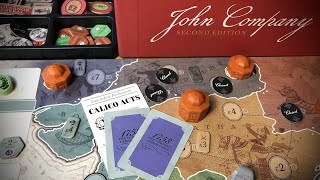
John Company: Second Edition Deep Dive
What the Community Thinks About John Company: Second Edition
John Company: Second Edition stands as one of the most distinctive and ambitious board games in recent years. Designer Cole Wehrle has created something that resists easy categorization. The game generates intense debate: reviewers praise its innovative design, thematic depth, and one-of-a-kind experience, while simultaneously acknowledging that it demands a specific kind of player and table. Those who embrace what the game is attempting find it revelatory; those seeking traditional victory conditions or straightforward gameplay paths may struggle with its structure.
The game captures something genuine about ambition, greed, and competing interests within a shared institution. One reviewer noted that John Company "evokes the feeling of being a bunch of pompous jerks scheming around a company table for 3 to four hours, sending their family members to do odd jobs, seeing how they can most exploit the local populations while taking as much money as possible secretly." This isn't accidental thematic resonance; it emerges from how the mechanics force players into morally compromising positions while requiring collaboration to keep the Company alive.
Core Mechanics That Define John Company: Second Edition
Negotiation and Shared Company Management
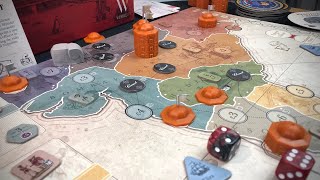
The heart of John Company lies in negotiation. Players take on roles as ambitious families attempting to profit from the East India Company while collectively managing its survival. Every decision involves bargaining. One reviewer described it as "a negotiation game where almost everything is tradable with really complex stuff." The Company itself functions as both a shared resource and a contested battleground; all players need it to succeed financially, but each player wants to extract maximum personal wealth. This creates the central tension: you must keep the Company healthy while positioning yourself to gain more than anyone else.
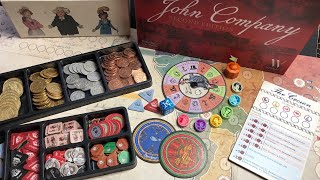
The game uses promise cubes as negotiation currency. Players earn these by pleasing the Crown (the AI faction representing royal interests) and can spend them to influence the Crown's actions or secure favors from other players. A reviewer playing solo noted, "basically I can bribe her with money right to do stuff I want right." This subtle economy of favors keeps tables engaged and ensures constant player interaction.
Auction and Bidding for Position and Influence
Players compete for prestigious positions within the Company's hierarchy: chairman, directors of various presidencies, military officials, and governors. These positions grant voting power and influence over Company resources. The game includes voting on laws, particularly the pivotal deregulation vote that allows players to establish private firms, but voting power comes from accumulated wealth, workshops owned, and offices held. Securing key positions requires both luck and negotiation; you might outbid other players only to have them extract concessions in return.
The John Company: Second Edition Experience
Epic Narrative Chaos and Table Talk
John Company creates emergent narratives that keep tables talking long after turns end. One reviewer emphasized the roleplay dimension: "the theme is just it really is one of the board games that I've played like of all time let alone this year that just facilitates a little bit of role play so well because you know it's like oh I'm inviting The Duchess of this and Mr Appleton and Mrs Willard to croquet on the lawn." Players naturally assign names and personalities to family members and create stories around trading expeditions, political machinations, and personal betrayals. The game becomes less about optimizing for victory and more about the stories that unfold through play.
This narrative quality emerges from the game's elaborate structure. Each turn cycles through multiple phases: family actions (recruiting officials), Company actions (trade, military affairs), parliament sessions where laws are debated, and London Season where players' family members retire into prestigious lifestyles. A reviewer captured this: "you go through like a cycle every time it's not asymmetric though like route we always struggle yes yes and I would say we always struggle to kind of get people on board." Unlike highly asymmetric games, John Company teaches relatively straightforwardly because the core loop repeats; complexity comes from understanding what those actions mean in context and how they ripple forward.
Ambiguous Winning Conditions and Constant Uncertainty
John Company resists traditional notions of victory. Your family's fortune depends on retirement bonuses, private firm dividends, and prestige cards acquired during the London Season. A reviewer articulated the confusion many experience: "winning is often such a roundabout way, made even more roundabout because players are pulling the company in their own directions. So, it gets super overwhelming. Like, what the heck is the value on anything in this game?" The value of actions becomes apparent only across multiple playthroughs. Early in games, players often don't know what winning looks like or how to pursue it, creating tension that mirrors the historical theme of colonial uncertainty.
What Makes John Company: Second Edition Stand Out
Unique Solo Mode with Sophisticated Crown AI
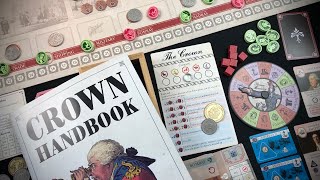
The solo game presents a marvel of design. The Crown, controlled by an AI deck and handbook, plays like a regular player with its own objectives. One solo player marveled, "I'm super impressed with what Cole Wehrle achieved in creating a really good solo negotiation game where you use like these little cubes to kind of control the ai's ability like giving them cubes to get favors and taking cubes when you do nice things to them I think that's genius." The AI responds to player choices through climate shifts and decision rules, making the solo experience feel like negotiating with an actual opponent rather than fighting a preset algorithm.
Multiple Scenarios Enabling Long-term Engagement
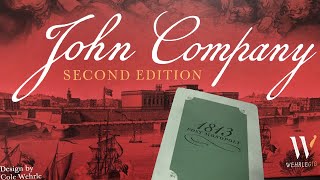
The game includes several scenario variants (1758, 1813, etc.) that fundamentally alter setup, goals, and available actions. Different scenarios present different challenges: some emphasize military control, others trade dominance. This variety ensures that replaying John Company doesn't feel like repeating the same game. A reviewer noted that even within a single scenario, "you could really pick either of them because there are separate games they're so similar in so many ways that I would have both but they are separate games I think for me it's just that they are so similar."
Potential Drawbacks
Overwhelming Complexity and Unclear Strategy
The mental load is substantial. One reviewer was candid: "after playing it for over 10 hours, I'm not playing this game to roleplay in the world or to get a history lesson. So, my primary enjoyment becomes figuring out how to win. And winning is often such a roundabout way, made even more roundabout because players are pulling the company in their own directions." The rules themselves are relatively straightforward; what exhausts players is processing how actions create cascading effects across the game's many systems. A reviewer playing competitively found that "winning is often such a roundabout way, made even more roundabout because players are pulling the company in their own directions."
Length and Accessibility Barriers for New Players
Games extend 2.5 to 4 hours easily; some play longer. This demands committed tables. The game teaches better than highly asymmetric designs because the core turn structure repeats, but players need 10+ hours before confidence emerges. One reviewer acknowledged respecting the game despite personal misalignment: "I have so much respect in how this game just breaks traditional board game structures that I'm going to leave it at a respectable 4 out of 10." Not every table will find this time investment rewarding, especially if winning feels arbitrary or if the historical theme fails to resonate.
If You Enjoy John Company: Second Edition
John Company appeals to negotiation game enthusiasts who appreciate games like Chinatown or Bonanza but want deeper mechanics. It resonates with players seeking thematic immersion and emergent narrative over mechanical optimization. If you enjoy euro games with asymmetry and player-driven storytelling, or if you want a solo AI opponent that feels like a genuine opponent, this game delivers. Fans of Cole Wehrle's other designs (Root, Oath) will find similar design ambition and willingness to challenge conventional game structures. Be prepared for a game that rewards repeated plays, reveals nuance slowly, and generates debate about what constitutes a successful outcome.
What Reviewers Are Saying
"The game evokes the feeling of being a bunch of pompous jerks scheming around a company table for 3 to four hours, sending their family members to do odd jobs, seeing how they can most exploit the local populations while taking as much money as possible secretly."
— One Stop Co-Op Shop
"I'm super impressed with what Cole Wehrle achieved in creating a really good solo negotiation game where you use these little cubes to kind of control the AI's ability. I think that's genius."
— One Stop Co-Op Shop
"The theme facilitates roleplay so well. I'm inviting The Duchess of this and Mr Appleton to croquet on the lawn, and you have to speak out what you're doing because it's fun for the whole table."
— Board Of It