/pic4093955.jpg)
June 2471, and kerosene - KERO - is scarce. Two clans are struggling to survive, exploring New Territories in their tanker trucks. Running out of fuel is a risk each time they leave camp! Fortunately, a local tribe of Tuareks can lend a helping hand…
Kero is a two-player game set in a future unfriendly world, where players will be clan leaders - managing a camp, a tanker truck and 7 Explorers - competing for the same lands. Their ability to win the game will be based on how much kerosene (Jerrycans) they can find and how they use it wisely… Collect as many resources as possible while using as little as possible of the KERO in your tanker-truck to upgrade your camp and claim New Territories! Score the more points (by adding up the points on cards and territories) and become the 2471 Badassest Clan!
The game is played in 3 rounds (ending when a Claim card is revealed), each comprising several turns. Making snap decisions and mistakes under time pressure is part of the game!
5 MAIN STEPS IN A PLAYER’S TURN
1. Fuel up with KERO (if necessary).
2. Choose your dice and roll them.
3. Collect resources shown on the dice and perform actions to upgrade your camp: take cards from the raw, take Tuarek tiles, send out Explorers on New Territories.
4. Deal with Fire and discard any burnt cards accordingly to the results of your roll.
5. Claim New Territories in which you have a majority at the end of a round.
FOCUS ON THE ORIGINAL REAL-TIME PLAY
TO COLLECT RESOURCES …
On a turn, choose your dice and roll them in a self-limited time using your tanker-truck. Tip it and roll your dice however many times you want, to obtain needed resources, keeping results as desired and avoiding fire (the fire dice burns up). When happy with the results, replace your truck flat. You can’t tip it up again! Beware of Kero outage! In this case, you lost your turn!
… AND FUEL UP WITH KERO
As soon as your opponent starts rolling the 8 dice, hold your tanker-truck (cab facing downwards). You gain only as much time as it takes your opponent to roll fires on all the dice. A simultaneous and interactive way to gain time for your sandtimer!
KERO KEY FEATURES
• Light, tactical & frantic game
• Fast & furious play for casual & experienced players
• Unique balanced gameplay mixing strategy & chance
• Uncommon barren theme with beautiful colored art
• Two 6 inch/16 cm tanker-timers inside!
HAVE FUN ROLLING YOUR DICE & REFUELING YOUR TANKER-TIMER!

- Large geometric shapes on the box
- Good color palette
- Industry
Mechanics (from transcript analysis)
Video topics + discussion points
Quotes (from this video)
- When a board game's sitting on the shop on the shelf sometime and get me interested to actually purchase it Oh on Kickstarter but more especially in boy game shop
- I almost pick a game based on pick a design based on the color on the spine and just liking the color palette and so you'll see that a bit through the first three that come up they're all guys or I really like the color palette on the spine and it transfers on to the front as well
- The reason is Tarrant started at pointing at board game covers originally and we sometimes think that you know when a board games sitting on the shop on the shelf sometime and get me interested to actually purchase it
- It's a book look the magnetic strip it's just the McCulloch I'm not gonna start saying the color plant pellet the color is good is golden with black keys it looks like an old just antique book
- This is a pizza box pizza box literally look but it is the what game food what game it's amazing
- it's excellent marketing it's yes taking the marketability to the next level
References (from this video)

Mechanics (from transcript analysis)
Video topics + discussion points
Quotes (from this video)
- the entire idea of these sponsored tutorials is that i don't give my opinion the game itself is trying to sell itself
- Jump into the pool without preparing yourself
- i love answering all these questions
References (from this video)

- Not going to be for me before I even played it
Mechanics (from transcript analysis)
Video topics + discussion points
Quotes (from this video)
- i want to live inside the board game industry i want that to be my job
- i don't want to do things that i dread
- i want to be as completely transparent as possible
- i'm going to call them good games logs
References (from this video)

- Lost Runes of Arnac
Mechanics (from transcript analysis)
Video topics + discussion points
Quotes (from this video)
- don't buy too many games all at once unless you love that part of it
- there's no such thing as hearing about a video too soon
- i plan out as far ahead as i can realistically
- i adore lost runes of arnac
- anno 1800 legacy thanks for putting that idea into my head
- on mars is right there at the top
References (from this video)
- Another Wii game that got sent to me
Mechanics (from transcript analysis)
Video topics + discussion points
Quotes (from this video)
- Anacrony is a cooperative game for one to four players. So it's a cooperative game where you're working together to stop that end game timer.
- You're constantly making choices about how you're gonna spend your next X turns, and you've got to have enough resources.
- You've got to plan for months ahead. You've got to plan how you're gonna spend your next X turns.
- This is a really good cooperative game. I've played it a couple of times.
- It's a very thinky game. So you've got all these different tracks and your different workers and your different ways to score points.
References (from this video)

- asymmetric roles with distinct mechanics
- cool co-design concept
- asymmetric two-player; octopus vs shark
- oceanic ecosystem
- Raiders of the North Sea
Mechanics (from transcript analysis)
Video topics + discussion points
Quotes (from this video)
- this is a work replacement Style game that very much reminds me of dwellings of el reveal
- I like Tableau building I like interesting work replacement systems
- I am quite looking forward to digging into this game to see exactly how it works
- I genuinely don't really understand and honestly I wouldn't say I'm particularly compelled by the mechanics that are explained so far
- this game has this interesting River idea where six cards will put face up in the middle of the table
References (from this video)

- Engaging asymmetry
- strong two-player dynamic
- high replayability
- pursuit and evasion with asymmetric roles
- asymmetrical duel between a shark and an octopus
Mechanics (from transcript analysis)
- Asymmetric play — players control the game using different tools (dice vs cards) and have opposite objectives (eat vs evade).
Video topics + discussion points
Quotes (from this video)
- this first game is an absolute home run
- as soon as you play this game you always want to play the other side
- I want to continue playing it again and again
- it's a spatial bidding game where you'll take turns bidding on this terrain
- planning your vacation and energy levels ... balance
References (from this video)
Mechanics (from transcript analysis)
Video topics + discussion points
Quotes (from this video)
- we will link the BGG preview list down below so you can also explore and read about all the different games
- you have to come in with an open mind
- we're excited and do a lot give us that pra to a lot of games
References (from this video)
- One of the best games played ever, a masterpiece in design prowess.
- Has a feel of trick-taking.
- So many nuances and layers to the strategy.
- Depth to length ratio is insane.
- Great tactics, great strategy, great production, low rules overhead.
- Close to perfection for fans of area control and card-driven games.
- Can be a rookie mistake to not bid enough resources in the last battle, costing the game.
Mechanics (from transcript analysis)
- Area Control — Players compete for control of regions on a simple board.
- card-driven — A card-driven area control game.
- Deployment/Action points — Card values determine which region troops can be deployed into or how many action points are available to move troops and eliminate opponents.
- Scoring based on leader placement — The region with the player's leader figure scores points, but this might not be the region being won that round.
- Trick-Taking — Game has a feel of trick-taking, where players play cards and the highest value card wins the round.
Video topics + discussion points
Quotes (from this video)
- This is where I talk about all of the games that I have played over the last couple of weeks this episode covering the first half of August 2024.
- The gameplay changes in this reprint are an improvement.
- This is a really good one this is right up there with the best negotiation games.
- It has this kind of Studio Ghibli style artwork which looks fantastic on the table and definitely does look distinct.
- It is an ingenious design I just wish I I designed a game like this cuz it is timeless it flows wonderfully.
- I cannot say anything bad about this game at all I think it's is close to Perfection.
- This is now I'm come out and say this is one of the best games I've played ever I think it is a masterpiece in design prowess.
- If you don't know about this one you like your area control games you like car driven games then this is close to Perfection.
- It really does build on that No Thanks mechanism to a very high standard.
- Hopefully you have enjoyed it some great games here you know Rumble Nation jeru um far away U you know zuad was thoroughly enjoyable but I'm not sure if it will stay around much longer Empire Zen was a solid one and I always love Savannah Park.
References (from this video)

- Fun tension between two players
- Natural tension
- Deeper nature of asymmetry
- Fun tension
- Learning curve
- Tougher for younger family members or friends
- Tougher for folks who don't want imperfect information or lots of mechanisms
Mechanics (from transcript analysis)
- Asymmetric — it is asymmetric in nature so it might be a tougher game for uh younger family members or friends or uh for folks who don't really want to enjoy a game with a imperfect information or a lot of mechanisms
- Imperfect information — folks who don't really want to enjoy a game with a imperfect information or a lot of mechanisms especially not knowing what your opponents mechanisms and systems are
Video topics + discussion points
Quotes (from this video)
- you know that this is directly inspired by Shadow of the Colossus
- apart from the verticality it's just such a smart creative cool package where each hero is a combination of a character class and a couple hero cards shuffled together and kind of played as if it were a deck building game that you're not doing any addition to throughout the game itself
- it has such an amazing intuitive simple system for telegraphing what the oppositional behavior of this Leviathan that you're climbing is going to be and giving you time most of the time to react to it
- Ironwood is an asymmetrical hard driven tactical game with multi-use cards Ironclad and wood walkers have different decks different Victory conditions move around the board differently fantastic components and artwork
- Pagan fate of Rowan Oak which is an expandable asymmetrical deduction card game where one player plays as a witch the other player is playing as the Witch Hunter and the witch is playing cards to try to perform this Grand ritual whereas the Witch Hunter is trying to figure out who the witch is and then bring them to justice
- React the Arts of War this one was super under my radar until packs unplugged but this is a onev one grid-based card dueling game with these highly asymmetrical artist characters that are very unique in their play style very thematic you are moving your artists around the board trying to damage the other artists you're competing against so thematic and extremely
- River of gold if you had told me 5 years ago that they were going to be making a Euro set in rokuan the setting of my personal Obsession as a teenager and young adult I would have well I would have believed you but I would have flipped my lid and even still now I'm kind of in shock at how good of a game it pulled off in being especially under a younger Studio like office dog
- River of gold is an exceptional worker placement with a linear aspect as you navigate these boats down the river and progressively more and more buildings are constructed along the ways
- it has just the right blending of approachable economics and astounding capabilities that you can roll into and is magnificently produced with these beautiful gold reflective elements throughout the otherwise kind of watercolor esque board
- first up we have SEI I know this is on a lot of other people's lists but it has a fantastic solo mode it uses an automa where the automa uh will do somewhat of a random action but the actions will be more powerful than anything that you can do on your turn so it ends up being very competitive you can see here I just finished a solo game and the scores were pretty close actually within 10 points
- arcs it is difficult to talk about this game without getting into the Weeds about how beautifully the mechanics interact with each other in this game to create an epic space conflict but at the same time a game about making do with what few actions you have
- it's hard to imagine arcs not being in the top three of this list in what we have talked about as an absolute Bonkers of a year it's cunning inventive and original while still being all that much more approachable than many of Leader's prior works
- the depths to which you can explore the systems involved is really something
- the last recommendation on my list is I Napoleon designed by Ted racer uh and GMT games it's another card driven game what I like about this one is the historical aspect of it and how true to the life of Napoleon it is uh first you start by playing as uh Napoleon when he was a commander you move up to uh first console and then ultimately Emperor if you make that far and there's a ton of ways to lose um but you can go through his entire life it's a fantastic solo experience highly recommend it
- Harvest the number one game of 2024 the Box really does say it best a fantastically fun fur filled farming Affair that is tricky to say but the game is just that much fun too
- Harvest is an amazing game it is a knife fight in a hay bale your turns are so few that you cannot Dilly nor dally but the adorable theme makes something that should be an inherently stressful game into a cute little farming experience
- it has the deep deep complexity of trying to maximize your turns to give it legs to even the most astute of board gamers was some serious debate Among Us contributors on the channel as to whether Harvest should take the number one slot
- taking the raw elements that TMG had rightly gone with but bringing it to a more Modern Standard giving it both a visual overhaul but also giving at a tight mechanical system that is shockingly deep for how mechanically narrow it may seem at first to have this level of function in a farming game that is played in a mere four rounds only 12 placements for the entire game is the Pinnacle of refined game design
- making Harvest our 2024 game of the year
References (from this video)
Mechanics (from transcript analysis)
Video topics + discussion points
Quotes (from this video)
- people love content I mean it's just it's the most simple it's the most simple truth of it
- I can allow people are more willing for bad stuff to happen cuz we're both experiencing it we're together in this bad situation
- I think reality TV is very underrated in terms of how much interesting game stuff is happening there
- I've been working on the prototype for I don't know like a year
References (from this video)

- Stunning art and components
- Strong asymmetrical design with thematic depth
- Rules can be heavy; higher entry barrier
- Longer play time for a two-player title
- asymmetric, strategic showdown
- Ocean, currents, shark vs octopus
- thematic, high tension
- Mandala
- Patterns
Mechanics (from transcript analysis)
- asymmetrical two-player design — Two distinct roles with different boards and goals.
- Currents and tokens — Placing tokens to influence movement and actions.
- Player Board | Main Board — Interaction on a common map while each player manages private areas.
- Shared center board with private islands — Interaction on a common map while each player manages private areas.
Video topics + discussion points
Quotes (from this video)
- I want to dig in on this game.
- It's a dig in for me as well.
- This is the best two-player only game I've played since Great Plains.
References (from this video)
- Had some cool things going for it (initially)
- Felt like doing too little
- Actions were pretty limited
- Rarely won bids to do multiple things
- Felt clunky and not that good compared to similar games
- Building buildings with different scoring elements
- Walking in Borono
Mechanics (from transcript analysis)
- action selection — Choosing actions from limited options, with bid winners getting to perform multiple actions.
- bidding — Secretly playing cards for bids to determine action selection.
- building — Players build buildings that have different scoring elements.
Video topics + discussion points
Quotes (from this video)
- Keep or Cull the series where we play a lot of games and then decide if we want to keep it in the collection or call them out of the collection.
- It's a double cow, which is sad because I really wanted to like this game. And it's not that I didn't like it. It's just that it was fine.
- But it was a in this genre I enjoyed it, but I'm the more of these I play, the more I'm like, I want to go back and play Fury Dracula, which is basically more straightforward where it doesn't take 16 hours to play.
- I was a little unsure because it was fun. But there's so many games. It's I'm I'm very happy to have played it, but I will never choose to play it again.
- Probably Bone Wars or Cudilero. So, I'm going to go Kudro because you had the other one.
- And best uh I think I liked the trick takers the most.
- But here we have a crazy good deal for you for $0 and0 or whatever currency you use in your country. You can subscription to this series forever.
References (from this video)
- Can be played at two players, but if a player is 'phoning it in', it can be less fulfilling for the opponent.
- Requires players to be actively engaged to be fulfilling for the opponent.
- Ironwood
Mechanics (from transcript analysis)
Video topics + discussion points
Quotes (from this video)
- I think that there are a lot of games that even if they're not built specifically for two players, the draw to play those games that was there at four players or three players is still there at two players.
- I think that some parts of Aries expedition becomes a lot stronger at two players than it does at three or four players.
- I have my sandbox, you have your sandbox. This can be great at two players.
- Well, let me tell you, nothing is going to create a marital uh battle like someone not being entirely focused on a game of sale.
- I can kind of be doing something else while playing.
- So to me, Ark Nova is ideal for two players.
- Peak Spirit Island is two-player or two spirit if you're playing solo and you have uh and you want to do double-handed
- However, it's too bigrain for me to feel like I'm up for that.
- I just like them at two players. You know, I don't need the extra player count. That's the right amount of opposition that I need for those.
References (from this video)
Mechanics (from transcript analysis)
Video topics + discussion points
Quotes (from this video)
- Tureaki was awesome.
- I love Aleif. He's like my favorite Euro designer.
- Darwin's Journey. I actually love this game.
- It's definitely the best pandemic ever, and it is definitely extremely thematic.
- I hardly ever play old games.
- Boop, love it.
- it's not going to hit the table anymore.
References (from this video)
Mechanics (from transcript analysis)
Video topics + discussion points
Quotes (from this video)
- This iceberg in and of itself is maybe, in fact, the tip of an even bigger iceberg.
- What's great about all of them is you just need some traditional sets of dominoes.
- Because they have two big big things. What are those two things? Well, the aforementioned concept of the numbers, orientation, and all that, but also the physical component, the delectable clicketity clack, that tactile nature.
- I already know that dominoes make games better from a physical standpoint.
- The game is just so satisfying when playing with the dominoes in their true clicketity clacky forms.
- It was so funny to have that revelation, that realization that wait a minute, I like that in games and Domino's are just already bringing that to the table.
- That means dominoes have been hiding in the games you've been playing and you didn't even know it.
- I think dominoes need to be given a little love.
- you can get a Domino set or two anywhere. And for a few dollars, you're opening yourself up to a tremendous world of gaming that is just hidden right there beneath the surface.
- Dominoes really are infectious, and I have put out two domino designs now on Board Gamegeeek.
- Dominoes make games better. Yeah. Yeah.
- I've fallen for it. I've fallen for the delightful sounds of the clicketity clacky.
- I'm buried in bones.
- If you have any questions, comments, or want to discuss any of the games mentioned here, please, please do.
- get yourself some dominoes, fall down the rabbit hole, and don't forget to play board games.
References (from this video)
- Fantastic game
- Very asymmetric and symbiotic
- Cleverly integrated mechanics
- Tight and well integrated
- Does not overstay its welcome
- Makes you want to play the other side
- Allows for incredibly clever things
- Compelling hunter experience
- Underwater Ecosystem
Mechanics (from transcript analysis)
- Asymmetric Player Powers — the game is very asymmetric
- Dice Rolling — If you're the shark, you have dice and even that's not done the way you traditionally use dice.
- Mahjong-style tiles — the octopus isn't using dice at all. They're using ma jang style tiles.
- Path building — It's more of a path building type of a thing.
Video topics + discussion points
Quotes (from this video)
- This is a two-player trick taking game competitive this time, mixing it with the lane battler.
- So, you're just as invested in win in losing as you are winning. But if you lose too much, you're not going to ever have enough power.
- My number one is not joking a political uh themed game. It's also in a way a a war game, but it is card driven.
- This is Twilight Struggle.
- It is so smart. It is so strategic.
- If you really want to play this well and have the best version of the game you can is is both players know both decks.
- It's got a tug-of-war style to it. Has multiple victory conditions, which I also love.
References (from this video)

- Cool asymmetrical gameplay
- Fun, quick, medium weight game
- Good for weeknights
- Luck mitigation strategies available
- Theme shines through
- Fun when octopus player evades shark
- Can be frustrating for the shark player when prey escapes
- Shark hunting octopus, or octopus evading shark
- Underwater
Mechanics (from transcript analysis)
- Asymmetrical play — Kelp is a really cool asymmetrical game, a one versus one game.
- Card drawing — you're drawing cards
- Dice Rolling — There is a fair amount of luck involved because you're rolling dice
- re-rolls — there's also a lot of mitigation in terms of chances to re-roll or add more dice to the bag.
Video topics + discussion points
Quotes (from this video)
- This one could end in divorce, but it also might be one of the best times of your life because I absolutely love Old King's Crown.
- Make no mistake, you can get butt hurt in this game.
- If you're into mean games, then honestly, this is my number one choice for you and personally, a top 10 game of all time.
- This is cozy couples gaming personified.
- I always come away from this one feeling smitten even if I've lost.
- It's just relaxing. There's something so relaxing about sitting down, building out your little meadow, and watching it develop over the course of the game.
- This is just one of those games that you finish, and you feel all content and fuzzy inside.
References (from this video)

Mechanics (from transcript analysis)
Video topics + discussion points
Quotes (from this video)
- I've been really impressed with it
- the museum board is a big thing
- I would probably prefer to play Merv over a T-series game
- the Crew is easily my favorite trick taking game
- Through the Ages is a solid game
References (from this video)
- Has potential to climb in rankings
- Piqued the reviewer's interest
- Much more to discover
- Strategy is a bit opaque
- First half feels like going through the motions
- Can be a brain burner
Mechanics (from transcript analysis)
- board manipulation — Players place marbles onto the board, and as they do, they must remove a disc, causing the board to constantly get smaller.
- Jumping and collecting — Players must jump over existing marbles, collecting them. Multiple jumps can be chained together.
- Set Collection — Players aim to collect specific quantities of different colored marbles (black, gray, white) or a mix of each.
Video topics + discussion points
Quotes (from this video)
- hopefully you have enjoyed the video as much as I've enjoyed playing these fantastic abstract strategy games I highly recommend checking them out all of them out actually if you um if you do uh enjoy abstract strategy games
References (from this video)
- Beautiful artwork
- Innovative central board mechanic with blocking interaction
- Some players may find it heavy or dense
- Trade, mosques, and market activity in a central board
- Ancient city of Merv with caravans and bazaars
Mechanics (from transcript analysis)
- Central board building placement — Place buildings in the middle to influence actions and resources.
- Dice Placement — Two-player variant uses a dummy to block/shape play.
- Multi-Use Cards — Cubes/discs grant actions and can interact with others.
- Multi-use/disc management — Cubes/discs grant actions and can interact with others.
- Two-player dummy placement — Two-player variant uses a dummy to block/shape play.
Video topics + discussion points
Quotes (from this video)
- it's gorgeous
- everything about this game is gorgeous
- it's jazz chess with insects
- it's a combat game that I really like
- don't be turned off by it being too pretty
References (from this video)

- Excellent production quality and graphic design
- Engaging asymmetrical two-player design
- Well-balanced and tense endgame with close outcomes
- Accessible mechanics that suit asymmetrical gameplay
- Strong thematic integration and potential for high replayability as cards/abilities evolve
- Memory-intensive elements requiring tracking of blocks and board state
- Can be stressful due to confrontation timing and pressure to act optimally
- Pacing can feel circular at times depending on board setup
- Predator-prey survival with asymmetric roles
- Underwater environment featuring kelp forests
- Head-to-head competition with evolving abilities
Mechanics (from transcript analysis)
- Asymmetric Player Powers — Two players operate as different characters (octopus vs. shark) with distinct goals and mechanics.
- asymmetric player roles — Two players operate as different characters (octopus vs. shark) with distinct goals and mechanics.
- confrontation card system — When the shark strikes, players choose confrontation cards to counter or defend; outcome determines who wins the clash.
- Deck Building — Octopus expands its deck of cards to gain new abilities; shark cards add dice and effects.
- deck-building / card acquisition — Octopus expands its deck of cards to gain new abilities; shark cards add dice and effects.
- Dice Drafting — Shark uses a bag of dice to navigate and perform actions; dice influence movement and actions.
- dice drafting/rolling and management — Shark uses a bag of dice to navigate and perform actions; dice influence movement and actions.
- hunger track and loss condition — Players add dice to a hunger track; filling it results in a loss.
- Resource Management — Manage energy/dice, buy shark cards, and balance immediate needs with growth.
- tile manipulation and information reveal — Blocks/tiles are revealed, moved, or hidden, affecting visibility and strategic options.
- Tile/Map Shifting — Blocks/tiles are revealed, moved, or hidden, affecting visibility and strategic options.
Video topics + discussion points
Quotes (from this video)
- I really enjoyed kelp
- it's asymmetrical two-player game
- this game is fantastic
- I would put this in my top 10 list
- the balance is integrated into the game
- the production quality is outstanding
References (from this video)
- Interesting twists on Lagrronha by removing a central area
- Engaging track-based progression
- Might not justify selling Lagrronha for Elbero
- Donkey-track progression and ship unlocking
- Lagrronha-inspired with donkeys and buildings
- Medium-weight Euro with tile-building flavor
- Lagrronha
Mechanics (from transcript analysis)
- Building unlocking and ship scoring — Unlock assets and later score via ships.
- Donkey-track advancement — Move donkeys to unlock buildings and triggers.
- Track Advancement — Move donkeys to unlock buildings and triggers.
Video topics + discussion points
Quotes (from this video)
- Oh my goodness, this game. I need to get my hands on a copy of this one because I really enjoy it.
- I love this part of the game. My only thing is I feel like there's this specific thing with whatever tea you have in your teap that is going to be used for all of your witches.
- Shallow Sea... definitely get your hands on a copy of Shallow Sea because it is so good.
- Federation needs more love. This game is so fantastic.
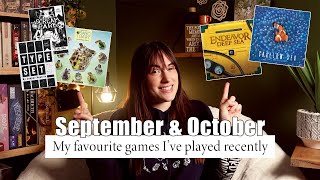
- Endeavor Deep Sea is my number one for September.
References (from this video)
- Absolutely incredible asymmetric two-player design
- Striking art and beautiful ocean theme
- Smooth, modern two-player feel; great for varied play sessions
- Limited to two players; not a multiplayer experience
- two-player asymmetrical strategy with aquatic life
- underwater/oceanic theme
- clear, vivid theme integration in a tiny package
Mechanics (from transcript analysis)
- asymmetric two-player design — Two players play very different roles with distinct goals.
- Hidden Movement — One side navigates movement to outmaneuver the other.
- Hidden movement / deduction — One side navigates movement to outmaneuver the other.
Video topics + discussion points
Quotes (from this video)
- The production and visuals on the game are Stellar.
- It's the kind of game that begs to be played.
- Rockard is a 10 out of 10; it is remarkable.
- Endgame scoring is abandoned here for just three different Avenues to Victory.
- If you like Seven Wonders Duel you like Tolken work or if you like D trait's artwork.
References (from this video)

- Stunning production and colorization
- Distinct two-player tension
- Strong thematic appeal
- Retail status and timing not fully clear
- Asymmetrical two-player conflict (shark vs octopus)
- Underwater duel
- Hidden movement and tactical play
Mechanics (from transcript analysis)
- Asymmetric Player Powers — One player as shark, the other as octopus
- asymmetric two-player — One player as shark, the other as octopus
- dice-based actions — Shark actions influenced by dice; tactical options for octopus
- Hidden Movement — Movement and actions are partially concealed
- trap/defense elements — Shark traps and octopus navigation create tension
Video topics + discussion points
Quotes (from this video)
- we're excited about all of the new board games coming out in 2024
- every month we're going to bring you five games that we really looking forward to playing
- this is series it's not like the top five games are going to come out this year
- please do so Matt let's dig into our next choice
References (from this video)
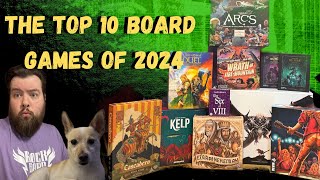
- tight decisions
- nice two-player mode
- some luck elements
- complex weight
- work replacement, production, and building
- fantasy kingdom empire building
Mechanics (from transcript analysis)
- Pattern Building — Strategic placement balances resources with building placement.
- pattern_building — Strategic placement balances resources with building placement.
- work_replacement — Place workers to take actions and gather resources.
- Worker Placement — Place workers to take actions and gather resources.
Video topics + discussion points
Quotes (from this video)
- this is just a snapshot of right now
- it's hard to make this list
- we like these games and we want to play them
- it's fun when we do this top 10
- top 10 is not set in stone
References (from this video)
- clear additional layer of strategy from area control
- simple rules with a satisfying depth
- thematic execution may be polarizing
- out-of-print status may affect accessibility
- area majority with trick-taking core
Mechanics (from transcript analysis)
- cube placement and movement — use results of tricks to move or place cubes according to scoring rules
- Trick-Taking — players compete in tricks while strategically placing cubes to dominate regions on a board
- trick-taking with area majority — players compete in tricks while strategically placing cubes to dominate regions on a board
Video topics + discussion points
Quotes (from this video)
- Park life is a trick taking game that has this really cool kind of spin on trick taking where basically you are going to win a trick if you play the lowest number
- I think it's really cool the solo version of the game is very fun where you are playing two open hands and basically each round you trying to get both hands to win an equal amount of cards or points
- Naku Dice is a game that I have wanted for so long I played it actually early last year and fell in love with it
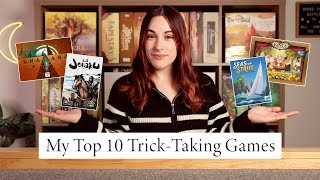
- Seas of Strife is my favorite trick taking game
- there is no Trump suit in Rebel Princess as well but the princes kind of act like a trump suit
References (from this video)
- A surprisingly deep two-player experience for a compact package
- Strong replayability due to asymmetry and leverage of powers
- Not universally loved; initial novelty can be divisive
- asymmetric, sea-creature themed with predation and pursuit
Mechanics (from transcript analysis)
- asymmetric movement / hidden movement — Two opposing sides have different movement patterns and goals.
- two-player, abstract strategy — Low-structure engine with deep tactical decision points.
Video topics + discussion points
Quotes (from this video)
- "this is the completely biased unadulterated Jack's personal top 10 list of 2024"
- "it's a wonderful year to be a gamer with the partner gamer in your life"
- "Leviathan Wilds is a midweight game that doesn't take a lot to get to the table"
- "Harvest is a game that got me into gaming in the first place"
- "this year has been bonkers... I'll remember forever"
References (from this video)

- lovely look and demoable design
- potential strong appeal for asymmetric duels
- depth TBD in early development
- limited time to explore at Essen/demo table
- underwater combat between shark and octopus
- two-player head-to-head undersea duel
- Array
Mechanics (from transcript analysis)
Video topics + discussion points
Quotes (from this video)
- it's become a tradition on this channel
- this channel is not just about playing games it's also about sharing experiences in board game design
- I'm Adam Porter I design games and I review them on this channel
- this happened a lot this year in Essen with many people introducing themselves to me or even requesting selfies with me
- it looked lovely
- I don't think achieve weekly videos in 2024 but it's important that the videos maintain their quality and I refuse to rush it just to hit a self-imposed deadline
- I look forward to seeing you all again in 2024 and until then all the best
References (from this video)
- fun small-card sequencing mechanic
- easy to learn
- similar to Captain Flip; questions about value if you own Captain Flip
- sequence building
- Captain Flip
- Biblios
Mechanics (from transcript analysis)
Video topics + discussion points
Quotes (from this video)
- the stench of BO was everywhere
- The finish on it was quite smooth
- absolute [__] bargain
- I absolutely love this game
- looked absolutely stunning
- this game sort of sucked
References (from this video)
- Clever asymmetric design with clear roles
- Tight interaction between players on a shared board
- Two-player only; reduces player-count flexibility
- Predator-prey dynamic between a shark and an octopus
- Underwater duel on a shared board
- Compact, duel-focused with asymmetry
Mechanics (from transcript analysis)
- Asymmetric two-player game — Each player has distinct win conditions and different actions due to asymmetry.
- Shared board interaction — Both players operate on the same board, influencing each other’s options
Video topics + discussion points
Quotes (from this video)
- reviews, rankings, lists are really snapshots in time
- It's a snapshot in time. And who knows, these things could even shift around if I were to do this again this time next year.
- I am a shallow gamer.
References (from this video)
- highly engaging two-player dynamic
- noted components/visuals
- two-player only may limit group play
- predator-prey dynamics between ocean creatures
- ocean ecosystem
- two-player strategic confrontation
Mechanics (from transcript analysis)
- bluffing — player deception to mislead about intentions
- deck-building — use cards to influence moves and options
- two-player asymmetric play — octopus vs. shark with hidden information and pursuit
Video topics + discussion points
Quotes (from this video)
- Happy Birthday time for Grant.
- We love you so much.
- We are taking OVER THE WHOLE HOTEL.
- The Omaha Gaming Convention will be right here in Omaha, Nebraska.
- Meepleathon here we come!