
Game Info
Year
2024
Players
2-10
Age
10+
Playtime
20 min
Collection
Ratings
Mechanic profile
Not enough video data yet
Vibe profile
How this game feels to play
Description
Landmarks is a word game of hidden paths and clever clues. Your party is lost deep in an island jungle, relying on you to guide them to safety and treasure! In this jungle, every word matters. Use strategic wordplay to send a chain of one-word clues. The connections between them will create a path leading to fortune and glory.
—description from the publisher
Featured Videos

Rules Teach

Landmarks - How To Play
Unboxing

PAXU Haul & Recap!
Ask a Rules Question
Images

GID0186216.jpg

GID0186216_thumb.jpg
All mentions
Browse transcript mentions, sentiments, pros/cons, mechanics, topics, quotes, and references.
Total mentions: 30
This page: 30
Sentiment:
pos 24 ·
mix 0 ·
neu 0 ·
neg 1
Showing 1–30 of 30
Video tw7DXmPh0oI
Board Game Sanctuary Other at 22:11 sentiment: negative
video_pk 109037 · mention_pk 314661
Click to watch at 22:11 · YouTube ↗
Overall sentiment (raw)
negative
Pros
- Engaging word game
- Tension in clue-giving and guessing
Cons
- Difficulty with peninsula tiles and open spaces
- Unclear strategy for leading the team to specific hexes in such situations
Thematic elements
- Giving one-word clues to guide a team across a map, collecting jewels and avoiding traps.
- Map with traps and jewels
Comparison games
- Codenames
- Decrypto
- Letter Jam
- The Chameleon
Mechanics (from transcript analysis)
- Hidden Information — The competitive mode has subtle hidden information.
- Route Building — Guiding a team across a map by placing connected word tiles.
- Set Collection — Collecting four jewels automatically wins the game.
- Word Game — Players give one-word clues to connect hexagonal tiles on a map.
Video topics + discussion points
No key topics recorded for this video.
Quotes (from this video)
- oh it was like a a dream come true just being able to meet Amy and Maggie in person and talk to them
- it's heartwarming to see as in Australian to be able to see lots of Australian fellow board gamers
- it's the people that really make this Hobby matter
- It's like walking into a modern art gallery
References (from this video)
No references stored for this video.
Video LwiwkpP5Sf4
Rolling Dice & Taking Names Event Coverage at 26:56 sentiment: positive
video_pk 103728 · mention_pk 299567
Click to watch at 26:56 · YouTube ↗
Overall sentiment (raw)
positive
Pros
- so good they were selling them out
Cons
none
Thematic elements
Comparison games
none
Mechanics (from transcript analysis)
Mechanics unknown.
Video topics + discussion points
No key topics recorded for this video.
Quotes (from this video)
- it cost me two things actions and resources
- the print is that small cuz it does not need to be
- the thing that I thought was cute with one piece is the same thing here is at the beginning of the game you take seven cards off the top of your deck and that's your life and when you take damage you take one of the life cards and discard it but there may be a trigger on it which does something like maybe puts it to your hand I thought that was kind of unique
- Evolution 2.0 that's right Evolution one of my favorite games
- this game is for those of you that enjoy Evolution but want to play with people who have never played
- I'm loving the concept I'm loving the idea of the um individual modules and the various biomes that they're picking
- you can make the deck so the the game so that okay there's not a lot of player interaction not of a lot of attacking or could be there could be a lot of attacking
- we were completely mesmerized by these things cuz they are very cool
- they are actually very helpful for even people of advanced age because it's 4 through 99
- the fact that it's a magnetic setting where you put an overlay in the box and you are sticking these pieces to it just blew us away
- teaching people how to use chopsticks
- this is the miniature game for board gamers
- 45 minutes okay now I'm paying a lot more attention
- this is a skirmish game
- an army is only like 15 Miniatures I could put those together real quick and paint those real quick
- we did another draft event tonight oh my gosh 64 people sign up for the event
- my leaders were all of the villain the dark side that I had
- don't judge a book by its cover
- she made it look easy and I played that leader the night before and I felt like I was an idiot
- you know what am I dealing with here and she just I was like wow
References (from this video)
No references stored for this video.
Video -kJy3KrOhb8
Rolling Dice & Taking Names Review at 1:00:52 sentiment: positive
video_pk 93439 · mention_pk 252780
Click to watch at 1:00:52 · YouTube ↗
Overall sentiment (raw)
positive
Pros
- Uses familiar mechanics in a new and exciting way.
- Very fun and creates high tension.
- Portable with no setup required.
- Good replayability with different maps and difficulties.
- Can be played cooperatively or competitively.
- Promotes discussion among players.
- A solid party game that feels familiar but fresh.
Cons
- Potential for downtime if the clue-giver gets stuck.
- Some clue placements can feel like a gamble.
- Can be a bit too complex for some players who prefer simpler games.
Thematic elements
- Navigating an island to find treasures
- An island with treasures
Comparison games
- Codenames
- Just One
- Clover
Mechanics (from transcript analysis)
- Competitive play — Can be played with teams competing to find treasures.
- cooperative play — All players work together towards a common goal.
- map exploration — Players navigate a map to find treasures and complete objectives.
- Resource Management — Managing the limited number of word tiles is crucial.
- Set Collection — Players collect treasures and amulets.
- Tile Placement — Players place word tiles on a hexagonal map.
- variable difficulty — Offers beginner, intermediate, and advanced modes.
- word association — Players give one-word clues to associate with locations on a map.
Video topics + discussion points
No key topics recorded for this video.
Quotes (from this video)
- The goal isn't to get the most victory points, actually, it is to make your way across an island and collect three treasures without getting trapped or cursed.
- You could take two actions related to manipulating resources, but you couldn't manipulate the same resource twice, which kept you from really manipulating the trade action for other players.
- The market was definitely part of the game and that definitely did determine what direction I went on what resources I got or maybe what planets I was going for but it's not like in a stock market game.
- I'm keeping this on the shelf instead of Codenames or something like that because I've played it so many times I want to pull this out here's something you already know how to do but it's a different goal.
- My boys play probably more old games than they do new games interesting is it because of the hard challenges it's the challenges and they're just classic games that they a lot of the games back then rtss and some some jrpg they just don't make that type anymore or these are the games that basically launched the whole that genre of video games and they just really kind of get into those.
References (from this video)
No references stored for this video.
Video Pm3qSszTT0I
Watch It Played Discussion at 2:41
video_pk 87444 · mention_pk 228535
Click to watch at 2:41 · YouTube ↗
Pros
none
Cons
none
Thematic elements
Comparison games
none
Mechanics (from transcript analysis)
- path/landmark discovery — use clues to connect to hidden paths and landmarks
- word drafting / clue creation — create chains of single-word clues to lead teammates
Video topics + discussion points
No key topics recorded for this video.
Quotes (from this video)
- multiplayer RPG in a box that you kind of just Choose Your Own Adventure through and play and have fun with and laugh about
- every word matters because you're going to use strategic word play to create a chain of single word Clues to lead them through the jungle
- it's a big heavy Euro by my standards
- it's a thinky Euro with a ton of actions to choose from
- Far Away is just an exceptional little game
- it's just such a lovely calming game
- it's very complicated
References (from this video)
No references stored for this video.
Video 6naoipI9Evo
Watch It Played Top 10 List at 4:55 sentiment: positive
video_pk 87413 · mention_pk 228361
Click to watch at 4:55 · YouTube ↗
Overall sentiment (raw)
positive
Pros
- Combines competitive and cooperative modes
- Uses strategic word play to create paths
Cons
none
Thematic elements
- Guiding lost friends to safety and treasure using strategic word play
- Lost deep in an island jungle
- Players use one-word clues to create a chain that forms a path.
Comparison games
- Codenames
- Codenames Duet
Mechanics (from transcript analysis)
- Clue Giver — Players give one-word clues to guide teammates.
- Competitive play — Combines competitive and cooperative modes in one box.
- cooperative play — Combines competitive and cooperative modes in one box.
- Word Game — A word game of hidden paths and clever clues where every word matters.
Video topics + discussion points
No key topics recorded for this video.
Quotes (from this video)
- hello join us as we cover 10 board games
- these are games on our radar
- if you're always keen on discovering new games and others you may have previously overlooked then you've come to the right place
- Matthew mentioned that he played kabanga with a great group of people but they all went into the game with some skepticism however they soon all fell in love with it
- there are so many games so many games how do you decide which ones are worth your time
- sometimes it just takes a picture and that's all it took for me with this one I saw this and all critical thought flew out of my brain
- Oh hey Chaz while you're here maybe you can lend me a hand with monik nen's first pick too
- I really liked it and I'm looking forward to playing it more and showing it to my friends
- It's nice when your job can also be your hobby
- until next time I've been Abigail Pennington and thanks for watching
References (from this video)
No references stored for this video.
Video 4cIrprW58lg
UndeadVikingVideos Discussion at 2:53:19 sentiment: positive
video_pk 87342 · mention_pk 228014

Click to watch at 2:53:19 · YouTube ↗
Overall sentiment (raw)
Positive
Pros
none
Cons
none
Thematic elements
Comparison games
none
Mechanics (from transcript analysis)
Mechanics unknown.
Video topics + discussion points
No key topics recorded for this video.
Quotes (from this video)
- Gotta shoot for shoot for the moon if you miss you'll wind up with the Stars
- I don't know man I mean it's just like when somebody wants to like get all up in my uh area and and and like and like I said I'm trying to give him empathy and saying I understand you know you have a shitty day a lot of people are like probably all up in your uh uh business about it
- It's just like instead of you could just come up with so many real reasons why why that guy's just an idiot and what's my what's my expression I don't know what's your you have enough ammunition stop trying to load a knife into the chamber
- The convention hall was just so so let me let me ask for I'll ask you how did Saturday feel I didn't I didn't really see it much
- My favorite part of John Conan was this year my hug
- I I love and hate you all in equal my favorite Jenna my favorite line that I've used that I stole from you and I've used it dozens of times is I used to have a friend that look just like you
- I don't know he's got he said he's got a fever and he's got sore throat hopefully he hopefully it's mild
- I was like you know what you know you know what really chaps my ass I'm just G to say this right now this really chapped my ass and I I I realize this is political and I apologize for it and and I'm willing to let people say say what they want to say but you know I think that Donald Trump Trump is a complete and total [ __ ] [ __ ] and I think that JD Vance guy is a complete and total [ __ ] [ __ ] as well and there is in a world where I would vote for either of them I wouldn't put them in charge of a 25 cent pay toilet
- It's like you know like wrestlers who come out and just say you know what I was driving into Minneapolis Minnesota that's where we're from yeah just like he said the name we're in the city we're in it's just it's just and so what it does then is that it gives the people that like are are are gonna vote for them it gives them all of the like ammunition in the world to say those idiots blah blah blah couch jokes you know it's just like instead of you could just come up with so many real reasons why why that guy's just an idiot
- I mean you guys pay attention to me but nobody else wrong again SC okay by the way also Twitter I hate that site
- I mean you guys told everybody to f off and they did and now you're suing them because they like what world is this now I don't know if anything they did is illegal not not a lawyer yeah but uh I suspect they probably didn't really do anything illegal in my just observations I don't know they're like oh so much has come to light I'm like huh really
- So Scott we we really need to do that well I forgot what you sent me the the lifetime VIP oh lifetime badge didn't we try to do a lifetime v no we just need we just need Gen Con hot games room VIPs for life bch
- There's a lot of games those see did anyone see the game it was there just demo I think um String Theory I saw it yeah that thing looks ridiculous it's basically there are it's they're hex tiles with these like spools on them I see it and you get actual string and you string together uh all these conspiracy theories
- I was like I'm not gonna play it probably so oh the big bucks yeah it was it was a definitely like i i i i i 50 bucks for a car I hesitate to say this it's a steep hill I hesitate to say this if if I had seen Ted there I would have tried tooo him first TR trade yeah and then I would have felt bad about like I don't know just you would have got over it
- I mean you know when I think about it the booth that was ridiculous for us from my my booth they had so many games at the end of the C they had to pack back up and take home
- I mean you know it's like oh yeah we you know we offered to pay more we offered this with that and just like yeah nothing you can do like you'd think there was only one convention in America it's crazy
- I mean you know it's like oh I I I I I I 50 bucks for a car I hesitate to say this it's a steep hill I hesitate to say this if if I had seen Ted there I would have tried tooo him first TR trade yeah and then I would have felt bad about like I don't know just you would have got over it
- People are still going to get really really sick from it and people are going to get really are going to you know die from it as well right but it is one of the nice things about viruses is that you know viruses are with us forever is that they do you know as they mutate and change and whatever you know our bodies adapt and and and grow more used to fighting it because you're just get exposed to it you get exposed to it you get exposed to it just except when long Co would hit you w you know you're believe everything you read
- they're hex tiles with these like spools on them
- you get actual string and you string together all these conspiracy theories
- sold out every day fairly quickly
- how's your hand he's like it really started to cramp up
- The Cat In The Box hat they had in the booth 50 bucks
- it's a really good game
- it's so good brilliant
- You're gonna be sad you passed on that
- perfect game for me
- it's a meaningful ending apparently
- and then you can start over with different characters different race different um class tons of classes tons of races tons of quests
- was landmarks one of the very few games I did play was things in ring
- if you don't advertise with me f off
- I will not be blackmailed with money but I will be blackmailed with chocolats
- there's a lot of dark chocolate
References (from this video)
No references stored for this video.
Video zETI8qfT0uM
Meeple University Top 10 List at 2:02 sentiment: positive
video_pk 87288 · mention_pk 227731

Click to watch at 2:02 · YouTube ↗
Overall sentiment (raw)
positive
Pros
- Fun, replayable with both competitive and cooperative modes
- Engaging team-based play
- Interesting word-linking mechanism
Cons
none
Thematic elements
Comparison games
- Santa's Workshop
Mechanics (from transcript analysis)
- cooperative vs competitive modes — The game supports both modes, mixing teamwork with direct competition.
- word-linking clues on a hex-grid — One player gives clues that connect adjacent words on a hex grid and direct placement decisions.
Video topics + discussion points
No key topics recorded for this video.
Quotes (from this video)
- I really love the competitive mode of landmarks as well.
- the best of both worlds in that team versus team... you can discuss things.
- Luia is a euro game ... what I most like about it simultaneous action selection
- it's a pure social deduction game
- the deluxe AKA second edition ... very accessible game
- it's a trick taking game
References (from this video)
No references stored for this video.
Video SKsh-Xqh6nI
Before You Play Discussion at 21:28 sentiment: other
video_pk 87328 · mention_pk 227913

Click to watch at 21:28 · YouTube ↗
Overall sentiment (raw)
Hot Item
Pros
none
Cons
none
Thematic elements
none
Comparison games
none
Mechanics (from transcript analysis)
Mechanics unknown.
Video topics + discussion points
No key topics recorded for this video.
Quotes (from this video)
- Kabanga is it cabanga kabanga kabanga for sure
- Your goal is to try to shed your entire hand
- it felt really really nice to just sit around and play just this kind of casual U kabanga tabanga tabanga tabanga hard game
- things in rings is a new partyish game from all play
- this is the game we've played the most uh since from Gen Con to now
- it has Dr Seuss like artwork
- it is very silly really really silly
- you're engaged the entire time
- Crokinole is a dexterity game that is literally all we knew
- we also brought home our first trading card game which is Neopets battle dome
- he is a wizard he's not a magician he's a wizard
- if you have the chance to go to Gen Con and he is doing this charity go just drop your plans and go see him cuz he's amazing
References (from this video)
No references stored for this video.
Video Apc520Z58ME
Watch It Played Top 10 List at 1:55 sentiment: positive
video_pk 87210 · mention_pk 227450
Click to watch at 1:55 · YouTube ↗
Overall sentiment (raw)
positive
Pros
- clear sponsor integration
- engaging word-creation mechanic
Cons
none
Thematic elements
- word clues guide your team to safety
- jungle path exploration
- cooperative word puzzle route-finding
Comparison games
none
Mechanics (from transcript analysis)
- word clue drafting / clue-chain — Players give single-word clues to create connections between clues and navigate a path.
Video topics + discussion points
No key topics recorded for this video.
Quotes (from this video)
- hi I'm Chaz maror watch it played host and board game Enthusiast
- every time I play this game I get a story out of it even or especially when I lose badly
- thematically dogs playing card games is a winning combination let's be frank
References (from this video)
No references stored for this video.
Video 46tPJLG2Fwg
Ryan and Bethany Board Game Reviews Top 10 List at 7:06 sentiment: positive
video_pk 86794 · mention_pk 225905

Click to watch at 7:06 · YouTube ↗
Overall sentiment (raw)
positive
Pros
- compared favorably to Code Names
- great for large groups
Cons
- may rely on group dynamics and can vary with players' clue quality
Thematic elements
- communication and clue-building
- group party word-mapping game
- dynamic, shared storytelling with clues
Comparison games
- Code Names
Mechanics (from transcript analysis)
- clue construction on map — one player gives clues as words on a map; others deduce which words link to a target path
- competitive/ cooperative modes — supports party play with optional competitive variant
Video topics + discussion points
No key topics recorded for this video.
Quotes (from this video)
- it's so tense you're basically the big old government and then the rebellion in this futuristic dystopian world
- it's so fast just play it again switch sides cuz they're both very different
- graphic design in this game is absolutely perfect cuz it immerses you in the theme without taking away from the gam play
- this game replaces code names I know that's like really popular in our community
- it's hilarious
- embrace the chaos of this one
References (from this video)
No references stored for this video.
Video otSj8LfUpig
Foster the Meeple Unboxing at 20:05
video_pk 86663 · mention_pk 225095

Click to watch at 20:05 · YouTube ↗
Pros
none
Cons
none
Thematic elements
Comparison games
none
Mechanics (from transcript analysis)
Mechanics unknown.
Video topics + discussion points
No key topics recorded for this video.
Quotes (from this video)
- this is the only game that I just straight up asked for this is this is actually iconic this is the only game in the history of uh Foster the meele that Jamie went up and just said hey I would really like a copy of that game
- I'm not like super big into RPGs but this is one that could get me into RPGs
- it is literally a pile of squishy poops
- I really wanted to focus this packs on getting um games that are really hard to find in Canada
- unless yeah something drastically changes just financially it does not make any sense for us to go
- we'll see what that other 10% says
References (from this video)
No references stored for this video.
Video hDnwfRQHN70
Board Gaming Ramblings Analysis at 23:15
video_pk 86596 · mention_pk 224607

Click to watch at 23:15 · YouTube ↗
Pros
none
Cons
none
Thematic elements
Comparison games
none
Mechanics (from transcript analysis)
Mechanics unknown.
Video topics + discussion points
No key topics recorded for this video.
Quotes (from this video)
- Congratulations to all the nominees and spectacular and to you for watching this award video Woo we will see you in 2025 bye
- The spoiler alert he has designed set Tea Garden Galileo galile and the designer is obviously then toas holck a designer just like came out of nowhere got so much hype this year and I will say even though like we have ranked those games we like all three of those games like two of them better than the last one but this is a designer I am looking forward to see more games from
- We are going to be bringing you the nominations and the winner for the best card game of 2024 and the nominees are Star Wars unlimited cortis an misos and 5050
- Lone wolves yay and lone wolves was one of my favorite small box games of the year so I am so glad it made the list
- If you like a High degree of uh interaction that head-to-head kind of style game this is I think my all-time favorite two-player trick game
- Congratulations Agonia for winning best narrative campaign game for 2024 in these rambling Awards
- Harmonies congratulations to Harmony is one of the most played games from this last year with the People's Choice as well over at the dice Towers uh game of the year uh so this is one that is very impressive so kudos to harmonies the winner of this year's abstract Game of the Year
- Tranquility the ascent yes congratulations indeed we have played that game do you remember we were we were building the the the oh my goodness I love that game oh there we go I love that game it's a deserved win I'm sorry I don't hate co-op games anymore it's an amazing game it's beautiful on the table if you haven't played it check it out it won fair and square this is a great game
- The winner is flip seven
- To the winner is iron Forest congratulations
- Most Innovative game is War Stories Occupied France designed by David Neil and David Thompson art by Mara and published by Osprey games congratulations to all the nominees but of course congratulations to War Stories Occupied friends
- we have made a big list of awards that we are giving away to different games
- this is all of the awards we have made a big list of awards that we are giving away to different games
- we want to highlight these amazing games that gives our or all so much joy
- I focus on cozy games welcoming games family games card games um also solo games as well
- Winner for the category of the most Innovative game is War Stories Occupied France
- that was amazing I really enjoyed that I hope you did too
- please go check all those amazing people out because they make really good content
References (from this video)
No references stored for this video.
Video oV38kWIbhNA
Where There's A Wilz, There's a Play Review at 0:12 sentiment: positive
video_pk 86533 · mention_pk 224154

Click to watch at 0:12 · YouTube ↗
Overall sentiment (raw)
positive
Pros
- Easy setup and quick rules that are easy to grasp
- High-quality components and nice artwork on a compact box
- Rulebook is concise and to the point
- One-word clue mechanic is intuitive and engaging
- Fits two players well and scales to more players with ease
Cons
- Treasure mechanic feels optional in the basic Pathfinder mode
- No explicit scoring in the base mode; can be hard to gauge performance without a score
- Some players may overthink clues and struggle with interpretation
- Competitive rules are only briefly discussed in the video
Thematic elements
- Cooperative pathfinding and clue-giving with resource management
- Island exploration across various regions (desert, rocky areas, volcano) with clues guiding a path to the exit
- Puzzly, treasure-hunt atmosphere with light thematic framing
Comparison games
- Codenames
- Codenames: Duet
Mechanics (from transcript analysis)
- Competitive mode — Two-team variant where teams compete to find treasures and direct teammates to goals.
- hazard tokens — Treasure, Water, Trap, Curse, Amulet, and Exit tokens influence progression and risk.
- One-word clue — A Pathfinder gives a single word clue to direct teammates toward the exit across a grid of tiles.
- Player Board | Main Board — A two-sided player mat/tracker to monitor resources such as water and other modifiers.
- Tile clues and word cards — Players place tiles with word cards to convey clues and navigate locations on the board.
- Tracker board and resources — A two-sided player mat/tracker to monitor resources such as water and other modifiers.
- Win conditions with variable modes — Pathfinder mode focuses on exiting; treasures and hazards influence outcome rather than a strict score.
- Word Deciphering — A Pathfinder gives a single word clue to direct teammates toward the exit across a grid of tiles.
Video topics + discussion points
No key topics recorded for this video.
Quotes (from this video)
- this is actually a pretty easy game to talk about for the components and the artwork
- the rule book is pretty short, sweetened to the point
- easy setup easy directions easy takedown
- I really like this is an UPS I would say this is almost an upscale part of game
- you are trying to give one word clues
- it's one word and you can't give any clarification
- I really like this game
- this is a good game I think
- small box quick setup
- there is no scoring in this game at least either win or you lose
- the treasure has no bearing whatsoever on whether or not you win or lose
- I see this one getting out quite a bit on our evenings
- we both overthink things one way or the other
- I overanalyze things a lot
References (from this video)
No references stored for this video.
Video SK_09TcPjB4
Ryan and Bethany Board Game Reviews Top 100 List at 7:19 sentiment: positive
video_pk 86191 · mention_pk 222297

Click to watch at 7:19 · YouTube ↗
Overall sentiment (raw)
positive
Pros
- Replaces other word games for me (Code Names rival)
- Highly social and replayable
Cons
- Word-guessing can be stressful for some groups
Thematic elements
- Array
Comparison games
- Code Names
Mechanics (from transcript analysis)
- word association — Players give clues to help teammates guess associated words on a shared island board.
- Word Deciphering — Players clue and deduce a set of letters to form connected words with teammates.
Video topics + discussion points
No key topics recorded for this video.
Quotes (from this video)
- it is insanely clever
- this is a full Cooperative game by Matt Leacock
- it's a sandbox game you can do whatever you want
- this has replaced Code Names for me
- it's elegant design
- it's so silly and so funny
- two stages in this game you're placing trees everywhere
- you will not win it by chance
References (from this video)
No references stored for this video.
Video mqIPGj_w4z8
Ryan and Bethany Board Game Reviews Top 10 List at 8:26 sentiment: positive
video_pk 86136 · mention_pk 222117

Click to watch at 8:26 · YouTube ↗
Overall sentiment (raw)
positive
Pros
- CodeNames killer for cooperative play
- Good cooperative word game alternative
Cons
none
Thematic elements
- Communication and clueing
- Cooperative map-based word association
Comparison games
- Code Names
Mechanics (from transcript analysis)
- Cooperative Game — team-based escape on a map with route choices.
- cooperative play — team-based escape on a map with route choices.
- word association / clueing — players provide clues tied to three map words.
- Word Deciphering — players provide clues tied to three map words.
Video topics + discussion points
No key topics recorded for this video.
Quotes (from this video)
- It's not a party game it's a card game but you use it at parties.
- I would use this every time over Code Names.
- This is a blast, a super fun game.
References (from this video)
No references stored for this video.
Video RekpLh9tKGE
Where There's A Wilz, There's a Play Top 15 List at 11:52 sentiment: positive
video_pk 86076 · mention_pk 221965
Click to watch at 11:52 · YouTube ↗
Overall sentiment (raw)
positive
Pros
- Bright, engaging word-based teamwork
- Good for players who enjoy cooperative wordplay
Cons
none
Thematic elements
- Array
- Team-based word route navigation
- Collaborative to guide a partner to locations
Comparison games
none
Mechanics (from transcript analysis)
- Cooperative Communication — Teams discuss and decide how to place words to guide the partner to the right tiles.
- Word clueing / word placement — A clue-writing, word-association style mechanic where clues guide a partner to specific locations on a board.
Video topics + discussion points
No key topics recorded for this video.
Quotes (from this video)
- I really like this whole cooperative nature of, okay, where can I place dice so that hopefully next time you can do some stuff.
- 62nd City is the way to go if you like to be a little stressed out, but yet have fun while you're being stressed out.
- This stresses me out, too. I don't know why I'm recommending games that stress me out.
- Five Minute Dungeon is a lot of fun. It was really crazy because we're throwing the cards down and clearing stuff out.
- There you have it. There are 15 cooperative game suggestions.
References (from this video)
No references stored for this video.
Video o-SMz66PoD0
Where There's A Wilz, There's a Play Top 10 List at 23:31 sentiment: positive
video_pk 85821 · mention_pk 220692
Click to watch at 23:31 · YouTube ↗
Overall sentiment (raw)
positive
Pros
- fun word-deduction challenge
- replayable with different clue strategies
Cons
none
Thematic elements
- communication and geography-themed word-finding
- word-deduction and clue-based tile placement
- educational, light
Comparison games
none
Mechanics (from transcript analysis)
- Cooperative Game — give clues to direct the other player to tiles while avoiding hazards.
- cooperative/competitive word clue game — give clues to direct the other player to tiles while avoiding hazards.
Video topics + discussion points
No key topics recorded for this video.
Quotes (from this video)
- This is a flip and write game where you are creating a castle.
- I really like this game. I think this is a really good followup because cover your assets.
- Patchwork Doodle is kind of like a followup to the original Patchwork.
- The creatures are adorable.
- I like the colors. They're pretty. They're really nice.
References (from this video)
No references stored for this video.
Video ewdfzVQZrF8
TheGameBoyGeek - Hi Quality Hi Energy Board Game Reviews Analysis at 16:28 sentiment: positive
video_pk 85457 · mention_pk 219057
Click to watch at 16:28 · YouTube ↗
Overall sentiment (raw)
positive
Pros
- Amazing game.
- Has both cooperative and competitive versions.
- Has spatial aspects.
Cons
none
Thematic elements
- Word-based map building
Comparison games
- Codenames
Mechanics (from transcript analysis)
- Competitive play — Players compete against each other.
- cooperative play — Players work together to achieve a common goal.
- Spatial — Gameplay involves spatial reasoning or placement.
- Word Game — Gameplay is centered around words.
Video topics + discussion points
No key topics recorded for this video.
Quotes (from this video)
- Nontaku Temple of the Ice. This is a cosmos game by designer Kane Keno. Fantastic game drafting set collection. Building a three-dimensional pyramid area control. Not super heavy. It's pretty light, but it's probably a little too heavy for the spiel. This is a perfect kenner spiel pick.
- Aqua, Biodiversity in the Oceans from the OP. Uh, another great one that is again a little heavier than a Spielus. A puzzly game where you're tile laying, you're trying to attract animals to your coral and then have bigger animals eat the animals that you've already got. It's a puzzly game. Very good. Little too heavy for Spiel, I think, but perfect for Ken Spiel.
- This next one is probably the heaviest of this list. Craft Wagon Age of Engineering. This is a re-implementation of a of a heavier mediumweight Euro game, Craft Wagon.
- And the last one I'm going to mention is Enaria demo by Michael Keesling. This is like a step heavier than Azul, but has lots of similarities to Azul. Uh so, but it's definitely heavier.
- I'm sure I'm going to get a lot of hate mail in the comments just like I did last year when I or two years ago when I uh was blasting the the the challengers whole debacle and then the Sky Team thing. I'm sure I'm going to get a lot of people from Germany hating this video, but this is how people outside of Germany feel about the award and it doesn't seem like the Germans really care.
References (from this video)
No references stored for this video.
Video aR_cP_LgN8Q
Where There's A Wilz, There's a Play Top 10 List at 20:51 sentiment: positive
video_pk 85255 · mention_pk 218139
Click to watch at 20:51 · YouTube ↗
Overall sentiment (raw)
positive
Pros
- strong wordplay and teamwork
- engaging to play and re-play with different clues
Cons
- depends on good communication; players may struggle initially
Thematic elements
- wordplay, exploration, and safety
- jungle tour guide guiding people through word clues
- cooperative word-guessing
Comparison games
none
Mechanics (from transcript analysis)
- Word Deciphering — Players give clues to guide teammates across a grid; wrong clues can lead to danger and penalties.
- word-based path building — Players give clues to guide teammates across a grid; wrong clues can lead to danger and penalties.
Video topics + discussion points
No key topics recorded for this video.
Quotes (from this video)
- This is a quick game. Makes you think.
- This is Stamp Swap... Automa Factory knocked it out of the park this with this one because what the Automa does, they're going to rate them based on the rarity of them.
- The artwork in this game is phenomenal.
- This game is a wordplay game, and every word matters when you're trying to do this.
- I really enjoy this game. It It was a lot of fun.
- Wonderlust Discover the World… a travel planning game.
- In Cities you are building the best city.
- The windmill rotates and you choose which side you are going to do things from.
References (from this video)
No references stored for this video.
Video 5fn_QPQXbPM
Board Game Buzzz Top 100 List at 28:15 sentiment: positive
video_pk 85027 · mention_pk 217141

Click to watch at 28:15 · YouTube ↗
Overall sentiment (raw)
positive
Pros
- Cooperative play
- Story-driven twist on cue-based linking
Cons
none
Thematic elements
- cooperative word association / clue giving
- island world; map path; treasure quest
- storytelling through clues and map exploration
Comparison games
none
Mechanics (from transcript analysis)
- cooperative_word_association — injecting clues to connect words on tiles
- curse_treasure_risk — curse mechanic and treasure ruby to avoid curse
- path_based_exploration — walkie-talkie map linking and movement
Video topics + discussion points
No key topics recorded for this video.
Quotes (from this video)
- I love it because it's very thematic.
- Oathsworn is a fantastic game.
- I fell in love with this game.
References (from this video)
No references stored for this video.
Video jTzo_uQTgp0
Ryan and Bethany Board Game Reviews Discussion at 9:25 sentiment: positive
video_pk 83975 · mention_pk 212683
Click to watch at 9:25 · YouTube ↗
Overall sentiment (raw)
positive
Pros
- Family loves it and gets more enjoyment from it than other party games
- Has fun interactions and makes them laugh
- Will be brought to family gatherings more than other games
Cons
none
Thematic elements
Comparison games
none
Mechanics (from transcript analysis)
Mechanics unknown.
Video topics + discussion points
No key topics recorded for this video.
Quotes (from this video)
- We don't want to just buy more kaixes. We don't want to just get more shelves. We we want to only have games we play.
- It's not like we're desperate for any of those. That's the kind of thing we can hunt for on other places, but it's just Yeah, it's hard to do.
- I think it's something we all kind of struggle with as board game hobbyists, but at the same time, there's a small part of us that's kind of like, uh, I have to figure out where to store this.
- So, if you hear us saying in one of our videos, "Oh, this was a keeper." That means it actually means something to us.
- So, Batman Love Letter, it's a game that we um really liked. It's one of our favorite love letters. We've got other love letters, right? And they don't have a bunch of a lot of space. But for a while there, they were going for like 80 bucks or something because of the scarcity of them.
- It's a lot of work, but it's worth it to not just have stuff.
- I mean, as it is, Jul is going to be a nightmare. Imagine if it was 5,000 games or, you know, whatever.
References (from this video)
No references stored for this video.
Video Y6DZkLBYu3Q
Discussion at 5:22 sentiment: positive
video_pk 69445 · mention_pk 165947

Click to watch at 5:22 · YouTube ↗
Overall sentiment (raw)
positive
Pros
none
Cons
none
Thematic elements
Comparison games
none
Mechanics (from transcript analysis)
Mechanics unknown.
Video topics + discussion points
No key topics recorded for this video.
Quotes (from this video)
- PAX Unplugged is one of my very favorite conventions
- it's like watching an entire city get built
- it was exhausting but fun
- I really really enjoyed it
- it's definitely super entertaining for uh these purposes
- it was really really delightful
- Pax makes you tired
- PAX is and remains my favorite
References (from this video)
No references stored for this video.
Video 9pH_iQ3PhSo
Discussion at 0:05 sentiment: positive
video_pk 67228 · mention_pk 163197
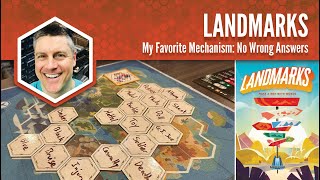
Click to watch at 0:05 · YouTube ↗
Overall sentiment (raw)
positive
Pros
- No fail state in individual clues.
- Permanent tile placement leads to new possibilities.
- Clever timing mechanic for water refills.
Cons
none
Thematic elements
- Clue giving word game where players try to find treasure and escape a map.
Comparison games
- So Clover
Mechanics (from transcript analysis)
- Push Your Luck (Implied) — The decision of where to place a tile can lead to good, neutral, or bad outcomes, creating a dynamic where players might have to go through bad things to get to good things.
- Resource management (water) — Reaching water spaces allows players to refill a limited stack of clue tiles, impacting the game's duration.
- Tile Placement — Players place word tiles on a map based on clues. The placement is permanent and affects the game state and future clues.
- word clue giving — One player gives a word clue, and other players try to figure out which space on a map they are referring to.
Video topics + discussion points
No key topics recorded for this video.
Quotes (from this video)
- Hey, I'm Jimmy from Stonemire Games and today I'm going to talk about my favorite mechanism in the game Landmarks.
- The key that I really like about landmarks is there is really no fail state.
- So, I really like the timing of when you actually get to use water in landmarks. That was a really clever addition of of timing.
References (from this video)
No references stored for this video.
Video Q445GmYykcc
Meeple University Rules Teach at 0:11
video_pk 63919 · mention_pk 157441
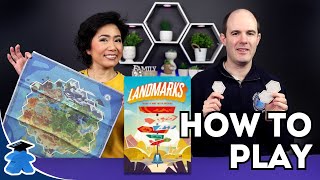
Click to watch at 0:11 · YouTube ↗
Pros
none
Cons
none
Thematic elements
- word association clues guiding a team around an island to safety and treasures
- island
Comparison games
none
Mechanics (from transcript analysis)
- Competitive mode — Two teams each have their own clue giver; teams alternate turns to reach treasures first.
- Cooperative Mode — A single clue giver leads the entire team in cooperative play toward safety.
- Curses and amulets — Curses can be cancelled by finding an amulet; end conditions depend on the relation of curses to amulets.
- End conditions — End conditions include exiting with or without curses or amulets; no hexes left at clue-time can cause loss; various loss conditions in competitive play.
- Hex placement — The team places the hex adjacent to a previously placed tile; the map card then indicates a positive or negative effect.
- Hydration/water track — Hydration level is tracked; water tiles impact the canteen and can cause dehydration if not managed.
- Map card effects — The map card specifies what happens next based on the newly placed hex.
- one-word clues — Clue Giver writes a one-word clue on a dry erase hex and hands it to the team; clues must be single words and cannot use any part of another word already on the board.
- Traps and penalties — Uncovering a trap discards a tile and affects the water track.
- Treasure and scoring — Treasure markers are used to track progress; first to four treasures scores; perfect game requires collecting all treasures before exiting.
- Variable Map — The map card specifies what happens next based on the newly placed hex.
- Word Deciphering — Clue Giver writes a one-word clue on a dry erase hex and hands it to the team; clues must be single words and cannot use any part of another word already on the board.
Video topics + discussion points
No key topics recorded for this video.
Quotes (from this video)
- Only the clue Giver can see the map
- the aim of the game is to find treasure and there are two of the yellow colored neutral Treasures on the map
- only single word Clues are allowed
- a clue may not include any part of another word that's already on the board
References (from this video)
No references stored for this video.
Video NTuWbCFtVOM
Watch It Played Rules Teach at 0:13 sentiment: positive
video_pk 63926 · mention_pk 157450
Click to watch at 0:13 · YouTube ↗
Overall sentiment (raw)
positive
Pros
- Supports up to 10 players
- Offers both cooperative and competitive modes
- Green deck provides an easier cooperative option
- Rules are explained clearly with step-by-step rounds
- Clue-based word mechanic provides puzzle-like challenge
Cons
- Clue construction has multiple restrictions (no rhymes, no using words already on the island, no context, etc.) which can be restrictive and complex
- There are several loss conditions (curse accumulation, exiting while cursed, or running out of water) that can end the game abruptly
- The system uses many icons and spaces that can be confusing for new players
Thematic elements
- treasure hunting with clues, exploration, and curses
- island jungle
- clue-based exploration guided by a Pathfinder
Comparison games
none
Mechanics (from transcript analysis)
- Cooperative Game — Green deck enables an easier cooperative variant; yellow is standard coop; red deck is used for competitive play.
- cooperative vs competitive modes — Green deck enables an easier cooperative variant; yellow is standard coop; red deck is used for competitive play.
- Deduction — Each round consists of clue, discussion, exploration, and resolution steps, guiding the party toward treasures and exit.
- Icon-based space effects — Spaces on the map have icons for water, traps, curses, treasure, amulets, and exit; these drive the round outcomes.
- One-word clue drafting — The Pathfinder draws a map card and writes a single word clue on a tile to guide the party, based on adjacent word tiles.
- Round structure with four steps — Each round consists of clue, discussion, exploration, and resolution steps, guiding the party toward treasures and exit.
- Tile and map card integration — Land tiles are placed to form a map; map cards indicate starting words and iconography that affect play.
- Tile/Map Shifting — Land tiles are placed to form a map; map cards indicate starting words and iconography that affect play.
- Treasure/curse/amulet tracking — Treasure tokens, curse icons, and amulets influence win/lose conditions and can alter how spaces affect the game.
- Word-to-space adjacency logic — Clues must relate to the meaning of adjacent word tiles; placement must connect to existing tiles on the map.
Video topics + discussion points
No key topics recorded for this video.
Quotes (from this video)
- The Pathfinder will give clues to the party which represent words they've been able to communicate through their old busted up walkie-talkie.
- The more Treasures you find before you exit the better.
- It must be a single word based on the meaning of the words adjacent to the space you're trying to guide them to.
- You couldn't write tiebreaker as a clue or untie as both of those words include the word tie which is already on a tile.
- If you find the exit while cursed you lose.
- The game is played over a series of rounds and each round is broken into four steps.
References (from this video)
No references stored for this video.
Video BIgiFz0vgPQ
Ryan and Bethany board game reviews Review at 0:15 sentiment: positive
video_pk 62264 · mention_pk 154778
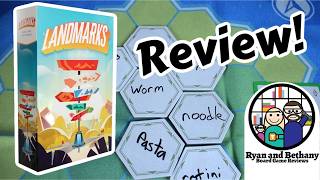
Click to watch at 0:15 · YouTube ↗
Overall sentiment (raw)
positive
Pros
- engaging blend of word association and spatial reasoning
- fun to watch and participate; good spectator experience
- offers both cooperative and team competitive modes
- dry erase board integration keeps components cohesive
- high replayability and dynamic clue-giving scenarios
Cons
- can be mentally taxing and challenging to perfectly clue
- not a pure party game; more of a puzzle
- pivoting clues mid-run can be tricky and requires careful play
Thematic elements
- navigation, discovery, and cooperative puzzle-solving under time pressure
- A map on a board with hex tiles representing locations; treasure hunting and escaping the map
- clue-driven, with a clue-giver guiding teammates to place clues on a map
Comparison games
- Code Names
Mechanics (from transcript analysis)
- clue-giving — a designated clue giver provides word clues that map to board locations
- map/board placement — tiles are arranged to form a map that aligns with the clues and treasures
- Resource Management — water tokens limit actions; extracting more tiles from supply expands options
- Resource management (water) — water tokens limit actions; extracting more tiles from supply expands options
- team mode / competitive mode — two-team variant with separate decks and color-coded treasures
- traps and curses — avoid or mitigate curses; amulets can protect against some curses
- treasure collection and exit — collect treasures and exit the map to win; multiple treasure locations increase score
- word association with spatial placement — players interpret clues to place words on hex tiles to match the clues
Video topics + discussion points
No key topics recorded for this video.
Quotes (from this video)
- this is a word association game
- I loved this game I had so much fun
- this could easily replace Code Names in your library
- it's dynamic, more fun
- two players very well or that you can play teams
References (from this video)
No references stored for this video.
Video k88B-cocwow
Tabletop Tokki Discussion at 4:00 sentiment: positive
video_pk 37114 · mention_pk 111436

Click to watch at 4:00 · YouTube ↗
Overall sentiment (raw)
positive
Pros
- Strong word association puzzle with meaningful strategy
- Nice cooperative mode option
Cons
- Some players may want more crunch or unique tiles/map layouts
Thematic elements
- word association and treasure-seeking with cooperative and competitive modes
- team-based clue-giving and deduction
Comparison games
- Word association games
Mechanics (from transcript analysis)
- cooperative/competitive modes — fully cooperative mode versus team-vs-team mode
- word association — teams give clues to locate treasure on a map based on board clues
Video topics + discussion points
No key topics recorded for this video.
Quotes (from this video)
- it's one you're not going to want to miss because our story took some very interesting twists and turns in that playthrough.
- I really like the rune system of casting your runes, which are double-sided instead of rolling dice.
- There was a lot of chaos and laughter all across the board.
- I'm not a huge fan of Take That Mechanics.
- I’m really excited to try some of the more challenging tiles and map layouts and things like that.
References (from this video)
No references stored for this video.
Video 8NM2Shp8YHw
The Board Game Garden Top 10 List at 20:20 sentiment: positive
video_pk 37068 · mention_pk 111290

Click to watch at 20:20 · YouTube ↗
Overall sentiment (raw)
positive
Pros
- Huge group fun and laughter with up to 10 players
- Strong social and drafting puzzle element
Cons
none
Thematic elements
- Urban planning and mapping
- Map-based city-building with a hex map
- Party/word-association flavored drafting
Comparison games
- Shut Up & Sit Down (reviewers' praise on 2024)
Mechanics (from transcript analysis)
- High player count suitability — Designed to support large groups (up to 10 players)
- Network/Route Building — Players draft placements to guide routes toward treasures and exit points
- Path/route drafting with scoring zones — Players draft placements to guide routes toward treasures and exit points
- Word-to-map placement — Active player gives words to place on a map to clue positions
Video topics + discussion points
No key topics recorded for this video.
Quotes (from this video)
- it's basically like a cottage board game relaxation weekend
- I love bumping tracks it's a good time
- I love multi-use cards
- Evenfall is my number one
- I cannot wait to play this one again
References (from this video)
No references stored for this video.
Video RBVMk9eQQ8M
Our Family Plays Games Discussion at 32:40 sentiment: positive
video_pk 12541 · mention_pk 36579
Click to watch at 32:40 · YouTube ↗
Overall sentiment (raw)
positive
Pros
- Strong party game feel
- Bright, colorful presentation
Cons
- Word associations can be abstract for some players
Thematic elements
- Word association and exploration
- World landmarks map with word connections
- Party/social
Comparison games
- Codenames
- Just One
Mechanics (from transcript analysis)
- Cooperative/team play — Teams collaborate to steer words and answers toward winning treasures.
- word association — Teammates connect landmarks with clues.
Video topics + discussion points
No key topics recorded for this video.
Quotes (from this video)
- board games a lot of ways have helped me find friends and build confidence in Social aspects
- we sold out about half our inventory yesterday
- the Mandalorians got it right
- the show must go on
- semi-cooperative
- I cannot win
References (from this video)
No references stored for this video.
Video 5303VOR_FLM
Going Analog Discussion at 12:03 sentiment: positive
video_pk 1631 · mention_pk 4708

Click to watch at 12:03 · YouTube ↗
Overall sentiment (raw)
positive
Pros
- strong production values and thematic tie-ins to cryptic exploration
- cooperative/competitive balance via team play
Cons
- rule clarity may vary; some players may find the cooperative puzzle heavy
Thematic elements
- cryptic clues and world exploration
- cooperative puzzle setting with exploratory landmarks
- team-based discovery with a map-like hex grid
Comparison games
- Crypted
- Code Names
Mechanics (from transcript analysis)
- clue-based deduction — players give clues using starting words to guide others to the correct path.
- cooperative puzzle / pathfinding — a Pathfinder guides teammates toward an exit on a hex map with three initial words.
- traps and curses — mechanics introduce setback tiles or events ( traps, curses, amulets, treasures ).
Video topics + discussion points
No key topics recorded for this video.
Quotes (from this video)
- Gen Con is my number one show of the year; the energy is like geek paradise.
- Non-stop bombardment of games and energy everywhere you turn.
- Indianapolis has embraced Gen Con to the point that even the airport has tables to play games.
- These are our people; the hobby is a shared language and vibe.
- Pax Premier Second Edition is a heavy, rewarding experience with deep political intrigue.
- The Search for Planet X uses a 360-degree sky view and rotating clues—it's a clever deduction challenge.
- Evenfall is gorgeous; the art and depth are top-notch, though it can be challenging to learn.
- Offsite publisher events can offer a more relaxed, focused environment for discussion and play.
References (from this video)
No references stored for this video.
Transcript Navigation
Showing 1–30 of 30