/pic5516555.jpg)
Astoria is a land pulsing with magic and intrigue! A handful of Arch-Mages are vying for the loyalty of wizards across the land so that they can wield ultimate power.
Lizard Wizard is a game from the team that brought you Raccoon Tycoon. Aspects of gameplay will be familiar to fans of RT, and will add a bit of extra depth and strategy.
In Lizard Wizard, players compete to recruit wizards from seven unique schools of magic, build mystical towers, research powerful spells, summon helpful familiars, and search dark dungeons for gold and items of power. Only one Arch-Mage will rise above the rest and control the land. Will it be you?
Actions
Lizard Wizard is an action-selection game. On a player’s turn, they may perform one of the following six Actions:
1) GATHER REAGENTS
Just as there are seven schools of magic, there are seven magical reagents, or ingredients, that fuel the magic of Astoria. Knowing where these natural wonders can be found is the essential starting point for every young wizard. Sometimes they use familiars to perform this errand, but it is still very common to find even the most powerful arch-mages lurking in the Enchanted Wood, searching for the most pure reagents.
Play a Gather Reagents Card
Take Reagents shown on the ‘Gather Reagents’ half (plus any on your Wizard Cards)
Increase the value of the Reagents shown on the ‘Increase Value’ half
Cast one spell (if you have the necessary reagents)
2) CONVERT REAGENTS TO MANA
Long ago, the wizards of Astoria learned how to convert reagents into mana, the magical energy that powers all things. The process is no longer dangerous, but it still takes great focus and knowledge.
Turn in one type of reagents to the supply
Gain Mana = Value of that Reagent x Tokens turned in
Reduce the Value of that Reagent by the number of Tokens turned in
3) RECRUIT WIZARD
The Arch Mages of Astoria are vying for ultimate power, which can only be achieved by drawing several lesser wizards into their circle of influence. They do this through demonstrations of their magical ability. Occasionally, their attempts to recruit a wizard are challenged by one or more rivals, and a Wizard’s Duel occurs. These contests of magical power can drain even the most powerful mage.
Select one of the two Wizard Cards on offer and bid Mana in turn (or pass)
Winner of the Auction pays the bid and takes the Wizard Card
If the player who started the Auction didn’t win, they may take another Action
4) RESEARCH SPELL
Arch-Mages have the ability to learn spells from any of the seven schools of magic. Once they have researched a new spell, it still must be cast with reagents (and the help of a familiar) before it takes effect.
Select a Spell Card from the four on offer and pay 5 Mana
Place the Spell Card face down in front of you
Cast the Spell if you have the necessary Reagents
5) CREATE A TOWER
Magical Towers amplify the power of wizards of each school of magic. Towers may be created through powerful magic, or built by workers who must be paid.
Pay either the Reagents or the Gold shown on the Tower Card on offer
Take the Tower Card and place it in front of you
Towers add ‘1’ to your storage for Reagents
6) SUMMON FAMILIAR:
Familiars are magical spirits that are summoned and inhabit the bodies of mortal creatures. They are essential servants who perform many vital services for wizards: They can be used for simple errands, such as gathering reagents or gold. They are the only ones who can locate the ever-shifting entrance to the famous Dungeons of Astoria. They are also essential assistants in the complex rituals required to cast spells.
Use the Card for one of four purposes:
a) Score one School of Magic (2 Gold/ Card of the same School of Magic as the Familiar)
b) Gather Reagents shown on the Familiar Card and Cast any number of Spells
c) Clear the Spell Offer, Replace them with four new Spell Cards and select one for free
d) Enter the Dungeon
Draw cards from the top of the Dungeon Deck, stopping when you want
Monster Cards ‘hit’; 2 hits = failure
If you stop before failure, keep the treasure cards and shuffle the monster cards back into the Dungeon Deck
If you fail, shuffle all drawn cards back into the Dungeon Deck
End Game and Scoring
The game will end when any one of the following decks is depleted: Familiar, Tower, Wizard, Spell.
When the game ends, the players will score points for each Wizard and Tower Card combo (10 VP if they are of the same school of magic, and 5 VP if they are not), 3 VP for each Spell Card in schools of magic where they have a matching Wizard and Tower, 1 VP for each Gold gathered from the dungeon or from scoring with a Familiar Card, and any points derived from the special abilities from spells.
-description from publisher


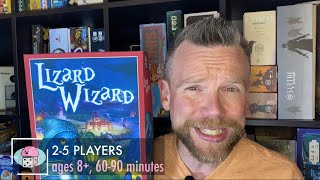
- Engaging auction mechanic for recruiting wizards
- Vibrant, high-quality card art and components
- Strong upside from fluctuating mana market and math-based decisions
- Dungeon mini-game adds tension and dynamic risk
- Familiars and dungeon path introduce meaningful choices
- Pre-production version means artwork and numbers may change before release
- Complex rules and heavy math may be challenging for younger players
- Long playtime potentially fatigue players not in the target age range
- Economic resource management, set collection, and bidding in a magical duel setting.
- Fantasy realm with wizards, magical towers, and a dungeon; players recruit wizards, assemble spell components, and quest for victory points.
- Family-friendly, humorous, and adventurous with a tongue-in-cheek fantasy vibe.
- Clans of Caledonia
- Raccoon Tycoon
Mechanics (from transcript analysis)
- Auction / Bidding — Players spend mana to bid on wizard cards; the winner obtains the wizard while others lose potential mana and must plan for future rounds.
- auction/bidding — Players spend mana to bid on wizard cards; the winner obtains the wizard while others lose potential mana and must plan for future rounds.
- dungeon / press-your-luck — Entering the dungeon triggers a push-your-luck sequence with treasure cards and monsters; two monsters bust you and you lose what you collected.
- familiars and choices — Familiars add options (dungeon entry, resources, or gold) and have different mana costs, adding strategic depth.
- fluctuating market prices — Reagents can be exchanged for mana with prices that vary; players evaluate current supply and opponents' stocks to time sales and bids.
- Hand Management — Start with limited reagent storage; adding towers increases capacity allowing more reagents to be held.
- hand management / capacity — Start with limited reagent storage; adding towers increases capacity allowing more reagents to be held.
- Market Pricing/Manipulation — Reagents can be exchanged for mana with prices that vary; players evaluate current supply and opponents' stocks to time sales and bids.
- Resource conversion — Reagents are converted into mana using a multiplication-based conversion, making quantity and price critical for bidding on wizards.
- Risk Management — Players must assess odds and resist chasing too much treasure as the monster deck becomes riskier the longer the run continues.
- risk management / probability — Players must assess odds and resist chasing too much treasure as the monster deck becomes riskier the longer the run continues.
- Set Collection — Pair wizards with towers of the same school of magic for extra points; symbol bonuses also drive end-game scoring.
- set collection / symbol matching — Pair wizards with towers of the same school of magic for extra points; symbol bonuses also drive end-game scoring.
- spells and reagents — Spell cards require reagents to cast; casting effects include stealing gold, increasing hand size, or other powers.
Video topics + discussion points
Quotes (from this video)
- it's a game called lizard wizard
- i really do love these games with the fluctuating market prices
- i think this is my favorite part of the game
- i'm willing to spend the three mana coins on this person
- driving up the price so that you're forcing them to spend some money
- i really like the auction
- this is where they go on the board in the recruit wizard space
- you'll gain some points if you have wizards and you can see that they have a little symbol here in the top corner
- each time you gather ingredients for your spells you get an extra one for each of those little symbols that you have on the wizards
- start the game with only being able to hold 10 of these different reagents
- each time you add a tower that increases your maximum number of reagents by one
- double the number of victory points you get at the end of the game if you can match up these pairs
- the dungeon deck becomes riskier the more people have gone through it
- it's an executive functioning element to this game as well
- you have to stop yourself when you're really excited about gambling for that next card
References (from this video)
Mechanics (from transcript analysis)
- Auction — A part of the game where players deliberately bid to raise prices for others, and the money bid is not directly tied to victory points.
Video topics + discussion points
Quotes (from this video)
- a lot of those questions which makes auction and it's an interesting mechanic it's a very pure mechanic because if everyone knows what something is worth to them and understands what something is worth to somebody else then it becomes a very tight and very pure mechanic that avoids luck
- because you're not quite sure what to price something
- i recognize it's it's a pure strat it's a pure um it's a cool mechanic but it's not going to work well the first time you play
- i think you like to think quite mechanically where um well you actually said it earlier as well so if you because you your brain the way it works it's mechanics so if you can't really put a value on it you'll be lost
- i don't want to come out and say auction as a bad mechanic i understand the deficiencies in my gameplay style that make auction not work for me
References (from this video)

- artwork liked
- set collection plus push-your-luck and resource management
- fantasy with collectible/set-collection aspects
Mechanics (from transcript analysis)
Video topics + discussion points
Quotes (from this video)
- "this is going to be a really hard list"
- "the cover art is amazing"
- "pop-up book game"
- "it's a game but it's a pop-up book"
- "all new monsters every single one of these monsters has all new wind conditions"
References (from this video)

- Accessible and charming
- Beautiful art from St Gard
- Some players may prefer deeper engines
- Magic taxonomy and lore
- A study of magical types represented by lizards
- Light, approachable, art-forward
Mechanics (from transcript analysis)
- set collection / tile placement — Study different types of magic with lizard-themed components.
Video topics + discussion points
Quotes (from this video)
- hi everybody hello I'm Ryan I'm Bethany
- this is our top 10 favorite games about Wizards warlocks and witches
- it's a battle between those two all this kind of this clever card play
- this game is so much fun
- it's a really clever two-player game
- it's a puzzle but the puzzle's alive and it's moving
- this is such a fun game
- it's gorgeous beautiful game
References (from this video)

- Lizard King
Mechanics (from transcript analysis)
Video topics + discussion points
Quotes (from this video)
- Bob Vance Vance Refrigeration Bob Vance Vance Refrigeration Bob Vance Vance Refrigeration
- Fashion show fashion show fashion show at lunch
- it's Halloween oh this is perfect this perfect timing
- The pens happened the pens happened
- Do you know who I am I'm Lizard King I'm the Lizard King
- that's dice jail when the dice rolls are bad you send them to jail
- well you're wrong because we talked to them
- if you think that any of them are wrong well you're wrong
References (from this video)

- Good
- A lot of cool ideas
- More is less
- Preferred Raccoon Tycoon
- dungeon
- Raccoon Tycoon
Mechanics (from transcript analysis)
Video topics + discussion points
Quotes (from this video)
- Secrets. This is a Bruno Faidutti Eric Lang game. It's kind of like a social deduction game where each It has some of these nice poker chips. You're on different things, taking things. It works well. It's not great, but I think it was a solid little game.
- Tapple's one of these games that I'm always I'm It's just It still sold very well. It's mass market, but it works incredibly well.
- I just really didn't like it at all. And I like Isle of Cats. I think it's fun. I didn't I this was a great follow up.
- Wow, I love the look of this game. So many neat things you're going through and as the the the character here and just rolling dice up, it's just very lucky. It's a big choose your own adventure game that's very lucky. I wish I liked it more.
- FunkoVerse Strategy Game. Eight out of 10 for me. I really like the FunkoVerse Strategy Game.
- This is basically just giant sandworms coming and you're jumping cars and shooting them. It has all the silliness of the series of movies and I think it's it's one of those movies that could have been an IP, but but isn't.
- Manhattan Project 2. No, I thought the newest one was okay. But this one I actively disliked.
- Curse Court's a great game. I've played Curse Court I think two or three times this year already, which is a lot considering I have to I play lots of new games.
- Well, it's kind of weird. I I mean, on one hand, my favorite is Curse Court, the one I just mentioned. But, also Kids Chronicles: Quest for the Moonstones is a pretty fantastic kids game. So, I have a lot of respect for that.
References (from this video)

- Fantastic artwork.
- Charming theme of wizard lizards.
- Fun push-your-luck mini-game.
- Host doesn't get to play it often.
- Anthropomorphic wizard lizards.
Mechanics (from transcript analysis)
- Push Your Luck — A miniature push-your-luck aspect within the larger game.
Video topics + discussion points
Quotes (from this video)
- this is kind of a placeholder for all of the ticket to rides we own like five maps to this I think we own like nine if you factor in the sand alone Germany and Europe and London we have a ton of these Maps we really like these games they are extremely streamlined to what a game is
- this is the game I would recommend every library to purchase if they have a circulating board game collection because it will get played and it will get circulated
- also a great game by the way it's going to be higher up on my list spoiler alert but this game is also great
- I just really really like that you don't have to be good at games be good at this game cuz you're just rolling dice like that's it that's all the game is you're just rolling Dice
- because of that corers is in my heart
- you are either playing a card you're getting a card or you're picking up your cards and that's it that's all you're doing
- it's really challenging to know when to do that and when it's going to be beneficial
- people feel really smart and clever while they're playing it but also not like overwhelmed with all these different things
- this is a game that you have an action you get to play an action but then everyone to do that exact same action you just have to do a stronger version of it
- the actions that don't get drafted actually get a little bit of money added to them
- it's a classic
- you're trying to draft all these marbles in order to make these drinks
- there's also some that are not like what you want they will do bad things to you but some of those selections might have just a ton of marbles in them so you're willing to risk it risk this negative thing happening to you in order to gain all of these so you can complete your orders
- it's really cool with this recessed board as you're putting all of these marbles in all of these places and you're drafting this these cards it just it's a really fun one to play
- worker placement game but usually worker placement what that means is when you place a worker no one else can go there it's the exact opposite in fact you want to go where you already have people placed
- my favorite mechanism in this game is you can go and you can arrest other people's groups of people and basically sell them to the jail for money
- there's kind of this morality track as well as you're um as you're going up kind of building this church this Cathedral as well
References (from this video)
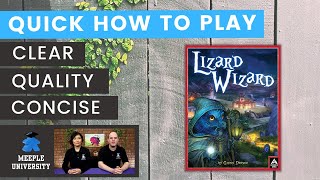
- Quick to play
- Simple to learn
- High interaction with many strategic options
- Many ways to play and win
- Vibrant fantasy noir art style
- Choices can be hard
- set collection with auction and commodity speculation
- a mystical and scaly world of archmages and wizards
- Raccoon Tycoon
Mechanics (from transcript analysis)
- Auction / Bidding — Players can spend a turn to put a wizard up for auction and bid against other players with mana to recruit them; recruiting provides an extra token when gaining commodities.
- auction to recruit wizards — Players can spend a turn to put a wizard up for auction and bid against other players with mana to recruit them; recruiting provides an extra token when gaining commodities.
- commodity speculation — Players spend commodity cards to gain what is shown on the top half and increase the value on the bottom; or spend any number of one type of commodity to gain its current value in mana, which in turn drops that commodity's value.
- Dungeon Crawl — Entering the dungeon with a push-your-luck quest to find gold and treasures while monsters appear.
- dungeon push-your-luck quest — Entering the dungeon with a push-your-luck quest to find gold and treasures while monsters appear.
- End-game trigger — The game ends once any deck of cards is empty.
- set collection scoring — Scoring involves creating sets of wizards, towers, and spells; individual wizards and towers have point values that interact for scoring.
- spells and familiars on the board — The board offers spells purchased with mana and cast with commodities; familiars purchased with mana provide various effects.
- tower and scoring structure — Towers can be purchased with commodities or gold, scoring points and increasing storage capacity; towers become more expensive over time.
Video topics + discussion points
Quotes (from this video)
- lizard wizard is a set collecting game with auction and commodity speculation
- the game ends once any one of the decks of cards is empty
- downtime is low with a rapidly changing economy track
- fantasy noir art style for all of the wizards and familiars
References (from this video)
- Artwork praised as amazing
- Fast-paced two-player experience
- Clear introductory overview and accessible rules
- Tight economy with meaningful decisions
- Not explicitly stated, but potential for tempo issues with 4 players; deck depletion endgame can slow down pace
- No explicit publisher/designer details in transcript
- wizards and spell economy
- lizard world
- auction-driven, set-collection with dungeon exploration
- Raccoon Tycoon
Mechanics (from transcript analysis)
- Auction (mana-based) — Wizards are gained by an auction where players bid using mana; the highest bid wins.
- Auction / Bidding — Wizards are gained by an auction where players bid using mana; the highest bid wins.
- Dungeon Crawl — Enter the dungeon to seek treasures and gold; limited encounters with monsters.
- dungeon exploration — Enter the dungeon to seek treasures and gold; limited encounters with monsters.
- Economy track price dynamics — Prices on reagents rise with gathering and are reduced by selling; top track shows values.
- End-game scoring and set collection — Score is based on matching wizards and towers, with additional points from spells and other achievements.
- End-of-round and deck depletion end — Game ends when one of the decks is empty, triggering final scoring.
- Familiars and bonuses — Familiars provide various actions and bonuses, including gaining mana when towers are built.
- Resource Management — Reagents are collected to build spells; mana is a key resource; reagents' values change on the track.
- Resource tracks (reagents and mana) — Reagents are collected to build spells; mana is a key resource; reagents' values change on the track.
- Spell buying and casting — Spells are bought for a cost and cast using reagents.
- Towers and Wizards acquisition — Towers are gained via reagents or gold; Wizards via auction.
- Transform/reagent alchemy (two-to-one) — A transform spell allows converting reagents at a 2:1 ratio before converting to mana.
Video topics + discussion points
Quotes (from this video)
- the end game condition is when one of these decks is empty
- end game scoring: matching wizards and towers is worth 40 points
- it's quick isn't it between two players
References (from this video)
- Deep economic engine with meaningful choices and strong player interaction
- High interaction through bidding, card drafting, and strategic planning
- Spell cards provide powerful, game-changing moments
- Accessible to new players while offering strategic depth
- Strong replayability due to variability in spells and card draws
- In-game scoring can be confusing and non-intuitive
- Dungeon luck introduces risk that may not appeal to all players
- Auction pacing can slow the game down for some groups
- Magic schools, economy, set collection, and dungeon exploration
- Fantasy wizard-themed economy in a competitive magical market with dungeons and towers
- Procedural generation of card sets with auction/bidding and evolving track values
- Raccoon Tycoon
Mechanics (from transcript analysis)
- Convert reagents to mana — Turn a chosen reagent back to the supply to gain mana; mana is the primary in-game currency and is hidden on your player screen.
- Create a tower — Pay reagents or gold to place a tower card in front of you, gaining extra storage and escalating costs for future cards.
- dungeon exploration — Draw dungeon cards to potentially gain treasure or gold; risk hits that can strip you of your holdings if you are attacked twice.
- End-game scoring and achievements — Score points from paired wizard-tower combos, spell objectives, gold/treasure, and achievement tiles worth 10 points each.
- Gather reagents — Take three reagents from the supply, choosing from listed options on the top half of the card, then increase their value by the bottom half text and advance them on the track.
- Recruit a wizard — Bid mana for wizard cards in an auction; the highest bidder takes the wizard and new options appear.
- Research a spell — Pay mana to acquire a spell; cast it immediately if you have the listed reagents, or later when preferred.
- Summon a familiar — Choose one of two familiars and perform one of four actions on it (e.g., gold from matching schools, gather reagents, cast spells, or wipe and refresh spells).
Video topics + discussion points
Quotes (from this video)
- the most confusing part of the game is the in-game scoring
- for me this is forbidding games best game thus far
- i like doing it if i feel like i'm behind and i need a boost in the game
- the game has a deeper strategy than raccoon tycoon yet it still has that family weight type feel to it
- i'm a big fan of going to the dungeon
- this game changes depending on the type of players you have in the game
References (from this video)
- Simple rules and quick turns in two-player mode
- Beautiful artwork and components
- Engaging engine with multiple paths to score
- High interaction during duels and auctions
- Space on small tables can be tight
- Version in video is an older iteration; shipping delays and balancing changes
- Some cards balance changes may not reflect final production
- Two-player version reduces card variety compared to multiplayer
- Spell crafting, wizard duels, and magical resource management
- A magical fantasy world where wizards compete for power and resources
- Competitive engine-building with light luck
- Raccoon Tycoon
Mechanics (from transcript analysis)
- Auction / Bidding — Recruiting a wizard or completing a card uses a duel-style auction.
- Auction / duel bidding — Recruiting a wizard or completing a card uses a duel-style auction.
- Card play / hand management — Players use action cards to gain ingredients and spells.
- Dungeon Crawl — Exploration with risk/reward to gain treasures and potential points.
- Dungeon delving — Exploration with risk/reward to gain treasures and potential points.
- End-game scoring — Scoring is based on towers, wizards, spells and completed sets.
- Hand Management — Players use action cards to gain ingredients and spells.
- Resource Management — Mana, coins and ingredients are collected and spent to take actions.
- Set collection / tile-building — Building towers and aligning wizards/towers to score points.
Video topics + discussion points
Quotes (from this video)
- this is a very simple game
- it's kind of like an implementation of a tycoon
- the auction is the big difference between two-player and multiplayer
- the artwork is amazing
References (from this video)

- Fun, approachable theme
- Bridges to other light strategy games
- Not a deep heavyweight title
- Limited variability for some players
- Magical critters navigating quirky challenges
- Fantasy realm with animal- and nature-themed motifs
- Playful and lighthearted with whimsical flavor
- Raccoon Tycoon
Mechanics (from transcript analysis)
- dice/element interaction — Dice-driven actions with thematic power grants
Video topics + discussion points
Quotes (from this video)
- "It's a game called Fool's Gold."
- "Spirit Island. Oh my word. I didn't even get done fully loading the picture here."
- "You know it when you know it."
- "I'm all gold."
- "Like I love Raccoon Tycoon. I've never played Raccoon Tycoon, but Matthew really likes it."
- "Stone Age is wonderful introductory worker placement game. It's so good."
- "Ark Nova. It is. You know, Ark Nova is on the right track in a way."
- "Be more or less literal. One of those two, depending on which one helps you more."
References (from this video)
- rich thematic integration with strong artwork
- adds meat and deeper strategy beyond Racoon Tycoon lineage
- varied strategies through towers, wizards, spells, and familiar choices
- more complex and heavier than its predecessor
- the rule set and iconography can be dense for newcomers
- wizard schools, magical reagents, and spellcraft
- A fantasy/wizarding realm with towers, wizards, and magical jurisdictions
- thematic and slightly whimsical fantasy with deeper strategy
- Raccoon Tycoon
- Seven Wonders
- Civ-themed engine builders
Mechanics (from transcript analysis)
- auction/bidding — competitive bidding to acquire towers and wizards; core engine for competing strategies
- deck-building / engine-building — players craft combinations of cards to improve actions and options over the course of the game
- dungeon delving (new element) — an optional/delving component with risk and rewards that adds tension and narrative flavor
- set collection / school alignment — collecting elements from schools of magic to maximize point scoring and spell effectiveness
Video topics + discussion points
Quotes (from this video)
- it's easy to get into but there's a lot of meat to it
- the simple mechanic works so well as kind of the beating heart of the game
- Lizard Wizard takes that idea and adds more meat and adds more different strategies and deck building potential and engine building
- the art in this game is absolutely amazing
- the two decks ... haven and street ... city deck with ongoing events
References (from this video)
- Stunning artwork and themed visual design that strongly supports the fantasy setting
- Clear symbology and readable interface on components
- Engaging dungeon-dive mechanic adds gamble and tension
- Well-integrated auction and set-collection elements that reward strategic planning
- Rule explanation can be dense for newcomers; early play may feel complex
- Endgame scoring can become highly punishing if you miss key towers or wizard-set matches
- Wizard schools, magical economy, dungeon exploration
- Astoria
- storybook fantasy
- Raccoon Tycoon
Mechanics (from transcript analysis)
- action selection — Each turn a player performs exactly one of six available actions; no rounds or resets—play alternates.
- Auction / Bidding — Recruitment of wizards is resolved via auctions; players bid mana to acquire a wizard, with strategic outbidding and pass decisions.
- Dungeon Crawl — A push-your-luck mechanic where players delve into a dungeon by flipping dungeon cards, risking monsters for treasure; stop early to secure rewards.
- Dungeon dive — A push-your-luck mechanic where players delve into a dungeon by flipping dungeon cards, risking monsters for treasure; stop early to secure rewards.
- Resource economy and conversion — Mana is the core currency; reagents convert to mana and fuel spell casting, market dynamics raise and lower resource values across turns.
- Resource Management — Mana is the core currency; reagents convert to mana and fuel spell casting, market dynamics raise and lower resource values across turns.
- Set collection / matching scoring — Endgame scoring rewards matching schools of magic with towers, driving set collection and tableaus.
Video topics + discussion points
Quotes (from this video)
- the world is set in astoria
- the dungeon's great
- the artwork is phenomenal
- it's like a storybook on the table
References (from this video)

- By same designers/company as Raccoon Tycoon
- High quality components
- UV coatings on cover
- Metal coins included
- fantasy
- wizards
- Raccoon Tycoon
Mechanics (from transcript analysis)
Video topics + discussion points
Quotes (from this video)
- pandemic shame which is i just went on a kickstarter spree while i was living in egypt
- we're gonna start a new hashtag we're going hashtag team jason zack
- there's nothing wrong with that because i think this is going to be a great game
- it might be number 23 which is something that is not being put out until tomorrow
- i just want to see that in motion and working on the table
- if you really enjoy some games by you know certain makers you're probably going to like in another one