/pic6399488.jpg)









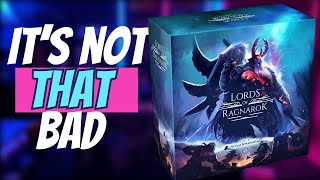
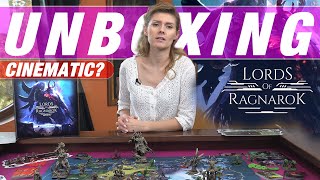

Lords of Ragnarok Deep Dive
What the Community Thinks About Lords of Ragnarok
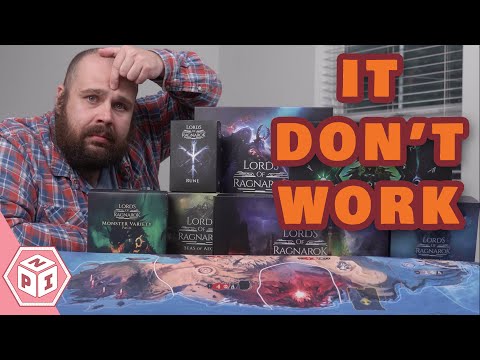
Lords of Ragnarok stands as a bold reimagining of its predecessor, receiving praise from reviewers for delivering a more streamlined yet strategically rich experience. The community perceives this as a significant evolution rather than a simple reskin. Reviewers consistently highlight the game's beautiful components and thematic execution, though they acknowledge it demands considerable time investment and careful planning. For those seeking a weighty, asymmetric strategy game with meaningful player interaction, Lords of Ragnarok delivers an experience that rewards both tactical thinking and adaptability.
Core Mechanics That Define Lords of Ragnarok
Asymmetric Hero-Driven Gameplay
Each player leads a unique hero with distinct abilities and starting positions, creating fundamentally different strategic paths. This asymmetry extends to how heroes gain attributes, recruit armies, and pursue victory conditions. The reviewers noted that heroes like Ragnar favor military conquest through rapid expansion, while others like Lagerta open different strategic avenues through unique special abilities. This hero asymmetry ensures no two games play identically, keeping experienced players engaged across multiple playthroughs.
Area Control and Regional Movement
Control over the game board hinges on army placement and strength in regions, with populations varying across territories. The movement system, using both terrestrial expansion and a ship (called a drakkar) for rapid transport across sea regions, creates dynamic spatial strategy. Reviewers appreciated how the drakkar mechanic fundamentally changes neighbor relationships, allowing armies access to distant regions and forcing players to think three-dimensionally about their position on the map.
The Lords of Ragnarok Experience
Epic and Foreboding Atmosphere
The Nordic mythology setting infuses every turn with a sense of impending cosmic catastrophe. The Ragnarok trigger mechanism creates mounting tension as monument construction and other milestones inch toward inevitable endgame conditions. Reviewers described feeling the weight of approaching doom as resources dwindle and the board fills with controlled territories and monuments. This creates a narrative arc where players are both competing and collectively hastening toward a dramatic conclusion.
Lavish Production Quality
The physical components receive consistent acclaim for their beauty and craftsmanship. The modular monument pieces that build up during play create a visual narrative of civilization taking shape. Gorgeously detailed monster miniatures evoke Norse mythology with eerie skeletal designs. Army miniatures include built-in strength trackers in their bases, eliminating the need for separate markers. This level of attention to component design transforms the material experience of playing into something immersive and tactilely satisfying.
What Makes Lords of Ragnarok Stand Out
Shared Action Wheel with Realm Bonuses
Rather than individual player boards, Lords of Ragnarok features a central action wheel where all players place markers in strategic order. Taking the same action as another player triggers realm-specific bonuses, creating subtle alliance incentives and reward cascades. Reviewers found this system more accessible than its predecessor while maintaining depth, since all players learn the available actions simultaneously and see how board control links to action selection. This design innovation makes the game feel more streamlined without sacrificing meaningful choices.
Multiple Intertwined Victory Paths
Four distinct winning conditions keep strategic options fluid throughout the game. Some players pursue controlling three entire lands in one color zone through military dominance. Others build temples to gain blessing cards and accumulate victory points. A third path involves becoming a slayer by defeating monsters, leading to confrontation with the boss Loki. Most games end through Ragnarok conditions, forcing a final turn scramble for control around the central action wheel. This multiplicity ensures comebacks remain possible and different heroes feel genuinely advantaged by different strategies.
Potential Drawbacks
Heavy Complexity and Teaching Burden
Lords of Ragnarok demands roughly 30-40 minutes of rules explanation before the first turn. The interplay between rune spending, monument effects, priest placement, and blessing card mechanics creates a steep learning curve. Reviewers noted that while the core loop becomes intuitive after a few turns, the sheer number of systems demands careful tracking. New players may feel overwhelmed by the simultaneous activation of multiple mechanics during single turns, potentially limiting table engagement until everyone grasps the rhythm.
AI Difficulty Scaling in Solo Play
The solo mode works well for learning the rules and experiencing the narrative flow of approaching Ragnarok. However, experienced players can score significantly above the AI opponent once they optimize their strategy around the opponent's predictable action sequences. While rulebooks provide optional handicaps like starting the AI ahead in points or adding extra advisors, some reviewers wished for more dynamic difficulty scaling, perhaps through additional action cards that make the AI opponent adapt to player strategy rather than following fixed patterns.
If You Enjoy Lords of Ragnarok
Players drawn to Lords of Ragnarok typically appreciate Lords of Hellas, its spiritual predecessor, though they should expect a more refined and accessible experience. Nemesis, designed by the same architect, offers similarly asymmetric gameplay with strong thematic integration. Those captivated by Norse mythology combined with strategic depth may gravitate toward other Awaken Realms titles, which consistently deliver lavish components and interconnected mechanical systems. Fans of area control and competitive monument building will find resonance in the core loop, while those seeking lighter play should explore alternatives.
What Reviewers Are Saying
"This is the new core set for our spiritual successor of Lords of Hellas and implements a lot of core gameplay aspects but with new mechanics and twists, a one to four player strategic board game where you will lead a unique asymmetric hero and their army trying to be the ultimate victor in a war that unfolds over approximately 120 minutes."
— Paula Deming
"The communal action wheel also makes the game more accessible as everyone learns at the same time how these actions work and how they affect the board overall, the mechanics of Lords of Ragnarok feel way more accessible than Hellas the first time they get on the table without losing any of its depth, this game is just more streamlined."
— Good Time Society
"I loved it, the worker placement and the fighting to get these walls up, the manipulation of trying to be the one that controls the most resources, I really enjoyed that, there's some predictability and planning in how the opponent prioritizes different resources like gold or lumber, so you can either work with them or try to block them all of that I really enjoyed."
— Board Games for One