/pic2695208.jpg)












































Magical Athlete Deep Dive
What the Community Thinks About Magical Athlete
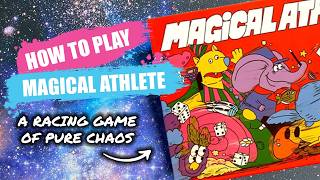
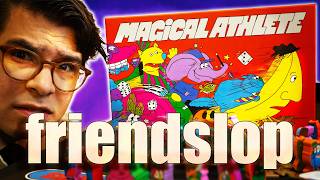
Magical Athlete has earned a reputation as one of the most joyful surprises in recent board gaming, consistently appearing on reviewers' year-end best-of lists and selling out at local game stores. The game originally released in 2003 but returned in a new edition with redesigned racer powers credited to Richard Garfield, the designer of Magic: The Gathering and King of Tokyo. That pedigree matters to the community, and the new edition clearly delivered.
TheGameBoyGeek placed Magical Athlete at number six on his top 10 games of 2025, calling it "just such a fun game" and noting it as the party game of the year, going so far as to say it nearly ties with Hot Streak for the top party game slot. He also named it party game of the year in a separate category video. Might I Suggest A Game awarded it the Top Game Jr. Award, with host Alex reporting that his young son became so obsessed with the game he "could probably rattle off every single power for every single racer." Rolling Dice and Taking Names called it an instant hit across a nine-person group, with many players immediately asking where they could order a copy. BoardGameBollocks listed it at number 66 in its top 100, calling it "chaos in a box" that "really doesn't have the right to work as well as it does."
Good Time Society played it live on camera and found the draft and race format instantly compelling, with host Ruel describing the moment they started reading character cards as a highlight of the session. Before You Play mentioned it as a game that had appeared on multiple people's lists and that they were eager to try. The community consensus is clear: Magical Athlete is accessible, chaotic, and genuinely funny in a way that draws in players of all ages.
Core Mechanics That Define Magical Athlete
Character Drafting
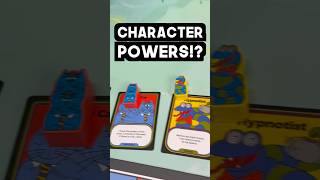
Before the races begin, players draft characters from a shared pool. Each character comes with a card describing a unique power, and the game includes 36 of them total, so no two sessions feel the same. The draft uses a snake format, and players build a roster of four characters, secretly choosing which one races each round. As Rolling Dice and Taking Names described it, building your team strategically is where the real decisions live: "From the very get-go, in my opinion, this is the strategy right there, building your team of racers so that at the end of the game you will have the most." Some characters play well together, others conflict, and the interaction of powers across a roster is something players discover during play rather than plan entirely in advance. Characters include abilities like the Stickler (other racers must land exactly on the finish line or not move), Scoocher (moves one space every time any power triggers), Alchemist (treats low rolls as a four instead), and Flipflop (can skip rolling and swap places with any racer). The combination of asymmetric powers in any given race is the engine that drives the game's memorable moments.
Roll and Move with Cascading Powers
On each turn, a player rolls a die and moves their character that many spaces, then applies their character's ability if its trigger condition is met. The crucial twist is that many abilities activate in response to what other players do, not just on your own turn. When one character's power fires, it can set off another character's power, which sets off another, creating a chain of unplanned chaos that nobody fully controls. Rolling Dice and Taking Names put it simply: "When a die is rolled and a character moves it can trigger other people's abilities." The banana character, for instance, causes anyone who passes it to trip and lose their next turn, so positioning around the banana becomes its own metagame within the race. The board also features trip spaces that knock players down, bonus spaces that award extra movement, and backward spaces that complicate the race further. A mild track and a wild track with more of these effects alternate across the four races. The timing of cascading triggers occasionally requires a few minutes of table discussion, but reviewers found the rules generally handled edge cases well.
The Magical Athlete Experience
Chaotic and Unpredictable
Every race in Magical Athlete contains moments that nobody planned and everyone reacts to out loud. A character in last place scores a victory point every round it stays last, so other players have incentive to drag the race out while the leader tries to finish quickly. A character who can swap places with any racer teleports to the front just as someone else reaches the finish. A character in a late race forces everyone else to land on the exact finish line number or not advance, extending a single race to twenty-five minutes when combined with the right (or wrong) combination of powers. Rolling Dice and Taking Names summarized the feeling directly: "It's chaos, y'all. It is total chaos." The game never allows anyone to build a safe lead because the powers are constantly reshuffling positions. That unpredictability is a deliberate design feature, not a flaw, and the community has embraced it as the source of the game's humor.
Lighthearted and Comedic
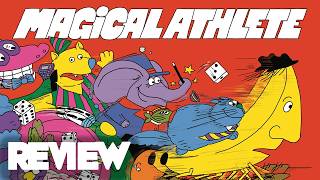
Magical Athlete generates laughter at the table through its characters as much as its mechanics. The roster includes a giant baby, a banana, a house with legs, an egg cup, a sandal named Flipflop, and a reptile called Genius. Their abilities are thematically on-point: the banana trips people who pass it, Flipflop skips rolling and swaps places with a rival, and the Duelist challenges anyone who shares its space to a dice-off. Might I Suggest A Game captured the family appeal: "There's always those moments at the table where people are cheering or jeering depending on what's happening. And any game that can really manufacture those moments of fun, I think is an absolute win." Good Time Society's live playthrough showed that energy directly, with players narrating Flipflop's sabotages and cheering for characters they rooted against just moments earlier. The lighthearted tone means finishing last feels fine and the mood stays upbeat even through the longest races.
What Makes Magical Athlete Stand Out
Exceptional Player Count Flexibility
Most party games shine at a specific count and struggle elsewhere. Magical Athlete handles the full range from two to six players with genuine design consideration for each. At higher counts, it plays as a chaotic group experience with overlapping powers creating table-wide pandemonium. At two or three players, the game shifts to a variant where each player controls two characters per race simultaneously, opening up combo potential between their own racers and adding a layer of strategy absent from the larger format. TheGameBoyGeek specifically highlighted this as the reason to own Magical Athlete over a comparable game: "It also has a two and three player variant that plays very differently. It's much more strategic, where you actually get to have two characters going each round and you can kind of combo those together." That flexibility makes it a rare party game that works equally well for a game night duo and a full family gathering.
Enormous Character Variety Across Sessions
With 36 unique characters and only a fraction used in any session, Magical Athlete plays differently every time. The combination of which characters are drafted, which they face across races, and which order players reveal them produces outcomes that even experienced players cannot predict. Rolling Dice and Taking Names noted that across seven players taking four racers each, there were still characters left over: "Every time you play the game, it's going to be a different combination." Might I Suggest A Game corroborated this: the host's son had memorized every single power in the game but still found each race surprising. The variety also means that session-breaking combinations are rare but memorable when they occur, rather than predictable. Rolling Dice and Taking Names described removing one character (the player elimination card) to improve the experience, which the community has treated as a reasonable house rule rather than a design flaw.
Potential Drawbacks
Runaway Race Length with Certain Character Combinations
The cascading power system that makes Magical Athlete exciting can occasionally transform a single race into an extended ordeal. Rolling Dice and Taking Names described a holiday session where a combination of the baby, party animal, and hypnotist characters kept moving racers backward and forward across the wild track for over twenty-five minutes in one race. While the players ultimately enjoyed it, the reviewer acknowledged: "It did get old to where the hypnotist said, 'You know what? We need to end this.'" The game's rulebook acknowledges infinite loop scenarios and instructs players to resolve them once and stop, but determining whether a loop is truly infinite requires a pause and a read-through. The community has developed informal strategies, including removing specific characters or using a simultaneous draft method at higher player counts to keep session length predictable.
Draft Length at Six Players
At maximum player count, the snake draft of character cards can slow the game's opening considerably. Rolling Dice and Taking Names reported their six-player draft lasting over ten minutes because players needed to read each character card individually, and by the time a player's pick came around, they had forgotten what the earlier cards said. The reviewer planned to switch to a simultaneous draft variant where all players receive a hand of cards and pass them around at the same time, eliminating the wait. The game itself is fast once racing begins, so the draft pacing stands out by contrast. Players who come to the table unfamiliar with the characters benefit from slowing down to read, but returning players who know the roster can move through the draft much faster, meaning the issue tends to diminish after a session or two.
If You Enjoy Magical Athlete
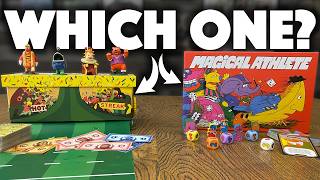
If the character-driven chaos of Magical Athlete appeals to you, consider Hot Streak from CMYK Games, a betting race game with overlapping mascot abilities that plays to even larger groups and rewards players who can predict race outcomes. TheGameBoyGeek called the two games "similar but different" and recommended owning both. Challengers offers another auto-battler style of play where character combinations drive unexpected outcomes across rounds. For players who love the draft-then-battle structure, King of Tokyo (also designed by Richard Garfield) provides a different flavor of chaotic power interactions in a faster format. If the family-friendly chaos resonates, Can't Stop captures a similar push-your-luck energy with dice, though without the character variety.
What Reviewers Are Saying
"Magical Athlete is a crazy take on a roll and move game where all you do on your turn is roll your dice and move your character. But here's the twist. All of the characters in the game have these extremely broken powers that are constantly activating through the game and messing with each other's plans. Every power in the game is broken, which means that none of them are broken."
— Might I Suggest A Game
"It's just totally chaotic because when a die is rolled and a character moves it can trigger other people's abilities. The most frustrating one was the banana. If anybody ever passed you as the banana you tripped and fell over. So the only thing you could do on your next turn was just stand up. Nobody was wanting to pass the banana knowing that they would trip. Everybody just wanted to make sure once they got in front of the banana, they stayed in front of the banana."
— Rolling Dice & Taking Names
"Magical Athlete. It really doesn't have the right to work as well as it does, but obviously it does. Otherwise, it wouldn't be on this list, would it?"
— BoardGameBollocks