/pic6725286.png)
Build a city, make a fortune.
“In Magnate: The First City, you’re a property developer out to build an empire in the midst of a citywide property boom.
By snapping-up valuable land and constructing the right buildings in the right locations, you’ll attract high value tenants and start raking in the big bucks. But beware: as the city grows, everything you build will also open up new opportunities for your competitors. Will you make a fortune? Or will you be caught out when the boom inevitably turns to bust in a game-ending market crash?”
---
Magnate: The First City is a midweight strategy game for 1-5 players. Each turn players try to grow their property empire by performing different actions, including: buying plots of land, constructing buildings, marketing their developments and selling them completely for their capital value. Once per round, they will also get the chance to attract tenants to any empty buildings they have. If they are successful, they will start collecting rent from their tenants and increase the value of their holdings. At the same time, they will also create new development opportunities for themselves and their opponents.
But in Magnate, as in real life, not all locations are equally appealing to all types of tenant. Magnate’s four types of tenant - residential, offices, retail and industry - all want to be linked to other types of tenant in nearby neighbourhoods. And they are all affected differently by what’s next door: The airport is an asset for offices, but it’s an unattractive place for new residents. By clever tactical and strategic building, players can increase their odds of attracting these tenants and improve their return on investment - without benefiting their opponents too much.
But while the players acquire more and larger properties, the price of land keeps rising higher and higher. Eventually, it becomes completely unsustainable and a game-ending crash that will destroy the value of players’ properties becomes inevitable. When exactly the crash happens, however, is shaped by the players: How much land they buy and how much property they sell will more make a crash on any specific turn more or less likely. Players must time their actions carefully to avoid substantial losses while maximizing their profits. Only then will they emerge victorious as the city’s wealthiest property magnate.
—description from the publisher
- Solid and very thematic mechanics
- Doesn't stall at the beginning
- Satisfying progression and ability to reinvest
- Well-designed so it doesn't overstay its welcome
- Everything makes sense within the game
- Flows very well
- Good game that the reviewer wants to play again and again
- Components are not what was expected or wanted initially
- Plastic houses and paper money
- Wished the boards were on thick cardboard
- Building a city
- Power Grid
Mechanics (from transcript analysis)
- Area Majority — Implied through building on plots and attracting tenants in neighborhoods, where adjacent buildings and population count influence outcomes.
- bidding — Players bid in increments of $1,000 for turn order.
- Dice Rolling — Dice are rolled to determine population counts for attracting tenants, which can be adjusted by advertising tokens and neighborhood bonuses/penalties.
- economic engine building — Players build buildings to attract tenants, collect rent, and reinvest money to acquire more land and build further, creating an economic engine.
- market fluctuation — The land price and crash marker move throughout the game, affecting land values and creating a dynamic market.
- Set Collection — Players make sets with dice rolls to match or exceed criteria to attract tenant tokens.
- Take That — While not direct attacks, players can influence the market to crash or sell land strategically, potentially impacting other players' plans.
- Variable Phase Order — The game progresses through five phases each round, including bidding, attracting tenants, collecting rent, player actions, and then property market changes.
- Worker Placement — Players take actions in turn order, and the winner of the bid goes first, implying a form of worker placement for actions.
Video topics + discussion points
Quotes (from this video)
- I have to say I was kind of intimidated with this game at first.
- wow this is an excellent economic game of goodness
- Mechanics and the gameplay is solid and very thematic.
- The game is designed very well that it doesn't outstay its welcome.
- The game is a very thematic game which is hard to get these days.
- It's still a good game and I do want to play it over again and again.
References (from this video)
- city building
Mechanics (from transcript analysis)
Video topics + discussion points
Quotes (from this video)
- It looks visually amazing. I personally like the color palette of the game, and I think it does look really good.
- The game is a heavy game. It's a Some people will call it a medium game, right? It's a 45-minute teach.
- Agemonia, still fantastic, still really good.
- It's all three of our number one games of all time.
- Does it fit with the Marvel theme? Absolutely. It it really does.
- I
- Magnate: The First City designed by James Naylor and I'm going to be doing a giveaway for it.
- So, good luck for that and I'll announce the winner next month.
- all of my advertising revenue from all of my videos every month goes to charity.
- So yeah, Solar Titans is going to get three play throughs on the channel in December.
- It's going to be January and February. In fact, February's looking like a good month for me at the moment.
- Talisman Nemesis is the latest expansion for fifth edition that turns the game into a one versus many game.
- And me and Rick on a Tuesday night we're starting playing the Arnak cooperative campaign. So that is another series of play throughs, Lost Ruins of Arnak the cooperative campaign.
References (from this video)
- strong replayability and adaptability with expansions
- elegant interlocking systems that support multiple strategies
- robust two-player and multi-player experiences
- base game can feel more linear and less variable
- teachability can be a hurdle for new players
- expansions can complicate balance and setup
- building for rent, tenant interaction, and market timing
- Urban development city-building economy with varied tenants
- Array
- elegant, interconnected economic system with emphasis on timing and adaptation
- Food Chain Magnate
Mechanics (from transcript analysis)
- dynamic economy — Economy evolves during play, affecting profitability and strategy.
- End Game Bonuses — Final cash comes from converting assets into liquid funds.
- endgame liquidation — Final cash comes from converting assets into liquid funds.
- land and building acquisition — Purchase land and erect buildings to create income streams.
- Market Pricing/Manipulation — Sell or upgrade assets in response to cyclical economy and events.
- market timing — Sell or upgrade assets in response to cyclical economy and events.
- tenant-driven income — Rent and adjacency effects from tenants shape revenue opportunities.
Video topics + discussion points
Quotes (from this video)
- It's punishing. If you make a misstep, you get hit hard.
- you need to be coached during the game
- expansion takes that game from an eight to a 10
- Magnate the First City is an economic city-building game where you're trying to have the most money in the win.
- it's nonlinear where you see an opportunity that no one else can see
- it's basically a tie
References (from this video)

- Rulebook was a mess
- Tutorial was confusing
- Difficult to get through the rules
- Real Estate
- City Building
Mechanics (from transcript analysis)
- Tutorial — The game has a tutorial section that is required to play.
Video topics + discussion points
Quotes (from this video)
- The Morrigan Game Factory though, what a great escape room game. It might it's it's definitely in my top escape room games.
- Noobs in Space is one of my favorite little games that's so unique and interesting. You have a deck of cards, you deal them out to everybody. Everybody has cards in their hand, and then you just solve those cards by saying things out loud, working together to play cards, and hopefully you solve it. It communication is the key. You can say anything you want, uh but you just can't show cards. And it's hilarious and fun. Very, very enjoyable.
- If you really like what we're doing here at the Dice Tower, then there are different ways to support Dice Tower.
- Tell your friends about the Dice Tower.
References (from this video)
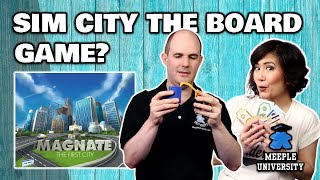
- engaging, interactive gameplay with strong thematic tie-in
- accessible to families and light gamers
- tangible components and production value
- fast play with up to five players
- exciting turn order bidding adds tension
- turn order bidding can be frustrating or feel advantageous to one side
- dice randomness can frustrate some players
- initial complexity may be intimidating though it lightens with play
- property speculation, market bubbles, tenants and rent
- 21st-century urban property market
- thematic, dice-driven tenant market with a bubble mechanic
- Terra Mystica
Mechanics (from transcript analysis)
- advertising to modify dice — Advertising can convert dice into fives to improve results.
- beginner vs advanced rules — There are beginner and advanced versions; advanced adds more tenant types.
- building types and sizes — Buildings fall into residential, retail, offices, and industrial, with small and large versions.
- Crash mechanism — End of round market checks; risk cards can trigger a market crash and end the game.
- deal with parkland modifiers — Proximity to parkland modifies dice outcomes and tenant quality.
- Dice Placement — Bringing in tenants is a dice-rolling exercise tied to nearby residential/retail/office availability.
- first-player bidding for turn order — First-player is decided through an open bidding auction, using a cute excavator marker.
- Grid Building — Buildings fall into residential, retail, offices, and industrial, with small and large versions.
- land plots appear randomly and are bought — Plots of land come out randomly; players buy plots and then build.
- land value multipliers — Selling buildings considers land price, building value, tenants and bonuses to compute profits.
- tenant assignment via dice — Bringing in tenants is a dice-rolling exercise tied to nearby residential/retail/office availability.
- three actions per round — Each round, players take up to three actions to buy land, build, or sell.
- Turn Order: Auction — First-player is decided through an open bidding auction, using a cute excavator marker.
- tutorial cards — A deck of tutorial cards helps de-randomize setup and teach rules.
Video topics + discussion points
Quotes (from this video)
- this is by james naylor of nayla games
- fresh from crowdfunding
- the property game for the 21st century
- the market is going to crash hard
- two million dollars
- three hundred thousand
- three actions that you can use to buy land build properties or try to sell properties
- bringing in tenants is a dice rolling exercise
- dice equal to the lower of those two numbers
- advertising will give you turn some dice into fives
- the first player marker is so cute is this this little excavator thing
- open option
- beginner and advanced
References (from this video)

- underrated, thoughtful economic design
- versatile pacing with 2-player snappiness or multi-player depth
- can drag or feel long in larger groups
- less-known designer/publisher details may limit discovery
- Economic growth with market downturns and strategic tapering
- Early city-building in a developing economy
- Crunchy, strategic euro with economic flavor
Mechanics (from transcript analysis)
- Asset management — Decisions about when to hold or liquidate assets for value
- economic engine building — Players grow wealth while timing downturns and asset sales
- Engine Building — Players grow wealth while timing downturns and asset sales
- Risk Management — Decisions about when to hold or liquidate assets for value
Video topics + discussion points
Quotes (from this video)
- It's the go-to push your luck game.
- This is a brain burner.
- Mechs versus Minions delivered an immersive campaign experience.
References (from this video)
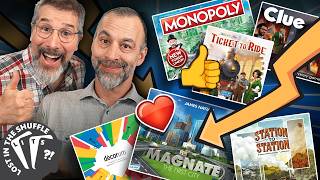
- Familiar Monopoly-like premise updated with depth
- Increased agency in decisions
- High interactivity between players
- Can feel long or heavy for casual players
- Mogul, property development and interactivity
- Real estate tycoon competing in a modern cityscape
- Monopoly-inspired with a modernized, more strategic approach
- Monopoly
Mechanics (from transcript analysis)
- Area Control — Acquire and develop properties, interact with others' developments to influence income
- Area control / property development — Acquire and develop properties, interact with others' developments to influence income
- Interactivity through building — Others’ constructions impact your own possibilities and revenue
Video topics + discussion points
Quotes (from this video)
- If you like this style of game, but you don't want that theme of like murder, then I would say check out Crypted, Search for Lost Species, or The Quorum.
- Monopoly adjacent, but modernized Magnate, highly recommend looking into this one.
- The engine building aspect to it because you are going to be purchasing these employees essentially for your train line and those employees will get you special abilities.
References (from this video)
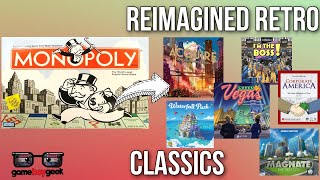
- Deep, thematic Monopoly-like feel with interdependent buildings
- Interesting crash mechanic adds tension and timing strategy
- High thematic complexity may challenge new players
- Mechanics dependent on player interaction to shine
- Market timing, tenant dynamics, and interconnected urban development
- Economic city-building with diverse tenants
- Thematic, interconnected city growth with economic pressure
- Monopoly
- Acquire
Mechanics (from transcript analysis)
- Area/land purchase and development — Buy land, construct buildings, and attract tenants.
- Market crash / timing — A crash track can end the game; players must time sales and investments.
- Market Pricing/Manipulation — A crash track can end the game; players must time sales and investments.
- Tenant-driven income and influence — Different tenant types provide varying rents and bonuses nearby.
Video topics + discussion points
Quotes (from this video)
- Monopoly, a very uh polarizing game.
- it's pure open negotiation.
- Open negotiation. Anything goes, you could trade anything for anything.
- The open negotiation in this game is awesome.
- Magnate the First City is an economic citybuilding game where you're trying to have the most money.