/pic43709.jpg)
Mah-Jongg (Chinese 麻將/麻将 Májiàng [game of the] sparrow) is a traditional Chinese game using illustrated tiles, with game play similarities to rummy. It is a popular gambling game, but wagering real stakes is by no means necessary to have fun playing.
The tiles consist of three suits numbering 1-9 (Dots, Numbers or Characters, and Bamboo, the "Ace" of which almost always looks like a bird), three different dragons (Red, Green, and White [white is unusual in that it may look like a silvery dragon, or like a picture frame, or blank - think "White dragon in a snowstorm"), and the four winds (east, south, west, and north). There are four copies of each tile. This totals to 136 tiles. In addition, special Flower, Season, and Joker (American version) tiles may also be used.
Four players take turns drawing from a stock (the wall), or from the other players' discards, in an attempt to form sets of numeric sequences (e.g., 5-6-7 of the same suit, which can only be drawn from the player at one's left, by calling "Chow"), triplets and quadruplets (which can be drawn from the discards out-of-turn by calling "Pung"), pairs, and other patterns. "Pung" takes precedence over "Chow", and "Mah Jongg" takes precedence over all (and is the only situation one may draw "Chow" out-of-turn.) What happens if a single discard would give two (or more!) players "Mah Jongg"? Precedence goes to the player who would play next in normal sequence.
Originating in China in the mid-19th century, it was introduced to the U.S. in the 1920s. It is now played in different forms throughout Asia, Europe, North America, Australia, and New Zealand. Although the rules for game play are fairly constant, there are an immense variety of scoring schemes. A few general categories of rule-sets include: Chinese Classical, Hong Kong Old Style, Japanese, Taiwanese, Western, and American.


- Tense when played with money
- Pure luck (according to reviewer)
- Boring without money involved
- Difficult to match numbers with Chinese characters
- Rummy
Mechanics (from transcript analysis)
- Betting/Wagering — We played with chips poker chips and this is where this game is stressful.
- Set Collection — Draw try to get runs and sets.
- Tile Placement — It is nothing more than rumy with tiles.
Video topics + discussion points
Quotes (from this video)
- The whole Resource Management mechanic between a blue and red resource.
- This game is played in two hours or less.
- To me this is now my recommended entry level into the coin game system.
- Whiz Kids just knocks it out of the park now don't they? It's like everything they put out is topnotch.
References (from this video)
- Has a rich history and links to China.
- Became primarily associated with Jewish middle-class women in the US, to the point some children thought terms were Yiddish.
- China, USA
Mechanics (from transcript analysis)
Video topics + discussion points
Quotes (from this video)
- the competitiveness gets crappy if like you if you cannot admit to yourself that you're competitive because that's when you will start being like horrible
- humans are I think generally really really honest with each other I think we'd be shocked really to realize how often we're quite honest that it's such a cultural norm and I think there's something lovely and delicious and interesting and empathy building about making consensual spaces where we go no we're going to do you
- games are this wonderful Embassy space where we can meet each other and uh we can kind of hang out
- the higher up that I was the better I was doing in a tournament the less eye contact there was at the table and stuff
- the joy that I experience of those kids of of completely fooling me and lying to my face I think actually does build trust and it's wonderful
- it turned out that they'd all been playing uh we one night werewolf in the dressing room and that was like a sign for like how they'd all sort of got this like developed an in team language of like of of lowering the mask to reveal that they were actually aw wolf
- I've been like loving it which is a game uh I think it's published by Hobby Japan called Builders high it's a kind of weird mix of engine building and shedding it's a card game right where you are building laying down buildings um you've got to fulfill some kind of there'll be some City contracts out right uh you're You're Building buildings but you've also got to get rid of everything in your hand and there's also you some cards have got money on and some of them are buildings and the buildings once you've built them do stuff have special powers so you're slowly building an economic engine the wrinkle in the game is that you can only spend exact amounts of money so if you get because you're it's you're basically public you're doing stuff for the city your public industry so you've got to um use up every bit of money in your contract you can't have money left over that doesn't go anywhere so um it's a really interesting game of think actually quite a lot of spending is harder than it first looks it's also a race because there's this amazing point you can't you can't end the game until you've claimed one of the contracts by building a set number of buildings and they're they're different targets right and and then the game and then what you're doing immediately there's this beautiful art where it immediately turns and you are having to shed your hand so suddenly everything you've been doing in the game up to then get money get buildings build this thing you now don't care about and you're just trying to spend everything in your hand and empty your hand onto the table so there's this lovely Arc and this lovely turn and for me the artwork is never going to be hung in the Lou um it's you know the Box looks nice but for me it just does something that um a lot of other games it just doesn't feel like anything else in my collection
- it just does something that a lot of other games it just doesn't feel like anything else in my collection
- it's found a kind of like ecological niche in every game night I've had there's always time for it
- Tim you are the most fantastically autistic person I've ever assessed
- on one level it's like well it's your special interest him you know that that's like a quite a pat answer is that you're autistic and you find meaning by diving into something in its totality and then when you're very safe in that kind of area of knowledge like almost like throwing out grappling hooks and kind of like doing boarding actions on adjacent topics and using board games as a way of like relating to everything else from this kind of uh you know Fortress of Solitude of board games
- as someone who's been particularly craving like human connection and human contact and I sometimes found that difficult and has found essentially what I would describe as a I'd characterize as kind of a uh an accessibility Aid uh through games
- we think of autism as being a uh a social impairment right as as having deficits when it comes to connecting with other human beings but I just you know and I sort of don't want to speak to soon is but like I've loved talking to you right and at no point has my talking to you felt to me difficult or strained I feel like I'm just vibing out with someone who I've only just met
- we all mask to an extent for different reasons
References (from this video)
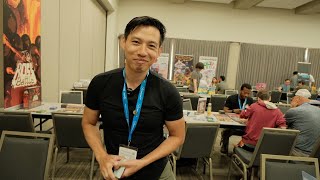
- Classic, enduring mechanic with strong social play appeal
- Versatile for large groups and cafe/Con environment
- Learned rules can be intricate for beginners
- Requires attention to rule variations across regions
- Abstract tile-matching
- Tabletop social setting, live play at a convention/demo session
- Abstract, non-figurative
- Rascally Rabbits
Mechanics (from transcript analysis)
- draw and discard / hand-building — Players draw from a wall and form a legal hand through melds, aiming to complete a winning pattern.
- Set Collection — Players assemble specific tile groupings (pungs, chows, kongs) to score.
- set collection / melds — Players assemble specific tile groupings (pungs, chows, kongs) to score.
- wild tile — A wild tile can substitute for any tile, enabling more flexible hand construction.
Video topics + discussion points
Quotes (from this video)
- it's a trick writing game.
- On your turn, all you do is call out one single number, but it has to be along the lines of what your vegetable is.
- If I called out 10 carrot, then you have to look at the carrot along the row and column and make sure that you have those available numbers that you can circle.
- three rounds and you count up all the tricks you've won, including rabbits.
- A group of wombats is called a wisdom.
References (from this video)

Mechanics (from transcript analysis)
Video topics + discussion points
Quotes (from this video)
- I did a little tweak in Euphoria where there are kind of shared tech tracks where multiple players can advance on a tech track and potentially benefit themselves and other players as well.
- Goa has gotten a full refresh.
- We currently don't have any plans for new content for Stamp Swap, but I certainly am open to it.
- sign up for a back in stock notification. That will signal to us that we need to get that back into stock.
- Flip Tunes and Tag Team are maybe the top two that I really want to play.
References (from this video)

- Beautiful game
- Brilliant way to ensure replayability
- Evokes happy childhood memories
- Requires purchasing new sets annually to stay current with legal hands
- Tile-based strategy
Mechanics (from transcript analysis)
- Rummy-like — Shares similarities with rummy-style card games.
- Set Collection — Players gather specific sets of tiles.
- Tile-laying — Played with tiles instead of cards.
- Variable Ruleset — Legal hands change annually, requiring players to adapt.
Video topics + discussion points
Quotes (from this video)
- It was a 7 and 1/2 hour game day, and I played 10 games while during that time. And there was one group that played this game World Order that played That's all they played.
- The frog can give it and the frog can take it away.
- This is we really worked on like the rules, the reference card, the packaging, the card design, every single element to make it as onboarding friendly and player friendly as possible.
- So, I went online and I picked up this, which is the Spin Master release of the CMON DC Super Heroes United Batman Hush.
- I just remember solving puzzles in my head and just like the thrill of like knowing that I was figuring stuff out, not even winning or losing. Just the thrill of knowing, 'Oh wow, I can figure this out. I can suss this out.'
- It's a beautiful game.
- It's like the drawer of no touchies, which again sounds very inappropriate
References (from this video)
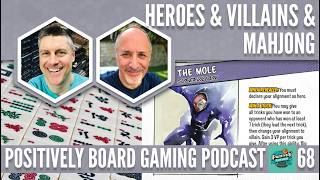
- Beautiful game with nice tactile components.
- Dynamic hands change yearly, keeping the game fresh.
- Very social and competitive.
- Facilitates positive player interaction.
- Original drafting game.
- Looks like a lot of information initially.
- Older sets may be made with illegal materials like ivory.
- The joke about it being a game for older Jewish women, though not a gameplay con.
- Creating hands based on tiles
- China (origin)
- Rummy
- Seven Wonders
Mechanics (from transcript analysis)
- Hand building — You're trying to create a hand based on these tiles that you have. There are numbers. There are also symbols like dragons and winds.
- Set Collection — You have to create these hands and you're given initial tiles and through passing and shuffling you're giving away you're putting tiles in the middle taking some out.
- tile drafting — Passing tiles around the table and passing and passing and then you shift to a phase where you're selecting.
- wild tiles — If I have a wild ... if I have one of those in there. ... Later on, if Mitchell or if if at that moment has a five that matches that suit. Swap it in.
Video topics + discussion points
Quotes (from this video)
- When it's something is just like drag and drop something new into something you already know, it's like, oh, Kismet, perfect. I already know what to do. That's awesome.
- And everyone knows you're the mole, so it's it's not that deep.
- When this ends and I'm not trying to be negative, they all end eventually, it could be in a week, it could be in 5 years. When it ends, I don't want to feel the loss of having made this a second home and now it's over and now I have to take stuff out of here. I didn't want to feel that loss. I just wanted to keep it a work space where I wouldn't feel the loss if something if this just went away.
- First of all, the game is beautiful. Would you agree Jamie like when you see it on the table?
- It's social. Um, it's competitive and it can be really it can be super competitive at the same time though there's something very warm and fun about it.
- When you're making a product, you're not just creating a product. You have to have an infrastructure and an ecosystem for that product.
- Kickstarter as a business. Which I think a lot of creators still overlook that. They view it as okay, I designed this game, of course I'll just put it on Kickstarter. But if you opt into that, which you can do, you are opting into starting a business. And that is a very different thing I think than designing a game.
- There's so much more to creating a great product than just creating a great product. There has to be an infrastructure.
- I'm hoping at some point let's say I'm at Gen Con. And you don't have to do this by seeing for seeing this video it just if it happens naturally that's great. If someone sees me at Gen Con and points to me and goes oh my god I know you you're the King of Stonemaier.
- It's so funny how uncomfortable my calling myself-proclaimed king, I'm the self-proclaimed king of Stonemaier.
References (from this video)
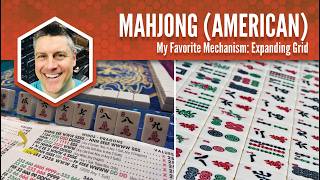
- Many melds provide flexibility and options.
- The annual change in melds keeps the game fresh in a novel way.
- The tile passing mechanism is crucial for strategic play.
- The complexity of melds can be overwhelming initially.
- The changing ruleset might be a con for some, though presented as a pro for freshness.
Mechanics (from transcript analysis)
- Hand Management — Players draw and manage a hand of tiles, deciding which to keep and which to pass.
- Melds — These are specific combinations of tiles that players try to collect to score points or win a round. There are many different melds, and some change annually.
- Set Collection — The game involves collecting specific numbers or suits of tiles to form melds.
- tile passing — Players frequently pass tiles around the table, which is crucial for deciding what to go for and what opponents might be pursuing.
- Variable scoring conditions — The specific melds that can be completed change, with some elements, like the year, incorporated into scoring combinations annually.
Video topics + discussion points
Quotes (from this video)
- I think that's a pretty neat element of American Mahjong.
- I'm kind of fascinated by the idea of a game where the core rules stay the same on an ongoing basis, but every year some important elements of the game changes that makes it that keeps it fresh, basically.
- It broke my brain a little bit because Mahjong has a lot of different, I'll call them melds.