/pic6837649.png)






















Maple Valley Deep Dive
What the Community Thinks About Maple Valley
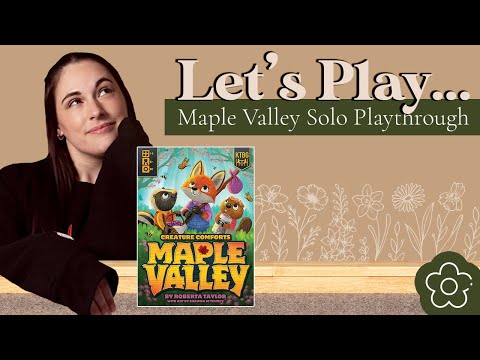
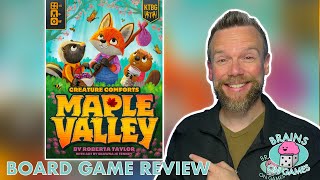
Maple Valley has earned genuine affection from the board gaming community for delivering something that feels both accessible and rewarding. Reviewers consistently praised the game's charm and mechanical depth, with many noting that it successfully bridges the gap between family-friendly gameplay and strategic satisfaction. The game's connection to the beloved Creature Comforts universe resonated particularly strongly, as it extends a story players already cherish while establishing itself as a mechanically distinct experience.
Core Mechanics That Define Maple Valley
Hand Management Through Friend Cards
At its heart, Maple Valley revolves around building and managing a hand of friend cards; woodland animals that serve as your means of moving around the board. Each friend card dictates which colored paths you can travel along: forest, canyon, or water. This creates meaningful decisions every turn. Players must balance between playing their strongest cards now or holding them for future turns, knowing that the more friends you acquire, the more options you unlock. The asymmetry matters: your starter friend can travel any path, but specialized friends restrict you to specific colors. This forces thoughtful sequencing and encourages players to gather diverse companions rather than duplicate cards.
Resource Collection and Favor Completion
As your critter moves around Maple Valley, you collect resources; wood, honey, berries, acorns, and curiosities like pebbles, bugs, and flowers. These feed directly into your primary goal: completing favors, which are essentially recipe cards requiring specific resource combinations. Completing favors scores you points and contributes to the spring festival festivities. The brilliance lies in how different favor cards chain together; some give bonus points if you complete them alongside matching cards, rewarding players who think ahead and build mini-engines of synergistic completions. This creates the satisfying moment of recognition when you slot together cards that were designed to work in harmony.
The Maple Valley Experience
Cozy and Breezy Atmosphere
Maple Valley wraps its mechanical framework in a genuinely cozy aesthetic. The woodland animal characters; rendered as adorable children preparing for their first spring festival; give the game a whimsical, low-stakes feel. There's no aggression or cutthroat competition; instead, players are simply helping cute critters gather supplies for a joyful community celebration. The vibrant, colorful board and tactile wooden components enhance this feeling, making setup itself feel like an event. Reviewers noted that playing Maple Valley feels breezy and relaxed rather than tense or intimidating, making it ideal for casual play sessions or introducing newcomers to board gaming.
Progressive Engine Building
What elevates Maple Valley beyond pure accessibility is how it delivers a satisfying engine-building arc. The first round or two feel manageable; you have few cards and limited options; but by rounds three, four, and five, you're orchestrating increasingly complex turns with more friends offering more abilities. Reviewers specifically praised how the game ramps in engagement without becoming overwhelming. You're not scrambling in round one; you're building toward something. By the final round, your turns feel substantial and rewarding as you've accumulated enough friends and resources to execute your strategy. This progression from simple to intricate makes replays feel different depending on your choices.
What Makes Maple Valley Stand Out
Thematic Coherence with Creature Comforts
Maple Valley exists in the same world as Creature Comforts, but rather than simply reskinning the predecessor, it tells a related but distinct story. In Creature Comforts, adult animals prepare for winter. In Maple Valley, their children dash through spring gathering supplies for a festival. This narrative connection deepens both games without making either dependent on the other; they remain standalone experiences that simply share a universe. Reviewers found this approach elegant; it allows players who love Creature Comforts to revisit that world from a different angle while remaining completely accessible to players new to the setting. The shared aesthetic and design philosophy create a cohesive family of games that feel like they belong together.
Accessibility Without Sacrificing Depth
Maple Valley walks an impressive tightrope. The rules teach quickly; learning the game mechanics takes minutes, not hours. Yet beneath that accessible surface lies genuine strategic variety. Which friend cards you recruit shapes your options. Which favors you pursue shapes your resource spending. How you sequence your movements around the board determines efficiency. Experienced board gamers report finding enjoyable decisions throughout, while newcomers find the game forgiving and confidence-building. This accessibility creates a gateway experience that doesn't talk down to players, allowing families to play together without someone feeling sidelined by complexity.
Potential Drawbacks
Brevity for Some Players
While most reviewers praised the game's flowing pace, a few noted that Maple Valley can feel quite short, particularly for experienced players seeking longer strategic arcs. The five-round structure means that once you've ramped up your engine, the game concludes. Some players wanted more opportunities to execute complex turns before the final scoring. This is less a flaw and more a design choice; the game deliberately prioritizes accessibility and replayability over marathon play sessions, which suits many tables but not all.
Limited Player Interaction
Maple Valley is largely a sandbox experience; each player pursues their own strategy with minimal direct interaction. There's no stealing, blocking, or negotiation. Some players crave more interactive gameplay or higher stakes. However, reviewers who appreciated lighter, multi-player-solitaire experiences found this refreshing. The game prioritizes personal satisfaction of completing well-chained favors over competitive friction, which aligns with its cozy, collaborative tone.
If You Enjoy Maple Valley
Consider exploring Creature Comforts, its thematic predecessor, which offers similar gentle charm with a heavier economic system. For players drawn to the hand management and route planning, try Flamecraft or Peak Team Rangers. Those captivated by the color and cuteness might enjoy Cafe Baras or Seashells, both from Kids Table Board Games. If the progressive engine-building appeals to you, Arato or River Market (another game in the Creature Comforts universe) could scratch that itch. Games like Cities or Arendelle similarly reward thoughtful sequencing and strategic decisions wrapped in accessible, beautiful presentations.
What Reviewers Are Saying
"It's the cutest game and if you've ever played Creature Comforts, then Maple Valley is a must-have because it just goes together. It carries the story of Creature Comforts one more level because in Creature Comforts you're storing up for winter, but in this game Maple Valley it's the kids going out getting cute little things for a festival."
— Our Family Plays Games
"The game ramps up where you're like oh I don't have a whole lot to do and then by turn three, four, five you're like you're doing so much. You have so many more cards and so many more things to do."
— Board Game Spotlight
"The game is different than Creature Comforts, but the long game issue with Creature Comforts is solved in this one and there's so many fun ways where you gain resources to spend on stuff and you gain cards to reveal around the board and move around differently. Maple Valley is my number one game of the top 10 Kickstarter games that I previewed."
— Meeple Mountain