



















Marrakech Deep Dive
What the Community Thinks About Marrakech
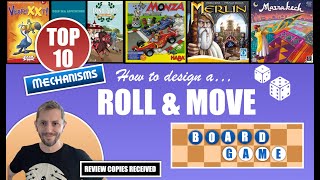
Reviewers describe Marrakech as a small, quick, and surprisingly sharp game. Board Game Spotlight calls it one of the most unassuming cutthroat area control games you will ever play. Its rug salespeople seem harmless at first, but the game "turns from cute to deadly" within a few turns. Getting Games, reviewing the game for the first time, found it a silly and fun evening, with the table laughing and groaning through a short session. Adam in Wales covers Marrakech in a broader survey of roll and move games, presenting it as evidence that dice-driven movement can still carry meaningful decisions.
Core Mechanics That Define Marrakech
Carpet Placement and Area Rent
Each player owns a set of carpets that are laid over the board. Getting Games explains that a carpet covers a 1x2 area, must be placed orthogonally adjacent to the pawn Assam, and may cover an opposing carpet but cannot hide it completely. Carpets stack on top of one another, so the board grows more tangled as the game progresses. Adam in Wales identifies the central tension: when Assam lands on an opponent's rug, the mover must pay coins equal to the number of spaces in the connected area of matching rugs. Because payment depends on the size of the whole connected region, a single well-placed carpet can turn a small risk into a large bill.
Assam Movement and Rotation
Assam is a neutral pawn shared by all players. On a turn, the active player can keep Assam facing his current direction or turn him 90 degrees left or right, but never fully around. The player then rolls a die with faces numbered one through four and moves Assam that many spaces, as described by Getting Games. Reviewers differ on what happens at the edge of the board. Adam in Wales says that Assam follows the arrows at the edge and re-enters facing a new direction, while Getting Games describes him circling around the edge. In either case, the rotation choice gives the active player some influence over where Assam ends up.
The Marrakech Experience
Roll and Move With Real Decisions
Getting Games argues that the game has more going on than its dice mechanism suggests. Players decide where to place their carpets, which opposing carpets to cover, and where to point Assam to cause trouble for others. Jonathan of Getting Games also notes that the push-your-luck quality lets players set themselves up for later turns, while a bad roll can still wipe out a pile of coins. Board Game Spotlight makes the same point from the other side, describing the placement of carpets as a way to steer the character toward your own rugs and away from those of opponents.
Standard Rules Versus the Mean Variant
The standard order asks the active player to choose Assam's direction before rolling, which gives that player some control over the odds. Getting Games played the rulebook variant instead, in which the previous player sets the direction, so the mover has no say in where the pawn is pointed before the die is rolled. Jonathan found this version chaotic and entertaining, because a player can place a carpet and then point Assam to exploit it on the following turn, and was happy to play either version. Getting Games estimates that a four-player session took about 25 minutes, under 30, which keeps the game light enough for a casual table.
What Makes Marrakech Stand Out
Tactical Depth in a Short Package
Board Game Spotlight highlights how quickly the game moves, while still rewarding careful planning. Getting Games calls Marrakech very quick to teach and very quick to play, and praises the production quality, and says the thick carpets stacking on the board are a big part of the appeal. Both channels suggest that the game offers a tactical reward that is out of proportion to its short length.
Choice Within a Roll and Move Framework
Board Game Spotlight argues that Marrakech is a classic roll and move game, yet it still lets the player decide where the character goes. Because Assam can turn left, right, or continue straight, but never backwards, the choice is limited to a few sensible directions. Adam in Wales explains that Talisman offers a similar choice of direction, but in that game the player chooses clockwise or anticlockwise after rolling. Marrakech asks for the direction before the roll, which gives the mover a different kind of forward planning.
Potential Drawbacks
Luck and Swingy Endings
Getting Games warns that the game is highly tactical, and that a player can lose because of a bad die roll near the end. In the reviewer's four-player game, the eventual winner would have finished third without a final roll that caused a massive swing in points. Players should know that this is part of the experience, and the game is best suited to groups who accept that things can go poorly for them.
Large Opposing Areas and Repeated Hits
The area-based rent rule can punish a player repeatedly if the same large opposing region keeps lying on Assam's path. Getting Games describes a player repeatedly landing on the same massive area, which is the kind of swing that can decide a game. Board Game Spotlight makes the same warning in different terms, noting that the game turns from cute to deadly quickly.
If You Enjoy Marrakech
Adam in Wales offers two useful reference points for players who like the mechanics of Marrakech. Talisman lets players choose a direction for their pawn, though the choice comes after the die is rolled rather than before. Adam in Wales also discusses Monopoly as a roll and move game in which the landing space carries a financial consequence, which shares the basic trigger behind Marrakech's area payments. Players who enjoy roll and move games with a direct choice of movement and a penalty for landing on someone else's holdings will likely find the mechanics familiar.
What Reviewers Are Saying
"It's the classic roll and move, right. You never hear when people talk about rolling move, but that is a roll and move game. But the reason why I like it a lot is because the the placement of your carpet can, you know, you're strategically trying to get this character to to land on your carpets on your turn, because you don't want to land on an opponent's carpets. Because if you do, you have to pay them money equal to however large that area is."
— Board Game Spotlight
"Obviously, it's roll and move, but there's a lot of other decisions that you're making, and there's a lot of kind of push-your-luck things. You can try to set yourself up for the future."
— Jonathan, Getting Games
"The central decision of the game is about adapting the playing space to maximize your opponent's chances of landing on a nasty spot. You do this by layering little rugs on the board."
— Adam Porter, Adam in Wales