






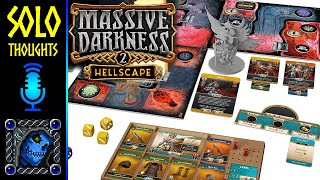
Massive Darkness 2: Hellscape Deep Dive
What the Community Thinks About Massive Darkness 2: Hellscape
Massive Darkness 2: Hellscape stands out as a cooperative dungeon crawler that brings together accessible gameplay and impressive production. Released by CMON, it draws favorable comparisons to Zombicide while carving its own identity through asymmetrical hero design and goal-oriented missions. Reviewers like The Dice Tower and The Discriminating Gamer consistently praise the game's heavy component load, especially the detailed enemy miniatures, and appreciate how each class creates distinct play patterns without overwhelming new players with rules complexity.
Core Mechanics That Define Massive Darkness 2: Hellscape
Dice Pool Combat and Resource Management
At the heart of Hellscape lies a straightforward dice-based combat system where heroes roll pools of attack and defense dice to battle AI-controlled enemies. Players build their dice pools from equipment they have looted and leveled into, creating meaningful progression that feeds directly into combat effectiveness. The system avoids a traditional overlord player, instead running enemies through simple AI rules that keep the pace brisk. This streamlined approach lets players focus on tactical positioning and ability choices rather than managing a separate opponent, and each hero garners resources and reacts to the environment in its own way.
Leveling and Asymmetrical Hero Classes
Each hero develops independently through a leveling system tied to individual character boards. The Berserker builds fury through combat and manages a rage track, the Rogue leans on stealth and shadow abilities, the Shaman commands elemental magic, the Paladin calls down blessings, the Ranger fires tactical shots, and the Wizard hurls spells. These are not cosmetic differences; they fundamentally change how players approach encounters. A Berserker gains power through damage output, while a Wizard constructs synergies between spell cards. The game delivers light asymmetry that feels thematic without creating a steep learning curve, letting teammates quickly grasp that everyone plays by slightly different rules yet still works toward shared goals.
The Massive Darkness 2: Hellscape Experience
Modular Dungeon Exploration and Replayability
Hellscape uses modular dungeon tiles, allowing quests to compose new dungeon configurations from scenario to scenario. A quest might ask players to rescue captives in one location, while another demands reaching and defeating a boss. This modularity, combined with a quest system spanning multiple difficulty tiers, creates genuine replay value; no two campaigns feel identical. Roaming monsters, generated unpredictably, keep veteran groups sharp and newcomers discovering something new each session. Reviewers emphasize how this variety, paired with a clear goal each game, prevents the experience from devolving into aimless room-clearing.
Treasures and Progression Loops
Loot arrives in waves of increasing rarity, along with special item sets reserved for specific classes. This progression feeds a satisfying feedback loop where early missions yield starter equipment, mid-game ventures unlock specialized builds, and late-campaign runs see heroes wielding gear sets that define their playstyle entirely. The loot system rewards both luck and smart decisions, letting players feel the tangible power growth that makes returning to difficult quests worthwhile. That sense of a character becoming distinctly yours is, for many reviewers, the emotional core of the experience.
What Makes Massive Darkness 2: Hellscape Stand Out
Production Quality and Component Design
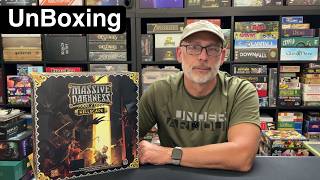
The sheer miniature count immediately signals CMON's commitment to visual polish. Players comment on the imagination embedded in creature design, from skeletal warriors to winged horrors. The rulebook spans dozens of pages with extensive examples and setup diagrams, and the cards and tokens punch cleanly. For a heavy-box game, the components feel purpose-built rather than an afterthought, and reviewers consistently call out the miniatures as a highlight worth painting.
Cooperative Focus Without an Overlord
Unlike Zombicide-style experiences with a controlling adversary, Hellscape removes that adversarial layer entirely. Heroes cooperate against deterministic enemy AI, letting the group coordinate openly. This shift frees players to focus on interesting positioning puzzles and ability sequencing rather than second-guessing a human opponent. The cooperative structure also means new players never feel singled out; success or failure rests on shared decision-making, making the game feel collaborative rather than cutthroat.
Potential Drawbacks
Complexity in Learning Despite Approachable Mechanics
While the core rules are straightforward, the sheer number of possible ability combinations and special effects means teaching Hellscape to new players requires patience. Hero power cards vary by class and level, door effects trigger multiple outcomes, and loot cards interact with character slots in specific ways. Players who breeze through lighter dungeon crawlers may find that Hellscape's depth sneaks up after the first quest, demanding a second read of the rulebook. Experienced gamers relish this depth, but casual groups hoping for a breezy evening should expect setup and first-quest learning to consume a meaningful chunk of the night.
Component Management and Table Space Requirements
The game's weight comes from abundance: dozens of miniatures, multiple card decks, loot tokens, and hero boards demand real estate. A coffee table feels cramped; a dining room table is safer. Setup involves sorting tokens, organizing enemy miniatures by tier and type, laying out quest cards, and configuring hero stations. This is not a grab-and-play game, and organized players benefit from storage solutions to speed future sessions.
If You Enjoy Massive Darkness 2: Hellscape
Fans should explore Zombicide, the clear spiritual cousin, which strips away some asymmetry in favor of pure cooperative slaying, or Massive Darkness (the first edition) to see how Hellscape refined the formula. For those who crave deep hero customization paired with cooperative dungeon crawls, Gloomhaven offers campaign-long progression through a living-world map system. Alternatively, Descent: Legends of the Dark delivers miniature-heavy tactical combat with app-driven scenarios, though with more complexity overhead. Each shares Hellscape's appetite for modular exploration and thematic hero differentiation while emphasizing a different layer, whether accessibility, long-form narrative, or tactical depth.
What Reviewers Are Saying
"I absolutely love dungeon crawl games, and this one gives me that Zombicide feel just looking at things, but in a dungeon crawl sense. There is a ton of components for this game, and these miniatures are phenomenal. I am going to be going online and looking at painted versions because I know somebody has painted all these up."
— The Discriminating Gamer
"Your character is going to have its own way that it's going to garner resources, how it's going to react to the environment, the way it's going to react with the different weapons it has. I like the guy that has the rage, the berserker. He gets really angry and then he just has a little tantrum and kills everything. I love his little rage track."
— The Dice Tower
"As a dungeon crawler, it's unique in that you really have that connection to your character. The dungeons are so different, the roaming monsters are different, every play is going to be different. But ultimately it is goal oriented and focused. I really like the way this one comes together with all those different elements."
— The Dice Tower