/pic5254404.png)
Are you as clever as a fox? As dogged as a bloodhound? Do you have an eagle-eye for details? Pool your team's resources together to seek out the master word!
Master Word is a co-operative word-based deduction game in which players have to work together to try to find a secret word from a single starting hint.
Each game, a guide selects a card, looks at the master word, then shows the other players (seekers) the starting hint. The seekers then have 90 seconds to discuss and each write a clue on a card, which they place in a row. Once this is done, the guide places a number of tokens at the end of the row equal to the number of clues that are "on the right track" toward the master word. The only catch: The seekers don't know which clues the tokens refer to!
If the seekers write the master word on a solution card before the end of seven rounds, everyone wins! If they fail to do this or if they accidentally write the master word on a clue card, everyone loses!




- Challenging yet rewarding
- Easy to teach and family friendly
- Great strategy and logical deduction
- Joyous moments upon success
- Scalable and accessible with a 2-player variant
- Requires printing off a 2-player variant from publisher website
- Word guessing, deduction
Mechanics (from transcript analysis)
- 20 Questions — The game functions as a 20 question style word guessing game.
- Clue giving — The guide provides feedback on how many player-suggested concepts relate to the mystery word.
- Deduction — Players try to guess a secret word based on clues and feedback from a guide.
- Set Collection — Players collect tokens that indicate how many clues relate to the answer.
- Word Game — Players write down concepts related to a topic to help deduce a mystery word.
Video topics + discussion points
Quotes (from this video)
- in this video we are going to be looking at the top three hottest board games that i've been playing this month
- Spicy is a super fun game and it reminds me of a game called cockroach poker and i like to describe spicy as a cockroach poker 2.0
- Masterword takes the original game mastermind and wordifies it by turning it into a 20 question style word guessing game that is a little bit more challenging than you might think but incredibly rewarding in the long run.
- Brew has a very interesting art style where the characters look like they have like no whites in their eyes or really dilated pupils it's kind of intriguing but creepy at the same time
- thank you everyone for joining me for my first top three list of the month and i look forward to bringing you top three lists uh once a month from now on
References (from this video)
- Brilliant word deduction game
- Evokes nostalgic memories of family word games
- Generates great conversation
- Well-distilled game combining familiar concepts
- Players work together using collective knowledge
- Intriguing mechanic of subdividing answers
- Word deduction and vocabulary showcase.
- Mastermind
- 20 Questions
Mechanics (from transcript analysis)
- cooperative play — Players work together to collectively use their knowledge to find the hidden answer.
- Deduction — Similar to Mastermind, players guess a hidden answer based on clues.
- Keyword generation — The effectiveness relies on creating keywords that effectively split the pool of possible answers.
- word association — Players devise keywords that link to a topic, narrowing down to a key answer or phrase.
Video topics + discussion points
Quotes (from this video)
- Hey everybody Merry Christmas and Seasons greetings if you're watching this video at any other time of the year then hello friends welcome to board game sanctuary.
- I remember the immense joy that I felt when I discovered modern board gaming for the first time it was like being a kid on Christmas morning ripping open that Christmas wrapping and seeing a brand new board game inside and unlocking its secrets mechanics strategy stories and themes and realizing there's a whole new world of games out there.
- Ultimately it is a game that will have you singing a Christmas tree whilst you watch your victory points grow.
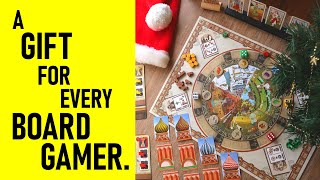
- The red cathedral is probably one of my most favorite euro small box games and it's definitely on my top recommendation list for you to get this Christmas especially if you want to satisfy the inner euro gamer in you.
- It is a game dripping with theme that has every elf envious of the adventure ahead.
- Sleeping Gods is probably one of the best board games I've played this year.
- Dune Imperium has plays dipping their toes in the really hot sand and if you're a long time follower of board game sanctuary you'll know that I'm a really huge fan of euros and worker placement board games and this game combines elements of worker placement deck building resource gathering as well as an interesting combat system.
- Land vs a game that is definitely travel worthy with its simple design and addictive replayability.
- Every time I set up a game of parks I always feel like I'm unwrapping a beautiful Christmas present.
- So what did you think of this year's gift guide? I hope this video gave you some suggestions or even some starting points of some board games for particular people in your family or friendship group.
References (from this video)
- Provides a significant power boost.
- Grants card draw upon dealing combat damage.
- Allows casting spells for free.
- Good synergy with creatures that have evasion.
- Lacks built-in evasion.
- Requires the equipped creature to deal combat damage to a player.
- The free spellcasting is limited by the damage dealt.
- The cost reduction for equipment is less impactful than protection from Swords.
- Final Fantasy 7 weapon
- Sword of Feast and Famine
- Sword of Fire and Ice
- Sword of the Animist
- Sword of Hearth and Home
- Fire and Ice
Mechanics (from transcript analysis)
- Card draw — Draw a card when the equipped creature deals combat damage to a player.
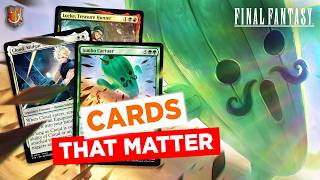
- Equipment — Equip creature gets +3/+2. Whenever equipped creature deals combat damage to a player, draw a card, then you may cast a spell from your hand with mana value less than or equal to that damage without paying its mana cost.
- Free spellcasting — Allows casting a spell without paying its mana cost based on combat damage dealt.
- Power Boost — Grants +3/+2 to the equipped creature.
Video topics + discussion points
Quotes (from this video)
- if you're not a lifeg deck, you probably don't run it.
- This is the ancient green warden text for lands, but also birds.
- This card is sort of like Panharmonicon stapled to a conjurer's closet
- It feels like it just instantly goes in all landfall decks.
- It's very interesting card that I am kind of having trouble evaluating
- This is the only one where the activated ability doesn't work unless the static ability has.
- I think this is probably I don't know. It's the blue one's very raw powerful in mill as well. It's this is a very powerful effect in a very powerful strategy being plus one plus one counter decks.
References (from this video)
- The scenario has an interesting thematic link to the X-Men story.
- Some hero abilities like piercing and abilities that bypass toughness are very useful.
- The feeling of overcoming the difficult scenario at the end was satisfying.
- The scenario can feel overwhelming with the constant influx of powerful minions.
- Certain mechanics, like guard and toughness on many enemies, can make the game slow and challenging.
- Encounter cards can be very punishing and feel difficult to overcome.
- The game felt like a grind at times due to the difficulty and repetitive nature of dealing with minions.
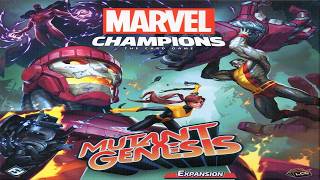
- Fighting against a sentient AI and its robotic army.
- A rogue Sentinel factory creating robots to subjugate humanity.
Mechanics (from transcript analysis)
- Bomb Counters — A mechanic involving bomb counters that trigger damage to enemies when removed.
- guard — Sentinel minions have guard, requiring them to be defeated before damage can be dealt to the main villain, unless overkill is used.
- overkill — A mechanic that allows excess damage dealt to a minion to carry over to the villain.
- Piercing — A mechanic that allows attacks to ignore tough status cards.
- retaliate — Some enemies have retaliate, dealing damage back to attackers.
- Scheme — The Master Mold's ability to scheme, which involves discarding cards from the encounter deck until a sentinel minion is revealed and then engaging the player.
- Stunned — Players can become stunned, preventing them from taking actions or changing form.
- Toughness — Some minions and the villain gain toughness, which negates the first instance of damage each turn.
- Tuck Cards — Silk's ability to tuck cards under her, which is a core part of her gameplay but can be hindered by certain encounter cards.
Video topics + discussion points
Quotes (from this video)
- I'm pretty much convinced that these are designed around the two heroes that come in the in the in the box, which I guess makes sense uh to a certain degree, but we shall keep pushing forward with Silk and Thor.
- So, be careful how often you allow Master Mold to scheme.
- God, these [ __ ] upgrades suck. Why are they so restrictive? It's insane.
- Who [ __ ] designs this [ __ ]?
- Wow. Wow. Wow. Wow. You know what? [ __ ] it. [ __ ] it. Mulligan. Mulligan.
- Boom. We actually won.
- That is insane.
References (from this video)
- art valuation and bidding
- potato-inspired artworks in an art gallery auction
- hidden value bidding
Mechanics (from transcript analysis)
- Action cards — On your turn you may play an action card from your hand and resolve its printed text effect; fast effects allow chaining additional actions.
- Auction / Bidding — Start a gallery auction by taking the gavel as auctioneer, reveal the next painting, and have players bid using their hand cards; the winner pays their bid value in hand cards.
- draw action cards — End of your turn you draw two action cards up to a maximum of five; you can draw if you are short on cards.
- End game and scoring — Game ends when the last painting in the gallery deck has been auctioned; final scores are calculated after revealing value cards and applying modifiers.
- End Game Bonuses — Game ends when the last painting in the gallery deck has been auctioned; final scores are calculated after revealing value cards and applying modifiers.
- gallery auction — Start a gallery auction by taking the gavel as auctioneer, reveal the next painting, and have players bid using their hand cards; the winner pays their bid value in hand cards.
- Modifier cards — Modifier cards are played face up to any painting in play and stay with that painting unless discarded by another effect.
- Multi-Use Cards — Modifier cards are played face up to any painting in play and stay with that painting unless discarded by another effect.
- private auction / other auction elements — Cards include private auctions and stop cards that can interrupt actions; stealing or exchanging paintings is possible.
Video topics + discussion points
Quotes (from this video)
- the Great Potato Art Auction
- the game end is triggered once the last painting in the gallery deck has been auctioned
References (from this video)
- word guessing with clues
Mechanics (from transcript analysis)
- clue drafting — seekers write clues on their clue cards within the round
- Compound Scoring — guide assigns thumbs up tokens to indicate helpful clues
- deck progression — cards increase in difficulty across the deck and new cards are introduced after each game
- Deduction — seekers' clues are analyzed across rounds to narrow down possibilities
- end-of-round reveal and scoring — after each round, clue tokens are revealed and used to control progress
- master word placement rule — the master word can only be written on a solution card and not on a clue card
- per-game special token reveal — the guide can move a token to reveal a clue as a one-time aid
- round-based deduction — seekers' clues are analyzed across rounds to narrow down possibilities
- solution cards gambit — players may place a guess on one of three red-bordered solution cards
- team-based roles — one player as guide, others as seekers
- thumbs up scoring — guide assigns thumbs up tokens to indicate helpful clues
- timed rounds — each round uses a 90-second timer
Video topics + discussion points
Quotes (from this video)
- the seekers will win or lose as a team
- the master word can only ever be written on one of the three solution cards
- if they cannot figure it out after the seventh round everyone loses
- the guide cannot give any indication about which specific clues they're for
References (from this video)
- Cooperative play encourages teamwork and friendly collaboration
- Audience participation adds energy and engagement
- Challenging word-deduction mechanics offer puzzle appeal
- Live-stream format enables interactive learning
- Ambiguity in certain clues (e.g., edible category) can cause confusion
- Some rounds can be time-consuming and require Google for clarification
- Long sessions risk fatigue if not paced well
- Mastermind
- 20 Questions
- Decrypto
Mechanics (from transcript analysis)
- audience_interaction — Viewers can influence gameplay by offering clues or feedback.
- category_guessing — The game uses categories (e.g., edible, purple) to guide guessing through clues.
- clue_writing_rounds — One player writes three clues while the other writes one; matching clues can unlock additional information.
- Deduction — Three rounds of clue-creation and guessing with scoring reveals per round.
- round_based_deduction — Three rounds of clue-creation and guessing with scoring reveals per round.
- secret_clue_reveal — A secret clue can be revealed if it matches another player's clue.
- two_player_roles — In two-player mode, a seeker (guesser) and a guide (clue writer) interact to identify the target word.
Video topics + discussion points
Quotes (from this video)
- it's kind of like mastermind isn't it
- it's a word guessing game you just ask questions and go yes or no basically
- cooperative game yes we work together
- Saving Mr Banks
- lion king
- beef jerky