
In the summer of 1972, the final match of the World Chess Championship in Reykjavik saw the ultimate showdown: American Bobby Fischer challenged the reigning world champion, Boris Spassky from the Soviet Union. Touted by the media as the most important sporting event of the Cold War, an incomparable thriller unfolded...and now, you can be right in the middle of it.
In Match of the Century, you play one another over a series of games, just as in a real championship match. However, here each game lasts only a few short and intense turns, so every decision counts in pulling off the win. As you play cards with unique effects from your asymmetrical decks, each of you manipulates the mental endurance of the other and the outcome of each quick game, but weigh your options carefully because only by giving up the advantage can you use your cards' effects.
—description from the publisher


Match of the Century - Teach & Playthrough
Images


- Brilliant tug-of-war style game about Chess
- Interesting gameplay that rewards understanding card and pawn management
- Can be won by strategic card play even when seemingly at a disadvantage
- Chess
Mechanics (from transcript analysis)
- Card Play — I played a card that prevented my opponent from playing pawns that turn
- Hand Management — how to really exploit that hand of cards and know when to throw games that you can afford to throw
- Resource Management — keeping your mental strength as high as possible to make sure you have more cards in your hand as well as more pawns to boost your strength
- tug-of-war — a brilliant Paulo Mori tug-of War Style game
Video topics + discussion points
Quotes (from this video)
- this is the London box but I've got the Paris map in there and I think that's my favorite version of the game now
- a brilliant Paulo Mory tug-of War Style game all about Chess and this game was so so interesting
- the more I'm playing this the more I'm understanding how to really exploit that hand of cards and know when to throw games that you can afford to throw in order to boost up your longevity by keeping your mental strength as high as possible to make sure you have more cards in your hand as well as more pawns to boost your strength
- this one might be one of the quickest climbers through my rankings
- the more I'm playing it the more the the depth of the game is starting to reveal itself
- this is a brilliant abstract game and I don't use that word lightly it is truly an excellent piece of design and it's definitely flown right into my top 100 now for the first time
- playing new games that I've really liked such as ter pyramides has been an absolute Joy
References (from this video)
- Great job of two-player implementations
- Weird how the game brings forth the feelings of Chess so accurately
- Encouraged to lose games for powerful abilities
- Game of attrition
- Forced to plan strategically
- Sometimes sacrifice the present for the greater game
- Delicately balanced
- Impressively balanced
- Nuanced game
- Executed so well
- Need to know when to throw a particular round to set yourself up for the future
- Simulates a chess series
- Chess
Mechanics (from transcript analysis)
- Card Driven — A card driven game where you use cards to participate in a tug-of-war system.
- fatigue system — Managing a fatigue system where winning too much leads to drawing fewer cards and having fewer pawns.
- Risk Management — Encouraged to lose particular games to get powerful abilities for the future.
- Tug of War — A system where higher cards win rounds.
Video topics + discussion points
Quotes (from this video)
- hopefully you have enjoyed it if you have please be sure to hit like And subscribe to the channel and keep an out for the remainder of the series
- hey everybody and welcome back to my 2024 into 2025 edition of my top 100 board games of all time today I'll be covering game 70 up to number 61 and I have a massive four new games to the list on this portion of the video
- before we get started on the games I want to give a shout out to the show sponsor kendra.co.uk who are my goto online retailer and if you use the link in the show notes or the QR code then you can get 5% off your first order
- be sure to check out my new game Thalamus and send me an email if you want to secure yourself a copy
References (from this video)
- Strategic design
- Unique approach and feel
- Genius card play
- Feels so unique
- Can be a long thinking game
- Represents several games of chess
Mechanics (from transcript analysis)
- Card game — Gameplay revolves around playing cards.
- Exhaustion track — A track that monitors player mental faculties, impacting future games.
- Incentivized loss — Players are often incentivized to lose games to gain powerful abilities.
Video topics + discussion points
Quotes (from this video)
- So, these are games that I played for the first time in 2024 that were not 2024 releases.
- Um I love the simple winning system here where you know, instead of trying to checkmate your opponent, you're simply trying to get two of your pawns behind your enemies' lines.
- It is just a perfect example of a two-player abstract strategy game that with a modern twist in terms of its scoring conditions.
- It's almost like a perfect design in the way that everything is is put together here.
References (from this video)
- Thematic connection to a famous chess match
- Engaging gameplay
- Accessible even for non-chess players
- Potential for players to be scared off by the chess theme
- Bobby Fischer vs. Spassky
- Chess match
- Raptor
- Watergate
Mechanics (from transcript analysis)
- Area Control — Players fight over lanes, implying control over those areas.
- Card Play — Players use cards that interact with chess pieces and events.
- Simultaneous Reveal — Higher pieces win, but the other player gains a special ability.
Video topics + discussion points
Quotes (from this video)
- The problem with two-player games is there's so many of them.
- This is a great game. It really is.
- It feels more strategic than it is.
- It's a simple game, but it's beautiful.
- This is just absolute comfort food kind of a game that still has a lot of player interaction.
- You got to play to the middle to draw new cards. It's brilliant.
- It kind of feels like cornhole but for indoors.
References (from this video)

- concept of bite-sized intense rounds with heavy weight
- varied micro-games with meaningful decisions
- short, intense micro-games forming a longer match
- a chess-themed strategic duel
- Watergate
- Capstone Games
Mechanics (from transcript analysis)
- asymmetrical decks with unique effects — each micro-game includes different card effects
- short, turn-limited rounds — series of quick rounds that resemble a chess championship
Video topics + discussion points
Quotes (from this video)
- this is going to be my ayb hyp list
- this is going to be the first installment there are going to be 10 games
- I'm a huge two-player dueling fan
- open-ended persistent world ... Myth Wind
References (from this video)
- Such a cool game
- Fantastic game
- Squeezed the win by building up pawns
- Need to be in the right mood to play
- Quite cerebral
- Game of attrition
- Chess simulation
Mechanics (from transcript analysis)
- Card Play — It's basically like a chess simulation where you are playing these cards to win these different games of Chess.
- Push Your Luck — When you deliberately lose a hand or you know lose a hand in any way you will um get some really cool powerful bonus that can give you some will set you up really well for future turns so again it's all about knowing when to sit back and knowing when to push.
- Set Collection — Building up a supply of Pawns that weren't my opponent couldn't quite overcome.
Video topics + discussion points
Quotes (from this video)
- Rise is a fantastic Euro um that all about climbing tracks and it really does have this kind of roll and right feel um as when you move up some tracks it'll push you up other tracks which will give you other bonuses it really does have that kind of combo domino effect scoring um all well that's what this game is all about really and I don't think any other game does it better than rise does.
- This is such a cool game that I must admit I do need to be in the right mood to play because it is quite cerebral it's a bit of a game of attrition where you need to be patient and know when to strike and know when to sit back.
- What a wonderful game it's so smooth and so streamlined but still offers so many options and it's exactly what I want for a game in my collection.
- This is probably the most competitive game of bble that I've had um very cut Thro as we were tearing each other's temples down switching temples off to the other side.
- Really cool Euro again criminally underrated and overlooked um but maybe the new addition will get this one back into the spotlight so that is ayia.
- I actually prefer this game to Splendor because um it's it's just a bit more bit more interesting in my opinion.
- Kind of really does walk that tight rip of being a Euro but also an abstract strategy game.
References (from this video)
- highly thematic conflict and tension
- potentially long play time
Mechanics (from transcript analysis)
- Area Control — players vie for influence on different zones.
Video topics + discussion points
Quotes (from this video)
- My most common rating is a 3.5 out of five.
- I’d rather air on the side of caution; a 4.5 can become a 5 later if it keeps standing.
- This year has the highest amount of five out of fives that stayed five out of fives.
- I’m a bit more restrictive on average, but most games are good.
References (from this video)
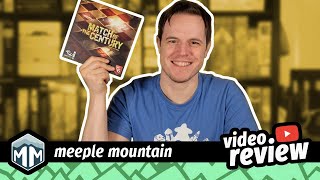
- Tight, engaging two-player interaction with meaningful decisions each round
- Strong hand-management and card-d cycling add depth without dragging play
- Unique thematic framing around a famous chess match; mood and flavor are well realized
- Short playtime (around 30 minutes) makes it accessible for quick sessions
- Clear opportunities for strategic retreats and adaptive planning
- Theme may not appeal to all players (not everybody enjoys a chess-centric or historical theme)
- As a thematic adaptation of a real match, some players may question authenticity vs. abstraction
- Event cards can create dramatic swings; some players may find the balance swings punishing
- Chess match dynamics and long-term strategic endurance expressed through a card-driven system
- A chess-themed two-player board game built around a historical World Championship match, capturing the drama and strategy of high-stakes chess
- Historical, meta-chess framing with a focus on the famous 1972 Spassky–Fischer match and the feel of high-level competition
- Caesar
- Blitzkrieg!
Mechanics (from transcript analysis)
- Advantage tracking and king-track progression — Winning rounds advances a marker toward the middle of the match track; first to reach a goal wins, adding a dramatic cadence to rounds
- Card-driven location battles — Players play cards to locations on the board; higher-valued cards win the location and adjust the advantage marker
- Endurance track for long-term strategy — Each player has an endurance track that determines card draw and pawn counts, reflecting the long arc of a chess match
- Hand Management — At the end of each round you discard and rotate the cards you keep, effectively reshaping your hand for the next round
- Rotation/rotation-driven hand management — At the end of each round you discard and rotate the cards you keep, effectively reshaping your hand for the next round
- Track Advancement — Winning rounds advances a marker toward the middle of the match track; first to reach a goal wins, adding a dramatic cadence to rounds
- Turn order and back-seat vs. driver dynamics — The game emphasizes when it is advantageous to be reactive (back seat) versus taking control (driver), consistent with chess-style decision timing
- Two-sided cards with events — Cards are white/black and carry events; losing a decision can trigger powerful events that swing the board state
Video topics + discussion points
Quotes (from this video)
- Match of the Century is a terrific two-player game
- hand management is also going to factor into your decision-making process and that's an area where I think match of the century really shines
- it's the kind of game where not only does every possible option feel like it's simultaneously good and bad for me
- I can Retreat as a viable option
- the real life match of the century ended when spassky resigned over the phone
References (from this video)
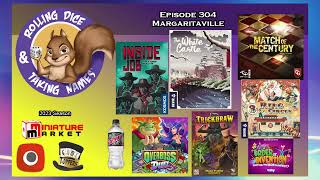
- very quick to teach and play
- highly interactive with meaningful choices each turn
- presents a chess-like duel but distilled into a fast, tense experience
- some players may crave deeper historical simulation
- arc of strategy can feel deterministic once players spot certain patterns
- pitting two generals in a strategic duel with card-driven play
- World War II era territorial battles in a condensed duel framework
- compact, tactical back-and-forth
- Watergate
Mechanics (from transcript analysis)
- area control / tug-of-war — four slots on a shared board determine who gains influence; win conditions are created by controlling multiple zones.
- Card-driven action selection — players select actions via a small hand to try to pressure the opponent and gain advantage on board.
- hand-management / endgame bonuses — cards carry text that can be used for points or special effects; timing of usage creates dramatic swings.
Video topics + discussion points
Quotes (from this video)
- Match of the Century is a clever, fast-paced two-player card duel with a historic theme.
- The lantern mechanic keeps the board interesting and ensures no two games feel the same.
- This is one of those social deduction games that leans heavily on card play and strategic tricking instead of pure accusation.
- The life deck and resource deck in One Piece add a surprisingly engaging tempo to damage and play economy.
- Watergate is a tight two-player duel with strong tension and readable decisions.
References (from this video)
- clever use of multi-use cards
- tight two-player pacing with strategic depth
- requires long-term planning and can be punishing if misplayed
- Lost Cities
Mechanics (from transcript analysis)
- Multi-Use Cards — cards can be used for scoring, powers, or other effects depending on context
- two-player alternation with strategic sacrifice — players manage risk by sometimes losing to leverage card powers
Video topics + discussion points
Quotes (from this video)
- there's this real tradeoff of how much do I want to invest in building my engine which cards do I want to hold back to actually reap the benefits from that engine
- the tempo of the game is dictated by the players
- you can use the cards as money, to unlock more actions, or to push your engine—it's all about balancing short-term gains with long-term setup
References (from this video)
- Tense, counterplay-driven two-player experience that rewards careful planning
- Strong historical hook tied to the 1972 Fischer–Spassky match
- Clear teach/playthrough flow that translates well to video through pacing and accessible explanations
- Tight balance between risk and reward in exchange-driven play
- Layered bookkeeping can be intimidating for new players
- The two-faced cards and orientation rules require careful attention and can cause initial confusion
- Longer gameplay sessions may be needed to complete an entire match
- Historical chess matchup reimagined through card-driven play and two-player interaction
- Reykjavík, Iceland, 1972 World Chess Championship
- Historical re-creation with tactical, card-driven decision making
- World Chess Championship 1972
Mechanics (from transcript analysis)
- Advantage track scoring — Points earned from each exchange move an Advantage track; reaching a threshold (six points) ends the game and determines the match winner.
- Card-driven exchanges — Each player uses a personal deck of 16 two-faced cards to place into one of four exchange columns, targeting opponent strengths and resolving exchanges to gain advantage points.
- Hand management and draw penalties — Mental endurance tracks govern how many cards you can hold and draw; reshuffles and hand depletion carry penalties that influence future rounds.
- Pawn economy — Pawns can be added to strengthen exchanges or returned to supply; pawns interact with card effects and can shift outcomes across exchanges.
- Two-color orientation and asymmetry — Cards are double-sided with white/black sides; players orient and use them according to their color, which affects strategic options and timing.
- Two-player duel structure — The game is a sequence of exchanges across rounds with alternating initiative, culminating in a race to six points.
Video topics + discussion points
Quotes (from this video)
- there's a very strong hand management aspect to the game
- this is chess 101 blunder
- the world knows I am the best
- I struggle with keeping up with my mental endurance track
- we're inching towards that six points
- there's a lot of little things to think about
- the white queen piece is going to pass to the other player
- we would begin a new exchange starting with the player who won the last exchange