/pic738119.jpg)


















Merchants & Marauders Deep Dive
What the Community Thinks About Merchants & Marauders
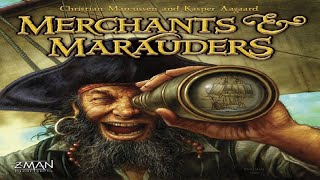
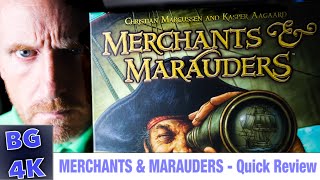
Merchants & Marauders is a game that sticks with players long after they finish playing. Reviewers describe it as one of the most memorable pirate games available, filled with moments that become legendary table stories. The game earns this reputation not from strict mechanics but from the sandbox experience it creates, where each playthrough tells a different tale of ambition, betrayal, and fortune in the Caribbean.
Core Mechanics That Define Merchants & Marauders
Action Points and Area Movement
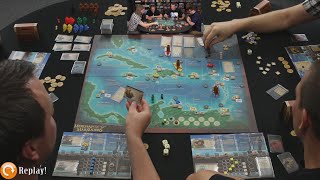
Each turn, players receive three action points to spend on movement between Caribbean regions, scouting for encounters, or docking in ports. This economy of actions forces meaningful decisions about whether to rush toward an objective or take time to upgrade your vessel. The area-based board ensures that encounters are never guaranteed, you have to position yourself strategically and hope that rival ships or merchants are sharing your space.
Port Actions and Economic Systems
Docking at a port unlocks dozens of activities: buying and selling goods, recruiting crew, upgrading your ship, claiming missions, and discovering rumors. The trading system rewards player negotiation and creates dynamic market opportunities as demand fluctuates across ports. Some players focus entirely on this economic layer, building wealth through careful commerce and later converting gold into glory through the stash mechanic.
The Merchants & Marauders Experience
The Merchant Path: Calculated Risk
Playing as a merchant offers relative freedom, you can sail safely between ports and accumulate goods without constant threats. However, pirates and unpredictable events create pressure to be tactical about which routes you take and when you travel. Reviewers note that the merchant experience rewards patience and planning, though it can feel slow compared to piracy. The tension comes from protecting your wealth from those who would steal it.
The Pirate Path: High Stakes and High Rewards
Becoming a pirate opens up merchant raids, ship-to-ship combat, and bounties. This path offers faster point generation through combat wins and treasure seizure, but success requires investment in ship upgrades early on. Reviewers emphasize that the pirate experience is fundamentally about risk-reward calculation: pushing for one more raid might net you victory, or it might leave you so damaged that you lose everything. Early game pirates who secure ship upgrades can see rapid point accumulation, while unprepared pirates face a grinding uphill battle against naval forces.
What Makes Merchants & Marauders Stand Out
Sandbox Storytelling and Player Agency
What reviewers consistently praise is the game's refusal to lock players into one strategy. You can begin as a merchant, become a pirate mid-game, retire and respawn with fresh capital, or switch between paths strategically. This flexibility means every playthrough generates unique narratives. One reviewer recalled playing by candlelight during a snowstorm, with players repeatedly dying and respawning, creating a wild back-and-forth battle that became a cherished memory.
Rich Player Interaction
The game thrives on direct conflict and negotiation. Combat feels consequential, losing a ship means losing resources, but not losing the game itself. Bounties create dynamic predator-prey relationships where multiple players hunt the same pirate. Reviewers highlight that even when not directly fighting, the threat of attack shapes every decision. The hidden stash mechanic adds a meta-game where players can secretly accumulate glory points, creating moments of surprising comebacks when a player reveals a massive gold reserve late in the game.
Potential Drawbacks
Complexity and Rule Density
Merchants & Marauders carries substantial rules overhead, particularly around combat resolution, damage tracking, and port actions. Reviewers note that players often keep reference guides nearby and spend the first playthrough clarifying specific interactions. The eight different port actions, ship upgrade systems, and nuanced combat rules mean learning the game requires genuine effort. Even experienced players occasionally need to look up edge cases.
Length and Planning Load
Games regularly extend 2.5 to 3+ hours, making scheduling difficult. Reviewers who love the game nonetheless acknowledge that finding time to play it has become their biggest barrier to enjoying it more often. The mental overhead of tracking multiple strategy paths, managing ship resources, and reacting to events means the game demands engaged attention throughout, limiting casual play and making rules teaching more critical than in lighter games.
If You Enjoy Merchants & Marauders
Reviewers suggest trying other sandbox games with high player interaction and emergent storytelling. The comparison to Catan appears in multiple discussions, though Merchants & Marauders offers far deeper systems and more direct conflict. Players who appreciate the pirate theme and episodic storytelling should explore other trading and exploration games, though reviewers consistently note that few games match the combination of economic simulation, combat tension, and sandbox freedom that defines Merchants & Marauders.
What Reviewers Are Saying
"You can play it as slow as you want and maybe that'll pay off, but if you play you can play a pirate character and be risking it and going for it and they can triple your money in two seconds. Or you can lose raids three times and get really hampered. But you can play it or like well for pirates at the beginning of the game I always like to go into a port first, buy some of the special weapon stuff, and then use those for the free actions."
— Board Game Replay
"It's such an involved game. The player interaction is so high. The reason why I'm getting rid of it is that it usually takes at least two and a half to three hours to play, sometimes more. And it's the type of game I would only play two or three times a year."
— All You Can Board
"I just love that you can tell your own story with this game and there's so many different options, everything is so thematic. It does mean that it's a complicated game and certainly the rules, especially when it comes to combat, are a bit fiddly. It's a long game but for me it's one of my favorite epic games because afterwards you just really remember the story that you told."
— Actualol