/pic8680320.png)
Millennia: Tracks of Time is a competitive civilization game for 1-4 players.
The game’s setting spans several millennia, a time span of thousands of years. Players go through eight ages, from the ancient to medieval ages, to the modern age, and finally to the near future, until the player with most fame wins. The game features more than 300 unique cards with more than 200 distinct illustrations showcasing historical inventions, buildings, and wonders. Your goal is to acquire the most advantageous cards to advance different aspects of your civilization, like research, military, population, prosperity, and culture.
Millennia utilizes a mix of drafting, engine building, and set collection mechanisms, all while introducing a unique twist with the concept of obsolescence. As time progresses, acquired technology and building cards will become obsolete, lasting only one to four ages before they must be discarded. This feature allows for the pursuit of various strategies during gameplay and, combined with the vast array of buildings and wonders, variable setup, and rich thematic elements, creates an incredibly replayable experience.
Each age has several phases during which the players:
draft new technology cards from that specific era
acquire important buildings and famous wonders
simultaneously use their technologies and buildings to increase various aspects of their civilization
compare their military strength with that of their opponents to determine the strongest force
After 8 ages, the player with most victory points is crowned the winner!



Mechanics (from transcript analysis)
Video topics + discussion points
Quotes (from this video)
- I think I can already say I would really like to try at some point just from the table presence alone.
- Honestly Cooperative games are far from my favorite type of game but I love Carcassonne so that is enough to have me quite intrigued if I have an opportunity to try this one.
References (from this video)
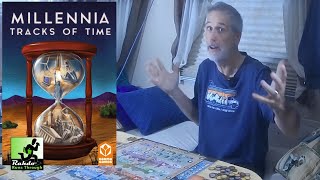
- Satisfying civilization-building design that doesn't rely on player-vs-player conflict.
- Epic sweep of history, extending into the future, which is rare for civilization games.
- Interesting military system that functions as a point transfer rather than direct conflict.
- The right amount of satisfying combo chains without being overwhelming.
- Big satisfying turns from the start, not requiring a slow build-up.
- Mechanically one of the best civilization-building games.
- Game length is significantly longer than stated (30 minutes per player); actual playtime is closer to 60 minutes per player or longer.
- The game can feel a bit too long, especially if players suffer from analysis paralysis.
- Civilization building and the advancement of human history across eight eras.
- The grand sweep of history, from the Stone Age to the actual future.
- Tapestry
- Nations
- Through the Ages
- Terraforming Mars
- Seven Wonders
Mechanics (from transcript analysis)
- Building Construction — Players can build various structures, including wonders, which provide scoring objectives or ongoing benefits.
- Card Drafting — Players select cards from available rows, which form the foundation of civilizations and provide various benefits.
- Engine Building — Developing technologies and buildings creates combos and passive benefits that improve efficiency over time.
- Era Progression — The game progresses through eight distinct eras, with new cards and opportunities becoming available in each subsequent era.
- Income generation — Players gain coins each round based on cards they've acquired or their position on the income track.
- Set Collection — Collecting specific icons or cards is necessary to unlock bonuses and advance on tracks.
- technology progression — Technologies are developed across eras, but often do not persist, requiring players to develop new ones in future ages.
- Track Advancement — Players move markers up on multiple tracks (government, influence, prosperity, etc.) to gain bonuses and points.
- variable setup — Randomly deployed books on the board and the selection of available technologies and buildings change each game.
- Worker Placement — Players send drafting tokens to various spots to perform actions like grabbing technologies or setting up for later phases.
Video topics + discussion points
Quotes (from this video)
- This is the grand sweep of history.
- I have one problem with the game. And folks, I don't think I have rarely have I seen a bigger lie than the side of this box that says the game length is 30 minutes per player.
- This is probably mechanically one of the best civilization building games I have built. It is so satisfying.
- Everything about this game works wonderfully.
References (from this video)
- Brilliant game
- Could be one of the greatest civilization building games of all time
- Gameplay is great
- Extremely long playtime is the only complaint.
- Tracks of Time / Civilization
- Civilization Building
- Nations
- Tapestry
- Through the Ages
Mechanics (from transcript analysis)
- civilization building — The game involves developing a civilization over time.
Video topics + discussion points
Quotes (from this video)
- And countryside is a freaking phenomenal.
- This is one of the best engine building games I have played this year.
- It is very likely going to make it into my top 10 games of the year. It is that good.
- My number three of the month is Rising Cultures.
- Number two is Druids of Adora.
- It's classic feld, making a comeback.
- Number one, Furnish Duel.
- A game that will not be coming out until 2026 will very likely make it into my top 10 games of 2026.
References (from this video)

- civ track building
Mechanics (from transcript analysis)
- Civ Track Building — Described as a civ track building game.
Video topics + discussion points
Quotes (from this video)
- My neurodivergent brain loves efficiency puzzles and building my strategy to to time a slingshot to build up to really big turns later in the game.
- I think that it has to be a game where the tags are used as a discount and not just as a requirement or if it is a requirement that there's an alternate cost to pay for that requirement.
- We usually plan around three years in advance. So we are already working on the games that we will release in 2028.
- The top pick here was watching, reading, or listening to a review.
- Nearly 50% of people say they're willing to wait between six and 18 months to get a game.
- 33% of people said they want to buy more games from their local game hobby or bookstores.
- Vidiculture is practically a must-own game for any gamer.
- I was really excited to bring something new to the hobby for the first time in a while.
- Maybe some people are willing to wait longer because their gaming shelves are already full.
- The most successful friendly game stores have large gaming areas that are free or low-cost.
References (from this video)
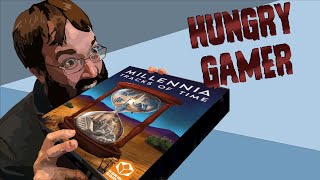
- Parts connect together really well.
- Easy to learn considering the complexity and game length.
- Everything makes sense with each other, leading to good game flow.
- Feels like players are moving at a good pace.
- Solo mode is easy to manage, play, and is fun.
- Tableau building and purchasing mechanics are clever and satisfying.
- Choices in drafting and purchasing are satisfying and create a fun, changing tableau.
- Balance of tracks is liked; going up tracks is fun with various rewards and things happening.
- Combines tracks and tableau for satisfying brain burn without analysis paralysis.
- The way cards age out is liked thematically, solving a common civ game disconnect.
- Makes for a satisfying Euro game with crunchy choices but manageable decision-making.
- Relatively quick for a civ game.
- Very satisfying with lots of crunchy choices.
- Tight and strong game with a good style for civ game fans who like drafting and tableau building.
- Not hugely thematic; it's a mechanics-forward game.
- A little bit longer than you think it's going to be.
- The game has a single arc; not a ton of discovery or replayability in the traditional sense.
- Has a learning curve, requiring a few plays to get better and understand fully.
- civilization game where you are building up your empire trying to get points
Mechanics (from transcript analysis)
- Card Aging — Technologies and cards have an expiration, going away after a few rounds, which is thematically tied to progression and prevents cards from being permanent advantages.
- Drafting — Players draft different technologies in each era. The choices in drafting are described as satisfying and lead to a constantly changing tableau.
- Multiplayer solitaire — The game is primarily 'multiplayer solitaire,' with limited direct interaction, allowing players to focus on their own engine building and strategy.
- recipe fulfillment — Described as a 'recipe fulfillment style game' where players aim to meet certain requirements, likely related to advancing on tracks or completing objectives.
- Tableau Building — Players build a tableau of technologies and buildings. The way cards are purchased and integrated into the tableau is highlighted as clever and satisfying.
- Track Advancement — Players advance on various tracks (e.g., population, culture, war) which provide different benefits, points, and unlock abilities. The mechanics of these tracks are central to gameplay.
Video topics + discussion points
Quotes (from this video)
- Millennia: Tracks of Time from Karma Games and designed by Juma Aluju
- it's a civilization game where you are building up your empire trying to get points.
- at its core, this is a tableau building recipe fulfillment style game.
- all of the parts that connect together really well.
- the solo is very easy to manage and easy to play and it is fun because this is a game that is mostly multiplayer solitire.
- I really like the way the tableau building works both with the drafting and then also the purchasing.
- It's really really clever the way that it works out.
- I like the balance of the tracks.
- when you combine that with the way the Tableau works and it's constantly changing, it makes for a nice bit of brain burn.
- thematically, I really like that because my biggest problem with civilization games is at the end of the game, I can be doing space travel, I can have a teleporter, and I never got beyond coal powered energy, and there's always that disconnect to me.
- this one doesn't do that.
- It's relatively quick. It's very, very satisfying.
- this is a Euro game, so you're going to have the same experience every time.
- It's not an analysis paralysis inducing brain burn for the most part because you just don't have a ton of choices as you go through.
References (from this video)
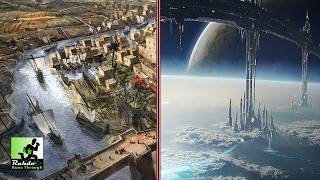
- Brilliant game, cut from the same cloth as Through the Ages or Nations.
- Big long epic beast of an experience.
- Cards have built-in timers, creating pressure from the passage of time.
- Progression lovers dream with multiple tracks to climb.
- Deserves more attention.
- Made the speaker's top 10 last year.
- Progression through eras
- Civilization
- Through the Ages
- Nations
Mechanics (from transcript analysis)
- Card play with timers — New cards have built-in timers, limiting their duration to a few rounds.
- Civ-building — Abstracts away the board but maintains a civilization-building theme.
- Track progression — Features seven or eight different tracks players can compete on.
Video topics + discussion points
Quotes (from this video)
- I just love that resource progression.
- It the resource progression feels to me like that you start with a wheel then you get cards then you get uh spaceships right?
- The game is just way too heavy. It is insane.
- It's like a rock paper scissors. I'm building my ship this way to count to your ship. Then you should build your ship another way.
- Yeah. Because they are so heavy, right? They do take such an investment you want to like uh go through, but people were saying that that Colution was was awesome.
- I think the moral of this stream is we can call anything a Civ game if you try hard enough.
References (from this video)
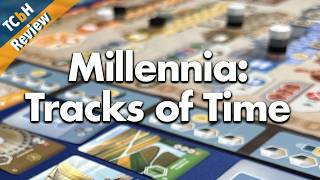
- Uncompromising in maintaining big Civ game scope while feeling mechanically condensed.
- Approachable way to deliver on its goals compared to most Civ games.
- Satisfying puzzle to make work.
- Great at conveying interactions in a sensible way.
- Solo mode does a good job mimicking multiplayer interactivity with almost no overhead.
- Clinical feeling.
- Loses some personality in translation.
- Thematic concepts boiled down to abstract bars to advance.
- civilization building
- Clans of Caledonia
Mechanics (from transcript analysis)
- Card Drafting — Players draft cards granting various tags that persist for a period of time, encouraging divergent play. The drafting phase is described like rushing to grab ingredients.
- Set Collection — Players accrue tags and advancements which are used for scoring or other benefits.
- Track Advancement — Players move up various tracks, largely for points or accumulating stuff, which in turn leads to points or more stuff.
- variable setup — Randomized pairs of tags are set up each era, and several bonuses on tracks are randomly set up each game for replayability.
- Worker Placement — The drafting is handled by a worker placement-like mechanic, claiming priority to pick a card. Dice can also be placed on one-off bonuses.
Video topics + discussion points
Quotes (from this video)
- Often barely more than a colorful spreadsheet protracted over a timeline, these games tend to be dense, crunchy, and sprawling.
- The drafting phase is like where you're rushing to grab all of your ingredients, which is heavily informed by what's left over by other players. And then afterwards, the action phase is where it's up to you to whip it into an actual meal.
- this game makes almost zero apologies for being just a collection of abstract tags and spreadsheets, but it does so in such a transparent way that the system feels clear and clean and much more intuitive than crunchy.
- if there's any major criticism that I have for this game, it's how clinical it ends up feeling.
- I have a mad amount of respect for how it's uncompromising in maintaining that big Civ game scope while still feeling mechanically condensed and being able to do that in a approachable way, even if it loses some personality in the translation.
- This is as much a puzzle as it is a game, but it is a very satisfying puzzle to make work.
References (from this video)
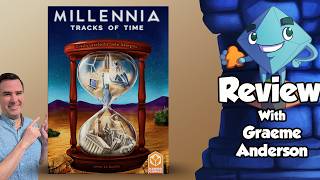
- Extremely satisfying gameplay loop of getting cards to work in your tableau to move up tracks.
- The drafting phase has tension and a good balance.
- The game has an excellent arc and a good eb and flow of your tableau.
- The idea of obsolescence is interesting and forces the tableau to evolve.
- The highs of the game are very enjoyable.
- Good balance between functional and aesthetic presentation.
- Not overly complicated in what you do each round.
- Good balance between strategic and tactical gameplay.
- The fluctuating power of your civilization during the game is a nice feel.
- Killer action phases where bonuses and actions fall into place are a true highlight.
- No single way to win, need to spread out and do a few things well.
- All tracks are useful.
- Research abilities change each game, making strategy a fun puzzle.
- Works at all player counts, though better at lower counts.
- The game just feels too long overall.
- The eight eras can make the game start to feel a little draggy.
- The gameplay takes the reviewer out of the theme, feeling like playing a spreadsheet.
- No real player interaction except for jostling for cards; much of the game is solitaire.
- Diplomacy cards can feel like a shot in the dark, often only yielding 3 VP at the end.
- Theme is loose and not deeply integrated into the core mechanics.
- Cards are mostly generic (e.g., 'library', 'computer') except for wonders.
- Civilization building and development over thousands of years
- Several millennia with players building up civilizations through many eras
Mechanics (from transcript analysis)
- action selection — Players take turns placing one of the markers on the draft area or in the special action area.
- Area Majority — During the war phase, the lowest player or players move their marker back to zero. And for each step they move back, all other players move back that many steps as well.
- Card activation — Here you're going to be activating your cards, that is tapping them to spend the icons or use their abilities to move up tracks, do research, or get a diplomacy card.
- Card Drafting — Players take turns placing one of the markers on the draft area or in the special action area. If you place it on a draft area, you take one of the tech cards from that row.
- Drafting — The game has a bit of drafting, a bit of tableau building, set collection, and engine building, but usually an aid of you going up those seven available tracks.
- End game scoring — After eight errors, players get points for where their markers are on the prosperity, population, and culture track.
- Engine Building — The game has a bit of drafting, a bit of tableau building, set collection, and engine building, but usually an aid of you going up those seven available tracks.
- Income — During the income phase, you receive income from any hand icons. They will be in the draft marker areas and where your marker is on the trade track.
- Obsolescence — The game also has the idea of obsolescence to go with the civilization theme that many cards will only last a few rounds then they're discarded so your tableau will be fluctuating during the game.
- Purchase Buildings — Players take turns purchasing buildings and wonders for the cost listed in the top left.
- Resource Management — These are good ways to use up leftover resources.
- Set Collection — If any of the icons on your tech cards match the pairs of prosperity cards, you move up one space on the prosperity track.
- Tableau Building — The game has a bit of drafting, a bit of tableau building, set collection, and engine building, but usually an aid of you going up those seven available tracks.
- Track Advancement — There are seven tracks for you to be moving up, which will unlock one time or ongoing bonuses, and ultimately lead to scoring a large portion of your victory points at the end of the game. So yeah, this game is mostly about tracks.
Video topics + discussion points
Quotes (from this video)
- So yeah, this game is mostly about tracks.
- The game also has the idea of obsolescence to go with the civilization theme that many cards will only last a few rounds then they're discarded so your tableau will be fluctuating during the game.
- The gameplay loop is either going to appeal to you or it's not.
- For me, it really does. It's extremely satisfying during the later stage of the game just to be tapping cards to move up a track to get a bonus which moves you up another track which opens up even more scoring opportunities.
- The biggest negative I have for this game is as fun as the individual action and phases are, the game just feels too long overall.
- Almost to the point where it feels like I'm playing a spreadsheet, a really really fun spreadsheet that I don't mind, but it does make it tougher to sell to say, 'Hey, do you want to play a really fun spreadsheet game?'
- For me, it just misses out on the seal of excellence because of the feeling that it needed to be shorter somehow, and I'm not exactly sure where, but I enjoyed each individual era, but overall, it was just a bit too long.
References (from this video)
- Multiple interacting mechanics create depth
- Timing and obsolescence add tension and strategic planning
- Can be complex and heavy for some players
- time management and chronology-based card interactions
- Time-based engine-building world
- tactical timing with evolving cards
Mechanics (from transcript analysis)
- Card Drafting — Draft cards to shape the engine and timing of plays.
- card obsolescence — Card obsolescence requires careful timing to maximize value.
- Engine Building — Players build an engine to generate resources and points.
- Set Collection — Players collect sets of cards/resources for scoring.
Video topics + discussion points
Quotes (from this video)
- Here's the expansion, Industria.
- I'm super excited to tear into Industria.
- This expansion adds train modules and new mechanics that change how the game plays.
- reminded me a little bit when I saw those guards of Burgle Bros, which is one of my favorite co-op games
- Millennia Tracks of Time combines engine building, set collection, card drafting
- timing is very important in this one
References (from this video)
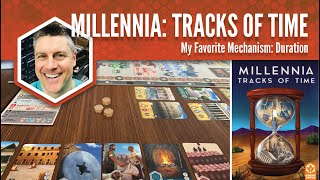
- Card drafting offers multiple interdependent choices combining income, icon use, and duration.
- Two ways to advance on tracks (tokens vs icons) add tactical depth.
- Prosperity goals provide a focused objective amid many possible actions.
- The ongoing clean-up aspect feels satisfying and tangible in play.
- Two-player playability and potential for strategic depth.
- No major cons discussed in the video; potential complexity for new players not addressed.
- track-based advancement and resource/growth planning
- civilization-building on track progression
- strategic, abstract civilization progress
- Tapestry
Mechanics (from transcript analysis)
- action marker placement — place tokens to claim cards and activate card-related benefits.
- Card Drafting — players draft and claim cards by placing action markers; cards have income values based on their row and perform varying one-time or ongoing effects.
- card longevity / duration — cards show how many rounds they'll remain in play, affecting value of taking them.
- deck/card cleanup — as play progresses, cards are moved out of the active area and some are removed from play, enabling physical cleanup.
- income row dynamic — cards come from different rows with different income values (2, 3, 4, 5) influencing choice.
- prosperity goals — each round has prosperity opportunities; collecting certain icon pairs advances the prosperity track for points.
- Track Advancement — cards' icons and token placements advance players on tracks, enabling various benefits.
- track advancement via icons and tokens — cards' icons and token placements advance players on tracks, enabling various benefits.
Video topics + discussion points
Quotes (from this video)
- This is my favorite mechanism if I had to choose a number one mechanism in the game.
- I really had fun my first play.
- If you can think of any other games that do that or if you have a different favorite mechanism in Millennia, let me know about it in the comments below.
- these numbers mean how long that card will remain in play.