/pic7333215.png)






























Mind Up! Deep Dive
What the Community Thinks About Mind Up!
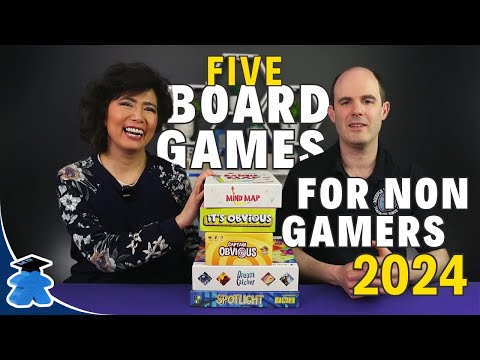
Mind Up! has earned genuine enthusiasm from card game enthusiasts who appreciate how elegantly it fuses familiar mechanics into something fresh. Reviewers describe it as a confident, snappy design that punches well above the weight of its small box. The game draws favorable comparisons to two beloved classics, Six Nimmt! and Mandala, and the consensus is that the combination of those two systems works remarkably well. Chairman of the Board, who plays an extensive range of card games, called it one of his top highlights of the year among pure card games, and later ranked it first among five new games in a head-to-head evaluation. That kind of repeated, enthusiastic endorsement from a reviewer who habitually compares games to a wide field speaks volumes about what Mind Up! delivers.
The game lands squarely in the category of accessible, fast-playing card games that still offer genuine decisions. It is easy enough to teach in minutes yet carries enough tactical depth to reward careful play. Reviewers emphasize that it fits a sweet spot: games that feel classic, move quickly, and leave players wanting another round.
Core Mechanics That Define Mind Up!
Simultaneous Blind Bidding
The engine that drives Mind Up! is simultaneous card selection. Every player reveals a card at the same time, and the relative values of those cards determine which cards from the central scoring tableau each player collects. The player who plays the lowest card collects the lowest-valued card available, the highest bid collects the highest, and every other player falls in between. This mechanic creates immediate tension at the table because no one knows what their opponents are about to reveal. Reviewers highlight this as the source of the game's most interesting decisions: when do you spend a high card to guarantee a desirable collection, and when do you play low and accept whatever remains at the bottom of the tableau?
The link to Six Nimmt! is direct here. Six Nimmt! fans will recognize the pressure of committing to a number before seeing what anyone else does, the uncertainty of whether your bid will land where you intended, and the consequential outcomes that follow from a single card reveal. Mind Up! takes that familiar tension and channels it toward a different scoring goal.
Mandala-Style Collection Order Scoring
What separates Mind Up! from a straightforward bidding game is its scoring layer, drawn from Mandala. The cards in the tableau are color-coded, and the order in which a player collects colors across the game is what determines how much each color set is worth. A point multiplier ranging from one to five is assigned to each color collection slot, and that multiplier is reshuffled each round. This means the first color a player commits to collecting could be worth five points per card, making every subsequent card of that color extremely valuable. Alternatively, it might be worth only one, making the decision to chase it a costly mistake.
Reviewers describe this scoring system as genuinely transformative for the genre. The collection order mechanic forces players to think several turns ahead, committing to a color direction and then managing whether to push further into it or pivot. Chairman of the Board noted that the Mandala scoring "completely throws games like this on its head" because it creates a constant zigzag calculus: have you gone far enough in a color to justify continuing, or should you abandon it and chase a higher-multiplier opportunity before someone else does?
The Mind Up! Experience
Flow and Pacing
One of the qualities reviewers return to most often is how smoothly Mind Up! moves. The game runs in approximately twenty minutes, and the round structure is designed to keep momentum high. A distinctive rule accelerates this: the cards a player collects in one round become their hand for the following round. This means there is no separate draw phase and no downtime between rounds. Players go directly from scoring into the next set of decisions with cards they have just earned. Reviewers call this a particularly elegant touch because it creates continuity across rounds while also making the collection decisions of one round directly relevant to the tactical options available in the next.
The simultaneous reveal eliminates the long deliberation that can slow turn-based bidding games. Everyone acts at once, outcomes resolve quickly, and the next round begins almost immediately. This pacing makes Mind Up! easy to fit into short windows and encourages back-to-back plays.
Strategic Depth Within a Simple Shell
Mind Up! hides more strategic texture than its simple rule set suggests. Because collection order determines scoring, players are not simply trying to collect the most cards or the highest cards. They are trying to construct a specific sequence of color acquisitions that maximizes their multipliers, while simultaneously preventing opponents from securing the multipliers that matter to those opponents. Reviewers note that the game rewards forward planning: thinking about which card to play now in order to guarantee collecting a specific card later, because that card will be the right color at the right moment in your collection sequence.
The result is a game where players who appear to be doing similar things are actually pursuing very different scoring trajectories. The decisions feel meaningful, the tension is real, and the outcomes rarely feel arbitrary. Chairman of the Board described the satisfaction of lining up turns in advance, identifying the card he wanted in the following round and engineering the bid to secure it.
What Makes Mind Up! Stand Out
A Successful Hybrid Design
Board game reviewers often approach hybrid designs with skepticism. Combining mechanics from two existing games risks producing something that feels derivative or muddled. Mind Up! earns praise precisely because it avoids that trap. The Six Nimmt! bidding system and the Mandala collection-order scoring are not simply glued together; they reinforce each other. The bidding system creates the raw tension and uncertainty of not knowing what you will collect, while the scoring system gives you a concrete strategic reason to care deeply about each collection. Chairman of the Board called it "a Frankenstein's monster" but used that phrase admiringly, noting that despite the borrowed parts, the resulting game has a coherent identity and works extremely well.
This synthesis gives Mind Up! an audience that extends beyond fans of either source game. Players who find Mandala's scoring system compelling but want more player interaction will find it here. Players who enjoy Six Nimmt! but want a stronger strategic thread across the game will find that too.
Portability and Accessibility
Mind Up! is a small-box card game that fits easily into a bag or pocket. The rule set is thin enough to teach in a few minutes, and the core concept of simultaneous bidding is intuitive to anyone who has played similar games. Reviewers position it as the kind of game that holds its own alongside established classics in the genre while remaining approachable for players who are new to card games with scoring systems of this type. The ease of setup and short play time make it a practical choice for gaming groups that want something with real decisions but without a lengthy commitment.
Potential Drawbacks
Dependent on Engagement With the Scoring System
Mind Up! rewards players who engage seriously with the collection-order scoring and think deliberately about their color trajectories. Players who approach it casually, bidding on instinct without planning across rounds, may find that the game ends before they realize how their early choices shaped their final score. Reviewers who discuss the Mandala-style scoring are uniformly enthusiastic, but that enthusiasm is rooted in having understood and internalized the mechanic. Groups that struggle to engage with multi-round scoring systems may underestimate the game on early plays.
Somewhat Familiar Territory
Mind Up! is openly built from established templates. Reviewers acknowledge this honestly. The simultaneous bidding will feel recognizable to Six Nimmt! players, and the collection-order scoring will feel recognizable to Mandala players. For collectors who already own and love both of those games, Mind Up! may feel like variation rather than revelation. The argument in its favor is that it synthesizes those systems more neatly than playing either separately, and does so in a shorter play time, but players who are fully satisfied by their existing collection may not feel an urgent need to add it.
If You Enjoy Mind Up!
If Mind Up! connects with you, the games reviewers most naturally compare it to are the obvious next steps. Six Nimmt! is the most direct comparison on the bidding side, offering simultaneous card play and the collective tension of not knowing where your card will land relative to the field. Mandala shares the collection-order scoring philosophy and rewards players who think carefully about the sequence in which they accumulate sets. Power Up appears alongside Mind Up! in community discussions as another compact card game with meaningful decisions. Magic: The Gathering comes up in the broader conversations of reviewers who cover card games across the spectrum; while Mind Up! is far lighter and plays nothing like Magic mechanically, it satisfies a similar appetite for card-driven tactical decisions in a fraction of the time and without the deck-building overhead.
What Reviewers Are Saying
"I played some more mind up. This is a lovely little card game that's a hybrid between a game like six n and a game like mandala. It has the mandala style scoring where the order in which you collect the cards is going to determine the points they're worth. And that hybrid between those two games works extremely well, plays very quickly and some cool decisions."
— Chairman of the Board
"I really love that mandala scoring. I think it's one of my favorite scoring mechanisms. It completely throws games like this on its head because it really does make you zigzag at the right time. So have you gone too far, but can you push a little bit further and maybe venture into this higher points scoring again, or do you want to completely turn your vision and go for those high-scoring ones."
— Chairman of the Board
"All in all this is such a cool game. I was really impressed with it, more so than I was anticipating, actually, even though it is just borrowed mechanisms from different games. But again, that six nimmt simultaneous selection with the mandala scoring just comes together so so well. I love the game that you can play in 20 minutes or so. All in all, I'm exactly my style of card game."
— Chairman of the Board