How expansions can enhance or undermine a game ft. King of Tokyo's Power Up & Mind Bug
Games in This Video
2 games are featured in this video — they unlock as you watch.

Transcript
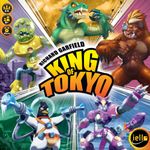
I love King of Tokyo, and I know that's not exactly the coolest take to have in the board game media space these days because there's been a lot of iterations, and hardcore gamers might be like, "Yo, I think King of New York actually elevates it to the more nuanced level that the system deserves." But, I don't really care. I mean, yeah, I've played King of New York, I played King of Tokyo Duel, I played King of Monster Island, and I seem to be the only person in board game media space that actually even likes that game. But, my heart still remains with the OG King of Tokyo. Here is my old-school edition of this game. Now, the reason why I'm bringing this up, because it's not particularly timely to be talking about King of Tokyo itself, is that it's expansion month here on the Cardboard Herald, and we're talking about expansions and kind of studying the goods, bads, and uglies of this world of expandable board games. And when I think of expansions and kind of the proliferation of them, one of the important milestones that I think about is the release of King of Tokyo Power Up. I don't have the box. I get rid of expansion boxes. Like, I just collapse them, and I think you should, too. But, Power Up was one of the originally celebrated modern iterations of board game expansions. This right here was viewed as one of those expansions that dramatically changes a game for the
better such that it is kind of viewed as a mandatory inclusion. If you're going to get King of Tokyo, you might as well just go out there and get Power Up. Now, what makes it so potent? Well, yeah, you got Pandakai in here, but beyond just having Pandakai as one of the best characters that you can be in this, introduced the individual powers that everyone could have, the evolutions, where you could upgrade what your character was doing by using three hearts because in the base game, hearts only mattered if you were outside of Tokyo, and if you were under full hit points. So, hearts would be something that you'd be like, "Ah, this is kind of a wasted roll." But, by introducing evolutions, where you could gain an important either ongoing or one-time use effect that is tailored specific to your character, ooh, all of a sudden, man, let's talk about getting them hearts. It gave you something to pull against conventional strategy, risk it for the biscuit, maybe something that is going to amount to nothing if you are at full hit points or are in Tokyo, but nonetheless, the pull, the luster of those evolution cards was something that motivated you to think about your turn in different ways, which is what an expansion can really do. It elevates the thematic elements of the game by giving each character a sort of identity, a theme, a way that their powers
um distinguish themselves, but also motivates you to experiment with conventional strategies and see if you can kind of push in different ways, take different risks, do interesting things, and it also eliminates the kind of wet fart that a heart would be when you didn't need a heart. Sometimes you re-roll a bunch of dice and you just ended up with a bunch of hearts. Hey, now you got a consolation prize. Hearts suddenly are effing awesome. Okay. Now, this wasn't intended on being a review for Power Up, though it kind of is, which is still available in a new edition because King of Tokyo has a new edition because, hey man, we can't have Cyber Bunny out here. There are lawsuits to be had if you had Cyber Bunny. But, if you have the new edition of King of Tokyo, well, yeah, you got Cyber Kitty, and there's a new version of Power Up, which I don't have, but I did need to have this version because I guess it was needed for compatibility checks on the new expansion that just came out, Mind Bug. So, again, back to expansion month. Let's talk about expansion month with the Cardboard Herald. I thought it would be fun to revisit one of the games that had one of the most celebrated expansions that just did a general uplift, and take a look at what the brand new expansion that just released that I didn't even know about
until I was doing some research for expansion month. I was like, "Whoa, King of Tokyo's got some new stuff going on." Let's see what's up with Mind Bug. Now, if, like me, you were to take a look at this, and you just saw that there were mind bugs who were invading, and you had no context or some other game that's titled Mind Bug, you might think, "Is this like a cooperative expansion? Like, there's mind bugs, and suddenly you're going to be doing a bunch of the stuff that was featured in King of Monster Island?" That'd be pretty cool. No, it's absolutely not that. This is a crossover with another unrelated game, Mind Bug, but you don't use any of the components from Mind Bug. I guess that this brings some of the mechanics from Mind Bug into King of Tokyo. It's an extremely slight expansion. Let's get into what's in here. So, right out the gate, you got three new characters and with them evolution cards. So, that way, if you have the Power Up expansion and can be playing the Power Up expansion with the other characters, you have those all available to you. So, there is already this conceit of, yeah, you're you're probably going to already have Power Up if you're playing with this thing. But, the main feature is there are a lot of new cards that are integrated into the deck that now are going to interact with the mechanics of the Mind Bug tokens. At the beginning of the game, everyone is given a Mind Bug token, and during your turn, you roll your dice, you check what you want, and then you roll your dice again, and then you check what you want,
and then you make your decision. Do you stop there? Do you want to roll one more time? But, whenever you say, "All right, I'm done," anyone can say, "I am mind bugging you." Discard their Mind Bug token, and then take your dice and use it as if they had just rolled them, and take a turn, after which then the dice are handed back to you, and you start your turn all over again. It's terrible. Not only is there this disruption on your turn, but it can persist because everyone at the table has the opportunity to mind bug your turn after a roll. The first person who declares it gets to do it, but then they hand you back to your dice, and then you roll again, and then if you're satisfied with your roll, you're like, "I'm going to take my turn," and someone else can be like, "Haha, I'm mind bug you."
You're like, "I really liked that roll." You could argue that there is a strategic element to now trying to make sure that you don't get an advantageous roll that you don't want someone to discard their valuable Mind Bug token, but it then has you trying to work against the primary mechanic, which is the kind of Yahtzee-fication of the dice that makes King of Tokyo so fun in the first place. You want to go for these really powerful explosive turns, and now you're afraid of that happening. It sucks to fight against the instinct of what makes the game fun in the first place.
I don't like this Mind Bug business. That was a good roll for me. It also disrupts the flow of play. King of Tokyo is something that should be easy to pick up, easy to play, and something that is intuitive for an all-ages audience, and suddenly you're taking a turn, and then the player across the table from you mind bugs, they end up taking your dice, they do some things with your dice, and then it goes back to your turn, and you got to remember, all right, now I'm taking my turn. Now, whose turn is it next? And you're leapfrogging about, and it ruins the overall tempo and pace of the game. It also just ruins the balance. The economy of actions is not built in such a way that someone could take double turns, could hijack turns. It just takes so much away from the simplicity and elegance of this game, and makes it into a zanier, crazier thing, which is what I think King of Tokyo strived to move against.
It was like, "Hey, you love dice chucking, you love Yahtzee-like games, you love big monsters crushing things. We can have all that, but actually have it in a smart structure that is fun, that's engaging, that's inviting to all kinds of different audiences." And now, it's undermining all the best elements that this game has to offer. And yeah, there there's more. There are consumable cards that are integrated here that uh you, instead of just having as keep or discard cards, are cards that you get and then can later, as a one-time effect, discard the card. So, they're consumable in that way. And the Mind Bug cards have a different back, so you can either just shuffle them in with the deck, which is crazy to think that a game designed by Richard Garfield, the creator of Magic, would be fine with you just shuffling in a deck with different backed cards, and that's just fine, so you can see what's on deck, but, you know, whatever, it's a communal deck, so I guess it doesn't matter that much. But, then you could also just play with the Mind Bug focus cards, and it's just bad. It is everything that the original Power Up is not, which sucks to say because I love King of Tokyo. Like, don't get me wrong.
This is not me ragging on King of Tokyo. I absolutely love and recommend this game. I think it's just fascinating to compare what I think is one of the best expansions ever made with one of the worst expansions that I've played for a game, and they're the same game. It's kind of like the Carcassonne Catapult problem all over again. And that's a shame. That's one of the bad sides of expansions, and this is easily the worst expansion that I've checked out during expansion month, which I only checked out because King of Tokyo had one of the best expansions of all time. So, that's just uh tiptoed down the expansion avenue when it comes to King of Tokyo, looking at best to worst, long ago history to where we are now, comparing some different elements here, and talking about different ways so that an expansion can change elements of a game. And that's what this month is all about. If you enjoyed this, and you like more kind of discussion-oriented type of reviews, then let us know. I'd love to hear from you, and also check out some of the other expansion month coverage that we have on the channel. We have interviews, reviews, recommendations, top 10s, all that kind of stuff where it's focused on expansions, the goods, the bads, the uglies, and I'm sure
you're going to get something out of it. That is our video, but let me know, is there a game that has one of your favorite expansions and one of your least favorite expansions of all time? Put it in the comments, and as always, thanks for watching, thanks for supporting, thanks for doing all the stuff that helps us grow. The likes, subscribes, comments, checking out our Patreon, and of course, sharing and links around the interwebs all goes tremendous distance to help us because no money exchanges hands from publishers to us so that way we can
feel free to say some of the things that we need to say, including talking hey about King of Tokyo and this Mindbug expansion. But, above all else, thanks for being such a great community. You know that I've been Jack for The Cardboard Herald.