





Mini Express Deep Dive
What the Community Thinks About Mini Express
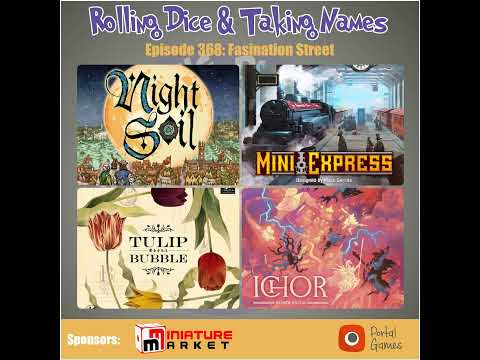
Mini Express has a dedicated following among board game reviewers. Mark Garrett designed the 2021 title as a sequel to Mini Rails, and More Ideas Game Design published it. Train game enthusiasts have placed it on year-end lists, and several channels describe it as a stock-holding train game that teaches quickly. The most common praise focuses on how much strategy the game packs into a short session.
Core Mechanics That Define Mini Express
Build Track or Take a Share
Each turn offers two choices. Building track connects a company's supply of track into a city, which raises that company's track marker and gives the player influence in the resource colors that city demands. Taking a share spends influence to buy a stock certificate. The price depends on how many trains remain in that company's reservoir, so a nearly empty company can be bought cheaply. Influence is the only currency in the game, and a player with no influence in a color receives nothing for stock in that color.
Scoring the Stocks
At game end, each company is scored by its track length. The player with the most influence in a company earns the top value per share, the runner-up earns the middle value, and everyone else receives the lowest value. Because laying track raises the value of a company's stock, the same action can help a player's holdings while also making the next company's shares cheaper for an opponent. The game ends when two stocks are depleted or a company runs out of trains, and the final score is tallied one company at a time.
The Mini Express Experience
The Two-Player Advanced Mode
Reviewers consistently point to the two-player advanced variant as the highlight. Each player takes two actions per turn, and those actions must be made in different companies. The game cannot end on a second action, which prevents a player from closing the game while holding an advantage the opponent cannot answer. The result is a tight duel in which every move reshapes the options available to the other player.
Tension Across the Board
Because every placement trades one benefit for another, decisions rarely feel obvious. Building into a city can raise influence in a color a player needs, but it may also lower the value of a company's shares. Reviewers note that end-game scoring rewards holding stock across several companies rather than investing heavily in one, and that a player who overcommits can lose ground quickly. Some players give up first place in a company to afford a second share, which can pay off in the final tally. Late turns often hinge on whether a final purchase is still available, since a depleted stock closes that market for good.
What Makes Mini Express Stand Out
Map Variety
The base game uses a US map, and expansion maps change the feel of play. On the UK map, London hosts a white underground train, and ferries offer alternate routes that narrow the board. Reviewers observe that companies start in different corners on this layout, so the opening feels more separated before the networks eventually meet. The European map adds harbours, a separate module in which a company's first purchase on a demand city can place a train in a harbour and create a new starting point. A reviewer speculated that this could let a player break into a distant region and compete there.
Setup and Accessibility
Channels highlight how quickly the game can be taught. Build track or take a share covers nearly all of the rules, and one reviewer said the rules could be explained in under five minutes. The small box and short setup make the title easy to bring to a table with newer players. Reviewers also note that the game plays at a comfortable length, usually around an hour, which keeps the decisions sharp without dragging.
Potential Drawbacks
Placement Can Help the Next Player
Early prototype feedback exposed an ordering problem. Because laying track makes the next company's shares cheaper, a weak placement by one player can hand a benefit to the player who follows. Reviewers who tested the prototype said this could make the game feel unfair to less experienced players. The early bot also failed to respond well to turn order and sometimes made weaker moves than a human would, which weakened its usefulness as a solo or two-player opponent.
A Learning Curve With a Mental Math Load
The strongest two-player experience depends on the advanced mode rather than the bot mode, and players who only learn the simpler play may miss the more rewarding version of the game. The advanced rules add a layer of planning that can slow down a new group, since players constantly calculate share counts, track markers, and possible end-game triggers. That load is part of the appeal for planners, but it can slow down groups who prefer quicker, more intuitive decisions, and the end-game can shift quickly enough that careful counting is necessary in the final turns.
If You Enjoy Mini Express
Players who like the stock-holding decisions in Mini Express may also enjoy the original Mini Rails, which one reviewer calls a favorite. Spikes: The Last Spike offers a simpler, older route-building experience, and the Capstone Rail series covers several different takes on train games. Ticket to Ride remains the common reference point for route building, and one channel said it would rather play Mini Express than Ticket to Ride for a game of similar length.
What Reviewers Are Saying
"This is so tight. Absolutely insanely tight."
— Meeple University
"I just really enjoy the back and forward of trying to win on these four tracks."
— Meeple University
"It's a 60-minute game. I would rather play this than Ticket to Ride."
— Rolling Dice & Taking Names