/pic8648824.jpg)
Mutabo resembles the creative activity that became known on BGG as Eat Poop You Cat : One player writes a sentence, then passes the paper to the left, where the next player will draw what they read, then hide the original sentence and pass the paper to the left, where another player will write what they see, etc.
The main difference is that in Mutabo, there are cards with which players create the first situation that shall be drawn. One set of cards contains the beginnings of sentences, the second one the end of sentences. Each player uses two of these cards to create a first sentence to start the game. A game round ends when the papers are full. Scoring is of lesser importance, but can be done by voting for the funniest images/sentences that appear.
There is a standalone expansion : Mini-Mutabo
A similiar game is Telestrations .

Mutagen - Kickstarter Tutorial
- theme is engaging; personal project and design ownership
- some rules felt inelegant and tacked on; requires refinement
- dice-stacking area majority
- bacteria in a Petri dish
Mechanics (from transcript analysis)
- adjacency stacking rule — you can stack on top of an opponent's die only if adjacent to a certain number of other dice
- dice-stacking area majority — largest contiguous set of your dice in the middle mass of stacked dice
- rule exploration and refinement — playtest with open-ended rules that can be refined toward an elegant solution
Video topics + discussion points
Quotes (from this video)
- the rules were really not good there were a couple questions we had where we like passed the rule book around twice trying to figure out some really basic questions
- it's a chaotic game I felt zero control while I was playing it
- I would teach and play it again
References (from this video)

Mechanics (from transcript analysis)
- Dice Rolling — dice rolling and stacking; you roll two dice per turn and pick one
Video topics + discussion points
Quotes (from this video)
- I read rules once and then I read the rules again to catch all the mistakes I made.
- I breathe rules constantly like I probably get 5 to 10 emails a week of people asking me to cover their games on YouTube.
- Corkle is a brilliant two-player game and it's really really good in the iOS adaptation.
- I’m my own boss now … the success of this drive is going to help dictate how many conventions I go to.
- I design a game called Mutation, a dice rolling and stacking game.
References (from this video)
Mechanics (from transcript analysis)
Video topics + discussion points
Quotes (from this video)
- the solo rules for Darwin's Journey were a mountain among themselves
- my wallet thanks you for Darwin's Journey and Ostia
- Nana toridori
- Hachi Train is a game that came out last year that I really liked
- Tigers and Euphrates is very dry except the river part of the title
- Newton has no theme
- Aura at Labora you are just going through the motions
References (from this video)

- Visually striking with gigantic dice that dominate the table presence
- Tactile and satisfying production and assembly process
- Strong personal achievement narrative; clear design intent
- Niche appeal; may not resonate with broader audiences
- Labor-intensive production and logistics (43 copies, custom dice)
- Requires a dedicated play space and a large dice pool
- Competitive area control with shared incentives and dice-driven interaction
- Dice-driven stacking and territory control on a shared table surface
- Abstract, artisanal/handmade presentation
Mechanics (from transcript analysis)
- dice pooling / color-based resource management — Different colored dice act as resources that drive territorial influence and strategic choices.
- dice stacking / tower-building — Players stack large dice to claim or contest areas on the board.
- shared/incentive-based control — Colors are controlled by players in shared spaces; control is contested with incentives tied to others' actions.
Video topics + discussion points
Quotes (from this video)
- I am incredibly excited to have this game done
- this is a game all about stacking the dice on top of each other
- I think it looks amazing on the table with these gigantic dice
- it's a ton of work, but it feels like a work of art
- I bought 3200 dice, 50 boxes, and I printed the rules—it's been a real labor of love
References (from this video)
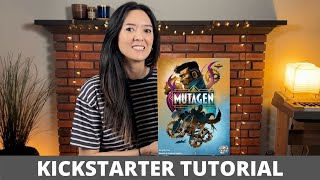
- Rich thematic integration with biopunk setting and mutation mechanics
- Deep customization through mutation drafting and worker-specific actions
- Multiple viable strategies via element tracks, trees, and crew cards
- Clear end-game tension with progressive scoring across rounds
- Rule complexity and interlocking systems may intimidate new players
- Managing mutations, storage, and tracks requires careful book-keeping
- Potential for analysis paralysis during mutation drafting and location choices
- biopunk, mutation, industrial revolution
- 1920s biopunk universe with floating cities powered by the Great Shard
- player-driven progression through mutations and ship upgrades
Mechanics (from transcript analysis)
- Airship expansion and storage — Storage spaces and airship upgrades are expanded via engineer actions; storage costs are paid in shards and affect future placement.
- Element management and placement — Elements (Crystal, Gas, Liquid, Ore) come in colors and are collected, stored, installed on airships, or delivered to the Sacred Tree for scoring.
- end-round and end-game scoring — Rounds end after all workers are placed; scoring includes element progress, completed storage columns, and final crew/tree scoring.
- Mutation drafting — At round start, players draft mutation cards (num players + 1) and attach them to their workers to gain abilities and actions.
- Reaction and mutations — When a player’s worker is placed above another, the owner can activate that worker’s mutations (reactions), adding strategic depth.
- Sacred Tree and set collection scoring — Turning in element combinations to Sacred Tree cards scores shards and endgame points; matching color pairs give bonus points.
- Worker Placement — Players deploy workers to six locations; spots scale with player count and are resolved in turn order with location-specific actions.
Video topics + discussion points
Quotes (from this video)
- the great Shard revolutionized biogenetic modifications
- this is a customizable worker placement game for one to four players
- six different locations in order to collect elements
- mutating your workers