/pic7193695.png)






















My Shelfie Deep Dive
What the Community Thinks About My Shelfie
My Shelfie has captured the affection of the board gaming community with its accessible gameplay and clever design. Reviewers consistently praise it as a game that works beautifully for both newcomers and experienced gamers. The game delivers on its promise of being quick, engaging, and remarkably replayable, while maintaining a charm that keeps players coming back to their shelves again and again.
Core Mechanics That Define My Shelfie
Tile Drafting with Constraints
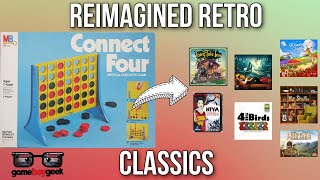
The drafting system in My Shelfie stands apart from typical grid-placement games. Players cannot take tiles from anywhere on the central board; instead, they can only select tiles from the edges where at least one edge remains unblocked. This constraint creates meaningful decision-making from the very first turn. When a player takes one, two, or three tiles in a line, they must place all of them in a single column on their personal bookshelf, where gravity determines how they settle. This resembles the classic Connect Four formula but with significantly more strategic depth layered on top.
Gravity and Vertical Stacking
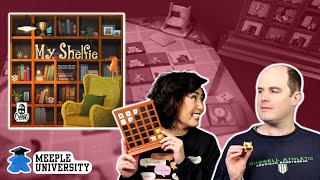
The vertical component transforms what could be a standard tile-placement puzzle. Tiles drop down in their designated column, just like game pieces in Connect Four. This mechanic creates beautiful tension between wanting to place tiles in specific patterns while knowing that future moves will rearrange how your current tiles land. The 3D bookshelf display gives the game genuine visual appeal as players physically construct their individual shelves throughout the game.
The My Shelfie Experience
Accessible Yet Thoughtful
One of My Shelfie's greatest strengths is its accessibility. Players unfamiliar with hobby games can quickly grasp the core concept because everyone knows Connect Four, yet the game adds layers of meaningful strategy that prevent it from feeling simplistic. The teaching burden is minimal; new players can pick up the mechanics within a few minutes and immediately feel engaged in the decisions they make.
Multiple Competing Objectives
My Shelfie presents three competing objectives that keep every turn tense and rewarding. Players score points for connecting same-type tiles adjacently, a task harder than it sounds. They must also manage two types of goal cards: personal objectives that only they know about, and common objectives available to all players. Finally, there is the speed element; whoever fills their shelf first triggers the end game and gains bonus points. These competing pressures create a satisfying crunch where no single strategy dominates.
What Makes My Shelfie Stand Out
Elegant Design That Rewards Repeated Play
Designers Phil Walker Harding and Matt Dunstan created a game where each decision matters without creating analysis paralysis. The turn structure flows naturally, and the game rarely overstays its welcome at approximately 30 minutes. Despite this brevity, players find themselves wanting to play again immediately, discovering new patterns and strategies with each game. The variety in objective cards ensures that no two games feel identical, even after dozens of plays.
The Connection Four Element Done Right
While My Shelfie borrows the gravity concept from Connect Four, it transforms the mechanic into something fresh and unique. Rather than trying to create linear patterns to win, players score through adjacency, objective completion, and speed. The familiar mechanic becomes a door through which players enter a world of more complex decision-making. The physicality of dropping tiles and watching them settle adds tactile satisfaction that purely abstract games cannot replicate.
Potential Drawbacks
Memory and Pattern Recognition
Players who struggle with spatial reasoning or remembering which tiles remain on the central board may find themselves at a disadvantage. The game rewards those who can mentally track available options and plan how future selections will cascade in their columns. While this is not prohibitively difficult, it does create moments where some players feel less in control of the outcome than others.
Limited Player Interaction
My Shelfie is fundamentally a puzzle that each player solves independently. While taking tiles can block opponents from accessing certain pieces, the game lacks the direct competition and negotiation found in many modern designs. Players looking for high-stakes player conflict may find the experience somewhat solitary, despite the shared central board.
If You Enjoy My Shelfie
Players who love My Shelfie tend to gravitate toward tile-placement puzzles with a touch of elegance. Games like Citrus share the sliding-tile drafting mechanic. Connect Four enthusiasts will appreciate the gravity system pushed further. Those seeking quick, satisfying gaming experiences should explore other Phil Walker Harding designs like Sushi Go or Calico, both of which share My Shelfie's balance of accessibility and depth. Wingspan appeals to the same audience that enjoys building engines through careful selection, while Nacho Pile offers a different kind of physical play with similar charm.
What Reviewers Are Saying
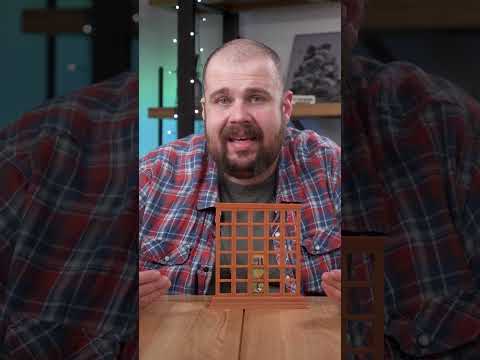
"It's got a bit of a toy factor in it, which I love. And it's something that has a familiar system that people who maybe don't play a lot of board games know because everybody knows Connect Four. You're going to take the things you're popping them into this thing and they're going to slide down. It's like Connect Four, but way better."
— Foster the Meeple
"This is a puzzle game where you're filling up a bookshelf full of all these different tokens and building patterns trying to score points on different criteria. The drafting system in this one was quite cool and it's one that I really enjoyed because of the gravity aspect."
— Chairman of the Board
"I am totally in love with this game. You're going to deal with some set collecting and in-game bonuses. The artwork was cute and quirky, the components were great. It's a good Gateway game, and you want to come back and play it again."
— Our Family Plays Games