/pic4584504.jpg)
Twin temples of two forgotten divinities containing ancient relics have been discovered in India. You set off on a treasure hunt, racing to find them before your rival, but your progress is slowed by a constantly shifting maze of paths... And eternal damnation awaits anyone foolish enough to uncover the three cursed relics of Garuda!
MOVE QUICKLY... CHOOSE WISELY! A treasure race packed with tough choices, twists & turns!
In this 2-players game, each player moves around their own temple, which has spaces for room tiles and hiding places for 9 sacred and cursed relics around. These relics are placed randomly, face-down, around the temples and worth victory points once flipped face-up.
The first player to score 25 victory points wins the game. However, a player loses if they reveal all three cursed relics! Each round, the players compete to win a new room tile by using cards allowing them to throw fate sticks. The player with the most fate points showing on their sticks wins the room tile and places it in their temple. Each player attempts to create paths leading to their relics, enabling them to flip them face up and score victory points. Yet, Naga symbols on some sticks let you activate cards with powerful effects, so that you can never take anything for granted.
A GAMEPLAY WITH DUAL-USE CARDS AND STICKS
Players must decide how to use the cards in their hands: for throwing sticks or activating their effects? Card effects can be applied on you or opponent's game and are relating to:
Sticks results
Relic positions
Room positions
Card drawing
Results on Fate sticks can be used to win the room at stake (using their Fate points) or to activate cards (using their Naga symbols). There are 3 types of sticks (number of Fate points or Naga faces are different for each type).
DILEMMAS, TWISTS, LOW BLOWS!
No temple room or Relic is locked in place, they can be moved/removed as you or your opponent activate cards… You could turn everything upside-down! For example:
Make the maze slide
Swap the positions of relics
Place a Trap room in your opponent’s Temple
Change the results of the sticks
Discard action cards from your opponent's hand
Make him throw again his sticks…
IF YOU...
Have ever dreamed of being an Indiana Jones, chasing relics in an Indian modular temple...
Adore putting a spoke in the wheels of your opponent...
Love gameplays balanced between strategy (cruel choices, anticipation) and fun...
then Naga Raja is the perfect game for you!

Naga Raja - How To Play

- Evokes a sense of adventure and exploration.
- Unique dice ('dice sticks') add to the experience.
- Engaging player interaction with trap-setting.
- Strategic card play is important.
- Dice pips have a meaningful impact on bidding.
- Requires learning unique dice.
- Can be complex due to interplay of mechanics.
- Racing to explore twin temples
- Temple exploration
Mechanics (from transcript analysis)
- card management — card management.
- Dice Rolling — features a unique set of dice called dice sticks.
- Set Collection — trigger bonus abilities on cards you've played.
- tile bidding — interplay of tile placement tile bidding.
- Tile Placement — interplay of tile placement.
- Worker Placement — placing offerings out using the values to kind of Garner uh I guess influence.
Video topics + discussion points
Quotes (from this video)
- the idea that you're working together but you're solving this puzzle in this way that's ever shifting and changing
- this next game encapsulates that that all into one box and what I really love about this game is it's kind of like one of those games where you have half of the answer and the other players the other half of the answer and with your communicative skills combined um this is a game I just love watching couples play with each other because some of the moments that come through this game are absolutely brilliant
- it's a game about decorating your house and it's called decorum it's a game of passive aggressive cohabitation that kind of sums it up really well
- what's really deceptively hard about this game is trying to work out ooh Why did my partner say they didn't like that Blue Lamp I really want a blue room but I don't want that Blue Lamp and that conversation and inferred meaning comes right through
- um and it was super fun because you're solving puzzles together where the puzzles feel Innovative fresh different allow to think outside the box sometimes literally
- yeah the exit games are super fun because they're quick to play they can be played in one session you have that collaboration but also those aha moments when you solve a puzzle together and this series is probably my favorite out of all of the Escape rooms
- but I cannot get over how ingenious this game is the idea that you're placing a tile out every single turn or you can move one of your insects using their abilities on your turn and the whole aim of the game is to basically surround your opponent's queen bee it's sounds simple but you're constantly analyzing all the potential moves
- this game is super Dynamic it has insect abilities Dynamic board tough decisions I've never ended this game in a draw there's always been a winner
- this is a game that has some beautiful components and you could literally play this by the pool if you wanted to or even on the beach it is my go-to game whenever we travel and it is one that I think will stay as my number one two-player board game of all time
References (from this video)
- Exciting to play
- Amazing adventure and action selection
- Works well as a two-player game
- Highly tense and interactive experience
- Harmonizes gameplay and mechanics well
- Elevates the racing element
- Makes you feel like you're clambering over the other person to claim treasure first
- Cool design element with three different types of fate sticks
- Constantly presents players with branching decisions
- Superb addition to the library of two-player games
- Elements of luck in card drawing and fate stick throwing
- Rare situations where you might not have anything to do on your turn
- Archaeologists racing to discover relics in forgotten temples
- India
- Karuba
Mechanics (from transcript analysis)
- action selection — Players select actions from a deck of four different types of cards.
- Area Control — Players compete to win room tiles by having the most fate points.
- Dice rolling (Fate sticks) — Players roll fate sticks to gain fate points and potentially activate card effects.
- Hand Management — Players manage cards in their hand, deciding whether to play them for their top section or activate the bonus effect on the bottom.
- player interaction — Actions can affect opponents by manipulating their cards, fate sticks, or room tiles.
- Push Your Luck — Players push their luck by revealing relics, as revealing three cursed relics results in an immediate loss.
- Set Collection — Players aim to reveal treasure relics with a total victory point value of 25 or more.
- tile selection — Players vie for different room tiles and place them on their temple board.
Video topics + discussion points
Quotes (from this video)
- Maharaja is an exciting to play game of adventure action selection amazing and tile selection
- Indiana Jones-style to try and discover the right pathways through their temple to unlock some really important treasured relics
- The mechanics here the two-player level really synergize well
- This really elevates the racing element in the game and really makes you feel like you're clambering over the other person to try and claim the treasure first
- The cards illustrated by renowned board game artist Vincent outre really evokes that sense that you're watching a motion picture or action blockbuster
- It's this binary level of choice that makes this game truly awesome
- Nagaraja is superb addition to the library of to play games out there
- It offers an engaging theme and a highly tense and interactive experience that harmonizes the gameplay and mechanics really well
References (from this video)
- Creates a tense and impactful back-and-forth experience.
- Theme is reminiscent of maze runners and temple exploration.
- Indiana Jones-like adventure, temple exploration
Mechanics (from transcript analysis)
- Action Points — Players can use action cards to add extra fate points, discard opponent's fate sticks, move temple room tiles, place traps, spy on relics, or swap them.
- Area Control — Players compete for temple tiles and aim to gain control of temple room tiles.
- bidding — The game pits players head to head by forcing them to bid on certain temple tiles.
- Card Play — Players acquire fate sticks by playing cards with the same icon from their hand, and action cards can be played to alter fate.
- Set Collection — Players aim to collect 25 victory points first and avoid collecting uncursed relics.
Video topics + discussion points
Quotes (from this video)
- Two player board games are some of the most commonly played games in my collection because it's really often quite hard to get a bigger group of people together for a game night
- In this video we look at my five favorite next level meteor to play games that probably will tear your relationship into
- This game truly encompasses what a really good Star Wars game should feel like especially if you're a fan of the original movies
- I hope these five board games have provided you an extra insight into some meteor two-player games you can add to your board game collection
References (from this video)

Mechanics (from transcript analysis)
- Dice — Really great to play game uses dice in a different way. These Nagaraja sticks are actually D-falls that kind of affect the choices that you have in the game.
Video topics + discussion points
Quotes (from this video)
- With hundreds of board games that are being released annually, that number is increasing exponentially.
- When a really cool board game comes along and piques your interest, there's a certain level hype that follows that.
- Consider very carefully what exactly that you're buying into.
- Think about the potential experience that board game can provide to the people that you're going to be playing with.
- You really need to think about the reliability of the information that you're being presented about a game.
- If you've got the time, it's well worth spending a little bit of extra time looking at multiple sources and multiple opinions on a particular game.
- You need to think about whether do you already own that game in your collection at home or some form of that game.
- Think about the worth of the game itself in terms of its price.
- It is your money and ultimately your choice.
- It's so critically important to research a game very thoroughly.
- The board game hobby is such a beautiful community of people and the games themselves just continually amaze me.
References (from this video)
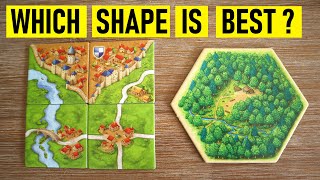
- Creates pathways to treasures
- Offers interesting route planning choices
- finding treasures
- temple
Mechanics (from transcript analysis)
- Tile Laying Maze — Players bid for and place tiles to create pathways within a temple, leading to treasures. The shape of the placed tile influences route access.
Video topics + discussion points
Quotes (from this video)
- When it comes to board game packaging most board games are square shaped so that they can be catalogued stacked and displayed easily on your shelf
- When it comes to designing a game and translating it into a fully fledged board game the shape of a game is the first thing that designers often think about
- Squares are really good because they can be easily joined together with other squares to make rectangles
- The idea that moving one space diagonally is not the same distance as moving one space orthogonally is an interesting dilemma that game designers have to contend with
- The hexagon is a very common shape used in many modern board games in fact it's a shape that tessellates extremely well
- When it comes to emulating the geography and topography of the true natural features of a map in a board game using a hex grid based system is actually particularly effective
- I'm always truly fascinated when it comes to tile laying games and the sorts of shapes that game designers use in their games to create a fun experience
- Just because a game uses a square shaped tile in its design doesn't actually mean that that game is any less complex
- Just when you think that the square has finally relished in its glory in terms of one-upping a hexagon in terms of its design shape well the game gods love dinosaurs takes domino's to a whole new level
- Polyhexes have an interesting shape to them and when you attach a polyhex to an established map they provide players with up to 10 different options of different ways they can be connected together
- Henceforth you could even rotate the tile so that it fits in spaces like this one here
- What this has consistently shown so far is that hexagons always provide that extra flexibility the extra level of option that squares don't often provide
- I personally gravitate towards the hexagon just because the shapes feel more organic when it comes to map building
- When games can kind of marry the shape of the game to the mechanisms and their theme and they can do it well then that says to me that it doesn't really matter what shape the game is the game is going to be fun regardless
References (from this video)

- Undaunted
- Watergate
Mechanics (from transcript analysis)
Video topics + discussion points
Quotes (from this video)
- I played Ragusa with Marty he taught me the game or rather he taught me some alternate universe version of the game
- there were so many rules mix-ups I didn't even know what was going on half the time
- I'm sorry I cannot in good conscience give out this award I'm gonna have to hang on to it
- This is one of those games that normally would have probably not been my game of the year if I would have played it
- it deserves my game of the year
- Raccoon Tycoon is from designer Glen drover from forbidden games and it is a market commodities game where you are trying to get the best prices for the commodities in the game
- Unbelievable oil paintings brought the game to life with with incredible anthropomorphic animals in Victorian dress
- it did give the game a cuddly fuzzy feel that I think makes the game a little bit more appealing to non-gamers as well as gamers
- Raccoon Tycoon that came out earlier this year and yet that was very much a contention for my my top game of the year
- it's just so well done
- 2019 was just a great year for games especially more of the the mid-level like euro type games
- we really dope into a lot of really really good two-player games in 2019
References (from this video)
- Highly strategic and engaging gameplay.
- Satisfying push-pull mechanics.
- Clever use of spatial elements.
- The card play and dice rolling are well-integrated.
- The catch-up mechanic works well.
- Deepens in strategy with repeated plays.
- The spatial element might not appeal to everyone.
- Can be a bit complex to grasp initially.
- Exploring a cave to find relics
- Cave exploration with relics
Mechanics (from transcript analysis)
- action selection — Players select cards to play, then roll dice, and finally activate special symbols on the dice.
- Card drafting/play — Players use cards with matching icons and special abilities to influence dice rolls and claim tiles.
- Catch-Up Mechanic — The loser of a tile acquisition draws extra cards, providing an advantage for the next round.
- Dice Rolling — Players roll custom dice (rods) with pips and special symbols to compete for tiles.
- Hand Management — Deciding which cards to play for their pips or special abilities is key.
- Resource Management — Managing cards is crucial, as running out can hinder your ability to claim tiles.
- Set Collection — Players aim to collect relics by creating paths to them, with point values for each relic.
- Tile Placement — Players claim tiles by rolling dice and place them in a 3x3 tableau to create paths to relics.
Video topics + discussion points
Quotes (from this video)
- The simple brilliance of that is these are low numbers because some where there's high numbers that it will allow you to exchange cards with other people but you won't those low numbers face up so that you can use their powers.
- So I'm like, uh, so there you go. It killed the American Dream and the economy because everybody was too busy playing solitaire and not doing word processing.
- There's definitely some interaction when everybody come to my side of the galaxy and started smacking me down.
- This came out of nowhere this is a surprise hit Tony for me unless some other stuff knocks it out it's the nomination for two players squirrly award for the year easily.
- And you're sitting there going, and then I saw stickers, I went, how many pieces needed stickers? A quick calculation tells me over fifty.
References (from this video)

Mechanics (from transcript analysis)
- hand management; bid-based dice allocation; dice-driven actions — two-player tile-connecting/treasure-flipping with unique dice mechanisms; bid and dice allocation
Video topics + discussion points
Quotes (from this video)
- it's an ongoing ripple effect of me changing the channel up and not making reviews any more
- I've been thinking about doing this for a while and I finally went about changing my audio setup in here
- thanks for watching
References (from this video)
- So clever from start to finish
- Lots of twists and turns in this case which I really loved
- There's a forgery and a theft of a famous relic called the Nagaraja. You're tasked not only with finding out who is behind the forgery but finding the authentic Nagaraja as fast as you can.
- India
Mechanics (from transcript analysis)
- Forgery — There's a forgery and a theft of a famous relic.
- Relic Recovery — Finding the authentic Nagaraja as fast as you can.
- Theft — There's a forgery and a theft of a famous relic.
Video topics + discussion points
Quotes (from this video)
- two games six cases one concept
- I'm Kevin Del
- I think it really plays best at the four player count maybe three it takes about an hour to an hour and a half to play each case
- The Orange Box came out in 2023 and the blue box came out last year in 2024
- at the core perspectives is a Cooperative deduction experience
- each box has a tutorial and three cases a case is divided into four acts You'll Play one act at a Time
- Players work to piece together a mystery using fragmented information
- each player has a portion of the story hidden from the others and through clever questioning and discussion you'll reconstruct the full picture
- the goal solve the mystery by answering questions asked at the end of each Act
- you can play and act put it away and then come back and do it another day but I think your best experience is going to be playing all four acts in one case at a time about 60 to 90 minutes
- I'm going to give you a breakdown of my favorites from least favorite with the main theme for each of the cases all the way to the most favorite and I won't be doing any spoilers
- The Orange Box all has cases from recent history 1994 2008 and 2016 whereas the blue box cases are a lot older 485 1207 and 1858
- I find this part just really fun
- even though I'm ranking these games I want to be clear just because one ends up at the bottom doesn't mean it's a bad game I genuinely enjoy the overall experience of these games and every game on the list has something great to offer
- okay with that caveat I'm going to go from my least favorite all the way to my most favorite
- I ranked this lower because the theme the story didn't really draw me in
- all right number three is lost mine it's in the blue box and it's set in the Western United States in 1858 a few years after the famous gold rush it all started with the death of your father and some missing gold I really really like this one but there was just one puzzle that kept it from the top two spots the theme worked really well in the puzzles and the story throughout all four acts I think you'll have fun with this one
- all right number two is the devil in the detail it's also from the blue box and is set in France in the year 1207 and I would definitely agree with the title you have to be extremely observant to do well in the game it has a great blend of puzzles as you go from act to act you are trying now not only to figure out the murder of one of the nuns in the abbey but also who was behind the heretical image that was found
- number one is nagaraja it's the first case in The Orange Box my favorite it's so clever from start to finish there's a forgery and a theft of a famous relic called the nagaraja the story is set in India in the Year 2005 you're tasked not only with finding out who is behind the forgery but finding the authentic nagaraja as fast as you can lots of twists and turns in this case which I really loved and I hope you enjoy this one as much as I did
- now ultimately both boxes are going to offer fun a collaborative mystery solving experience but I think you should start with the orange box if you haven't played either now and if you've already played The Orange Box then I would totally recommend the blue box
- Have you played either one did you have a favorite case let me know down in the comments and don't forget to like And subscribe for more board game content
References (from this video)

- Overpriced map purchased at the gas station is useless.
- Eternal damnation awaits if cursed relics are found.
- Treasure hunt for ancient relics
- Temples in India
Mechanics (from transcript analysis)
- bluffing — The host mentions enjoying a good bluffing game.
- Maze — An ever-shifting maze of paths.
- Push Your Luck — A player loses if they reveal all three cursed relics.
- Set Collection — Finding relics and riches.
Video topics + discussion points
Quotes (from this video)
- it seems there's always another game on the shelf waiting to be discovered
- this episode is made possible in part by oceans from north star games
- You know what's even better than the idea of a lifetime spent exploring space doing so from the comfort of your own home where the potato chips are kept and that's why I joyfully wept gently for several minutes in secret where nobody else could see my shame once I discovered that this month's countdown would be starting with the economic space strategy game Master of Orion the board game
- The winner being granted the coveted title of emperor of the galactic council which is essentially just an honorary title for a glorified administrative desk job
- Now that we've conquered space which took way less time than I was anticipating let's now turn our attention towards conquering the sea because it's just sitting there being all damp and such
- Aquatica with a recent second edition from arcane wonders is a strategic but easy to learn family engine building game about underwater kingdoms
- You know I always enjoy a good bluffing game or do I perhaps I was bluffing just now you can't no I'm unknowable I barely know myself
- Vindication is a wonderful feeling like when you warn someone not to sit on wet paint but they ignore you and then immediately get eaten by a crocodile
- Every year sorcerer city gets built and rebuilt in magically new ways with blocks moving and rotating in crazy directions
- It sounds like a workers compensation insurance nightmare but that's what you get for hiring Howard Howard and Fine as your city planners
- Keith Forge's world was always in a constant state of change but now a vault containing mysterious dark amber is open causing strange and unusual transformations unlike anything seen before
- If you're anything like me then you also have a hilarious crocodile-based anecdote locked and ready to go at a moment's notice but you'd also probably fare pretty well if you ever came time to live underground
- Fallout shelter the board game a post nuclear worker placement board game for two to four players from fantasy flight games based on the hit mobile game from Bethesda softworks
- Three orders nobles civilians and religion unlike today where it's organized around media influence and high fructose corn syrup
- Typically a roll and write game is only a proper roll and right game if it's from the Roland Right region of France
- Otherwise it's a sparkling dice based activity
- And now for some lip smacking cracking action in the upcoming hidden role deduction game from Fun Tales Feed the Kraken featuring three asymmetric factions for feuding friends
- In 1871 with Canada only four years old the prime minister calls for a massive undertaking a transcontinental railway to link eastern and western provinces
- It would be a nation defining project shaping not only the economy of this young fledgling country but also his identity as the well-mannered cousin of the United States who lost a bunch of weight and finished community college
- Brazil Imperial coming from Meepo BR in 2021
- The best monarch receives a title a Brazilian emperor which is essentially just an honorary title for a glorified administrative desk job
- Losers are banished to a ship lost at sea where they inevitably go madam pledge allegiance to a kraken
- That's our list of games we wanted to make sure did not go overlooked this month
References (from this video)
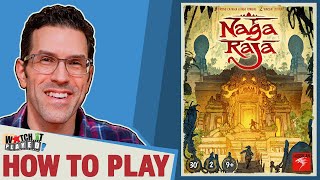
- Clear rule explanation by the host
- Good visual demonstration of setup and steps
- Some rules are dense and may require replay to fully grasp
- Relic collection and temple exploration with curses influencing outcomes.
- Two temples with relics hidden inside; players seek treasure while their archrival pursues the opposite temple.
- Step-by-step hands-on teaching of setup and gameplay with explained rules and card effects.
Mechanics (from transcript analysis)
- End Game Bonuses — End conditions include 3 cursed relics face up, 25 points, or ninth room tile placed.
- endgame conditions — End conditions include 3 cursed relics face up, 25 points, or ninth room tile placed.
- fate sticks and fate points — Players use fate sticks and track fate points to determine the first player and to gain tokens.
- Hand Management — During the Call of Fate and Confrontation steps, players play cards with Naga tokens to resolve effects.
- hand management and Naga cards — During the Call of Fate and Confrontation steps, players play cards with Naga tokens to resolve effects.
- relics, amulets, and scoring — Relics grant points; cursed relics are worth more but can cause loss; amulets grant powers and points.
- round structure (four steps) — Each round has four steps: Call of Fate, Confrontation, Exploration, New Deal.
- temple tile placement — Players place temple room tiles to form paths from entrances to relics.
- Tile Placement — Players place temple room tiles to form paths from entrances to relics.
- tile rotation and movement — Tiles can be rotated or moved to modify paths and connections, influencing relic/entrance links.
- Tile/Map Shifting — Tiles can be rotated or moved to modify paths and connections, influencing relic/entrance links.
- trap tile — A trap tile can be placed to block placement and affect endgame tile counts.
Video topics + discussion points
Quotes (from this video)
- to set up place a temple in front of each player one has a yellow border and the other is gray
- three of the relics are cursed
- you keep it secret from your opponent but you can examine this at any time
- the game will continue like this until one of three possible things happen
References (from this video)

- great two-player interaction
- beautiful artwork
- complex for new players
- not ideal for solo play
- mythic Indian temple building with competitive play
- temple-building in a head-to-head arena
- tableau-building with direct interaction
Mechanics (from transcript analysis)
- Action cards — spend dice-based resources to trigger effects.
- tile placement with dice — connect tiles to a temple and resolve via dice/strength.