/pic5241774.png)


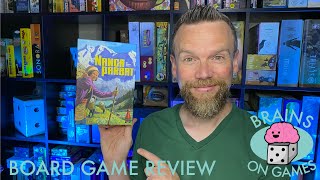



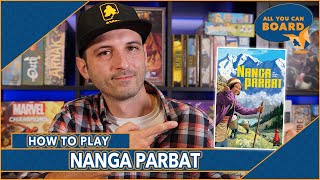


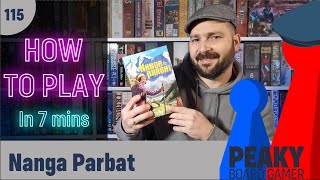


Nanga Parbat Deep Dive
What the Community Thinks About Nanga Parbat
Nanga Parbat has earned warm praise as one of designer Steve Finn's most refined small games. Hungry Gamer frame it as a title that does one thing and does it well, Gaming with Edo & Jessica rank it among the best two-player games they have played from Dr. Finn's Games, and Before You Play walk through its clean, approachable systems. The mountaineering theme resonates with players wanting an engaging, portable game that finishes quickly without sacrificing meaningful decisions, and reviewers consistently highlight how much tension it packs into a short, head-to-head experience.
Core Mechanics That Define Nanga Parbat
Set Collection as the Engine
At its heart, Nanga Parbat is a game of collecting animals from the mountain and converting them into points through set building. Designed by Steve Finn and published by Dr. Finn's Games, it has players alternate taking an animal from the board, placing a hiker on the space it left, and then moving the guide pawn to a new region based on where the animal sat. Hungry Gamer stress that the game commits fully to this single loop and executes it well, layering twists through animal abilities and campsite placement rather than piling on subsystems. That focus keeps turns quick while still demanding genuine thought about which animals to grab.
Layered Scoring Through Camps and Sets
Points flow from two directions, each requiring forethought. Players can claim scoring conditions by turning in sets of animals, whether several of the same type or several different types, and they can build base camps by clustering adjacent hikers on the board and converting those groups for points. Because scoring spaces are limited and once claimed cannot be reused, locking in an easy set early can shut an opponent out of a convenient path, forcing them toward harder combinations. This dual-track scoring creates constant tension over which avenue to pursue and when to commit.
The Nanga Parbat Experience
Elegant Simplicity for Two Players
What elevates Nanga Parbat is its accessibility paired with decisive play. The ruleset is clean and quick to teach, and most players grasp it in a single explanation. Hungry Gamer describe it as a delight to play, the kind of game two people can enjoy over morning coffee while holding a conversation. The board's regions and the guide pawn's movement create a natural rhythm that feels familiar after the first round, and the game rewards attentiveness without punishing newcomers, making it an ideal gateway that still respects experienced players.
The Jockeying Back-and-Forth
The turn structure produces a tense push and pull. You choose which animal to take and where to leave the guide, knowing your opponent faces those same choices next, so every move is both a grab for what you want and a way to deny your rival. That constant negotiation of position generates the game's primary tension, and the compact design keeps both players engaged every turn, with no downtime and little room for analysis paralysis. Reviewers describe the experience as a brisk race to be the first to lock in the most points.
What Makes Nanga Parbat Stand Out
Animal Abilities That Bend the Rules
Each animal type carries a special ability that can be triggered by exhausting it, and these powers create the most interesting decisions in the game. They let players rearrange the board, reposition their growing camps, reach regions that would otherwise be inaccessible, or claw back points when behind. The tension comes from deciding whether to use an ability now for immediate gain or hold the animal for its collection value, and reviewers note that these powers keep the core loop from ever feeling rote, since every animal on offer carries potential beyond its face value.
A Tight Design That Respects Your Time
Reviewers consistently praise Nanga Parbat as a game with real staying power despite its brevity. The half-hour playtime feels earned rather than padded, giving just enough room for tension and decisions. Gaming with Edo & Jessica single out the fantastic art and components and call it a pleasant, enjoyable two-player experience, and others describe a clean, portable design that is fast to learn and quick to set up. The result is a game that often leaves players wanting to go again immediately, a sign of careful calibration.
Potential Drawbacks
Limited Depth for Long-Term Engagement
Some reviewers raise a common caveat about Steve Finn's lighter designs: because Nanga Parbat commits entirely to set collection, it can feel a touch samey after many plays. The core sequence of moving the guide, taking an animal, and building sets stays unchanged throughout, so players seeking puzzle-like depth or emergent complexity will find the decision tree more linear than in heavier designs. That same restraint, however, is what makes the game so accessible and quick, a deliberate trade-off rather than an oversight.
Theme as Window, Not World
While the mountaineering setting provides flavor, the game does not deepen a player's sense of the Himalaya or of climbing itself. Reviewers note that the animals function as points and abilities rather than as vehicles for narrative immersion, so the theme sits lightly on the mechanics. Players who want setting and systems to intertwine deeply may find the backdrop more decorative than essential, though for those who value mechanical elegance, that gap is no drawback at all.
If You Enjoy Nanga Parbat
Nanga Parbat shares DNA with other quick, elegant games. Biblios, another Steve Finn design, offers tight head-to-head and small-group play built on the same commitment to doing one thing superbly. Jaipur delivers a sharp two-player duel of set collection and timing in a compact box, and Lost Cities pairs press-your-luck tension with simple, decisive turns. Each rewards the same appeal Nanga Parbat offers: a purposeful, well-calibrated design that respects your time while still demanding real decisions.
What Reviewers Are Saying
"It's a game that has one thing that it is doing, and it does it, and it does it well. You're doing set collection, and yes, there are twists with the way you use the animals' powers and put your campsites out there, but really this is a game about set collection."
— Hungry Gamer
"A very enjoyable game; two players play it quickly, have a conversation while you do it over coffee in the morning, whatever. Just a delight to play."
— Hungry Gamer
"I think this is one of Steve Finn's, Dr. Finn's Games, best games ever. The art and production is fantastic, the components are fantastic, and for a two-player game it's great; it's head to head, but such a pleasant and enjoyable experience."
— Gaming with Edo & Jessica