/pic3605785.jpg)





























Near and Far Deep Dive
What the Community Thinks About Near and Far
Near and Far has earned strong consensus praise as one of the most distinctive storytelling board games in the hobby. Reviewers across channels consistently highlight it as a standout title that successfully blends narrative immersion with engaging mechanical depth. The game represents a significant leap forward from its predecessor Above and Below, with critics praising how Ryan Laukat's second venture into the Arzium universe addresses the shortcomings of the first game while dramatically expanding its scope. The community recognizes Near and Far as a rare breed: a game with genuinely compelling writing that doesn't interrupt or overshadow the core gameplay. While some reviewers note pacing challenges at higher player counts and occasional randomness in quest outcomes, these concerns pale against the overwhelming appreciation for how the game weaves storytelling and strategy into a cohesive, immersive experience.
Core Mechanics That Define Near and Far
Narrative Choice
At the heart of Near and Far lies a choose-your-own-adventure structure that feels purposeful rather than decorative. When adventurers venture out from the town board into the Atlas, they encounter story passages presented in a gorgeous illustrated storybook. Each passage presents exactly two challenges: one skill-based, one combat-based, allowing players to tailor their approach based on their party composition. The Broken Meeple reviewer noted how this mechanic creates genuine narrative progression: observing how certain quests lead to side quests involving recurring villain characters, the player realizes a larger story is unfolding across the campaign. This is far more cohesive than the random quest structure of Above and Below, making each choice feel weighted and consequential. The mechanic brilliantly enforces that failure isn't always failure; spending hearts to pursue the harder challenge sometimes yields unexpected story rewards that complement the narrative arc.
Track Advancement
Character progression throughout a campaign defines the long-term appeal of Near and Far. As players move through maps in campaign or character modes, their adventurers gain talents, skills, and equipment that permanently enhance their capabilities. Watch It Played's extended playthrough showcased how this progression creates investment: recruiting allies with specific abilities, acquiring pack animals that expand movement capacity, and unlocking magical artifacts that provide ongoing benefits. These advancements compound naturally, making early-game setups feel deliberately simple to teach, while later game turns offer rich tactical possibilities. Designer Ryan Laukat and publisher Red Raven Games crafted a system where your character genuinely feels like they're leveling up, becoming stronger and more capable as they explore the world. This mechanic prevents the game from feeling like eight disconnected stories; instead, it creates a genuine adventure arc where you're watching your character transform across the campaign.
The Near and Far Experience
Adventure Atmosphere
Playing Near and Far captures the essence of exploration and discovery. The game's tone strikes a delicate balance between whimsy and tension. Reviewers consistently describe the experience of stepping out into the Atlas with hearts and supplies, uncertain what you'll encounter. Will you face a bandit? Uncover a mysterious statue? Help a desperate traveler? The beautiful, evocative artwork reinforces this sense of immersion in a fantasy world. When you read a passage aloud around the table, the elaborate descriptions pull everyone into the narrative moment. Allies or Enemies noted that the stories are "short but interesting," hitting that sweet spot where narrative enhances rather than delays gameplay. The game's aesthetic contributes tremendously: vibrant maps filled with character, detailed character standees, and treasure tokens all create a visual feast that makes adventuring feel genuinely epic despite the relatively simple mechanical resolution.
Tense Pacing and Player Interaction
The tension between exploration and preparation creates compelling strategic pressure. In the town, players race to recruit adventurers, purchase supplies, and gather pack animals before rushing out to complete quests and set up camps. With limited quest tokens available, there's genuine competition for the most rewarding storylines. Allies or Enemies described the game as having "a tense head-to-head pace" where players race to place their tents on the map before opponents claim the best locations. The duel mechanic adds another layer: when two players visit the same town location, they must resolve conflict, adding player interaction that keeps the game from feeling purely solitaire. Watch It Played's playthroughs revealed constant decision pressure: should you spend hearts on a risky skill check to get a bonus, potentially missing out on setting up camp? The game maintains engagement throughout by ensuring every decision carries weight and opportunity cost.
What Makes Near and Far Stand Out
Exceptional Storybook Integration
Near and Far's storybook isn't window dressing; it's mechanically integral. Unlike many narrative games where story feels tacked on, here the quest passages directly inform your party's capabilities and tactical decisions. Watch It Played demonstrated this beautifully: choosing whether to pursue a skill 5 challenge or a combat 8 challenge depends entirely on your party composition. The stories feel consequential because they reward different build strategies. The Broken Meeple particularly praised how the narratives create surprising interconnections across the campaign: completing one quest spawns related side quests with thematically consistent consequences. Players find themselves emotionally invested in how their character will overcome each encounter based on what they've built. This is genuine narrative-mechanical integration, not bolted-on flavor text. The writing itself stands out in the hobby; Allies or Enemies and The Board Game Garden both noted surprise at how the actual writing quality exceeds typical board game prose, making story passages genuinely engaging rather than a chore to read.
Four Distinct Play Modes That Extend Replay
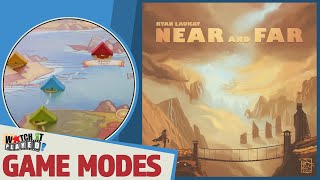
Few games offer as much structural variety. The Intro Adventure teaches mechanics in a single short game. Campaign Mode provides a 10-11 map epic journey that ties all adventures together into a cohesive narrative arc, with multiple quests visible across each map and character progression that creates a sense of leveling up toward something grand. Character Mode lets players experience unique, character-specific storylines across three maps, offering focused narrative arcs without the commitment of full campaign play. Arcade Mode uses a card-based quick system for those wanting stories without constant book consultation. This modularity means different groups can experience the game according to their preferences and available time. Allies or Enemies called Near and Far the "Goldilocks" game of the Arzium trilogy, striking the right balance of setup burden versus play time. The Broken Meeple estimated 25+ distinct game experiences before repetition becomes noticeable, giving genuine value across different play modes and player counts.
Potential Drawbacks
Turn Pacing Disparity and Length at Higher Player Counts
With three or four players, Near and Far experiences significant pacing drag. The Broken Meeple articulated the core problem: when players venture out on adventure, they spend 2-3 minutes or more resolving threats, reading story passages, and tracking resources. Meanwhile, a player in town placing a single worker takes 10-15 seconds. This creates noticeable downtime periods where some players are idle for extended stretches. A two-player game maintains brisk pacing (the reviewer reported solid play at 90 minutes as intended), but with three players, games stretch toward two hours, and with four, easily exceed it. Allies or Enemies recommended the game primarily for two-player sessions, noting that while three-player games add more table interaction through duels, the pacing challenges make scaling inefficient. The review noted the game genuinely drags when players are just executing Euro mechanics late-game, waiting for someone to finish their adventure sequence.
Quest Token Scarcity and Mid-Game Tone Shift
The Broken Meeple identified a subtle but meaningful design issue: quest tokens are limited based on player count, scaling only roughly with the number of players. This means that mid-game, particularly with four players, all available quests can be claimed, forcing the remaining turns into pure Euro mechanics (placing workers, building artifacts, managing resources). This creates a tonal whiplash: the early-game excitement of adventure gives way to routine engine-building. Players who purchased Near and Far specifically for the storybook experience find themselves performing familiar Euro actions without the narrative payoff. The reviewer wished more quests were available to extend the storybook phase throughout the game. This isn't a game-breaking flaw, but it means the late game plays quite differently from the early game, potentially disappointing players who came for the stories and find themselves obligated to complete tedious Euro turns while waiting for the game to end.
If You Enjoy Near and Far
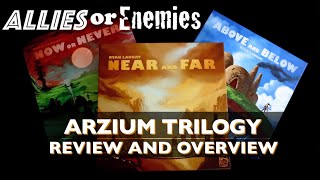
Players who appreciate Near and Far's blend of narrative and mechanical depth should explore the Arzium trilogy. Above and Below, the prequel, offers simpler mechanical execution and quicker play at the cost of less cohesive storytelling. Now or Never, the third game in the trilogy, escalates complexity significantly with simultaneous town-building and adventuring, making it suitable for groups wanting heavier mechanical challenges but potentially overwhelming newcomers. Those drawn to the campaign structure and character progression will find strong similarities in Pandemic Legacy, which shares the "story unfolds across connected sessions" DNA, though with cooperative mechanics rather than Near and Far's competitive scoring. Players should also seek out other Ryan Laukat designs: his distinctive art style and thematic sensibility appear throughout Red Raven Games' catalog, and his commitment to marrying beautiful visuals with thematic mechanical depth is evident across his designs.
What Reviewers Are Saying
Every game that there's a greater storyline being told and even the first game I played of this on campaign mode a friend of mine got side quests as a result of doing a particular quest and during those side quests you're like, okay, this is a recurring villain character I think you know this guy's going to come back and you're going to be like superpower form will come out again. He'll be a massive burden for us in a later episode of the game.
— The Broken Meeple
Near and far is by far our consensus favorite it's one of the most played games in our collection and a game that we would recommend to anyone looking for something that combines story with engaging and original mechanics. It's got a bit of worker placement a bit of racing and some push your luck quests.
— Allies or Enemies
I usually have a problem with story in board games because usually the writing is awful but in this case it's actually pretty decent and it's nice, it's like just the length you want, like a paragraph and a half, but the story ties together nicely even within the choose your own adventure.
— Allies or Enemies