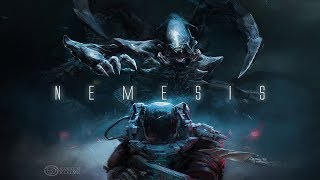
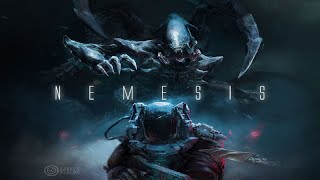
Playing Nemesis will take you into the heart of sci-fi survival horror in all its terror. A soldier fires blindly down a corridor, trying to stop the alien advance. A scientist races to find a solution in his makeshift lab. A traitor steals the last escape pod in the very last moment. Intruders you meet on the ship are not only reacting to the noise you make but also evolve as the time goes by. The longer the game takes, the stronger they become. During the game, you control one of the crew members with a unique set of skills, personal deck of cards, and individual starting equipment. These heroes cover all your basic SF horror needs. For example, the scientist is great with computers and research, but will have a hard time in combat. The soldier, on the other hand...
Nemesis is a semi-cooperative game in which you and your crewmates must survive on a ship infested with hostile organisms. To win the game, you have to complete one of the two objectives dealt to you at the start of the game and get back to Earth in one piece. You will find many obstacles on your way: swarms of Intruders (the name given to the alien organisms by the ship AI), the poor physical condition of the ship, agendas held by your fellow players, and sometimes just cruel fate.
The gameplay of Nemesis is designed to be full of climactic moments which, hopefully, you will find rewarding even when your best plans are ruined and your character meets a terrible fate.
Nemesis in about 3 minutes
Nemesis Co-Op carnamorphs playthrough part 1
Mechanics (from transcript analysis)

Video topics + discussion points
Quotes (from this video)
- A 3.5 is a seven out of 10. A 3.5 is a good game.
- But if a game is good, a game is good.
- I can't fully separate out my emotional range.
References (from this video)
- Array
- Science Fiction
Mechanics (from transcript analysis)
Video topics + discussion points
Quotes (from this video)
- I think this is great.
- I think the whole AB thing is really cool, really fun.
- I love managing your dice. I love the management of these items and these cards.
- There are a lot of really creative things in the design.
- The map cards can also flip.
References (from this video)
- Cinematic atmosphere; tense moments when everyone knows the icons
- Icons require memorization; rule checks interrupt immersion
- creature threat and stealthy escape
- cinematic sci-fi horror in a ship
- immersive but icon-heavy exploration
Mechanics (from transcript analysis)
- icon-heavy rulebook — immersion relies on understanding a large iconography set.
- semi-coop with hidden roles — player goals may conflict with others, adding tension.
Video topics + discussion points
Quotes (from this video)
- It's not engagement. It's everyone doing their own puzzle in the same room.
- Gorgeous production quality, but multiple simultaneous subsystems that can feel complex initially for new players.
- Turn order determines a lot in this game's economy.
- One wrong move with how the link network system works, and you've completely invalidated your entire strategy.
- The clue giver walks a razor line between clever and intuitive that new players haven't calibrated.
- Eight-hour day commitment, full group attendance, full mental energy required throughout.
References (from this video)
- Atmospheric theme and cinematic moments
- Visually striking minis and components
- Overreliance on randomness can feel unfair
- Elimination and swings can undermine tension
- alien threats, paranoia, tension
- Semi-cooperative sci-fi aboard a starship with hidden objectives.
- Array
- Station Fall
Mechanics (from transcript analysis)
Video topics + discussion points
Quotes (from this video)
- The theme and the mechanics are completely disconnected.
- Yes, Terrammystica.
- Masquerade looks silly at first. You're given a character card.
- Descent solved the overhead problem by integrating a free companion app that handles almost everything Gloom Haven makes you do manually.
- Station Fall is making your own story.
- Aons is exceptional for people who want depth without the homework.
References (from this video)
- Atmospheric sci-fi theme
- Varied win/lose conditions
- Tense, thematic gameplay
- Heavy rules
- Long play time
- Survival horror in a sci-fi setting
- Spaceship, alien-infested ship
- Semi-cooperative with traitor/hidden agenda elements
- Aliens
Mechanics (from transcript analysis)
- asymmetric player powers — Players have different abilities and goals.
- asymmetric roles — Players have different abilities and goals.
- cooperative with variable map and events — Board changes and events occur as you play.
- Semi-cooperative — Players work together but some players may have traitorous objectives.
- semi-cooperative play — Players work together but some players may have traitorous objectives.
Video topics + discussion points
Quotes (from this video)
- this is our top 10 co-op games
- it's such a chill game
- we are so engaged in this very simple game
References (from this video)
- strong thematic alignment with space horror survival
- high production quality and components
- good two-player experience
- can feel clunky or long-winded for some players
- may be less accessible for casual players
- survival, horror, mystery, crew cooperation under threat
- spacefaring research ship with alien intruders
- cinematic, story-driven with situational tension
- Exit: The Game
- Unlock! series
Mechanics (from transcript analysis)
- action cards and movement — turns are driven by action cards; players plan moves and actions to progress
- cooperative gameplay with potential antagonistic elements — players work together to survive while threats emerge via event/deck-driven encounters
- exploration and resource management — players explore the ship and manage limited resources to endure
- Resource management — players explore the ship and manage limited resources to endure
Video topics + discussion points
Quotes (from this video)
- the puzzles were pretty fair
- the cube was cool
- this is a really solid start to this series
- we don't want to spoil anything in these boxes
References (from this video)
- Tense cooperative gameplay with thematic fit
- Rule complexity and steep learning curve
- Array
- Sci-fi horror aboard a derelict spaceship
- Survival, tension-filled
- Scythe
Mechanics (from transcript analysis)
- Cooperative/Hidden Objective — Players work together with individual hidden goals and shared threats.
Video topics + discussion points
Quotes (from this video)
- we're trying to remove as much bias as we can when scoring
- it's not necessarily about standing out it's more about making content that we would have wished we watched before buying games
References (from this video)
- immersive, cinematic experience
- high tension and atmosphere
- replayable with different crew dynamics
- rulebook can be confusing
- game length can be long; may feel heavy for some groups
- semi-cooperative survival with hidden agenda and horror elements
- A derelict spaceship overrun by alien threats
- Array
- cinematic, immersive, and claustrophobic survival horror
Mechanics (from transcript analysis)
- noise markers — noise markers drive alien arrivals and game tension.
- procedural tension — danger escalates with each turn and event card draw.
- rich thematic narrative — strong atmosphere and storytelling during play.
- Semi-cooperative — players partially cooperate while pursuing personal objectives.
- semi-cooperative play — players partially cooperate while pursuing personal objectives.
Video topics + discussion points
Quotes (from this video)
- it's Mario Kart in board game form without the blue shells and all the fun little items
- Blood Rage has quickly escalated up my top games chart
- Ankh is super super fun I absolutely love this game
- Nemesis is cinematic
References (from this video)
- great gameplay experience
- strong thematic fit and tension
- terrible or confusing rulebook
- complex/verbose rules and occasional lack of clarity
- cooperative exploration with hidden antagonists and emergent tension
- spacecraft survival with sci-fi horror and potential traitor dynamics
- story-driven, cinematic exploration with variable player roles
- Dune: Imperium
- Dead of Winter
Mechanics (from transcript analysis)
- Dice rolling — combat and action resolution rely on dice outcomes
- dice_rolling — combat and action resolution rely on dice outcomes
- modular_chits_and_actions — board and actions evolve with scenario-driven content
- semi_coop_with_traitor_elements — players cooperate to survive while roles and objectives may conflict
- Semi-cooperative — players cooperate to survive while roles and objectives may conflict
Video topics + discussion points
Quotes (from this video)
- I was very excited about void fall, then I read that it was like an hour setup and I went not for me Fam
- production quality isn't up to the level to the Italian standard I'm pretty much not impressed
- one of my red flags is if I see that a game is a campaign game ... I want my time to be treated well by the game I'm playing
- floppy rules or bad rule books is an absolute nightmare for me
- Nemesis is a great game but the rulebook is a mess
References (from this video)
- Immersive atmosphere and thematic fidelity
- Two-player co-op/solo options with solid pacing
- Tension and payoff when facing aliens
- Can be fiddly to set up and scale for new players
- Some players feel the solo experience can diverge from full co-op
- Alien invasion, suspense, claustrophobic exploration
- Derelict spaceship infested with hostile aliens in a cinematic sci-fi survival horror setting.
- Atmospheric, cinematic storytelling with emergent moments
Mechanics (from transcript analysis)
- card-driven action engine — Players build sequences by playing cards to take actions and trigger events.
- engine building — Players build sequences by playing cards to take actions and trigger events.
- exploration and stealth — Exploration of a derelict ship with hidden threats and tactical decisions.
- noise and infection risk — Noise and alien encounters can lead to infection or worse, driving tension.
Video topics + discussion points
Quotes (from this video)
- this is the fourth in a series of videos where I'm separating my favorite solo games into five different complexity levels
- it's my favorite as well
- no Universal scale exists so a mediumweight game to you might be a heavy game to me and vice versa
- I particularly like its clever bag building system
- this war of mine is the most profound board game I've ever played
- the solo opponent is super quick and easy to manage
References (from this video)
- Survival and alien threat
- Space station
Mechanics (from transcript analysis)
- semi_cooperative — Players collaborate with hidden objectives and rivalries
- Semi-cooperative — Players collaborate with hidden objectives and rivalries
Video topics + discussion points
Quotes (from this video)
- I hate those things with a passion they suck all the joy out of the dice
- I do love to actually roll my Dice and see them bouncing around
- this is number one by a mile
References (from this video)
- cinematic feel and thematic immersion
- strong tension and player interaction when betrayals occur
- great production values and art
- setup can be lengthy; rules can be dense
- best with experienced players; beginners may struggle
- Survival with silent or obvious traitors and internal threats
- Space horror aboard a derelict starship
- Cinematic, movie-like progression with thematic tension
- Cooperative sci-fi games
- Unfathomable
- BSG
Mechanics (from transcript analysis)
- Asymmetric objectives — Different players have different win conditions and agendas
- cooperative with betrayal — Partial cooperation required with a subset of players secretly sabotaging goals
- hidden roles — Some players secretly work against the group with personal objectives
Video topics + discussion points
Quotes (from this video)
- the two Hitler and the fascist players are going to try to demolish democracy and take over the power
- it plays with giving everyone bad information
- it's a pretty decent social deduction game
- it's a backstabbing traitor Black Knight
- it's such a cool theme and it's such a cool game
- the game is like go kill player three oh damn okay that's the game from now on
- you need to lean into those secret things with 100% conviction
- the role playing in the game is essential
- it's all of these games but just cranked up to 11
References (from this video)
- Immersive theme and tense atmosphere
- Asymmetric objectives can increase replayability
- Dice luck can ruin late-game outcomes
- Complex rules and setup
- Tension, teamwork under threat, possible traitor dynamics
- Sci-fi spaceship survival horror
- Story-driven experience with variable events
- Gloomhaven: Jaws of the Lion
- Kingdom Death: Monster
- Zombicide
- Gloomhaven
Mechanics (from transcript analysis)
- Combat: Dice — Combat resolution heavily relies on dice and item cards
- Dice-based combat — Combat resolution heavily relies on dice and item cards
- Events — Scenario-based events that drive the campaign
- exploration and event cards — Scenario-based events that drive the campaign
- Semi-cooperative gameplay with traitor mechanics — Players have personal objectives and may work against each other
Video topics + discussion points
Quotes (from this video)
- Board games are supposed to be fun, right?
- In cooperative games, you're playing together and you're trying to beat a game and the game sometimes has it out for you.
- Are house rules adaptions that you make to make the game more playable, or are they a sin against God, man, and the industry as a whole?
- To maintain the fun of the game and continue moving forward, we were just fudging some of the core mechanics.
References (from this video)
- strong sci-fi horror feel
- great art and minis
- nails the aliens theme
- can be tense and divisive depending on group
- sci-fi horror and suspense
- cryo-sleep ship infested with aliens
Mechanics (from transcript analysis)
- Engine Building: Triggered/Cascading — movement and actions can attract aliens and cause jumpscares
- hidden objectives — each player has personal goals and may undermine others
- hidden roles — each player has personal goals and may undermine others
- noise-triggered events — movement and actions can attract aliens and cause jumpscares
- Semi-cooperative — players cooperate but have secret objectives; actions impact others
- semi-cooperative play — players cooperate but have secret objectives; actions impact others
Video topics + discussion points
Quotes (from this video)
- these games still represent like the top five percent of all games I've ever played
- the theme really comes alive
- it's incredibly dynamic and fun highs and lows and a ton of agonizing decisions
- it's a very unique abstract game where the theme actually comes through
- it's cutthroat brutal game actually
References (from this video)
- tense atmosphere and emergent story
- strong thematic integration
- overly complex rules with many micro-details
- some feel it’s a chaotic mess; too many rules
- horror and social deduction under stress
- Space-station survival with alien antagonists
- cooperative with traitor elements
- Gloomhaven
- Endless Winter
Mechanics (from transcript analysis)
- asymmetric player powers — Different roles and goals per player.
- hidden traitor / social deduction — Players may have conflicting objectives.
- modular board and asymmetric player powers — Different roles and goals per player.
Video topics + discussion points
Quotes (from this video)
- Twilight Imperium is over four (weight) and a lot of people still find it rewarding.
- heavy doesn't mean good, and should never be assumed to be better.
- we should have a graph rather than just a chart for weight, depth, and breadth.
- mom threshold: anything below that is considered very simple.
- it's a messy but fun game—Nemesis is a mess with too many rules.
References (from this video)
- immersive theme, tense atmosphere, memorable moments
- rule density, potential for frustrating betrayals
- semi-cooperative with hidden agendas and personal win conditions
- a derelict spaceship infested by aliens
- tension-filled, horror-survival on a claustrophobic vessel
- Battlestar Galactica
- Dead of Winter
Mechanics (from transcript analysis)
- hidden victory points — each player has private objectives that can diverge from the team’s success
- noise/area mechanic — moving through the ship generates noise that can attract alien threats, adding tension
- personal win conditions — each player has private objectives that can diverge from the team’s success
- Semi-cooperative — players cooperate to achieve mission goals while some players may pursue conflicting objectives
- semi-cooperative play — players cooperate to achieve mission goals while some players may pursue conflicting objectives
Video topics + discussion points
Quotes (from this video)
- the narrative it does ends up being a fun experience
- it's the story. there's almost I find when I'm playing it and horrible things are happening
- through the ages... a grand historical journey
- epic and full-day experience
- you can draft up to your point level and duke it out to the end
References (from this video)
- Array
Mechanics (from transcript analysis)
Video topics + discussion points
Quotes (from this video)
- The point is, I love board games. I love this community.
- this insane hype cycle of FOMO has, I think, produced a lot of pretty good games because they're built on the backs of giants that have proven mechanics, things in which that we have already said that we loved, but then added incredible components or art or a variety in theme.
- my hope is that the cream rises to the top and the best ones survive
- Let's come together and find the great games together and get excited about the great stuff together
- I am absolutely a victim of this, but also excited just to, you know, be a victim of it, frankly.
References (from this video)
- strong atmosphere
- high tension
- memorable moments
- rule complexity can be steep
- semi-cooperative, survival with traitor elements
- space-faring horror on a derelict ship
- cinematic, scenario-based
Mechanics (from transcript analysis)
- dice-rolling and tactical movement — encounters and threats rely on dice and board placement.
- Semi-cooperative — players work together but have personal motives and hidden agendas.
- semi-cooperative play — players work together but have personal motives and hidden agendas.
Video topics + discussion points
Quotes (from this video)
- Final Girl was number one.
- There were 61 games that made the cut.
- Death May Die. It's an S tier spooky game.
- Slay the Spire... this one is a spectacular game.
References (from this video)
- Introduces a memorable boss that changes board state
- Encourages teamwork and strategic planning
- Adds dramatic tension and narrative punch
- Boss is exceptionally resistant, leading to lengthy battles
- Potential difficulty spike may frustrate some players
- Survival horror with crew vs alien intruders
- A derelict spaceship in deep space
- Array
Mechanics (from transcript analysis)
- asymmetric roles — Players assume distinct crew roles with different objectives and capabilities, creating varied experiences.
- boss battler — A dedicated boss presence on the Nemesis board introduces a high-risk threat that can alter game state.
- boss-on-board encounter — A dedicated boss presence on the Nemesis board introduces a high-risk threat that can alter game state.
- cooperative threat management — Players must coordinate to manage threats (alien intruders, events) while pursuing objectives.
- Event-driven escalation — Game events or cards escalate danger, affecting pacing and strategic choices.
- Events — Game events or cards escalate danger, affecting pacing and strategic choices.
- Modular board — The ship is divided into modules; movement and exploration unlock new areas and threats.
- modular board exploration — The ship is divided into modules; movement and exploration unlock new areas and threats.
Video topics + discussion points
Quotes (from this video)
- this is the first time this game to me has had a true boss
- she's a full-on boss. She has a full-on board, a queen board, and she is a tank
- She takes a lot of hits. I mean, a lot.
- If you want to kill the queen, you better team up and you better go hard and you better pray.
- it's cool. It is. I mean, she's hard.
References (from this video)
- Engaging tension and thematic immersion
- Good example of teaching through scenario-based play
- Strong group dynamics when teaching the game
- High cognitive load for new players
- Rules complexity can be a barrier to first-time teaching
- cooperative survival with potential traitor dynamics
- Spaceship/shipboard exploration with alien threat
- cinematic sci-fi horror
Mechanics (from transcript analysis)
- crew/ship exploration — Exploration and movement around a ship layout to advance goals.
- hand management — Players manage a hand of action cards to perform actions on their turns.
- Semi-cooperative — Players cooperate to achieve objectives while threats may undermine cooperation.
- semi-cooperative play — Players cooperate to achieve objectives while threats may undermine cooperation.
Video topics + discussion points
Quotes (from this video)
- one of my favorite games to teach is Nemesis.
- Endeavor Deep Sea recently. And that was neat because Rick had played it solo quite a bit.
- Magic the Gathering, that's exactly what came to mind.
- Alice's Garden. This is great because I'm not familiar with this game.
References (from this video)
- Introduces a true boss on the Nemesis board
- Encourages teamwork to defeat a difficult foe
- Adds narrative tension and scale to the game
- Boss can be extremely challenging and possibly unbalanced
- Can slow the game down if the party cannot coordinate effectively
- Alien intruders threatening the crew
- Space survival aboard a derelict spaceship
- Array of mechanics with descriptions
Mechanics (from transcript analysis)
- boss battler — Introduction of a powerful boss (the Queen) on the board requiring coordinated team effort.
- Boss encounter mechanics — Introduction of a powerful boss (the Queen) on the board requiring coordinated team effort.
- Event/deck-driven encounters — Threats and twists progress via an event deck that can alter the board and pressure players.
- Events — Threats and twists progress via an event deck that can alter the board and pressure players.
- Modular board — Board layout changes to influence exploration, positioning, and combat.
- Modular board / space ship map — Board layout changes to influence exploration, positioning, and combat.
- Semi-cooperative — Players cooperate to survive while competing for objectives and survival outcomes.
- semi-cooperative gameplay — Players cooperate to survive while competing for objectives and survival outcomes.
Video topics + discussion points
Quotes (from this video)
- This game to me has had a true boss.
- She's an intruder with more health and she hits harder.
- She is a tank.
- She takes a lot of hits.
- She's really hard.
References (from this video)
- Intense, cinematic moments with a dramatic Queen encounter.
- Rich emergent storytelling supported by a robust, tactile action/loot system.
- Cooperative design that rewards teamwork and planning under pressure.
- Rule complexity can be intimidating for new players; many tokens, tokens interactions, and edge cases.
- Long playtime and potential downtime while players plan and reset after encounters.
- High randomness from bags, decks, and exploration can lead to punishing swings.
- Survival horror aboard a ship; cooperation under pressure with a looming threat and potential betrayal dynamics.
- A derelict spaceship where waking crew discover intruders, nests, and escalating threats while attempting to complete mission objectives or escape.
- cinematic, emergent storytelling driven by player choices, random events, and boss-like encounters (notably the Queen).
Mechanics (from transcript analysis)
- Action deck / card-driven actions — Players use a hand of action cards to perform basic moves, searches, and special actions; card costs and timing influence strategic pacing.
- bag building — Draw intruder tokens (larva, adult, queen) from a bag; larvae can become adults, and the queen appears as a high-stakes threat with its own mechanics.
- card crafting — Search actions yield items; crafting (antidotes, bandages, tools) requires specific item combinations to mitigate contamination and heal wounds.
- Combat and damage system — Ranged and melee combat with ammo management, heavy items, wounds, contamination, and combat cards; outcomes depend on dice results and card effects.
- Combat: Damage Based — Ranged and melee combat with ammo management, heavy items, wounds, contamination, and combat cards; outcomes depend on dice results and card effects.
- Contamination and infection management — Contamination cards clog a player's hand; surgeries and scans allow purification or reveal infection status, influencing long-term survivability.
- Dice rolling — Movement and certain actions require rolling a noise die; noise tokens can trigger encounters with intruders if thresholds are reached.
- Eggs, Nest and Nest interactions — Egg tokens in the Nest create a race to collect or secure; Nest-related rules influence risk and movement decisions during the late game.
- Exploration tokens and room tiles — Reveal rooms and gain items, malfunctions, or special features by flipping exploration tokens and orienting tiles toward the ship map.
- Intruder bag and bag development — Draw intruder tokens (larva, adult, queen) from a bag; larvae can become adults, and the queen appears as a high-stakes threat with its own mechanics.
- Noise and encounter system — Movement and certain actions require rolling a noise die; noise tokens can trigger encounters with intruders if thresholds are reached.
- Scavenging, crafting, and items — Search actions yield items; crafting (antidotes, bandages, tools) requires specific item combinations to mitigate contamination and heal wounds.
- Self-destruct countdown and Escape pods — Certain rooms enable a self-destruct countdown; players can aim to reach and use Escape pods to win, adding urgency and choice about destruction vs. evacuation.
- Two-player co-op with dual-character control — Play is designed as cooperative, with two distinct characters (Pilot and Scout) enabling synchronized or complementary actions per turn.
Video topics + discussion points
Quotes (from this video)
- The Queen Is Dead
- unbelievably lucky
- I love this game
- The pilot just had her left arm ripped out by this thing and rather than retreating she stands up fires two shotgun blasts horribly missed with one Direct Hit and killed just like that
- Blast Off in the Escape pod headed to Earth with the egg
- Seven injuries on the queen
- I think we have to careful move over to start the self-destruct countdown
- I love this game all right well now it's the Scout's turn
References (from this video)
- Strong cooperative tension with meaningful player agency
- Expansion content (Karna morph) adds depth through mutations, evolved intruders, and new card interactions
- Dynamic, emergent gameplay with varied room layouts and procedurally driven threats
- Steep learning curve and potential rule complexity for new players
- Rulebook-heavy experience can slow initial sessions
- Survival horror, teamwork under pressure, infestation, and ship-wide containment.
- A spacecraft under siege by carnivorous intruders; a crew must explore, repair systems, manage threats, and decide on a path to Earth or safety.
- Cooperative, emergent storytelling driven by player actions, intruder tokens, mutations, and expansion-driven events.
Mechanics (from transcript analysis)
- Action cards and hand management — Each player draws up to five action cards; players choose cards to play for actions, balancing costs, and discarding as needed.
- Event-driven escalation and time track — Time and self-destruct tracks plus event cards drive escalating danger and potential ship-wide loss if objectives aren’t met.
- Intruder bag and mutation evolution — Intruders evolve via tokens drawn from a bag, with expansions introducing mutations (e.g., Karna morph) that alter threats and endgame dynamics.
- Noise and intrusion management — Movement creates noise; dice determine where noise lands, triggering encounters, intruder activity, or events in different rooms.
- Room exploration and item acquisition — Rooms contain search opportunities, items, and hazards; players search rooms to gain gear and information to progress.
Video topics + discussion points
Quotes (from this video)
- This game is absolutely phenomenal
- It is one of my favorite games that I have right now
References (from this video)
- enjoyable game that is played repeatedly
- fire card that spreads can make game unwinnable
- outcome depends heavily on when card appears
Mechanics (from transcript analysis)
Video topics + discussion points
Quotes (from this video)
- it's not even a game it's just like a story
- why is it there this is the game about inventions and this is basically telling me to make cutesy patterns with tiles
- the bane of my freaking life this horrible game
- I just want to feel like right I can do this I can do this
- just design one good game one good game one good mode
- why can't I tell you
- they just made them a lot worse
- it's a red flag to the game is going to suck
References (from this video)
- Thematic immersion and tense survival horror on a sci-fi ship
- Rich player interaction with conflicting objectives and bluffing potential
- Varied ship components and modular exploration create dynamic play
- Humor and banter providing entertainment value amid chaos
- Rule complexity and accidental rule interactions can be overwhelming
- Downtime and logistical tracking in a crowded table
- Negative outcomes like queen attacks can derail early game
- Survival horror with asymmetric roles and conflicting objectives
- Spaceship Nemesis aboard a research vessel with alien intruders in the vents
- Cooperative with potential traitor-style dynamics; emergent story
Mechanics (from transcript analysis)
- action_cards_and_two_action_turns — Players spend cards to perform actions; some actions require discarding multiple cards; passing ends the turn.
- combat_and_weapons — Combat with intruders uses energy weapons, ammo management, and dice-based outcomes; special weapons have extra effects (e.g., auto-loader, recon drone).
- event_phase_and_end_of_round — Time track advances; event cards resolve intruder arrivals, fires, or loss of pods; round ends when all players have passed.
- exploration_and_room_tiles — Exploration of unexplored rooms reveals new tiles with hazards and items; doors can trap players inside rooms.
- hidden_objectives_scoring — Each player starts with personal and corporate objectives that can conflict; aliens can force changes to those objectives.
- intruder_bag_and_vent_system — Draw intruder tokens from a bag to populate the ship with aliens; various types (larva, adult, queen) with different effects.
- noise_and_slime_mechanics — Actions generate noise; slime makes noise harder to ignore and introduces penalties; vent noise can summon intruders.
- ship_systems_repair_and_firefighting — Mechanics to fix damaged ship components; steps involve cards, tools, and sometimes multiple rooms; fire control systems.
Video topics + discussion points
Quotes (from this video)
- it's the big boy now
- in space no one can hear you be a bastard
- bullets back on the menu boys
- we can funnel them
- it's the queen
References (from this video)
- strong thematic immersion
- variable map and mission structure
- cooperative yet tense with betrayal potential
- heavy and long; group coordination required
- betrayal can frustrate some players
- betrayal, trust, survival under pressure
- spaceship with aliens; survival and paranoia
- high-tension, immersive
- Battlestar Galactica
- Dead of Winter
Mechanics (from transcript analysis)
- hidden objectives — two objectives create tension and choices
- hidden roles — two objectives create tension and choices
- Semi-cooperative — teams share objectives but betrayal is possible
- semi-cooperative play — teams share objectives but betrayal is possible
- tension/noise mechanics — random events heighten suspense
Video topics + discussion points
Quotes (from this video)
- Cat in the Box is a fascinating Twist on trick taking
- the killer for me was I just don't think it was a game that was going to be an evergreen for me
- Endless Winter ... feels kind of like a kitchen sink Euro design
- it's not easy to teach
- I rate this an 8 out of 10
- Nemesis is one of my favorite games of all time
- the crew is a great game
- the new edition feels to me like the one that's going to be best for me
References (from this video)
- immersive sci‑fi horror feel with cinematic moments
- extremely thematic and tense
- great high‑risk, high‑reward moments
- can be punishing when things go wrong
- room/space-intensive with a longer play time
- semi-cooperative, traitor dynamics, and cinematic tension
- Spacefaring base with alien threats and survival horror
- story-driven with escalation and fear of betrayal
- Dead of Winter
- Arkham Horror
Mechanics (from transcript analysis)
- Deck building — personal equipment deck progression for survivability
- deck-building and equipment — personal equipment deck progression for survivability
- random encounters and threats — aliens and events drive tension and require teamwork
- Semi-cooperative — players cooperate to survive but some have hidden goals
- semi-cooperative play — players cooperate to survive but some have hidden goals
Video topics + discussion points
Quotes (from this video)
- Age of Innovation feels like it delivers the pinnacle experience of that kind of whole system.
- Twilight Struggle is a borderline masterpiece.
- The arc of Twilight Struggle is so exciting; tension grows across the board.
- This is Mage Knight Ultimate Edition—changing it to cooperative mode is incredible; I’d never go back.
- Eldritch Horror highs are the top board game experiences I’ve had.
- Agricola is the best board game we have ever played and it has stayed at the top for years.
References (from this video)
- strong narrative and replayability
- high-quality miniatures and well-designed insert storage
- immersive storytelling with heavy randomization
- excellent production quality and components
- long playtime (often around 3+ hours)
- high price due to Kickstarter premium
- rulebook complexity and setup time
- solo mode can feel like a partial experience
- survival horror, creature infestation, and cooperative teamwork under threat
- A derelict spaceship exploring deep space, with evacuations, fires, and an outbreak of alien intruders.
- cinematic, heavily narrative, highly randomized with replayable outcomes
- Massive Darkness
- Zombicide
Mechanics (from transcript analysis)
- asymmetric invaders / AI — intruders are controlled by a lurking AI with hidden movement and threats across the ship.
- cooperative exploration — a crew of survivors explores a ship to locate engines, survivors, and escape; teamwork is essential.
- dice and card combat — combat uses dice and event/attack cards to determine hits, wounds, infections, and outcomes.
- Loot and upgrade system — rooms contain loot tokens that affect装备 and capabilities; upgrades affect play style.
- modular/randomized ship layout — the ship’s rooms are shuffled each game, creating a new map and objective layout.
- narrative-driven variability — each playthrough yields different stories due to randomization and player choices.
- permadeath / solo mechanics — solo and group modes exist, with the potential for permanent losses impacting playtime and strategy.
- self-destruct / timed pressure — game events push toward a countdown, increasing tension and urgency.
Video topics + discussion points
Quotes (from this video)
- this game is survivor horror at its most primitive this is your own horror film experience on the tabletop
- every playthrough will be unique
- this probably worth the money you have to spend on it if you want to really focus in
- a cinematic horror experience with dice and monsters
- the box design gets a star rating all of its own
- i've enjoyed all but two player throughs out of me six of this
References (from this video)
- Wrongfully not in top 20
- Survival horror
- Spaceship with alien threat
- Sci-fi horror
Mechanics (from transcript analysis)
Video topics + discussion points
Quotes (from this video)
- Board Game Geeks top 100 sometimes feels like random people voting random stuff
- This is the way by two random people from Latvia
- Your mind feels like a fog after playing Spirit Island
- Frodo really doesn't want to destroy ring at the end he's like nah I'll go home
- It's a fine game it's super boring it just the same thing over and over
- Wrongfully not in the top 20 yet
References (from this video)
- Immersive theme
- Strong player interaction and tension
- Can be harsh on new players
- App/expansion content may be needed for full experience
- Survival, mystery, and potential hidden traitor dynamics
- Space horror aboard a derelict vessel
- Cinematic, cooperative with social deduction elements
- Betrayal at House on the Hill
- Alien: Fate of the Nostromo
Mechanics (from transcript analysis)
- cooperative play — Players work together to survive, complete objectives, and escape
- Hidden traitor / variable player powers — Some players may have hidden objectives or unique abilities affecting group dynamics
Video topics + discussion points
Quotes (from this video)
- the future is mestizo
- good trouble
- we're not trying to get rid of nobody we're just trying to make space for everyone to be involved
- if you could change your mind i could change the world
- inclusion and diversity in gaming is very important
References (from this video)
- High production value and thematic immersion
- Tense, cinematic gameplay that scales with group
- Traitor dynamics can slow games
- Some rules interactions are dense
- cooperative survival with hidden traitor dynamics
- secluded spaceship infested by alien threats
- cinematic sci-fi thriller with tense missions
- Space Hulk
- Betrayal at House on the Hill
Mechanics (from transcript analysis)
- Hidden traitor / secret objectives — Some players secretly work for the alien threat.
- Semi-cooperative exploration and combat — Crew members must cooperate to survive while competing for personal goals.
Video topics + discussion points
Quotes (from this video)
- Artwork does have a big impact on my interest in playing the game.
- I bought games just for artwork that I've never played.
- Santorini doesn't turn me off, and Arcadia Quest doesn't turn me off exactly but I would prefer it to be more realistic in general.
- I think games with Xavier Colette his kind of artwork he did the a lot of the dixit stuff.
- I love getting up and coming down here and shooting a video and editing a podcast and developing content for the next show.
- quit drinking soda it's poison.
- Feast for Odin is a Viking-era title that rewards careful planning.
References (from this video)
- High thematic immersion and tense atmosphere
- Rich potential for memorable table dynamics and storytelling
- Strong core concept with room for varied scenarios and replayability
- High risk of frustration if players are eliminated early and must sit out for long periods
- Balance and pacing can be uneven across scenarios, potentially leading to lulls or excessive difficulty
- Survival with hidden/environmental threats and potential danger from within
- Space station, sci-fi horror
- Cooperative exploration with emergent tension driven by scenario and random events
- Nemesis Retaliation
Mechanics (from transcript analysis)
- action selection and resource management — Players choose actions that consume limited resources and influence both board state and character status.
- asymmetric character abilities — Each character brings unique abilities and equipment that affect how teams approach problems.
- Cooperative survival with threats — Players work together to survive encounters on a derelict space station while managing resources and threats from the environment.
- Event/encounter deck and randomization — A deck of events drives encounters, escalating danger and forcing adaptive play.
- Exploration and environment interaction — Movement and exploration of a modular board unlocks rooms and systems with consequences.
- Player elimination/incapacitation — Characters can die or be sidelined, changing how the game progresses and the group dynamic.
- Scenario-driven objectives — Different scenarios provide varied goals and win conditions, increasing replayability.
Video topics + discussion points
Quotes (from this video)
- this isn't just like a slightly different theme Nemesis. Like this is a this feels different to the point that I almost think you could own both.
- you have to really
- In original Nemesis, it really leaned into like you are completely helpless and could die at any moment. And part of that's the fun of it.
- I wouldn't own both, but you could because they they do deliver.
- it's not very fun if someone dies randomly in the second round of the game and has to sit and watch for the next two hours.
- this isn't just like a slightly different theme Nemesis. Like this feels different
- it's a very different feel
- I personally like that you're coming in a little bit stronger
- the original Nemesis might be better if you really love the helplessness
References (from this video)
- immersive atmosphere and narrative tone
- flexible drop-in/drop-out play
- strong thematic tension and player interaction
- solo play can be intense
- can be heavy on setup and rules for new players
- survival, semi-cooperative, tension-driven
- spacefaring horror aboard a derelict spaceship
- story-led with dynamic player roles and hidden threats
- Dark Souls: The Board Game
- Shadows of Brimstone
Mechanics (from transcript analysis)
- event/deviation deck — random events and threats increase tension and unpredictability
- modular board and variable threats — different board layouts and threats create varied playthroughs
- semi-coop survival with traitor potential — players cooperate to achieve objectives but may be sabotaged by hidden agendas
Video topics + discussion points
Quotes (from this video)
- the writing is incredible and the story really drives the game
- the siege was epic because the map changes the feel of the game
- we'll be doing Arkham Horror Living Card Game next summer
- the story is the core of the experience
- this is the type of game it is; it's like you read it, you are the story
References (from this video)
- space
- aliens
- survival
Mechanics (from transcript analysis)
Video topics + discussion points
Quotes (from this video)
- it's simple but brings so much emotions
- really really underrated game really love it
- i went all in on that kickstarter this is going to be the ultimate batman game in which it wasn't
- picking up phone checking stuff on phones your turn
- you didn't listen and another you explain all the rules
- if you don't like the game push through the end and never play it again but don't start saying that you hate the game
- just because we can reach bigger audience
- and we're friends so you can definitely be just don't talk about it
- i throw out the rules i don't like and put in rules i like and then i hope the game sells
- all euro games are the same
- they just feel so very similar
- they kind of kind of mush into one this big euro game mask
- sandwiches don't come free you know we need money to make sandwiches
References (from this video)
- Engaging, tense combat system with high variability
- Intruder interaction and bag mechanics create emergent tension
- Plays well as a solo experience with meaningful trade-offs
- Thematic production and atmosphere feel strong based on prompts and visuals in-play
- Single-player escalation can be punishing and feel unforgiving
- Rule explanations and some mechanics (e.g., noise, slime, and experimental rooms) can be tricky to grasp without prior exposure
- Balance can tilt quickly toward failure if unlucky with intruder draws or poor resource management
- Sci-fi horror survival, claustrophobic exploration, risk vs. reward
- Derelict spaceship with an alien infestations and survival scenario
- Procedural playthrough of a single crew member with intermittent objective-based moments and escalating threats
Mechanics (from transcript analysis)
- Combat system with randomized damage — Attack actions rely on dice results, with the possibility of double hits and ammo management affecting how many injuries can be dealt.
- Event deck and intruder actions — Event cards trigger intruder movements, healing, or special effects that reshuffle the board state and influence strategy.
- Events — Event cards trigger intruder movements, healing, or special effects that reshuffle the board state and influence strategy.
- Exploration and door manipulation — Players explore rooms, flip exploration tiles, and use actions to open/close doors to shape intruder movement and access.
- Intruder/Enemy Bags — Intruders are drawn from a bag, with different types (adult, creeper, queen) that interact with the board and player actions.
- Noise tokens — Rolling for noise can spawn intruders in adjacent corridors; slimed condition can modify how noise is handled.
- Wounds and contamination — Characters accumulate light and serious wounds, plus possible contamination cards that affect hand management and future turns.
Video topics + discussion points
Quotes (from this video)
- this game is hard it's really tough to get through
- the combat system works, i really like the way that combat system works
- we're slimed
- queen is bad news
- every time you roll a double hit you can discard one additional ammo to deal one additional injury
References (from this video)
- tense atmosphere
- high tension and betrayal dynamics
- can be harsh; player elimination and randomness
- survival, betrayal, horror
- space-faring crew aboard a derelict vessel
- story-driven with hidden objectives and traitor dynamics
Mechanics (from transcript analysis)
- Dice-driven combat — combat outcomes driven by dice and equipment
- semi-cooperative with traitor mechanics — players collaborate to survive while some may have hidden agendas
Video topics + discussion points
Quotes (from this video)
- it's the most addictive deck builder that I ever played
- it's a two-player war game where you have a map you have your own troops
- the greatest thing in this game is the Tableau
- aliens can kill you
- you can't trust the others
- it's the Lord of the Rings In The Box, I love it
References (from this video)
- big cinematic feel
- high replayability and story variety
- great production value
- steep learning curve
- massive time commitment
- cooperative survival with potential traitor twist
- space station infested by aliens; cinematic sci-fi horror
- movie-like, epic storytelling with dramatic moments
- Alien-themed board games
- Arkham Horror family
Mechanics (from transcript analysis)
- cooperative play with traitor potential — Players work together to survive while a potential traitor undermines efforts
- pacing and endgame drama — Extreme tension and cinematic moments as threats escalate
- scenario-driven, large-scale play — Long-form missions with branching outcomes
Video topics + discussion points
Quotes (from this video)
- 13 games that we think you should check out for this Halloween season.
- This is one of the more immersive games I think we have on our list today.
- It's almost more of an activity than a game.
References (from this video)
- explicitly described as a loved title on the shelf
- strong theme and cooperative/competitive tension
Mechanics (from transcript analysis)
Video topics + discussion points
Quotes (from this video)
- I think this is a fantastic look.
- it's a fantastic collection almost I want it.
- I still don't have eclipse.
References (from this video)
- Big, thematic game
- Alien the board game experience
- Massive scale and complexity
- High unpredictability and tension
- Need to determine trust of other players
- Survival-focused gameplay
- Random elements
- Requires proper mindset (expect to lose)
- Science fiction
- Alien survival
- Spaceship
- Horror
- Betrayal
Mechanics (from transcript analysis)
Video topics + discussion points
Quotes (from this video)
- there's so many games you will never have time to play all of them
- thematically it's so well represents the theme it feels amazing
- it's one of the most unique designs I've ever played
- don't trust your friends
- every time you win or lose you always feel satisfied about with this game because this is what I build
- what else you want from board games got good times and good stories
- it's Simplicity is what amazes me
- one of my favorite games because of the experiences it gives you
- no two games were the same which I really loved about it
References (from this video)
- tensionful, cinematic feel
- asymmetric character tools and AI
- strong replayability with multiple modes (solo/coop/semi-coop)
- not strictly cooperative; some players prefer pure coop
- high component cost and complexity
- learning curve can be steep
- survival, paranoia, and teamwork
- sci-fi survival aboard a ship with intruders
- semi-coop with variable threats and AI-driven antagonists
Mechanics (from transcript analysis)
- AI-driven monsters and modular goals — monsters scale with difficulty, no fixed kill shots
- Dual action decks per character — combat and defense/diplomacy decks give varied options
- Noisy token bag intruders — random intruders appear based on tokens drawn, increasing tension
Video topics + discussion points
Quotes (from this video)
- this game is fast and fun
- the themed aliens is a wonderful sci-fi universe it's probably my favorite one of all time
- the living world of folklore said in the dark fantasy comes in at number 9
- it's such a unique game and has a really cool feel
- the continent is absolutely huge and the crafting system is unique
- fail forward is a huge bonus in my book
References (from this video)
Mechanics (from transcript analysis)
Video topics + discussion points
Quotes (from this video)
- Nemesis leave me alone
- Res Arcana don't hurt me now
References (from this video)
- High-quality miniatures and art with strong thematic alignment to alien invasion vibes
- Extensive variety through character decks, item cards, and a modular ship layout
- Clear sense of scalability and replayability with different objectives and intruder scenarios
- Kickstarter bonuses provide additional content and tactile value
- Large box footprint and significant setup time
- Complex rule system with a steep learning curve for new players
- High component count can be intimidating and expensive
- Ambitious scope may lead to lengthy game sessions
- Alien infestation, suspense, survival, and tense interpersonal dynamics with cooperative but potentially conflicting objectives.
- A sci-fi survival scenario aboard a sprawling starship overrun by alien intruders, where crew members must navigate threats, explore rooms, and manage ship integrity.
- Semi-cooperative with mixed incentives: players cooperate to survive while personal objectives and potential backstabbing create tension and strategic depth.
- This War of Mine
Mechanics (from transcript analysis)
- Character-specific item and action decks — Each character has a personalized deck of items and actions, enabling diverse playstyles and strategic variety.
- Cooperative/semi-cooperative play — Players work together to reach ship objectives while competing for personal goals or trust, creating a blend of collaboration and tension.
- Dice-based combat with specialized dice — Combat uses distinct dice (combat dice and a 'noise' die) that influence threat outcomes and mission progression.
- Hidden/variable player objectives — Each character has unique objectives that influence choices and can conflict with others, driving replayability.
- Intruder AI and event deck — A dedicated AI/intruder system uses decks and a tracking mechanism to drive intruder movement, encounters, and escalating danger.
- Limited information and suspenseful discovery — Players often lack complete knowledge about threats and objectives, heightening tension as the ship and intruders respond to players' actions.
- Modular board and room exploration — The ship is built from tiles or modules; exploring rooms unlocks actions, resources, and potential threats.
- Ship integrity and environmental management — Engines, hull, and other ship systems can be damaged or powered, affecting movement, availability of rooms, and survival odds.
Video topics + discussion points
Quotes (from this video)
- I'm a huge fan of the Alien franchise and this has a lot of feel to me for that genre.
- this game is a Kickstarter copy and this is the Kickstarter copy of the Sun drop.
- I think these are really cool.
- the art I think it's pretty cool.
- this is gonna be awesome.
- Awakened Realms are slowly I think becoming one of my favorite companies when it comes to board games.
- they just completed another Kickstarter at the time of this recording about the tainted Grail.
References (from this video)
- Atmospheric, tense, strong theme
- Complex rules, heavy setup
- cooperative survival with hidden traitor elements
- Space colony on a derelict ship
- co-op thriller with paranoia
- Alien Frontiers
Mechanics (from transcript analysis)
- semi-cooperative action selection — Players take actions while pursuing personal and shared goals; roles may be hidden.
- variable player powers / traitors — Different player abilities and potential traitor dynamics drive tension.
Video topics + discussion points
Quotes (from this video)
References (from this video)
- epic, climactic experience for solo/adventure play
- beloved by many for its atmosphere and tension
- strong series identity (Awaken Realms ecosystem)
- some players find the game heavy on randomness
- ranks can drift based on expansions and variants
- epic, climactic solo/adventure/killer dynamics
- sci‑fi horror with alien intrusion and survival elements
- narrative-driven, cinematic survival
- Awaken Realms catalog games
- Awaken Realms titles
Mechanics (from transcript analysis)
- Dice-driven combat — combat outcomes driven by dice with situational modifiers
- semi-cooperative/coop with betrayal — players work together to survive but personal goals create tension
Video topics + discussion points
Quotes (from this video)
- Turning Machine solo is so much fun; there’s something nice about doing a puzzle next to another person.
- The seven Citadel ... is a top game for me this year probably a top game of all time.
- Nemesis is one of the most epic climatic experiences that existed out there for solo epicness.
- Ash’s reborn popping up so high … I’m becoming quite fond of that game.
- Halls of Hegra is an excellent excellent like kind of historical Siege game.
- Great Western Trail second edition came packaged with a solo mode that used to be a fan solo mode.
References (from this video)
- refreshing take on hidden traitor games
- betrayal is an opt-in mechanism rather than forced
- increased tension with 5 players due to hidden objectives
- encourages table talk and negotiation
- space survival
- alien threat
- hidden objectives
- betrayal
- Betrayal at House on the Hill
Mechanics (from transcript analysis)
Video topics + discussion points
Quotes (from this video)
References (from this video)
- cinematic feel
- interactive fear and tension
- variable player count impact
- long play time
- semi-cooperative survival horror with paranoia
- damaged spaceship
- cinematic, tension-filled
- Arkham Horror
- Nemesis Ultimate
Mechanics (from transcript analysis)
- dice/space-tension driven — alien intruders and mission-based objectives drive anxiety
- Semi-cooperative — players balance helping the group and personal survival
- semi-cooperative with hidden motives — players balance helping the group and personal survival
Video topics + discussion points
Quotes (from this video)
- This is obviously an S tier game.
- I'm combining a few Clank games here, but they're all A tier.
- I hate Kingdom Death Monster. I hate it.
- This is an easy A tier game.
- This is an S tier game.
- Don't yuck yums.
References (from this video)
- immersive sci-fi theme
- rich equipment and crew customization
- tense, tactical decision making
- steep learning curve
- heavy setup and rule density
- potential downtime between turns
- Survival, crew coordination, and stealth against a lethal alien threat.
- A sci-fi starship under siege by alien intruders, with limited propulsion and EMP events.
- Story-driven, event-driven progression with modular mission setup.
Mechanics (from transcript analysis)
- Cooperative Game — Players work together to accomplish mission objectives while managing threats.
- cooperative gameplay — Players work together to accomplish mission objectives while managing threats.
- Events — Noise markers and event cards drive escalation and danger.
- hand management — Characters' action decks and items govern available actions.
- Modular board — Conduits and rooms arranged per mission create varied layouts.
- Modular board setup — Conduits and rooms arranged per mission create varied layouts.
- noise and event tokens — Noise markers and event cards drive escalation and danger.
- ship/engine management — Repair, cabling, conduits and engine control influence mission progress.
- variable intruder threats — Intruder tokens and bag development create unpredictable challenges.
Video topics + discussion points
Quotes (from this video)
- this is not a rescue op
- could be an absolutely monumental task
- meet me at the table
- we're doing fantastic
References (from this video)
- Perfect simulation of space horror film like Aliens
- Captures untrustfulness between players
- Personal goals create tension
- Constant feeling of being hunted
- Thematic feeling is exceptional
- Creates narrative through events without explicit story
- Amazing game
- Surprising pick for non-space-focused player
- Space horror, aliens
- Space
- Survival horror
- Nemesis Lockdown
Mechanics (from transcript analysis)
- Cooperative — Cooperative play with hidden goals
- Hidden Goals — Each player has secret personal objectives
- Suspense — Constant threat of alien encounters
Video topics + discussion points
Quotes (from this video)
- if ever somebody says that he has the top 10 games of all time never trust them it's in their opinion
- if i could give a game 11 out of 10 clank legacy would be it
- this is the reason why i fell in love with board games in general
- it's my favorite solo game for sure the more i play it the more i want to play it
- to be honest right now probably next year it will be different maybe tomorrow it will be different
- the unknowing like what's gonna happen what's his agenda it's just an amazing experience
- if you like deck building then i think you definitely like clank legacy like a lot
References (from this video)
- Tense, chaotic cooperative gameplay with high replay potential
- Strong asymmetry and role flavor enhances immersion
- Deep exploration, crafting, and objective tension
- Steep learning curve and heavy setup
- High risk of catastrophic failure (ship explodes) even with careful play
- Long playtime and large table requirements
- Cooperative survival on a ship with hidden threats and objective-driven play.
- A derelict spaceship (Nemesis) with a crew trying to escape Earth or return home while contending with alien intruders.
- Asymmetrical team dynamics with personal and corporate objectives; high-stakes threat management.
- Nemesis: Lockdown
- Nemesis (base game)
Mechanics (from transcript analysis)
- Action cards and two-actions-per-turn — Each player starts with five action cards; on a turn you may perform two actions (or pass). Actions cost cards from your hand.
- Asymmetrical crew roles — Characters have distinct abilities (e.g., scientist, pilot, mechanic, soldier) that influence exploration, repair, and combat options.
- Combat and wounds — Combat uses a combat die; energy weapons, ammo management, and various wound types (light, serious) influence survivability and actions.
- Crafting and items — Crafting items uses room actions and symbols; potential to create flamethrowers, molotovs, tasers, antidotes, etc.
- Escape pods and hatch rooms — Pods provide a way to escape; each pod has seats; access through hatch and evacuation rooms; dolphins of risk if pods fill up.
- Event phase and intruder behavior — At the end of each player round an event card is drawn; intruders may move down specific corridors and interact with players.
- Exploration and weakness discovery — Scan corpses or eggs in the lab to uncover alien weaknesses; some objectives require finding multiple weaknesses.
- Malfunction and fire tokens — Rooms can be malfunctioning or on fire; eight malfunction tokens or eight fire tokens trigger ship loss conditions (explode).
- Noise and intruder movement — Noise tokens in corridors drive intruder movement; careful movement reduces noise and risk. Coridors with existing noise are especially dangerous.
- Objectives and victory — Each player has a personal objective and a corporate objective; winning requires both surviving and achieving your chosen goals.
- Self-destruct timer — A countdown mechanic controls the self-destruct sequence; if it reaches critical levels the ship explodes unless players escape.
Video topics + discussion points
Quotes (from this video)
- It's a silly game.
- This room is broken.
- It's like a life simulator.
- The ship ready to explode at any time.
- We can all go home.
References (from this video)
- immersive theme
- strong narrative and atmosphere
- can be lengthy and intense
- hidden-traitor dynamic may frustrate some players
- cooperative survival with betrayal and faction tension
- spacecraft infested by alien intruders
- dramatic, cinematic sci-fi nightmare
- Betrayal at Baldur's Gate
- Space Hulk
Mechanics (from transcript analysis)
- asset management and exploration — Explore a modular map and manage character equipment.
- cooperative with traitor mechanic — Players work together but one may be secretly antagonistic.
- scenarios and event-driven tension — Events escalate as you progress, increasing pressure.
- Traitor Game — Players work together but one may be secretly antagonistic.
Video topics + discussion points
Quotes (from this video)
- it's gotta be root it has to be root that's my guess
- i didn't want to pick root because i knew that you would probably just assume i'd pick root
- why eat all the flowers
- eight days cat pistachio cheese pizza